
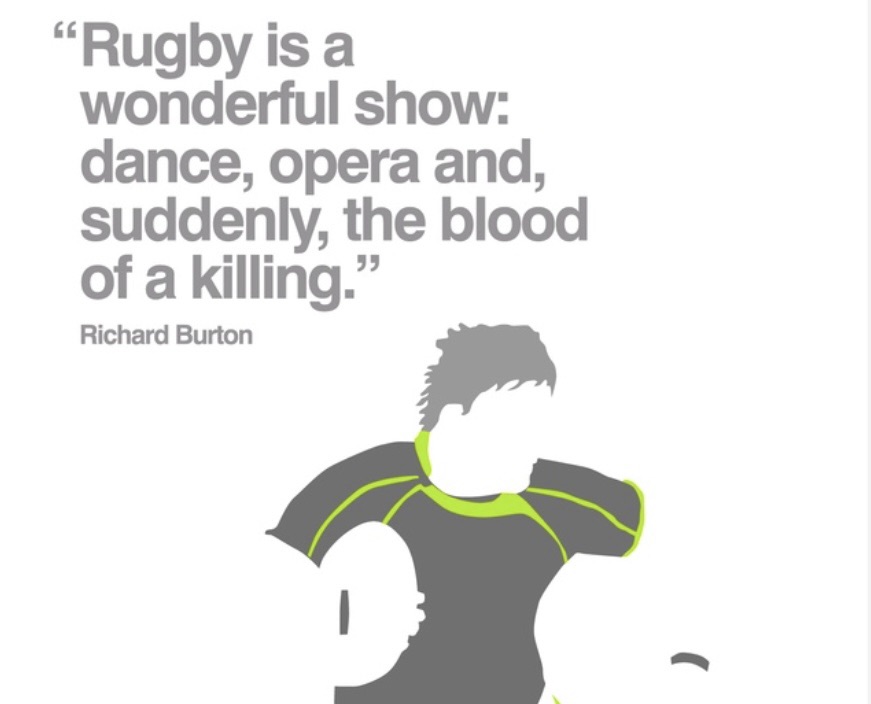
At first glance, rugby and opera couldn’t seem more different. One is fast, physical, and brutal. The other is slow, precise, and expressive. One is played in stadiums, often in the rain and mud. The other unfolds on stages lit by chandeliers and carried by orchestras. But beneath the surface, they’re not opposites, they are parallels.
Both are about performance. Both demand absolute commitment and both are driven by emotion, story, and the need to connect with an audience.
In rugby, the field is a stage. The players know eyes are on them. Every pass, tackle, or decision carries pressure. It is not just about winning, it is about showing heart, resilience, and skill in front of thousands of onlookers.
In opera, the singer takes the stage with a different kind of vulnerability. The voice must be perfect, the timing exact. But more importantly, the emotion must be real. You can’t fake a heartbreaking aria any more than you can fake a match-winning try.
What most people don’t see in either world is the training. The hours even years of practice. The pain, the sacrifices. In rugby, it’s the early mornings, the bruises, the physical toll. In opera, it’s vocal exercises, language study, constant repetition, and the pressure of perfection.
Opera tells its stories through music and emotion. The pain of love, the weight of loss, the joy of reunion, all delivered through voices that carry centuries of tradition.
Rugby tells stories too. Not with words, but with action. The underdog fight. The comeback. The heroics. Every match has its own emotional tale. A team on the ropes, digging deep. A player playing through pain. A moment of brilliance that changes everything. Both forms remind us of what it means to feel, to struggle, to overcome adversity.
There’s a ritual to both. In rugby, the anthem, the haka, the roar of the crowd. In opera, the hush before the curtain rises, the collective breath before the first note. The audience is never just a bystander, they’re part of the spectacle.
Fans of each carry deep loyalty, shared language, and reverence for history. A great performance lives on, whether it was a famous aria or a legendary match.
But what truly links rugby and opera is emotion. Raw, honest, sometimes overwhelming. They both ask their performers to feel deeply and to express that in a way others can share. And they both ask something of us, to show up, to watch, to listen, to care.
Rugby and opera might speak in different languages, but they both speak to the same part of us. The part that loves the story. That respects effort that wants to be moved.
They show us what’s possible when passion meets discipline. When physical strength or vocal power is guided by something more, the drive to connect, to move, to matter.
In the end, whether it’s a note that gives you chills or a last-minute score that makes you leap off your seat, it’s the same thing, the thrill of being part of something that reaches deep into the soul and takes you for that split second out of the troubled world we live in.
 Mike Pearce Rugby