Christmas Day 1916 was a fairly lively affair for a certain Mr and Mrs Davies from Llanelli, as Mrs Davies gave birth to a bouncing baby boy amidst all the tinsel and the stuffing.
In a moment of inspiration, or maybe sheer madness, they named their newborn son Christmas Howard Davies, whether this was a blessing or a curse for the incumbent we will never know.
Had the baby been a girl, no doubt she would have been called Holly, Carol or even Ivy, much less traumatising one would imagine than being called Christmas.
In the record books, Christmas Davies is forever referred to as Howard, and it is under the name of Howard that his distinguished rugby career is chronicled.
One of the few players to represent Wales either side of the Second World War. He began his rugby playing career with Burry Port All Blacks, before crossing the Loughor bridge to play for Swansea, from where he won his first international cap against Scotland in. 1939.
After a successful debut, Wales won 11-3, he was selected for the following match against Ireland in Belfast, which proved to be Wales, and Ireland’s, final international before war broke out.
Wales first post-war championship international, in the 1939 Five Nations tournament, was against England in Cardiff in 1947, and Christmas Howard Morris, having moved west from Swansea to Llanelli, was at full back. The home side fielded thirteen new caps, only Davies and Haydn Tanner had been capped previously.
Wales lost to England that day, 9-6, but they went on to defeat France, (3-0) Scotland (22-8) and Ireland (6-0) that season, with Christmas, or should I say Howard, featuring in every game, with Wales & England emerging as joint Five Nations champions,
Davies was a superb tackler and had a massive boot on him, his last ever game for Wales was in that 6-0 victory against Ireland in Swansea on 29 March 1947.
He continued his life in Burry Port, earning his living as a steelworker.
Having been born on Christmas Day, it seems appropriate that Christmas Howard Davies left this world on another memorable date in the calendar, 5 November 1987.
Hawkes Bay is located on the east coast of New Zealand’s North Island.
The hot summers and cool winters provide excellent weather for growing the grapes that provide the areas famous wines, particularly the highly regarded Cabernet Merlot blends.
It is also one of the most seismically active regions of New Zealand and has had around fifty notable earthquakes since the 1880’s.
However on Saturday July 17th, at McLean park, Napier, the earth moved for an entirely different reason when the British Lions came to town.
The epicentre of this phenomenon was a certain Welshman, Thomas Gerald Reames Davies.
This was the 19th match of the Lions tour they had already played two tests against the all Blacks with one victory and one defeat and were building up for the third test in which Gerald was to figure prominently.
Referees in those days were not neutral and one of the main remits of mid week teams was to beat the living daylights out of the touring team in preparation for their next match against the All Blacks, Hawkes Bay proved no exception in a thoroughly nasty match.
Amidst the darkness of brutality and violence there shone the golden bright light of sheer rugby beauty by the man from Llansaint.
Gerald scored three first half tries whilst on the right wing and one late in the second half whilst playing at centre, when Mike Gibson went off with an injured hamstring.
His first try came from a Hawkes Bay dropped goal attempt that bounced off the posts gathered by JPR, the ball went through six pairs of hands before Gerald Davies touched down.
The second try followed a chip through from Mike Gibson which Davies gathered before touching down to score.
Gareth Edwards long pass from a blind side ruck went to Davies who shimmied and sidestepped half of Napier before touching down with defenders spreadeagled all around him,his third try of the first half.
A fourth try came in the second half helping the Lions to a 25-6 win in a brutal encounter
Dai Smith’s words from “Fields of Praise” written in 1980 beautifully encapsulate Gerlad Davies, the rugby player, I find it hard to comprehend, that I last saw him play thirty nine years ago, where has the time gone ?
Gerald Davies was poised on the field, his element, until the moment to switch and dart like a fish came. He sidestepped at a speed whose rapidity still never made him lose control, to left or right, squeezing fearlessly through eye of the needle gaps that no defence could cover, for no one else could have gone through them.
When his markers knew his intentions they could not master the execution of his desire, when he was checked in that one to one confrontation which comes to wing three quarters more than other players he was supremely brave, moving in close and quickly before, ingenuously and bewilderingly , pausing, absolutely and fractionally, only to shoot away.
Like the flickering tongue of a fly eating lizard he was nakedly on show, and then retracted to his own satisfaction, all in an instant.
His thighs were strong, despite a frail upper body, so that he could, if held, breakthrough any half grasping hands whilst his own understanding of physical limitations, that would have made head on bone crushing tackles either foolishly inept or worse, counter-productive, never made him an easy man to elude.
The lurking feline presence of Gerald Davies could instil a wary trepidation that let others in through less guarded entrances.
Tonight I will raise a glass of Cabernet Merlot in memory of that magical day back in 1971, a Hawkes bay vintage indeed.
The World Champions South Africa against a full strength Wales side had the potential to be an extremely painful experience for the men in Red. However, with the home side missing thirteen players who ply their club rugby trade outside the country defeat, and a very large one, was almost a certainty.
When you also take into account injuries to talisman Jac Morgan and hat trick hero Tom Rogers the word daunting does not even come close to describing the task that loomed ahead.
There was certainly a case for this match to be cancelled on health and safety grounds after the Springboks put 32 points on a supremely talented French side, saw off Italy, and destroyed the Irish scrum in Dublin.
As the match in Cardiff took place outside the official autumn international test window, the English clubs (and Montpellier) had full protective custody of their charges, depriving Wales of the few world-class performers they have at their disposal in these lean times.
A crowd of 50,112 masochistic individuals turned up to watch, I would normally say more in hope than expectation but on this occasion there was very little, if any, hope or expectation, although trepidation was in plentiful supply.
A Wales defeat by 73 points to Nil was what we feared, but the manner of the loss was hard to swallow. Conceding eleven tries and not scoring a single point made it a humiliating experience.
The value of a match like this can be regarded a success solely in financial terms for the governing body. A depleted home side being used as cannon fodder against the best team in the world will have done nothing for squad morale, or indeed any limited optimism for the upcoming Guinness Six Nations.
So putting to one side the annihilation and humiliation of Saturday’s result how do we assess the Autumn programme from Wales point of view ?
In the opening game against Argentina there were some positive signs, but in a 50+ points defeat they tend to come into the clutching at straws category.
The match against Japan was in effect a knock out game with priority seeding for the 2027 Rugby World Cup the reward for the victor.
A match that just a few years ago would have been used as an opportunity for Wales to play their second string outfit was filled with jeopardy, nervousness and foreboding.
As it turned out Wales produced a dreadful performance that earned them a last minute victory such are the vagaries of sport.
Of course one swallow doesn’t make an Autumn and just a week later that swallow turned into a giant gulp when the All Blacks came to town. Smarting from defeat to England they put 50 points on Wales but there were encouraging signs in defeat, particularly in attack where Wales managed to score 4 tries.
And finally to last Saturday when our worst fears were realised. Having earlier making the excuses for Wales and their absentees, in the interest of balance it is worth noting that South Africa were without World Rugby Men’s Player of the year Malcolm Marx, Thomas du Toit, Boan Venter, Lood de Jager (who was still serving a suspension for a dangerous tackle), RG Snyman, Pieter-Steph du Toit, Grant Williams, Handre Pollard, Manie Libbok, Jesse Kriel, Cheslin Kolbe, and Edwill van der Merwe, who had all returned to their provincial unions and clubs.
Next up for Wales are England at Twickenham on February 7th part of the opening weekend of the 2026 Guinness Six Nations. The ‘hymns and arias’ are in cold storage and have been for quite some time, but perhaps the ‘long and winding road’ would now be a more appropriate musical accompaniment as things stand.
Autumn is turning to Winter and there are some bitter days ahead for the game in Wales. As the cold dark nights descend, the game at all levels is on a precipice.
In meteorological and sporting terms it is worth remembering that after the longest night the sun always returns and even the toughest winter ends in spring.
But for now in Wales the total eclipse continues, let us hope 2026 provides a few shafts of light.
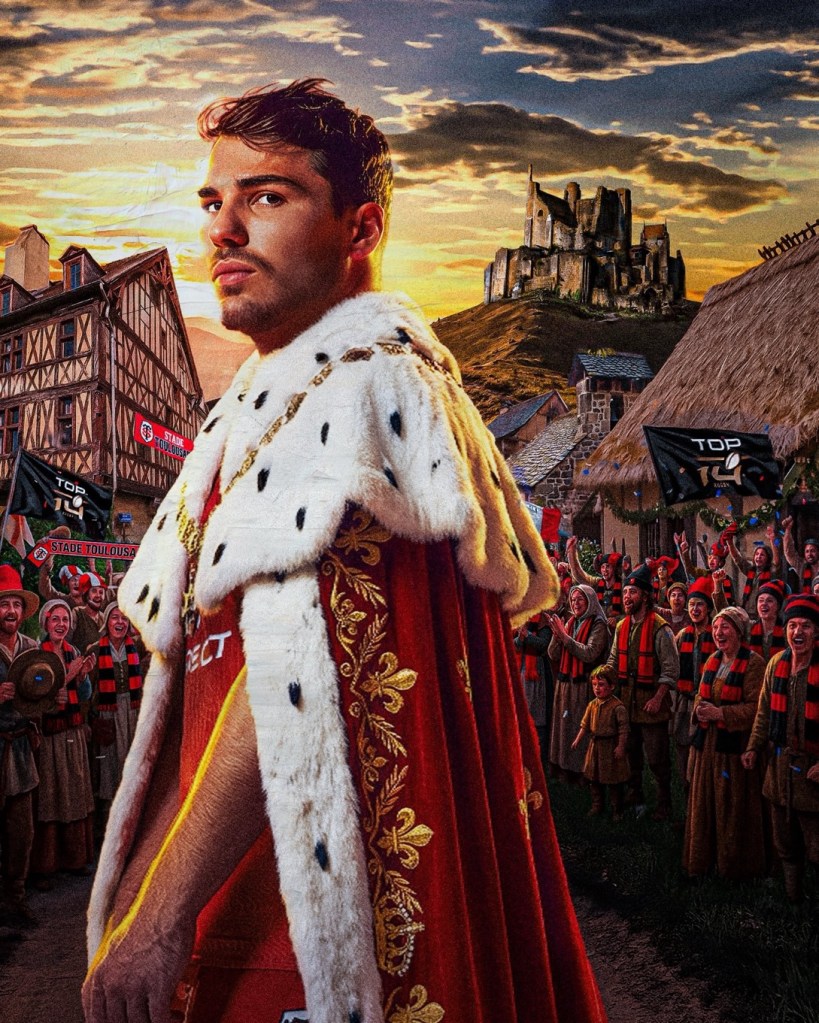
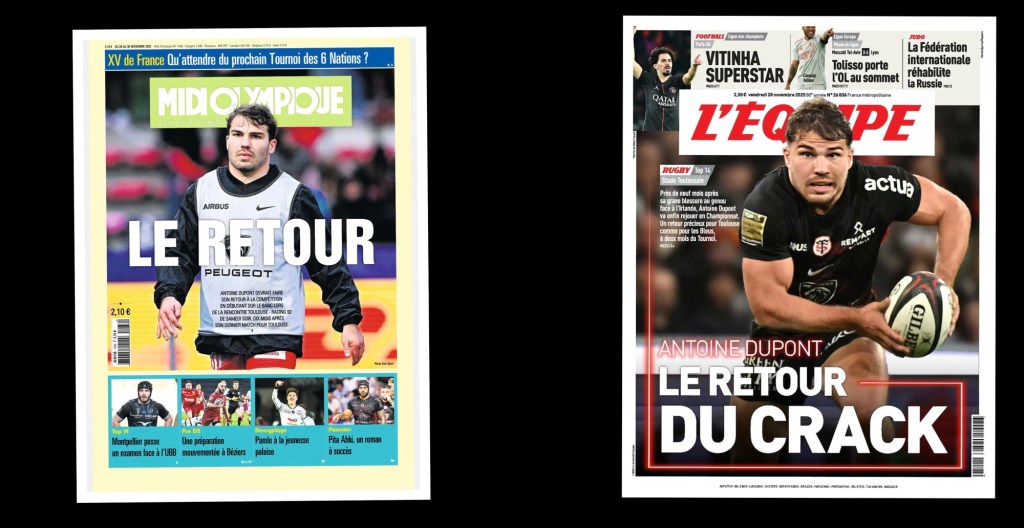
After 266 days out of action Antoine Dupont finally returned to the green green grass of home on Saturday after a long term injury.
Coming off the bench with the number 20 on his back the whole world of rugby let out a collective sigh of relief, boy have we missed him.
It has been nearly nine months since that injury which occurred on 8 March 2025, during the Guinness Six Nations match between France and Ireland in Dublin.
The specific incident: during a ruck in the first half, an opposing player, Tadhg Beirne, fell onto Dupont’s leg while clearing out at a ruck. The pressure caused Dupont’s knee to buckle. He left the field around the 29th minute, visibly distressed and limping. He suffered a rupture of the cruciate ligaments in his right knee.
Along with the cruciate-ligament rupture, he reportedly also sustained damage to his medial meniscus and collateral ligament.
There are players who define a team, and then there are players who redefine a sport. Antoine Dupont has long been counted among the latter, the heartbeat of French rugby, the conductor who turns chaos into choreography.
When news first spread of Dupont’s injury, the reaction throughout the rugby world was not just disappointment it was a collective sigh. Fans, teammates, and rivals alike understood what his absence meant.
The French national side lost its spark plug, its accelerant, the player capable of flipping a match on its axis with a single darting run or laser-flat pass. And Dupont himself was thrust into a different kind of struggle, one fought not on playing field but in silent training rooms, under the hum of physio machines, with patience as his toughest opponent.
Injury can be a lonely companion. It strips away the roar of the crowd and replaces it with repetition, doubt, and the stubborn march of time. Yet it was there, in the quiet lonely corners of rehab facilities that Dupont displayed the unseen dedication and determination arriving early, staying late, attacking recovery with the same precision and resolve he brings on the field. He refused self-pity, channeling his frustration into discipline, knowing that every tedious session was a stitch in the fabric of his return.
The first touch of the ball in the 50th minute drew a swell of anticipation. His movement sharp and balanced was not simply the mark of a recovered athlete. It was the statement of a man who refused to let adversity dull his instincts, it was like he had never been away.
In sport, there is something profoundly human about watching someone rise again. Dupont’s return is not just a boost for Toulouse and France it’s reminder of why we watch, why we care. It’s the resilience of a player who refuses to be diminished by circumstance. His comeback echoes far beyond France’s tactical options; it speaks to the spirit of a competitor whose love for the game burns brighter than the setbacks thrown in his path.
As he re enters the fray, eyes sharpened and striding purposeful, the rugby world braces for the future familiar shockwave of his brilliance. Because with Antoine Dupont, the extraordinary always feels just a heartbeat away.
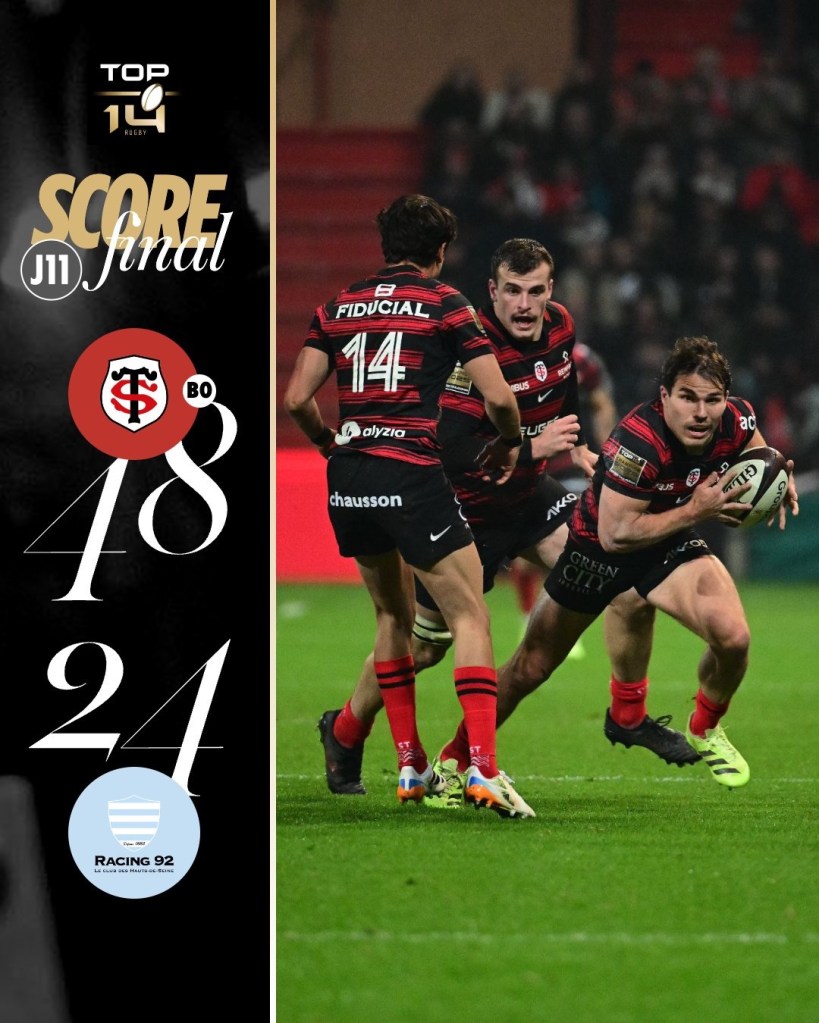
For the record Toulouse beat Racing 48-24 in Pita Ahki’s final match for the club, it was a pretty memorable night at Stade Ernest-Wallon.
is a stressful time for all those involved with international rugby. Whether you are a rugby fan, a rugby writer or perhaps more importantly a rugby player, the stresses and strains that three or four weekends of back to back matches can impose upon your body and indeed your mind can be extremely challenging.
This weekend with no official media duties to perform, my main health concern was DVT after spending almost twelve hours courtesy of DFS on the sofa, interspersed with short sprints to the kitchen to top up on saturated fats.
Talking of mental health, watching Wales v New Zealand comes into the realms of PTSD, but then again doesn’t every match involving Wales fall into that category these days.
With Wales trying to extend their unbeaten run to seven days, the Haka was drowned out by my snoring All Black Labrador Rufus, who was totally unimpressed with two legged humans of a similar colour disturbing his beauty sleep with their grunting and throat slitting gestures.
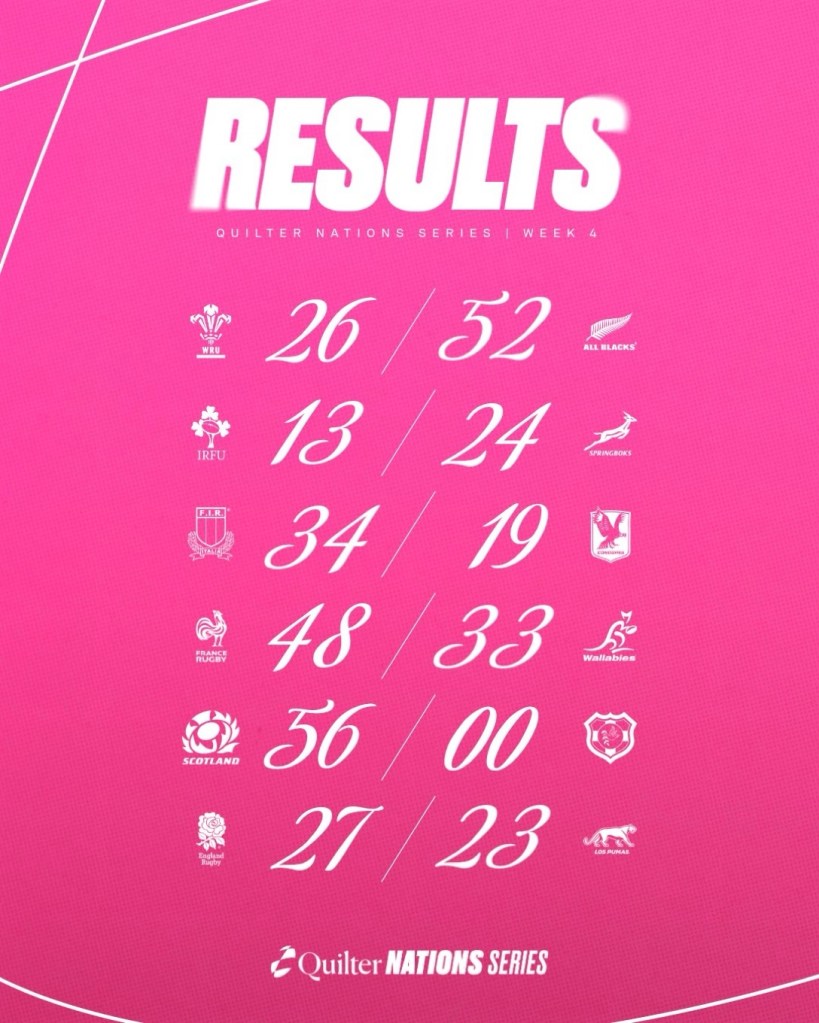
Wiping away my salty tears after a 52-26 defeat, it was straight into Ireland v South Africa with a Nespresso and hob nob accompaniment, a match that proved to be a full-bodied as my arabica roast.
With more cards than Clinton’s, Irish players were hopping on and off the field like Michael Flattley on steroids. Four yellows and a red were an aid the world champions gratefully gobbled up scoring four tries to one their to earn a 24-13 win, the Boks head home as they arrived number one in the world.
With cramp setting in and in urgent need of hydration, the healthy sort, there was Just time for a virtual evening in Paris with a glass of Red and a statin both purely medicinal to get me through the final vestiges of Saturday night.
Fabien Galthie is under fire in many quarters of the French press for only delivering a Grand Slam and a Six Nations Championship in recent years and for having the temerity to help deliver two defeats to the best team in the world, South Africa. In Wales, they build commemorative gates for a coach with that kind of record.
Les Bleus with snowflakes falling at Stade de France eventually pulled away from Australia to earn a 48-33 victory, but it was not without its squeaky bum moments for the home team.
In an entertaining match with twelve tries, the French back line showed some wonderful touches, with Louis Bielle-Biarrey demonstrating his warp factor speed along with some deft footballing ability.
Sunday dawned and following a caffeine fuelled morning recovery session it was back to the sofa. When it comes to delivering, Scotland are a close second to yodel in the success stakes. Their blueprint for “this is our year” shown below was leaked just before they conceded five second half against Argentina a week ago.
They finished their Autumn campaign with a 56-0 win over Tonga to go with their opening weekend victory over the USA. The tartan golden generation once again failing waiting to match words with deeds.
Finally, minus the bagpipes and my barking dog, a perfect storm for which the noise abatement society should provide a suitable warning, it was a trip to Twickenham where the much loved Pumas were facing an England team on the crest of wave that is in danger of becoming a tsunami such is their strength in depth and the amazing winning run they found themselves on.
The comeback kings from the Pampas nearly did it again but in a nail-biting finish just came up short 27-23 after trailing 17-0 they once again launched a second half come back that Lazarus would have proud of but just fell short at the final whistle.
If this weekend was spent on the sofa for many of us Welsh folk, next weekend will be spent behind it as Wales without their twelve English and French based players face the World Champions South Africa in Cardiff.
It is time to say a prayer and light a few candles. Things could, and probably will, get very ugly. No sofa for me next Saturday as I will be in Wales to witness the expected Cardiff carnage.
Dim, drizzly, murky November afternoons feel like the perfect backdrop for rugby international matches with an historic rivalry.
Memories come flooding back of great winter treks when New Zealand would tour these islands for months on end travelling the length and breadth of our countries playing clubs, combined xv’s and finally the Barbarians.
In the modern professional era, this type of rugby odyssey is no longer viable, and the game is all the poorer for it. But there are still the vestiges of those magical days in international form, where the anticipation and thrill of the contest are still very much as they have always been.
On days like these you can feel the ghosts of seasons past breathing down your neck Duckham, Kirkpatrick, Going, Obolensky, days when rugby was black and white on the field and on your television.
England and New Zealand matches, for more than a century, have heavily favoured the All Blacks, but the rivalry is about far more than wins and losses. The two sides first met in 1905, during the famous tour of the “Original All Blacks.” New Zealand won 15–0 at Crystal Palace, a match that introduced English crowds to the revolutionary running and passing style that would come to define New Zealand rugby. For England, it was both a shock and a revelation, a glimpse of how far the game had evolved beyond its birthplace.
The two nations have met each other on 43 occasions with New Zealand winning 33, England 8 and two matches have been drawn.
This All Blacks side, by their own high standards, have shown hitherto unseen signs of vulnerability, emphasised by recent narrow defeats to Argentina and massively to South Africa.
But in victories over Ireland and Scotland over the last few weeks we have seen if not a rejuvenation then certainly signs of greater things to come from this group of players. Facing England at Twickenham would be the acid test.
For an England side unbeaten in their last nine games, this was the day to prove that they could live with the big dogs of the game. With a frightening depth of talent now at their disposal, there could be no excuses.
England started in full colour, pounding the All Black defence, but the visitors held out and scored tries through Fainga’anuku and Taylor in a five-minute spell.
Lawrence pulled one back for England before George Ford landed two drop goals in the space of two minutes just before half-time to make it a one point game.
The second half couldn’t have started much worse for New Zealand, a harsh yellow card for Codie Taylor and a try conceded within the opening three minutes.
England pounced on an error strewn All Blacks team and built up a 25-12 lead before Will Jordan scored for New Zealand closing the gap to sevens points with fifteen minutes remaining.
England despite being down to fourteen following Ben Earle’s yellow card not only saw out the remainder of the game but managed a further try from right wing Tom Roebuck.
Make no mistake, this was a convincing win for England. Whilst their chest pumping and posturing after every successful turnover and penalty may not be to everyone’s liking, there is no doubt they have woken up the Allianz Stadium, which was as loud as I have ever heard it.
It may have been rugby in black in white, but there will have been plenty painting the town red in the Twickenham area and further afield last night and maybe for a few nights to come.
“La vengeance est un plat qui se mange froid” or, for those of us who scraped through GCE French, “revenge is a dish best served cold”,
One of the first recorded instances of the saying in print was in the 1845 French novel Mathilde by Eugène Sue, which suggested the phrase was already in common usage at the time.
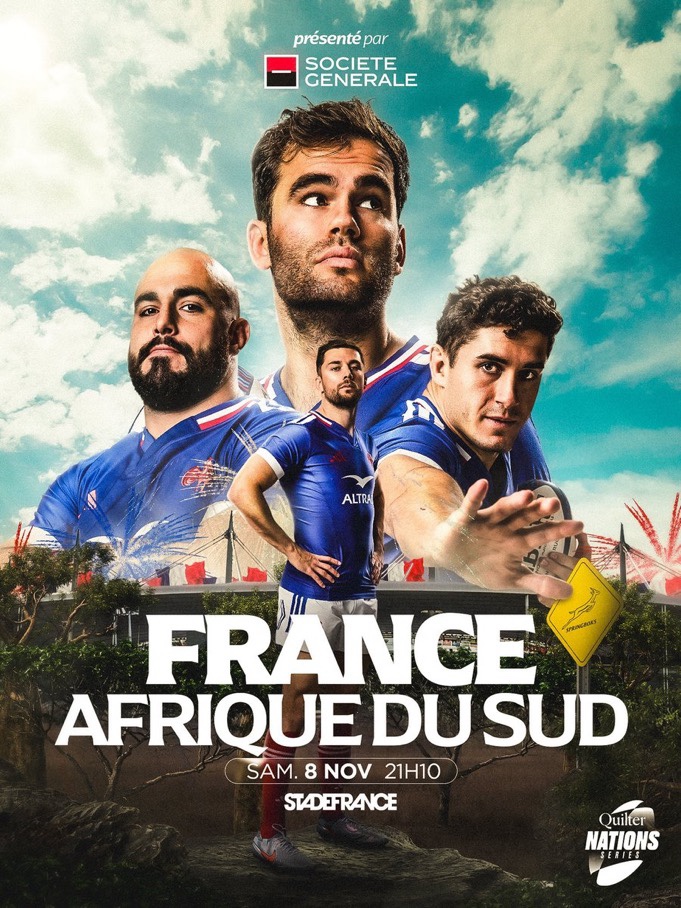
Three years ago, on this very soil in the Northern outskirts of Paris, the Springboks broke French hearts. They trampled all over their Rugby World Cup dreams and left a long-lasting and deep hurt in the soul of Les Bleus.
Saturday night was the first meeting between the two teams since that October night in 2023 when an epic World Cup quarter-final ended with a South African victory by a single point (29-28).
Time heals old wounds, but there was still plenty of rugby scar tissue remaining to remind the boys in blue of that epic balmy autumn night 756 days ago.
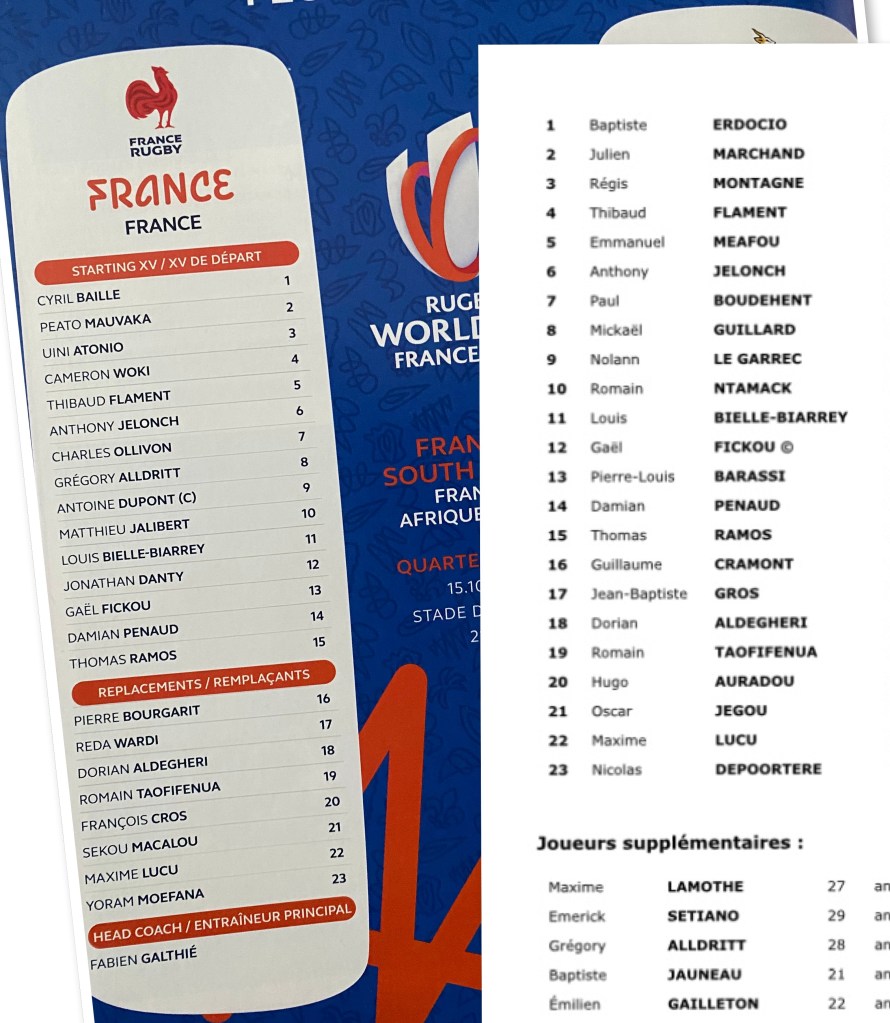
There were six French survivors in the starting line up from that game and there would have been many more but for France’s extensive injury list which includes Peato Mauvaka, Uini Atonio, Tevita Tatafu, Paul Mallez, Matthias Halagahu, Joshua Brennan, François Cros, Antoine Dupont, Baptiste Couilloud, Louis Le Brun, Jonathan Danty, Yoram Moefana, Théo Attissogbe, Gabin Villière, Romain Buros plus Pierre-Louis Barassi, Matthis Lebel, Matthieu Jalibert, Romain Taofifenua and the recently returned Baptiste Serin.
In a match that should have been measured on the Richter scale the hits were immense and the physicality in all quarters was simply breathtaking from start to finish.
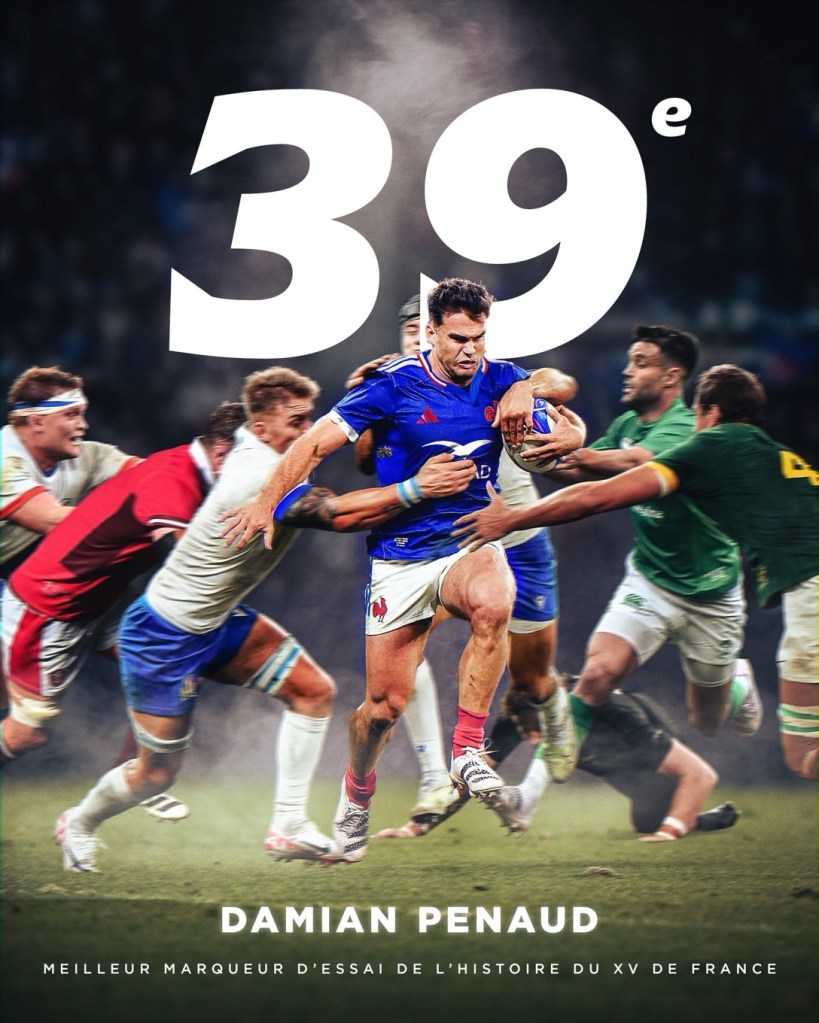
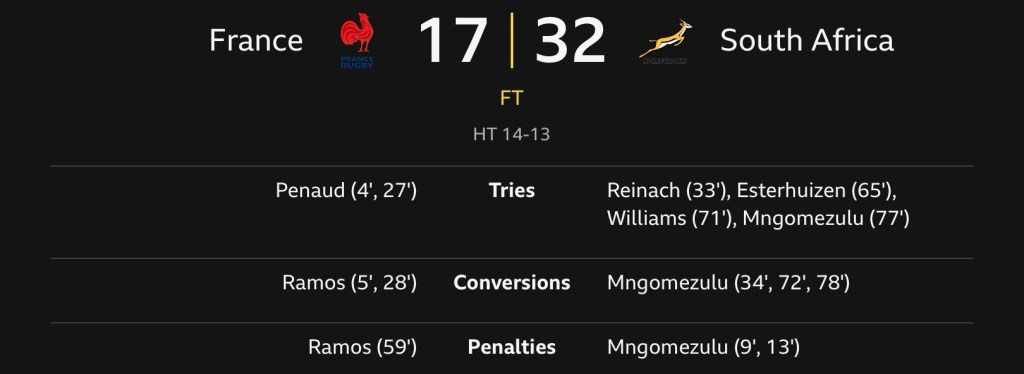
Damian Penaud’s first half brace of tries, the first after just four minutes, gave France a narrow 14-13 half time lead with the Boks further punished by Lood De Jäger’s 39th minute permanent red card.
Damian Penaud became France’s leading try scorer last night
France started the second half where they left off. A penalty from Ramos extended the home side’s lead to 17-13 but their their dominance of territory and possession were not converted into any further points.
The 14 man Springbok team that appeared to be on the rack produced a defensive masterclass and staged a remarkable comeback scoring nineteen points in the last fifteen minutes of the match including three tries to give them a remarkable 32-17 victory.
A night that had started so promisingly for a France ended with an almost silent Stade de France crowd slinking off into the darkness of a late dark Parisian night engulfed in a feeling of Deja vu.
Revenge a dish best served cold was not on the menu tonight.
There’s a certain electricity that hums through a stadium when Cam Roigard takes the field. It’s not just the anticipation of what he might do next, it’s the sense that, at any moment, he could change the course of the game.
From the quiet fields of Cambridge on the banks of the Waikato river to the roaring cauldron of international rugby, Roigard’s rise has been a story of persistence, patience, and passion. He wasn’t born into rugby royalty, nor did his ascent come overnight. It came through sweat, toil, long drives to training, and the relentless pursuit of something greater.
At Counties Manukau, he learned to lead men older and stronger than himself. With the Hurricanes, he became the spark, a scrum-half who saw space where others saw walls, who appeared to have more time than anyone else. His game displayed both art and aggression, a dancer’s footwork with a warrior’s heart.
When Roigard pulled on the All Blacks jersey for the first time, against Australia in 2023, it was an arrival. His crisp passing, fearless running, and predatory instincts brought crowds to their feet. The Kiwi’s took him to their hearts, earning him the love of a nation recognising one of its own.
Then came the cruel twist of sport which the rugby gods can endow so cruelly, he tore his left patella tendon playing for the Hurricanes in March 2025 a knee injury that stopped him in his pomp.
For months, he could only watch as others played the game that lived in his bones. But even from the sideline, Roigard’s spirit never dimmed. He spoke of gratitude, of growth, of using the setback to come back stronger. And when he did return, he carried not just speed, but steel, a player tempered by the bitter experience.
Now, as New Zealand rugby rebuild and dare I say it look human, Cam Roigard provides both as both promise and proof.
Proof that the black jersey still finds its way to those who earn it the hard way, and promise that the heartbeat of the game’s future beats strong in men like him.
Every pass he makes feels like poetry, every tackle a reminder that greatness isn’t built in comfort but in courage. The crowd may cheer the tries, but it’s the story behind it the grind, the grit, the grace, the humility that makes Cam Roigard a name to remember.
Because in the rhythm of his play, New Zealand can hear its rugby heart beat, and those of us who have the privilege of watching him play can feel our pulses racing that little bit faster too.
“On the anniversary of his death I felt moved to write a piece about Grav. Here is my humble tribute. May you continue to rest in peace Ray.”
RAYMOND WILLIAM ROBERT GRAVELL
(12 September 1951 – 31 October 2007)
WALES CAP NUMBER 763
BRITISH & IRISH LIONS CAP NUMBER 553
“The centre must be everything — the shield, the sword, and the storyteller.”
To be a centre in Welsh rugby is to carry a tradition of partnership, pride, and poise under pressure. It is to step into a jersey once worn by legends and be expected to play with the same courage and commitment. Whether it’s holding the defensive line, launching a counterattack from deep, or cutting inside to crash over the whitewash, the centre has always been more than just a cog in the machine. In Wales, the centre is the soul of the backline.
Calpe is a charming old town in south east Spain. Its landscape and sandy beaches make it an ideal holiday destination. The peaceful and relaxed demeanour emanating is a complete contrast to the nearby lively resorts of Alicante and Benidorm.
The magnificent Rock Penon de lfach hovers above Calpe. That limestone mountain is 330 metres high and connected to the ground by a neck of land. It is one of the most beautiful geographical features on the Mediterranean coast.
It was in this delightful place that Ray Gravell passed away at the age of 56 whilst on holiday with his family on 31 October 2007 just over two thousand miles away from his beloved Wales and his home on top of another mountain Mynydd y Garreg (mountain of stone).
This is a place I know all too well. As child I was brought up in the town of Kidwelly just down the road.
For Raymond William Gravell his mountain home was his castle, the fact that there was already an imposing Norman castle in Kidwelly was a total irrelevance.
His heart, the one that gave out on that fateful day in Spain, belonged to Wales, but Ray gave a piece of if to every one he met. It was a heart that was full, a heart that was generous, maybe he had given away so much of it to others that it couldn’t carry on.
The date of his death, 31 October, could not have been more poignant, it was on that exact date in 1972 that Grav wore the number 13 shirt for Llanelli in the club’s greatest ever victory a 9-3 win over the New Zealand All Blacks. It really does make you wonder whether there is some vast eternal symmetrical plan to our earthly life.
Ray crammed so much in to his fifty-six years on this earth, he lived many different lives and didn’t waste a single minute.
Born on 12 September 1951 in Kidwelly he was no stranger to tragedy. His father took his own life after the pain of a mining accident became too much to bear both physically and mentally. Ray was one of a group to find his fathers body aged only fourteenthe horror of that experience must have been hugely traumatic and something Ray had to carry with him on those broad shoulders for the rest of his life.
Despite winning 23 caps for Wales and playing in all four Tests on the Lions’ 1980 tour of South Africa, Gravell never saw himself as one of the greats.
For a man of giant stature and power on the field of play he was saddled with a deep-seated insecurity.
Friends and former team-mates recall that he was always looking for reassurance both on and off the field as well as personally and professionally.
One of the greatest rugby coaches the world has ever seen, Carwyn James, was in charge at Llanelli when Gravell started his senior career with the Scarlets in 1969 making his senior debut in 1970 against Lampeter.
Grav stated categorically that Carwyn made him believe that he was better than he was. “Carwyn knew, better than most, that psychology plays a big part in sport, I do not think I was that good a player, but Carwyn made me think I was a world-beater. I was 21 when Llanelli beat New Zealand in 1972, the youngest player in the side. I was terrified before the game, but listening to Delme Thomas and Carwyn speaking before we went on to the field made me forget my nerves. Even all this time later, I can remember exactly what they said, the goose pimples their words provoked and how tall they made me feel.”
Gravell was one of the first of a new breed of centres taking the ball up the middle, enticing defenders and using his strength to cross the gain line whilst holding on to the ball to provide a target for the forwards. He became pigeon holed as a crash-ball centre, but he was much more than that, he was also a skilled provider as the wingers at both Llanelli and Wales would happily testify.
Five Nations Championship 1975 France v Wales Parc des Princes Paris
The many stories surrounding Grav’s Wales debut have passed into legend, it used to be that children would sit on their Grampa’s knee and be regaled with tales of Gelert, but that all changed in 1975 and those fireside stories of myths and legends became centred on Raymond Gravell.
For the uninitiated one of the best known, and loved, folk-tales in Wales is the story of a faithful hound.
The story goes that in the thirteenth century Prince Llewelyn the Great had a palace at Beddgelert in Caernarvonshire, and as the Prince was a keen hunter, he spent much of his time in the surrounding countryside. He had many hunting dogs, but one day when he summoned them his favourite dog Gelert didn’t appear, so Llywelyn had to go hunting without him.
When Llywelyn returned from the hunt, he was greeted by Gelert who came bounding towards him …his jaws dripping with blood.
The Prince was appalled, and a horrible thought came into his mind …was the blood on the dog’s muzzle that of his one-year old son. His worst fears were realised when he saw in the child’s nursery, an upturned cradle, and walls spattered with blood! He searched for the child but there was no sign of him. Llywelyn was convinced that his favourite hound had killed his son. Enraged with grief he took his sword and plunged it into Gelert’s heart.
As the dog howled, Llywelyn heard a child’s cry coming from underneath the upturned cradle. It was his son, unharmed! Beside the child was an enormous wolf, dead, killed by the brave Gelert.
Llywelyn was struck with remorse and carried the body of his faithful dog outside the castle walls, and buried him where everyone could see the grave of this brave animal, and hear the story of his valiant fight with the wolf.
In Wales there is often a very thin veil between myth and reality and to confirm that premise a short walk from the village of Beddgelert following the footpath of the Glaslyn river there is a stone monument to mark the resting place of Gelert the faithful hound. History lesson over let’s get back to Grav.
He was selected to make his international debut with x other new caps at Parc des Princes not the sort of place considered a wise choice to be an inexperienced new cap but Wales well and truly debunked that theory with a magnificent 25-10 win.
One of six new caps Grav travelled to Cardiff on the Thursday before the match spending the night at the Angel Hotel. He was a bundle of nerves. JJ Williams, his team-mate with Llanelli, Wales, and the British Lions, said “Grav was so nervous before his debut in Paris and we shared a room that Thursday night.
“At about three o’clock in the morning, I heard a commotion in the room, only to wake up and Grav was packed to go home. “I can’t take the pressure JJ, I’m not cut out for international rugby, I’m going home’,” he said.
“If I hadn’t told him to jump back into bed his career would’ve been over before it started. He did get back into bed and of course the rest is history. But that was his strength. He was a bag of nerves but then when he stepped onto the field he just exploded.”
John Dawes, the Wales coach who selected Gravell spoke about the new man’s dreadful nervousness.
“We lost Grav, we didn’t know where he was and then all of a sudden we could hear a noise in the toilets and there was Grav singing Dafydd Iwan songs in one of the cubicles Derek Quinnell had to knock on the door and beg him to come out and when he eventually did he looked ten feet tall and ready to face the French”
One of the tales that has passed into legend from that 1975 debut concerned a telegram he received before kick off.
DEAR RAYMOND
ALL OUR LOVE
MAMI & TWDLS
Twdls by the way was the family cat.
The match itself turned out to be one of the greatest and most unexpected wins in Welsh rugby history, and Ray was convinced that somehow his Father was close and with him on that most special of days.
Wales to everyone’s surprise led 17-7 at half time scoring a try after just three minutes through new cap Steve Fenwick who seized upon a sliced Gareth Edward drop goal attempt to touch down near the posts.
The French fans booed their team constantly throughout the second half as the men in red rampaged to a memorable victory scoring five tries in the process with Terry Cobner, Gerald Davies, Gareth Edwards and Graham Price adding to Fenwick’s early effort. Wales failed to achieve another win in Paris for twenty four years.
Five Nations Championship. 18 February 1978. Wales v Scotland. National Stadium, Cardiff
Ray’s only try for Wales in a major international came against Scotland in the wintry Welsh capital in early 1978. Snow had been cleared from the pitch and was piled up behind the posts but it was nothing to compare with what was to follow later that day.
Wales were awarded a penalty following Scotland being pinged for being on the wrong side at a ruck inside the Scottish twenty-two on the fifteen metre line at the Westgate Street end of the ground.
Bill McLaren’s commentary thrilled television Welsh viewers on the BBC’s Grandstand programme.
“So the Welsh are going for a quick one-Edwards to Windsor to Edwards-Gravell of Llanelli- and Gravell is there-the whole of Llanelli will be simply thrilled”.
Once the match was over it started snowing heavily, the blizzard turned out to be one of the worst of the century. Around two feet of snow fell post match between 6pm and 10pm. Cardiff was completely cut off and the Welsh players were marooned in the Angel Hotel until Monday morning whilst the Scotland squad fought their way to Birmingham, the nearest operating airport, on the Sunday afternoon for a flight home.
Five Nations Championship. 20 March 1982. Wales v Scotland National Stadium, Cardiff Arms Park.
Four years after scoring his first international at the same ground and against the same opponents Ray’s international career came to an abrupt end as Wales were heavily defeated by a rampant Scottish outfit.
The manner of the defeat left the country in a state of shock. Wales had not lost a Five Nations game at home for fourteen years, equating to twenty seven championship matches. It was Scotland’s first win in Cardiff for twenty years and Wales had never previously conceded five tries at home there were bound to be scapegoats after such a national disaster.
“I remember praying with six minutes to go for the match to end and bring the nightmare to an end, I had never felt like that before on a rugby field.”
Grav decided he would end his international career on his own terms although he did not make an announcement until the start of the following season.
Ray continued to play club rugby with his beloved Llanelli until 1985, his final game a Welsh Cup game against Llandovery on 26 January 1985 where he suffered a broken arm, After 485 appearances scoring 120 tries he finally hung up his boots.
He had been diagnosed with diabetes in 2000 and campaigned vigorously to help raise funds for research into the disorder. In 2007 he was admitted to hospital with blood supply problems in his right leg. Toxins in the tip of his little toe had spread and septicaemia had set in. His life was saved on Friday 13th April by an operation to amputate his right leg below the knee. According to reports Ray was only days away from death.
Even after this traumatic event because of a condition brought on by diabetes, his renowned humour did not desert him he was cracking jokes about how he was never a kicking centre anyway. His artificial leg was Scarlet with the Llanelli club crest emblazoned on the front
When you have a street named after you it’s a pretty good indicator that you are regarded as someone special.
Jonah Lomu Drive in Auckland, Muhammad Ali Boulevard in Louisville, Kentucky along with Jack Nicklaus Drive in Palm Beach, Florida are testament to that fact.
England has honoured two Steve’s in similar fashion with Ovett Close, just yards from the Crystal Palace athletics track, and Redgrave Road in Putney a town famed for its association with rowing.
Just a stones throw away from Stade de France in Paris lies Rue Jesse Owens where there is a wonderful boulangerie and my regular coffee haunt when covering France’s home games.
So when the band U2 start singing ‘where the streets have no name’ send them to any one of those locations or better still point them in the direction of Mynnyd y Garreg where the road sign Heol Ray Gravell stands proudly, and for those readers who don’t speak the language of heaven Heol is Welsh for Road.
At the end of his playing days, he joined the BBC in Cardiff and took the leading role in a BBC Cymru film for S4C, Bonner. In 1991, he played an impoverished 19th-century farmer in a big-screen adaptation of Dylan Thomas’s Rebecca’s Daughters, starring Peter O’Toole, and the following year played Jeremy Irons’ chauffeur in the Louis Malle film Damage.
Also in 1991 he received a letter inviting him to become a member of the Gorsedd of Bards.
He was inaugurated at the National Eisteddfod in Machynlleth.
Up until his death, he hosted radio programmes and was due to present the shirts to the Wales players before the November 24 international against South Africa in Cardiff but sadly fate intervened.
On 15 November 2007 under cloudless bright blue sun kissed skies 6000 filled the stands at Stradey Park and even more lined the streets of Llanelli to pay homage to the man for whom they had so much affection. The famous old scoreboard showed ‘Llanelli 9 Zeland Newydd 3’ and the Llanelli Male Voice choir and Burry Port Brass Band led the crowd through Calon Lan and Cwm Rhondda.
Ray emerged one last time from the Llanelli dressing room carried shoulder high by three of his team mates from that historic day in 1972 Delme Thomas, Derek Quinnell and Gareth Jenkins, along with three current Scarlets at the time Dwayne Peel, Simon Easterby and Stephen Jones.
His two young daughters, Manon and Gwenan wore Llanelli jerseys with their father’s number on the back, 13, as they and their mother, Mari, in lead the procession behind the coffin as former Scarlets, Wales and Lions hooker Robin McBryde carried the ‘Great Sword’ that Grav used to bear at the National Eisteddfod.
Rev Meirion Evans, a former archdruid and great friend of Grav, led the mourners and there were moving tributes from the First Minister as the time , Rhodri Morgan, Welsh historian Hywel Teifi Edwards, and former Wales and Lions legend Gerald Davies.
Wales First Minister Rhodri Morgan spoke: “Grav had charm and a Bambi like vulnerability. As a politician you rate communicators. But few of us touch people’s souls like Grav did. Every achievement of his he never expected. He had huge talents, but he didn’t realise he had them. He never expected anything and everything that came his way came as a pleasant surprise.”
Gerald Davies his friend and former team mate said: “For the many who knew him, and the many thousands who felt they knew him, he was an inspiration. He first made his name as a remarkable rugby player for Llanelli, Wales, the Lions and the Barbarians. As Carwyn James said of Ray, ‘no one has ever worn the Welsh jersey with a sharper sense of what it means to be a Welshman’. He was happy among Princes, paupers and poets – and the difference meant nothing to him. He was dazzling and unforgettable with a heart of gold. He was a rugby Viking, a true warrior who Bill McLaren once declared to be ‘a force of nature’. Today is a remarkable testimony to this great Welshman’s benevolent heart.”
As Grav was carried from the field at Stradey Park for the final time. the crowd rose to give him one long last standing ovation it was a fitting tribute to the people’s friend.
Ollie Cracknell is renowned for his powerful ball-carrying, tireless work rate, and uncompromising physicality on the field. Born on May 26, 1994, in Leeds, Cracknell qualified to play for Wales through his Llanelli born grandfather.
He represented Wales at under-20 level, making a strong impression early with his aggression and commitment in the back row.
A few days ago after Leicester Tigers defeated Sale Sharks 36-35 in a pulsating match he was called up into the Wales senior squad for the upcoming Autumn Nations Series to replace the injured Taulupe Faletau.
Cracknell began his professional journey with the RGC 1404 academy in North Wales before joining the Ospreys in 2014. Over several seasons in Swansea, he established himself as one of the most consistent flankers in the United Rugby Championship earning a reputation as a player who thrives in the toughest physical battles. His performances for the Ospreys led to a senior Wales squad call-up under Warren Gatland in 2017 although he was not capped.
In 2021, Cracknell moved to the English Premiership with London Irish, where his robust defensive work and relentless tackling quickly made him a fan favourite. Following Irish’s closure in 2023, he signed with Leicester Tigers, continuing to showcase his trademark intensity and leadership in the Premiership’s back-row battles.
Speaking to him in Leicester he love for the club is very evident.
“Tigers have an environment where people improve and that is where I want to be. Knowing I will be somewhere I can improve and learn is a big thing for me.”
“The fanbase Leicester Tigers has is incredible and the history around the club enormous.”
“Tigers is a massive rugby club, you can see that, and I am really excited to be a part of it.”
Off the field he has a passion for ornithology and has ventured way up north to the Isle of Skye to observe birds of prey.
“I’ve been up to Scotland for a couple of family holidays and we saw eagles up there on one of those and I thought they were really interesting and I wanted to see one in the wild,” said the former Osprey.
“When we had we had week off in January sometime ago or February, I went with my dog up to the Isle of Skye in my camper van and saw a golden eagle and white-tailed eagles in the wild.”
Ollie’s call up came as a shock with most folks assuming fellow Tiger Tommy Reffell would get the call, but Wales coach Steve Tandy had other ideas.
Eight years after that initial call up it looks like he will finally get that elusive Welsh cap at the tender age of thirty-one
When I spoke to him that call had not been made
“Every player that goes out there in the Premiership aspires to play international rugby,” he said.
“I want to test myself at the highest level I can, but l’ve got to be patient and play as well as I can.”
Little did he know that call up was just hours away.









 Mike Pearce Rugby