They know a thing or two about producing mouth-watering products on the banks of the Garonne but this particular Bordeaux vintage also travels very well as was shown further south on the edge of the Nervión river in Bilbao.
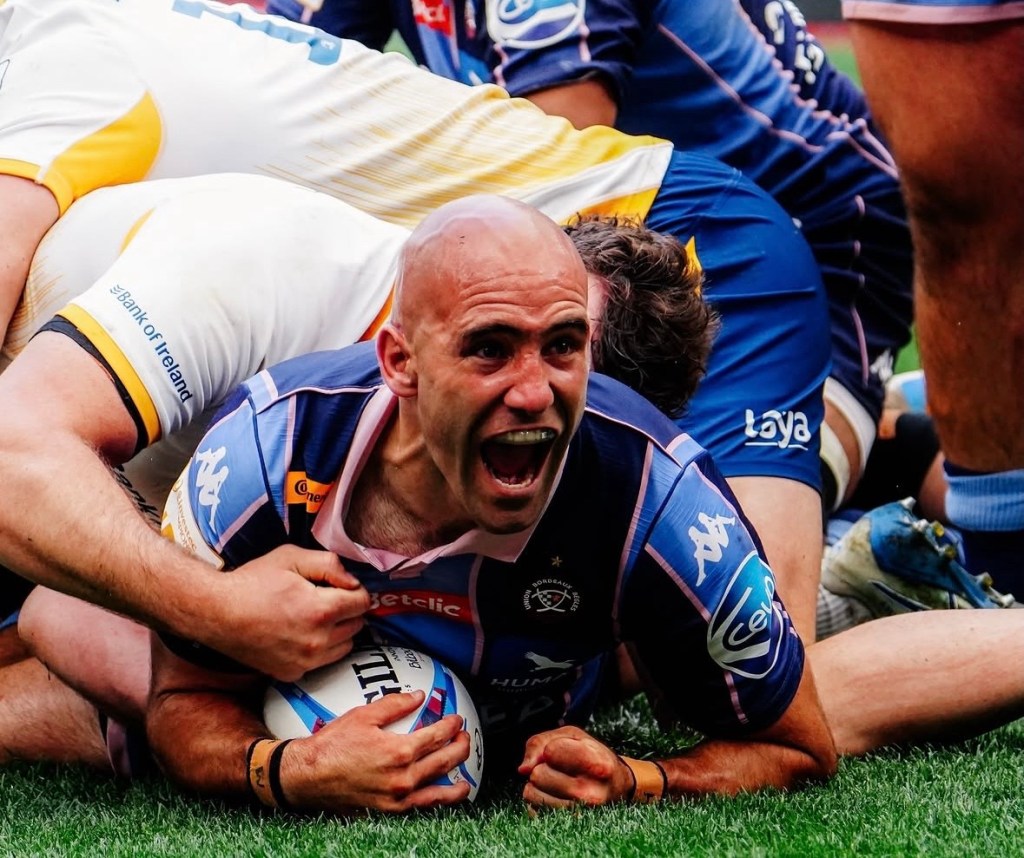
The reigning Investec Champions Cup holders Union Bordeaux Bègles to give them their full title dispatched the River Liffey challengers Leinster with a display that will result in a few hangovers this morning as celebrations and commiserations continue to ebb and flow much like those beautiful waterways.
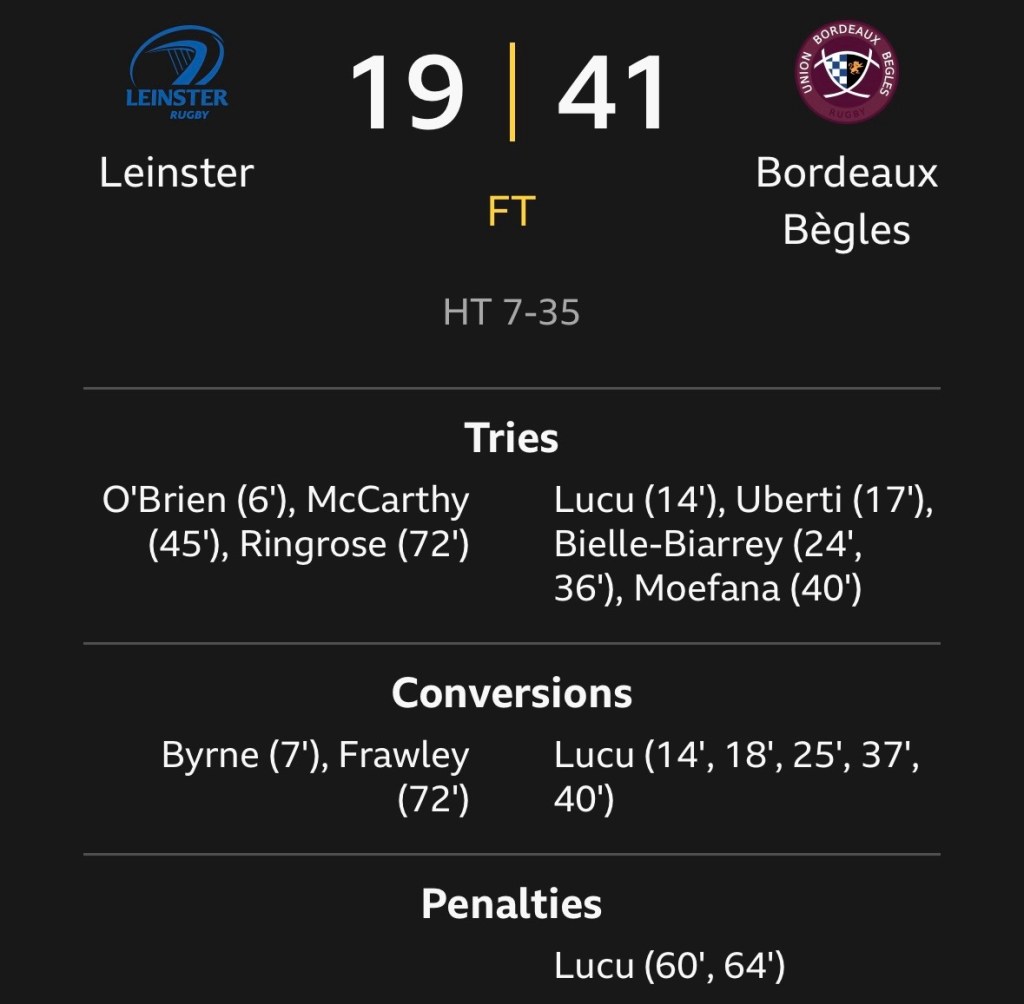
With temperatures above thirty degrees, red-hot Bordeaux demolished Leinster with their five first half tries giving them a 35-7 half-time lead despite the Irishmen taking the lead with an O’Brien try after just six minutes.
Three Bordeaux tries in 10 first half minutes were the killer blow, and Leinster had no answer to the broken play carnage caused by the French side.
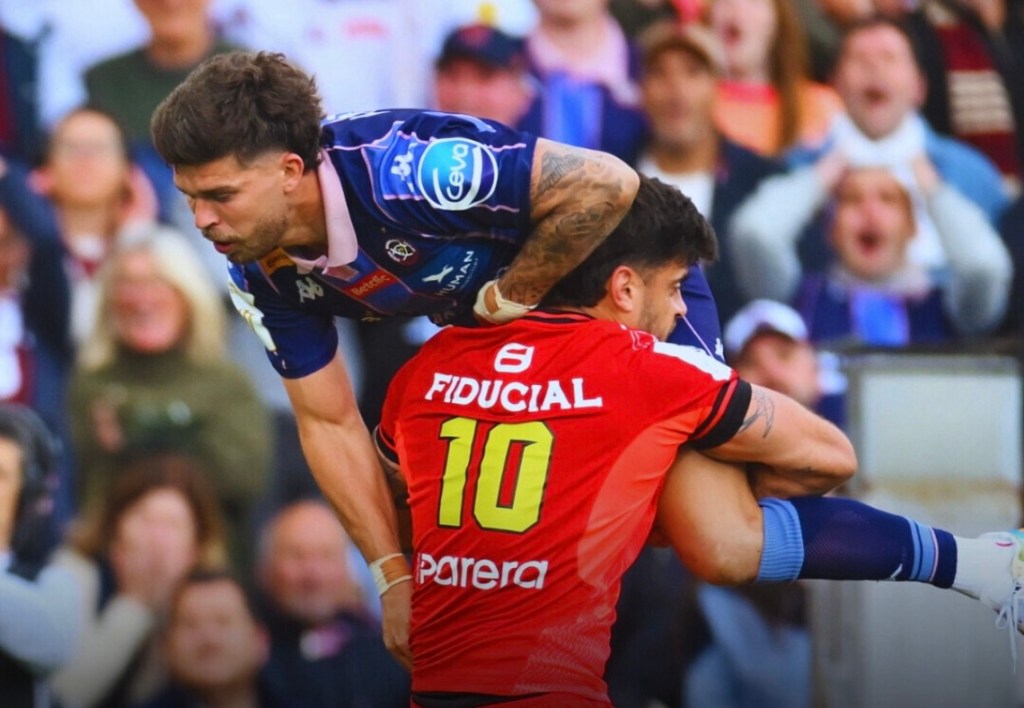
Man of the match brilliant Basque Maxime Lucu controlled the game magnificently, scoring a first half try and receiving a ludicrous second half yellow card for making contact with the mullet of Joe McCarthy simultaneously with his shirt collar. Hair pulling was apparently deemed to be the sin binning offence.
A try from McCarthy himself whilst Lucu was in the bin was the best Leinster could muster with an extra man advantage.
Lucu’s two penalties after leaving the ‘naughty step’ added gloss to the scoreline and despite Leinster’s efforts in limiting Bordeaux to six second half points and scoring two tries themselves, this was a comprehensive win for the now back to back European champions.
Bordeaux are a joy to watch and in the boiling Basque sunshine they lit up this final, they are a very special team indeed.
Six Georgia players and a team official have been sanctioned for committing anti-doping rule violations as part of what World Rugby has described as “an orchestrated scheme”.
A joint investigation by World Rugby and the World Anti-Doping Agency (Wada) discovered a scheme involving sample substitution and advance warnings of drug tests.
Dubbed ‘Operation Obsidian’, the investigation was launched in 2023 and found five instances where players allegedly swapped urine samples to avoid detection.
A Wada statement said that employees of Georgia’s national anti-doping agency (Gada) also tipped off players about upcoming tests and that doping control officers failed to properly observe athletes during testing and did not witness urine collection.
World Rugby described it as “an orchestrated scheme involving recreational drugs and sample substitution”.
It added that the investigation “was triggered when irregularities in urine samples were identified by World Rugby’s athlete passport management programme, covering an extended period of time prior to the men’s Rugby World Cup 2023”.
The game’s governing body supplied historical samples which, when retested, showed five instances of sample substitution involving Sharikadze and five other players, dating back to 2019.
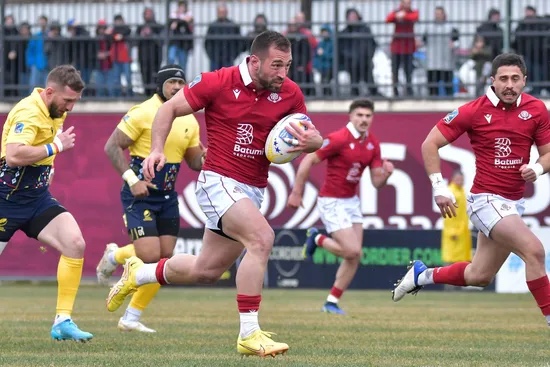
As a result Former Georgia captain Merab Sharikadze (pictured above) has been banned from sport for 11 years for his part in a secret scheme which helped national team players cheat anti-doping tests.
Hooker Giorgi Chkoidze has been banned for six years, with Lasha Khmaladze, Otar Lashkhi and Miriani Modebadze receiving three-year suspensions, and Lasha Lomidze being banned for nine months.
Sharikadze, who led Georgia to a famous win over Wales in Cardiff in 2022, admitted providing ‘clean’ urine to team-mates.
Having considered this recommendation, World Rugby issued a misconduct charge against the Georgia Rugby Union. The Union accepted the charge and agreed to a sanction including financial penalty along with a requirement to implement a roadmap of various reforms and measures in its anti-doping training and education to mitigate the risk of any future issues of this nature arising.
A World Anti-Doping Agency investigation found that Georgia’s national testing authority would tip off Georgia’s team doctor Nutsa Shamatava about forthcoming tests, and she would then share the information via a team group chat.
World Rugby also commissioned an independent enquiry into the actions of the Georgia Rugby Union to ensure that any potential involvement of the Union in the scheme was considered and addressed. While the independent report details that there are no grounds for the Georgia Rugby Union having a case to answer under World Rugby Regulation 21, the fact that a number of players and staff wilfully failed to comply with their anti-doping obligations brings the game into disrepute under Regulation 18.5.
This is undoubtedly a blow to Georgia’s reputation and credibility as they continue to pursue a path that will enable them to bid for a place in the Guinness Six Nations tournament.
1888 Vincent van Gogh left a dull grey Paris and headed south by train for the unique almost heavenly light of Provence. “May artists come together in Provence” was Van Gogh’s wish, and last night at the Orange Velodrome the artists of Toulon and Toulon showed us their true colours.
This Top 14 encounter is in fact a Toulon home game, annually transferred 47 miles up the coast. It encompasses a rugby festival where the whole of the city is in rugby party mood along with the sold out 67,000 capacity crowd at the stadium for a post 9pm kick off.
With the Bodega at Parc Chanot open from 11 a.m. it was a challenging day for those with a penchant for pre match beverage consumption, fortunately the Velodrome is only a five-minute walk, or a fifteen-minute stagger, away.
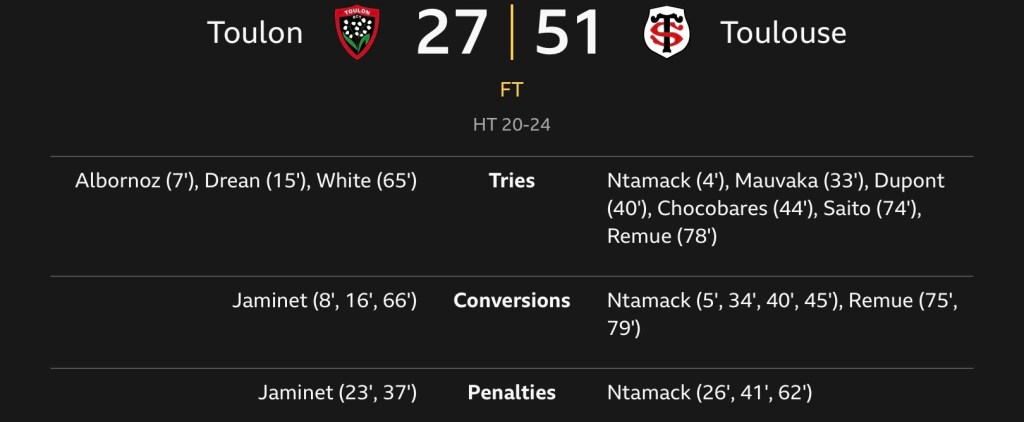
The strains of “Pilou Pilou” were still hanging in the air when Romain Ntamack crashed over for a try after just four minutes.
Toulon responded magnificently with tries from Albornoz and Drean and the metronomic Jaminet’s 23rd minute penalty gave them a 17-7 lead.
Toulouse went up another gear and Dupont’s try right on half-time lit the blue touch-paper for a second half they dominated and displayed their artistry, with halfbacks Dupont and Ntamack back to their very best.
Toulouse scored three second half tries, the best of which occurred in the 44th minute, when Dupont displayed his football skills at the home of OM. This set up a wonderful try for Chocobares, dribbling through before providing a glorious offload that sent the Argentinian for a sliding touchdown to make the score 34-20 to the visitors.
Replacement scrum-half Ben White scored a consolation try for Toulon in the 65th minute, but by then Toulouse were home and hosed.
Toulouse victory guarantees them a semi-final place in the Top 14 knock out stages, and in the process they continue to set new records.
The 912 points scored far this season is a new record, as is the try tally of 123.
As the crowds headed to the midnight metro Marseille was greeting a Sunday morning where the most important challenge will be where to go for lunch, Toulouse certainly gave everyone food for thought last night at the Vélodrome.
There used to be only two certainties- death and taxes, we can now add another one to that exclusive list-Red Rose victories.
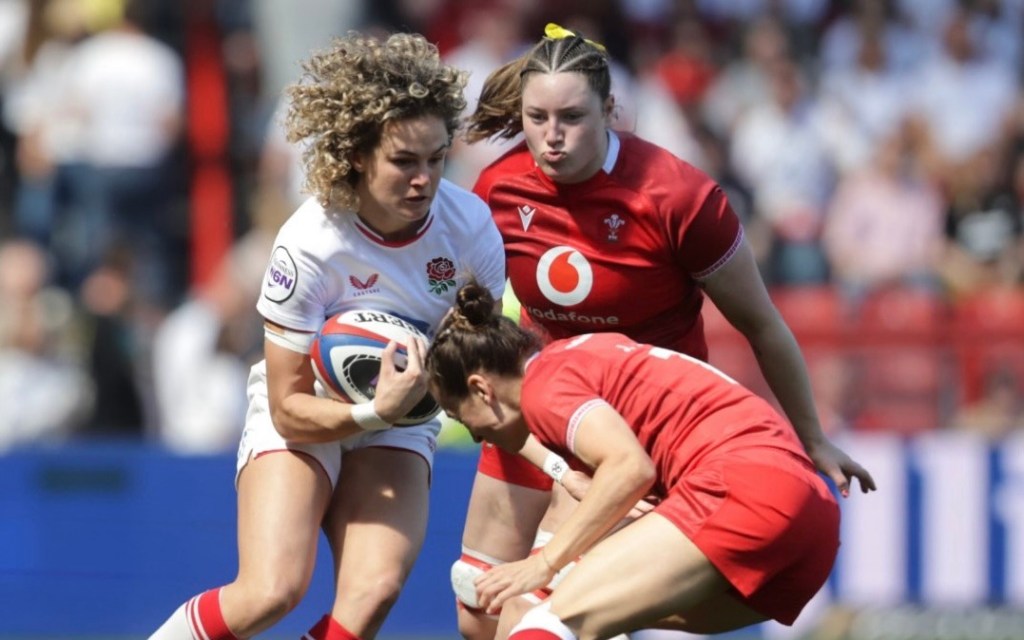
For the 36th time in a row, England women left the field having secured a comprehensive win.
Wales were the bindweed clinging to the blossoming red blooms, but England possessed far too many thorns to be hampered in yet another big scoreline at Ashton Gate.
Yesterday was always going to be a Severn Bridge too far for a Wales side who have forgotten that winning feeling
Bristol is approximately 12 miles from the Welsh border at the narrowest part across the Severn estuary, despite the closeness this was very definitely a home game for the English fans who dominated the sun-drenched 26,247 crowd.
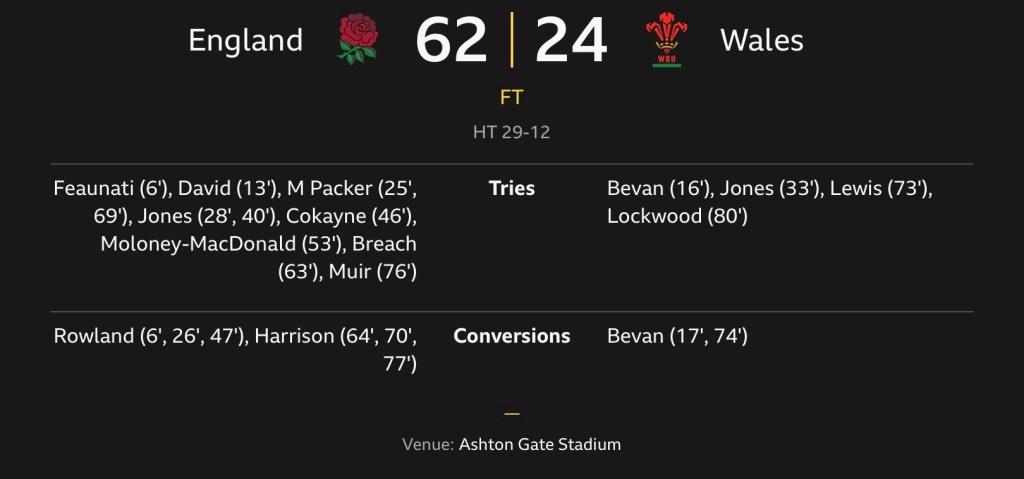
They did not have to wait long to celebrate their first try. Maddie Feaunati took just 6 minutes to cross the whitewash, and it looked like England would pull away when Millie David scored a try 13 minutes into her international debut it looked like England would pull away.
Wales responded well and their two first half tries along with Kiera Bevan orchestrating matters at scrum-half ensured at least a competitive contest.
A half-time score of 29-12 was not as bad as many had feared, but thirty-three Red Roses points in the second half made it yet another comfortable win for the women in white.
In fairness to Wales, they didn’t give up, and two tries in the last seven minutes gave them the most unlikely and unexpected of bonus points.
It may seem crass to feel positive about a 62-24 defeat, but this was a massive improvement from Wales. There was at last some imagination and variety in attack and whatever else they lacked there was heart and commitment in spades.
The back line still looks a little clunky with their try scoring threats mainly coming from the pack, but there is definitely something to build on here.
As for the Red Roses, we are running out of superlatives for a team who are finding their toughest opponents at their own training sessions.
England have now won 37 consecutive Six Nations matches. Their last defeat came against France in 2018.
This year alone they’ve scored 179 points (27 tries) despite missing more than a dozen players because of injury, pregnancy or retirement,
The Red Roses continue to bloom, but Wales are beginning to show some green shoots of recovery.
“Centres are the only players who get smashed in defence, smashed in attack, and still blamed when the winger drops the ball.”
In English rugby, where tradition clings and expectations weigh like granite, the centre is not just a position it is a crown, a battlefield. From the bloodied jerseys of Twickenham to the wet Saturdays in Exeter or Leicester, these players carry the legacy of a thousand rucks and a million hopes.
To play centre for England is to know that the game can turn on a shoulder, a step, a feint It is to be at the very centre of the storm, and to smile in the rain.
Because in the heart of the line, where everything converges defence, attack, brutality, and brilliance there lies the centre. And England has never stopped searching for its next king or Queen of that hallowed contested ground.
From its source in the springs of the Ashdown Forest in East Sussex, the River Medway flows north east across the landscape of the Weald flowing seventy miles to where it joins the North Sea at Sheerness in the county of Kent. It makes a gap through the ridge south of Maidstone and another through the North Downs between Maidstone and Rochester where it meanders alongside paper mills and cement works. It forms a tidal estuary below Rochester navigable by shallow sea going vessels.
This tidal river is fed by the iron-rich streams of the Weald that support resident populations of highly coloured brown trout. Other fish species include chub, dace, roach and pike. Bream and trench.
But it is not just the fauna that flourish here. There is also a unique type of flora that thrive in this area the Red Rose and the pick of the bunch is undoubtedly Rachael Burford.
Known to anyone who has any form of acquaintance with her as ‘Burf’ she started out at Thomas Aveling school in Rochester, and is now regarded as one of the most famous alumni of that educational establishment along with model and television presenter Kelly Brook. Rachael could never have imagined the incredible rugby life that lay ahead of her, or indeed the impact she would have in transforming the quality, perception and development of the women’s game.
Charles Dickens lived on the outskirts of Rochester where Burf began her rugby journey, but even the great man himself could not have written a tale to match the one that is about to unfold in this chapter, although a few of his titles could well be relevant to Rachael Burford’s story not least of which is Great Expectations.
Sport at its simplest is an expression of joy and competition, an arena where players and fans can unite in a common cause, sharing hope, despair, joy, and heart breaking sadness.
Sport mirrors society, and yet in many ways sport can be a catalyst for social change, to create equality in gender, sexuality and in the way we treat our fellow human beings.
Rachael Burford was a rugby player, she was a brilliant rugby player, and when meeting her you discover that she is a thoroughly lovely, friendly, down to earth, and modest individual to boot, you can see why she is hugely admired and respected by those in our game and beyond.
Women’s rugby is growing, and growing at a pace, it will be forever grateful to people like Burf for lighting the blue touch-paper. Those that follow in her footsteps will find the path a lot smoother thanks to Rachael and co having paved the way.
I’m not sure what magical properties lurk in depths of the River Medway but the Garden of England has produced Red Roses by the bouquet load along with the odd flower of Scotland.
Medway RFC might well have been renamed Burford RFC. Mum Renata and Sister Louise all wore the scarlet and gold at Priestfields, and the three ‘Burfs’ played together for a season, one of Rachael’s fondest memories.
Dad Mick also played, as well as doing virtually everything else at the club from keeping the books to running the bar.
Mick set up a rugby club in Poland, where he met Renata before they both decided to settle in Kent, and nurture a budding Red Rose who would blossom beyond their wildest dreams.
“I started playing at Medway RFC at the age of six. I played with boys. I loved watching Dan Luger and Mickey Skinner, they were my the role models. I saw Sally Gunnell in the Barcelona Olympics but I never thought I’d do what they’d do.“
At the age of twelve she was training with the senior women playing at fly half and full back before finally settling into her natural habitat-the number 12 shirt.
“When I started playing rugby alongside the boys I wanted to be better than them. It was only when I reached the age of sixteen and made my senior club debut that it hit me what I could achieve in the game.”
The teenage years saw a rapid rise in her development as she moved from County and Regional honours to international selection with the England under 19 side aged sixteen and having only just started to play senior rugby.
A move to Bath to join Oldfield Academy brought about an alchemy that further down the line would light up women’s rugby in England. It was there that Rachael first worked with coach Gary Street, a partnership that would flourish and blossom in later years with Harlequins and reach a pinnacle when England won the Rugby World Cup in 2014.
The academy folded after a year and Burf was advised in 2004 to join a Premiership club to continue her progression.
Henley were the fortunate recipients of this prodigious talent and she was ‘rewarded’ (I use the word ironically) with the staggering inducement of petrol money which helped with the costs of frequent 165 mile round trips in the taxi of mum and dad.
“I then spent two seasons playing for Henley before moving to Saracens in 2006. That summer was a big turning point in my career because that is when I won my first senior cap for England, a week after my twentieth birthday I was on a plane to the Rugby World Cup in Canada where we reached the final.”
Her first cap came against South Africa on 4 September 2006 in Edmonton it was England’s second pool match of the tournament and a 74-8 victory was a pretty good way to launch an international career.
England were beaten in final by New Zealand (25-17). It was the first of four Rugby World Cup tournaments for Rachael in the fifteen a side game.
“When we got back from RWC 2006 a lot of the players retired and I was expected to be a leader despite my lack of experience. The other turning point in my life was the passing of my father a few months after that.
That made me grow up quicker and I was so sad he’d never seen me play in an England shirt. He watched me on a blurry TV at the World Cup but never got to see me in the flesh. He was the one who drove me to every training session and every game so when we won the World Cup I went to his plaque at Twickenham with the trophy. He would have been so proud.”
Rachael was only twenty years old when she lost her Father. Having to cope with the grief and heartbreak of that loss whilst dealing with the stresses and strains of international rugby speaks volumes for her character.
The 2007 Six Nations tournament was particular poignant and the wearing of black armbands by the England squad was a fitting tribute to Mick Burford.
A move from Saracens to Premiership rivals Richmond in 2009 with another Rugby World Cup just around the corner.
The 2010 Women’s Rugby World Cup was held in England with the pool matches held at Surrey Sports Park a venue that would become Burf’s second home seven years later when it became Harlequins training base and a venue for their home games in the Women’s Premiership however at this stage it was basically a leisure centre with string links to the nearby university.
England best Ireland (27-0), USA (37-10) and Kazakhstan (82-0) in which Rachael scored a try in the 38th minute, one of twelve England touchdowns that day.
A semi final victory over Australia (15-0) set them up for a final against three times back to back World Cup Winners New Zealand.
The final took place at Twickenham Stoop on 5 September 2010 in front of 13,000 spectators a massive crowd for a women’s match at that time.
Despite a hugely courageous effort England lost the final 13-10. The scores were tied 10-10 with fifteen minutes of the game remaining but a 66th minute penalty from Kelly Brazier gave New Zealand their fourth World Cup final victory in a row.
There are some things that are destined to become paired in everyday parlance bacon and eggs, gin and tonic, the same goes for people, Morcambe and Wise and David and Goliath.
In rugby terms Street and Burford are high on that list. Gary and Rachael forged a bond for club and country that ignited the women’s game, the pinnacle of that partnership resulted in England being crowned Rugby World Cup winners in 2014. With Gary as England coach and Burf owning the number twelve shirt they swept all before them beating Samoa (65-3), Spain (45-5) in the pool stage the only slight hiccup they suffered was a 13-13 draw with Canada. A comfortable semi final win over Ireland (40-7) meant England would face Canada in the final.
“We had a very tough 2013 losing the Six Nations, the Sevens World Cup and being whitewashed in New Zealand so we had to show a huge amount of character in 2014 to put all of it behind us and turn things around. Becoming professional took a lot of getting used to. We had to learn to rest and find things to do in the evening because for the first time in the very long time I didn’t have to train in the evenings any more.”
“We invested a huge amount of time to make sure we would reach our ultimate goal. Unlike in 2010 when we lost in the final. We started training together back in January trying to be prepared for anything and everything and that made a huge difference.
We also tried to take emotion out of the equation. It was just a process of winning our pool games to qualify and then the next one and the next one. I never thought about losing and I think it was the right mentality to go into it.”
17 August 2014 Stade Jean-Bouin, Paris. England v Canada Rugby World Cup Final.
This was England fourth consecutive final and their sixth overall. After three successive defeats in World Cup finals this was the time to put the record straight. Eleven of England’s side from the 2010 final that ended in defeat to New Zealand started the match.
That Parisian evening under grey French skies was lit up by a team of plumbers, vets, teachers, police officers and students, the majority of whom had to take three months’ unpaid leave to play in the tournament. For coach Gary Street it was the culmination of seven years hard work and detailed planning, driving up and down the country to visit players at their workplace having given up his job as a quantity surveyor to focus on the quest for World Cup success.
In front of a crowd of 22,000, an unprecedented figure for a women’s game at the time, England took the lead on 11 minutes with an Emily Scarratt penalty she repeated the feat thirteen minutes later to give the women in white a deserved 6-0 lead.
With 35 minutes on the clock Kay Wilson and Rachael cut the Canadian defence apart down the left and the recycled ball allowed Tamara Taylor to offload to Maggie Alphonsi who sent Nolli Waterman over in the right hand corner for a fabulous try. Magali Harvey clawed back three points for Canada with a penalty on the stroke of half time to make the score 11-3 at the interval.
The second half saw Harvey kick two penalties for Canada to reduce England’s lead to a nail biting nervous two points (11-9). An Emily Scarlatti penalty on 60 minutes made it 14-9 before her superb individual try and resulting conversion increased England’s lead to 21-9 with just 6 minutes left to play.
One of my best moments was when I went into a school before the World Cup I took my two silver medals along. I said to them, when I win the World Cup, I’ll bring my gold medal back. I went back into the school after the tournament and said ‘remember what I told you…’ and I pulled the medal out of my pocket. At that moment I realised I had gone silver, silver, gold.”
Sunday April 29, 2018. Harlequins v Saracens. Premier 15s Final at Ealing Trailfinders.
With 81:16 on the clock Harlequins are on the attack, trailing 24-20, they have recovered from a poor first half with tries from Holly Myers, Jess Breach and a touchdown from Debs McCormack that has given them all the momentum.
As they mount a final assault looking for the one tiny chink in the opposition defence. Just one score and the Premiership title will be theirs, one bounce of the ball, one refereeing decision could change everything, but a knock on just outside Saracens twenty-two brings the game to an abrupt and gut-wrenching end.
That blustery, icy cold day at Ealing will never be forgotten by Quins and their fans, or indeed by this correspondent.
The team and management vowed, almost immediately, that they would return for the 2019 final, which they did, but an uncharacteristically flat performance resulted in defeat, which meant that for the second year in succession the title was won by Saracens.
No Premiership final took place in 2020 due to the COVID-19 pandemic, but normal service resumed in 2021 and once again it was Harlequins and Saracens that reached the final, would it be third time lucky for Burf and and Harlequins?
Sunday 30 May 2021. Kingsholm, Gloucester. Harlequins v Saracens. Premier 15s Final.
A sweltering, cloudless afternoon formed the backdrop to an eagerly awaited Premier 15s final. Harlequins were without their try scoring machine Jess Breach and things got even worse when they lost their Captain and leader Rachael Burford after just nine minutes of the first half.
However, Quins raced into a 16-0 lead thanks to two carbon copy tries from Amy Cockayne and via the boot of Lagi Tuima, a half-time lead of 19-7 was no more than they deserved.
The second half started even better, with a Tuima penalty just three minutes after the restart extended Quins lead to 22-7. However, Harlequins have a bit of a bug bear about doing things the straightforward way.
Two yellow cards followed both on 56 minutes to Cokayne and Ward, Saracens scored two tries through Packer and DeGoede and all of a sudden it was a one score game at 22-17. But Quins showed immense composure to see the game out and with another penalty from the immaculate boot of Tuima on 61 minutes making it 25-17 and a precious lead requiring two scores to be overtaken proved to be enough.
Cue the celebrations, with Captain Rachael Burford throwing away her newly acquired crutches as she was piggybacked to join the rest of the squad in the centre of the field by flanker Lauren Brooks.
“It was in that final where no matter what was thrown at us, we were not going to lose,” she reflected.
“To have that feeling and complete trust in the team around us, there was a lot of excitement and belief in each other that we knew that we had the ability to beat Saracens on that day.”
“Post winning, it just was relief but really special for that team, because a lot of us had gone through the continuous heartbreak. Then to do it collectively was really special.”
That most magical of days proved to be a bitter sweet occasion
Despite the euphoria, Burford ended up holding the trophy on one leg after that first-half injury in which she dislocated her knee, rupturing both medial patella and medial cartilage ligaments.
Initially she was told that she might not play again and after that initial “gloomy prognosis” she admits there were “a few tears and probably a bit of panic.
“But I just allowed myself to wait until I had all the information and make a plan. I’m very good once I have a plan.”
Fortunately her surgeon had a more optimistic assessment and reassured her she could return to play the following season. However, her recovery was far from simple, including a four-night stay in hospital as the medical team helped her manage “the pain, sickness and healing of it”. Post-op required eight weeks of complete rest, until rehabilitation could begin.
To see this confident eloquent person addressing the great and the good and watching them hang on her every word makes it hard to believe that as a child she refused to read out loud at school because she was embarrassed at her ability.
Now she gives speeches on leadership, champions women’s rugby on the world stage and encourages young girls to take up the sport through her Burford Academy.
“I stand up and do public speaking and look back at the girl in school who wouldn’t read out loud because she couldn’t read very well so she was sent out of the class,”
“It was really embarrassing and I’d go all defensive and that’s why I’d get kicked out. Now I stand here with two GCSEs, but I own my own business and do my own accounts.”
“I couldn’t do any maths at school but now I can because of what rugby’s taught me – resilience, hard work and determination.”
Now, when she speaks to young people about her experiences, she is always honest about her past academic struggles.
“I know that there will be kids in that room who will be in the same situation,” she added. “They struggle academically but they’ve got something they’re really good at.”
Burf’s floating passes were a thing of beauty, England World Cup winning coach Gary Street compared them to Beethoven’s Fifth Symphony, but for me, they have an operatic quality more akin to a Puccini aria. You know exactly what is coming, but it is still always a joy to behold.
There are some things in life you just never want to end. That glorious summer holiday as the sun sets over the beach on your final evening under the stars, a wonderful meal when the bill arrives, or that memorable concert as your favourite band perform their last song of the evening.
Those feelings are a strange mixture of enjoyment, gratitude and sadness. Similar emotions prevailed on 2 June 2024 as Burf exited the green green grass of her Twickenham home for the final time following defeat to Ealing Trailfinders.
You can always go on another holiday, have another memorable meal or hear your favourite band on their next tour, but there will never be another Rachael Burford. The message she posted on the Harlequins website brought home the reality of her retirement.
“As I prepare to hang up my boots and step off the rugby field for the last time, I am overwhelmed with emotions and nostalgia, I am filled with a deep sense of gratitude and fulfilment. After playing rugby for 31 years, seven of which I had the immense honour of spending with Harlequins, I want to take this moment to extend my heartfelt gratitude to all of you.
These past seven years with Harlequins have been some of the most memorable and rewarding periods of my career. The sense of camaraderie, the thrilling moments on the pitch, and the unwavering support from you, the fans, have made every game, every practice, and every challenge worth it.
Your passion and dedication have always been a driving force for me and the team. Whether it was a roaring applause in the stands, a word of encouragement after a tough game, or the incredible atmosphere you created at every match, your support has been invaluable. You have cheered us on through victories and stood by us during defeats. For that, I am eternally grateful.
Playing for Harlequins has been more than just a professional commitment; it has been a true privilege. You all have exemplified what it means to be a part of a strong, spirited community. The memories of our shared triumphs and the spirit of perseverance that you embodied will stay with me forever.
To the young fans who dream of playing for Harlequins one day, always chase your dreams with passion and dedication. Rugby has taught me invaluable life lessons, and I encourage you to embrace every challenge and celebrate every victory, no matter how small.
As I step into this next chapter of my life, I do so with a heart full of treasured memories and immense gratitude. Though I will no longer be on the field, I will always be a Harlequin at heart, cheering for the team and supporting the sport I love in every possible way.
Thank you for being the best fans any player could ask for. Your support has been a cornerstone of my career and has made my time with Harlequins truly unforgettable.
I will now sit by your side in the stands and cheer the team on with you.”
Everything that can be written about Rachael Burford has already been penned and in many forms and guises, but for me, it is her actions that separate her from the rest.
She has been a pioneer and pathfinder for the women’s game, quite a weight to carry when you are trying to focus on your own game. Those strong shoulders, the ones that rotate to provide a pass worthy of Beethoven or Puccini, carried that load with grace, poise, and in a light humble manner that made it appear effortless.
Burf was a constant at Harlequins. She was their lighthouse, a shining beacon to cling to when the rugby seas got rough. However bad things got on and off the field, you felt Rachael Burford had a metaphorical arm around your shoulder, you knew things would turn out okay.
Being the official Welsh cake provider to the Quins women’s squad, I got to see the England centre’s silky skills on a weekly basis. I also witnessed her modesty and kindness to those around her, and experienced it first hand when my parents passed away.
She straddled the bridge between old world rugby and the new order, managing to retain the old values, whilst embracing the hard edged professionalism that is an essential requirement at the top end of the game also despite being a Red Rose legend at Harlequins she was just one of the gang, taking and giving the banter in her own humble way.
Just to see the crowd standing on their feet in my final game for Quins, seeing my family, seeing former players, that means the world to me,” she said. “It was a really special moment and I’ll definitely look back on that. That’s what moved me to tears and I was trying to hold it back”
Like all great artistes, any retirement has to be followed by at least one final encore. The wonderful singer Frank Sinatra announced his retirement in 1971 but he would perform another thousand concerts and was still going strong in 1990.
Burf was a bit more circumspect than ‘old blue eyes’ and performed just once more on 7 September 2024 in Cape Town wearing the number 12 shirt for the Barbarians against South Africa Women. Her team-mates included fellow Harlequins retiree Emily Scott along with Rocky Clark, Amber Reed and Kendra Cocksedge. The Baa-Bass were beaten 59-17, but performing your final ‘Puccini Aria’ under Table Mountain and the bright blue African skies is a pretty good way to finally bow out.
But whilst she may have hung up her she hasn’t hung up her laptop or indeed her passport for the good of the game.
In July 2024 the Rugby Players Association announced that ‘Rachael Burford will be joining the RPA, leading the Women’s Rugby Department as the domestic game thrives in Premiership Women’s Rugby and as we head towards the Women’s Rugby World Cup in 2025.’
Rachael joins us alongside her role with International Rugby Players, where she serves as the Head of Women’s Rugby.
Off the field, Rachael has been a trailblazer for women’s rugby, serving on World Rugby’s Rugby Committees across all areas of the game and becoming the first women’s player on the RPA Players’ Board in 2015. She was appointed as Head of Women’s Rugby for the International Rugby Players in March 2021.
With the PWR looking to increasingly professionalise and the Women’s Rugby World Cup 2025 on the horizon, the women’s game is at an exciting stage. The need for a strong collective player voice is vital in this development, and the RPA is pleased to have someone of Rachael’s calibre to drive it forward in collaboration with the game’s stakeholders.
Rachael response was typically eloquent and succinct “As a former player who has experienced first hand the impact of support, I am honoured to lead the Women’s Rugby department at the RPA. I am driven to collaborate with clubs, work closely with players, and tailor our support to meet the evolving needs of athletes. In this fast-paced game, a united voice is crucial for both the present and the future. I am deeply passionate about providing the highest level of support for players in the league, recognising the unique stages of each athlete’s journey in the PWR.”
She has seamlessly side stepped into the world of broadcasting with the same fleet of foot that she displayed on the field and makes it look just as effortless but as in her playing days this has been achieved not by luck but rather meticulous preparation.
“I have done a lot of radio and television for the men’s game. I think I’ve actually commentated more on the men’s game than I have the women’s.
I love it, I think it’s really enjoyable. You’re talking about the game you love, you’re seeing it from a different angle and it’s nice to bring a different insight to people who are listening, because I’ve been in some of the situations that are happening in games.
I make sure I’ve done my research, I know what’s happening, I know who’s playing, I know background on players.
I think that’s one of the biggest things that have come out of people doing commentary, the importance of being well-prepared.”
Rachael Burford’s playing days may be over but her influence, knowledge, drive and compassion are desperately needed in a sport that faces huge challenges over the coming years.
Many years ago when my liver and I were much younger I spent a few nights in Saint-Émilion a beautiful medieval city situated in the Bordeaux wine region that produces one the world’s finest red wines.
In the early mornings I used to don my trainers and run through the cool fresh vineyards just as the sun began to rise I felt like I was in heaven.
It may not have been on a par with Theresa May’s wheat field frolics but I will never forget breathing in that sweet air before the heat of the day kicked in.
The Bordeaux wine region is divided by the Garonne and Dordogne rivers, with the left bank known for Cabernet Sauvignon-dominant wines and the right bank for Merlot-dominant ones.
The left and right divide in their rugby team has some equally tasty and mouth watering vintages and when Damian Penaud and Louis Bielle-Biarrey are uncorked then the beautiful aftertaste their artistry creates leaves you with a craving for more.
Toulouse is the heart of the South-West wine region, which encompasses a vast area with diverse terroirs and grape varieties.
The region’s wines are known for their unique character producing a range including red, white, rosé, and sparkling as well as sweet and fortified wines.
A blend of the Bordeaux and Toulouse teams would create the ultimate alchemy in rugby terms but yesterday it was time to decide which of the two teams would proceed to the Champions Cup semi final stage and who would be left to drown their sorrows.
The fascinating sub plot between opposing number tens Emile Ntamack and Mathieu Jalibert filled the pages of L’Equipe and Midi Olympique in the week leading up to this epic showdown. Both wonderfully gifted fly halves occupy the National jersey with distinction but the ridiculously gifted Bordeaux man is the current incumbent although there is a feeling that Dupont and Ntamack work better as a half back pairing.
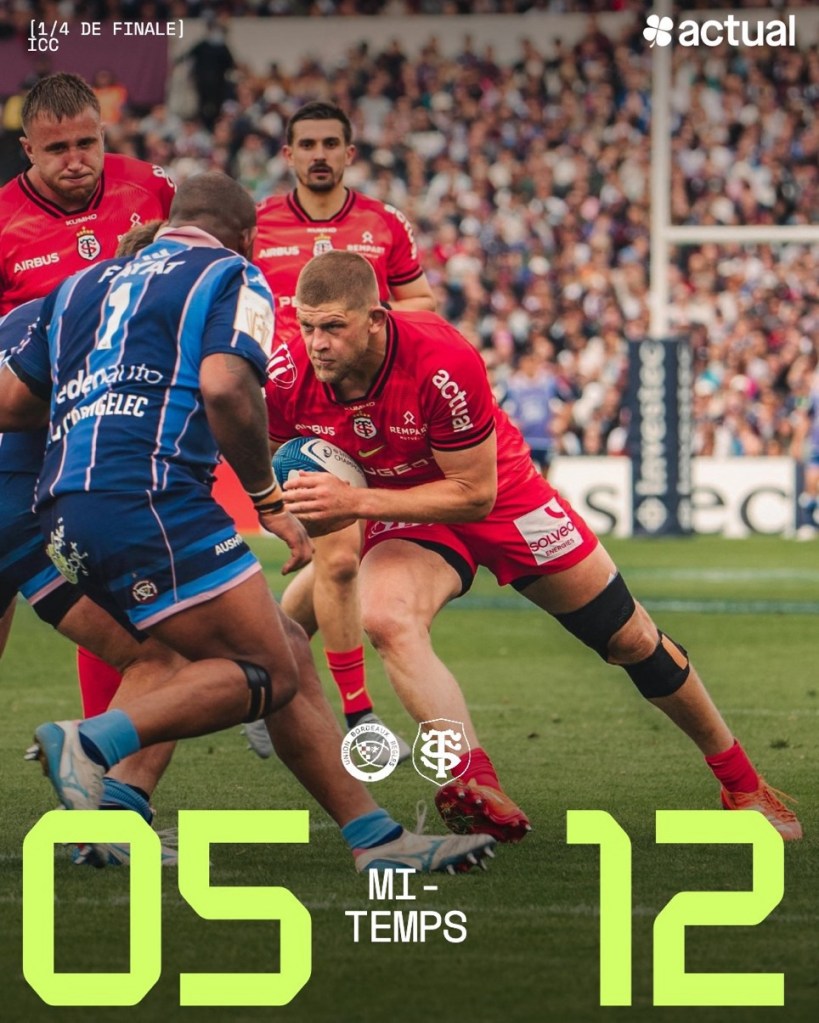
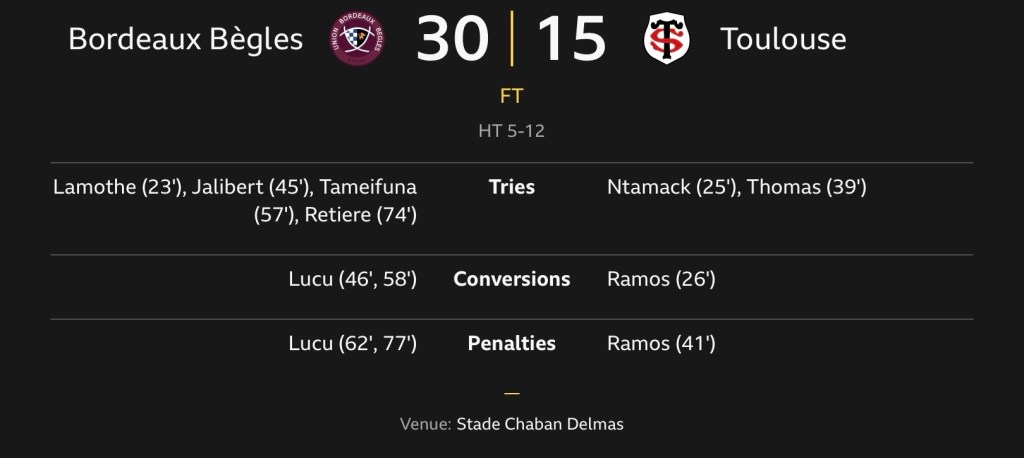
Like a fine vintage poured under pressure, Bordeaux matured beautifully over the course of eighty minutes, turning a tense, tightly corked contest into a rich and full-bodied 30–15 triumph over Toulouse
The first half saw two sides swirling, sniffing, testing. Toulouse uncorked the early notes, with Ntamack and Teddy Thomas adding sharp, fruity tries that gave them a 12–5 lead. Even when reduced to 14 men, they held firm-structured, composed, like a wine refusing to open too soon.
But after the break, Bordeaux began to breathe. The aroma changed. The game opened up—and at the centre of it all was Matthieu Jalibert swirling through Toulouse’s defence with elegance before pouring over for a crucial try. Suddenly, the balance shifted Bordeaux’s blend had found its depth.
Toulouse began to lose their structure. A yellow card for Antoine Dupont added bitterness, and Bordeaux seized the moment. Their pack rumbled forward with earthy power, before full bodied Ben Tameifuna crashed over the try line.
Pulling the strings with the calm of a seasoned sommelier, Maxime Lucu began to dictate territory and tempo. And when Arthur Retiére added the final flourish, it was the perfect finish, long, smooth, and deeply satisfying.
From a first half on the back foot Bordeaux aged into the game, revealing layers of power, finesse, and character. A performance to savour, and one that leaves their European campaign breathing with promise, like a great wine beginning fully mature.
So whilst Bordeaux’s evening glass of Saint-Émilion will have tasted all the sweeter last night, Toulouse will have probably woken up with a bitter aftertaste in their mouths as once again their European dreams were left cast adrift on the banks of the Garonne.
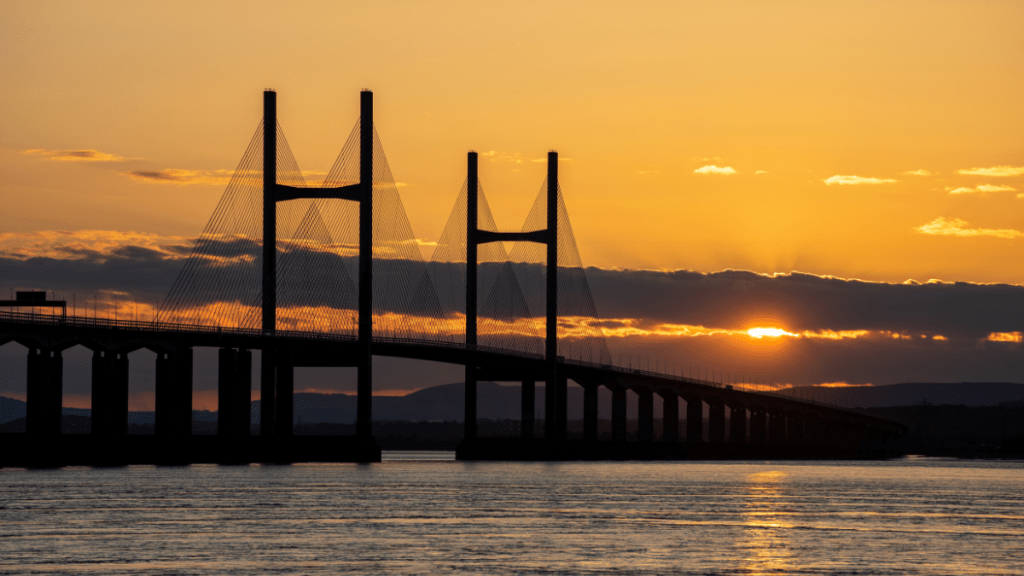
The Severn Bridge is less of a border crossing and more a brief moment of indecision at 70 miles an hour. One minute you’re in England thinking about tea and orderly queues; the next you’re in Wales wondering whether the road signs have suddenly developed extra consonants just to keep you alert.
For a structure built of cables and steel, the bridge carries a surprising amount of cultural traffic. Rugby loyalties, weather complaints, and the eternal debate over whose hills are greener all glide back and forth above the water. The bridge, patient and slightly windswept, simply holds the argument up in the air and lets the tide sort it out below.
Wales rugby fans have recently been swept away on a tide of despair their beloved team lost in its own swirling tides, defeats piling up, confidence fading, the famous sounds of the the Cardiff crowd growing quieter with each passing match.
But this year, something shifted. Not all at once, not in a blaze of glory but in flickers. In moments. In the stubborn refusal to stay broken.
The early rounds were still harsh. Heavy losses came like winter storms, cold and unforgiving. Yet beneath them, something fragile but vital began to grow. Tackles were made with more bite, phases held with more patience, and for the first time in a while, Wales did not look like a team waiting to lose, but one learning how to fight and win again.
In February they were beaten 48–7 by England and 54–12 by France, conceding over 100 points in just two games,a brutal reminder of how far they had fallen.
But even in those bleak scorelines, something subtle began to change. Against Ireland, the gap narrowed to 27–17. At home to Scotland, they lost by just three points (26–23).
The defeats were still there, but there was a subtle change, the losses were edged with resistance instead of resignation, you could see it in the players eyes. Not despair, but defiance.
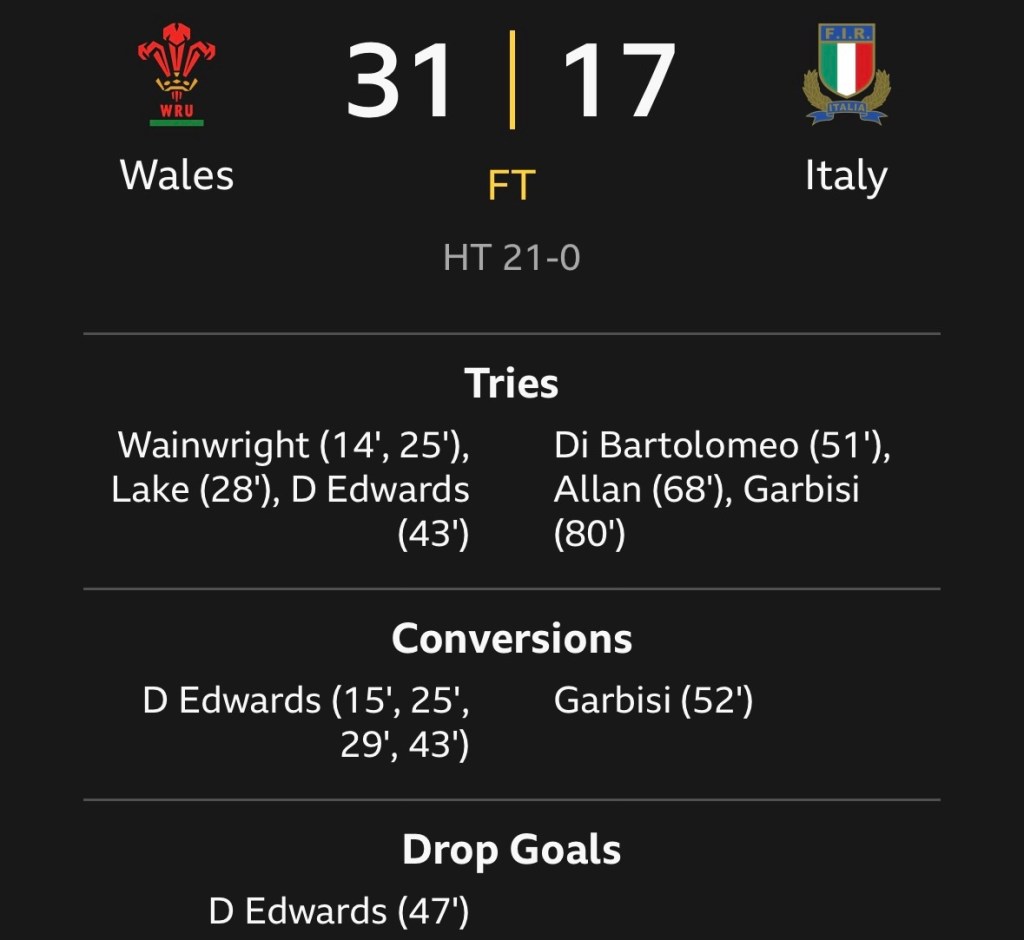
And then, at last, came the moment that felt like a sunrise. Against Italy seven days ago the weight of the past seemed to lift. The ball moved with freedom, the players played with belief. Every try felt like a release, every cheer from the crowd a reminder of what Welsh rugby means not just in results, but in pride, passion, and identity.
When the final whistle blew, it was more than a 31-17 win. It was an ending, and a beginning.
Because this campaign was never really about their place in the six nations table it was about rediscovery. About a young team finding its voice, piece by piece, heartbeat by heartbeat.
Wales may not have conquered Europe this year. But they found something just as important: hope.
Nocturnal France playing at home with the customary post 9pm kick off were favourites against their beleaguered old rivals from across le manche but, there was a Gallic nervousness in the air. French fans do not count their cockerels these days,
The events of the unsuccessful 2023 Rugby World Cup still cast a long shadow in these parts but the previous weekend’s mauling at Murrayfield is in the development stage of being even more traumatic and longer lasting.
For France, le Grand Chlelem is everything. The immensely talented squads of recent years should have achieved far more than they have done, and whilst winning the six nations championship is no mean feat, the mystical clean sweep is a treasured and much vaunted triumph that should have been in French hands much more often.
This golden generation have just one ‘slam’ achieved in 2022 and one other title in 2025. For the wonderfully talented players that have inhabited the glorious blue jersey during the last seven years this is a poor return.
England arrived in Paris from their Roman ruins via Verona not just with their tail between their legs but with it fully docked. On Thursday night Les Bleus left their training camp to watch rehearsals of the ballet of featuring two previous Verona residents Romeo and Juliet at the Opéra Garnier, no doubt in a bid instil some tranquility into a squad chomping at the bit to get back in the saddle.
The fuming frustrated French players having been fed a diet of raw meat and espressos all week were dripping with perspiration and twitching manically before they had even departed the players tunnel on Saturday night.
Defence coach Shaun Edwards’ external jugular vein had finally decreased to safe levels in size and colour as England kicked off in the final game of arguably the best ever Guinness Six Nations Championship. By the end of an extraordinary game goodness only knows what state the poor man was in.
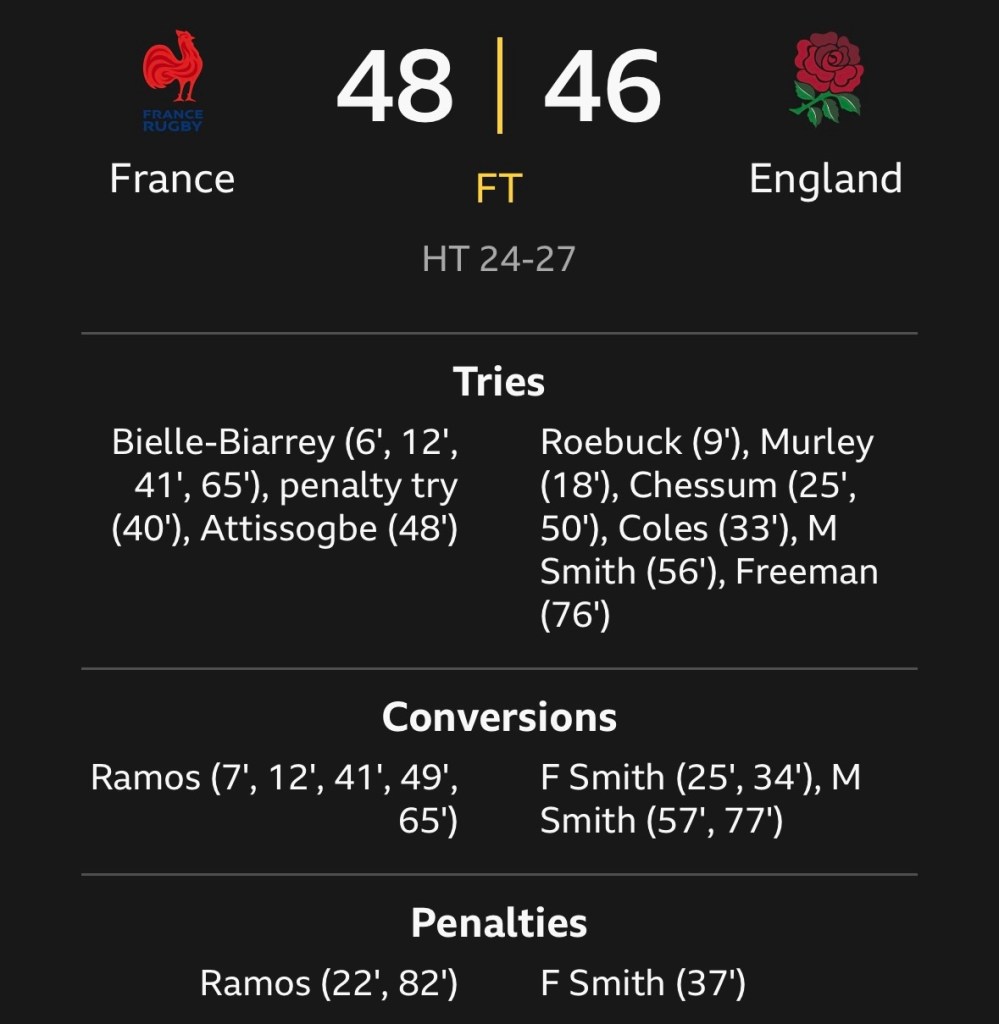
With 82:46 on the clock France were losing 46-45 to the English whilst in Dublin the Six Nations trophy was a breath away from being coated in green ribbons. But one breath was all that France needed to snatch victory and in one exhale, via the right boot of Thomas Ramos, the title was theirs.
48 hours after this epic match despite going through the entire Oxford English Dictionary I struggle to find any words that do justice to this match.
The 2026 title winners were only revealed in the last second of the last match on the last day of the tournament , it can only be only the Guinness Six Nations Championship.
The bond between Wales and Italy is a very close one, particularly in the Welsh capital, and when heading northwards up in to the valleys.
There was a time when every little town and community in Wales had an Italian cafe and an ice cream parlour.
Many of them have now disappeared, or been superseded by multi-national chains, but the memories still remain, not just of the cafes, but also of the people who ran them and how they and their establishments became a centre of those communities.
As Wales and Italy prepared to battle it out, Cardiff’s wealth of Italian eateries filled up, Giovanni’s, Da Mara’s, Stefano’s and Antonio’s provided a conveyor belt service of antipasto, meatballs al forno and pizza.
The whole of Wales hoped their men would stir to avoid a third consecutive Guinness Six Nations whitewash a hope that was accompanied with a hint of expectation following two encouraging performances against Scotland and Ireland.
Optimism in Cardiff yesterday may have centred around two crucial factors. one-that the Italians had indulged in a few Peroni’s too many after their historic win over England in the eternal city and, secondly that the blistering pace and balletic footwork of Rhys Bielle-Carre, the new Welsh folk hero, would prove too much for the blue defensive wall.
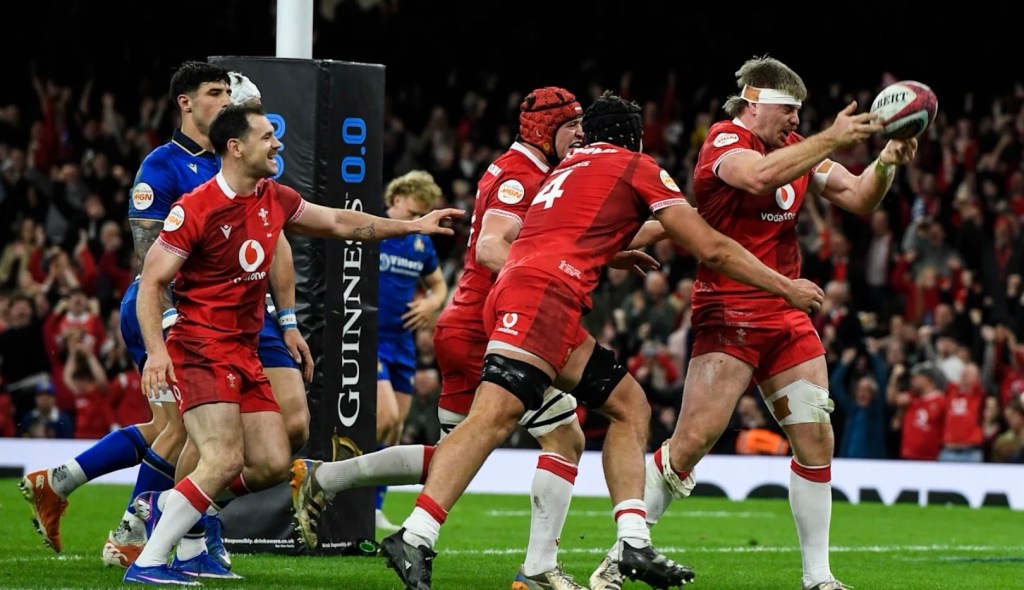
On the final day of a Six Nations championship where the only thing predictable has been its unpredictability, Wales finally ended a three-year Six Nations losing streak in glorious style with a bonus-point win.
Number eight Aaron Wainwright crossed for two tries with a further score from captain Dewi Lake. Impressive fly-half Dan Edwards finished with 16 points, including a try and a drop-goal, as Wales romped into a 31-0 lead.
For once Welsh fans could actually sit on the sofa rather than crouch behind it. With a big lead even Italy’s comeback did not create the usual gut wrenching nerve jangling last ten minutes usually associated with any Welsh win.
The win did not prevent delivery of the wooden spoon but the fact that Wales stirred so magnificently softened the blow immensely.
This performance compared to the opening day surrender at Twickenham was chalk and Mozzarella. Wales have not only found the tunnel they also appear to have seen the light at the end of it.
On a Spring Sunday morning with the sun shining and a Wales win racing around your head things feel pretty good, and after a dark grim Winter, I think we’ll settle for that.
There is something about Murrayfield that disturbs the French psyche. Media in France often label trips to Edinburgh as a piège (“the trap match”).
For generations, visits to Murrayfield have carried a particular sense of unease for the French. While Scotland have not always entered these fixtures as favourites.
These encounters in Edinburgh have repeatedly ruined French championship ambitions and produced some of their most frustrating defeats in modern Six Nations history.
The reputation is not built on myth. A combination of conditions, atmosphere, and history has gradually transformed Murrayfield into one of France’s most uncomfortable away venues.
Many times France have arrived in Edinburgh with Grand Slams and titles on the line only to be sent home to réfléchis encore.
In 2006, France arrived a Grand Slam within reach and confidence sky high. Difficult weather conditions and a fiercely physical Scottish performance dragged the match into an attritional contest that neutralised France’s attacking strengths.
Scotland won 20–16. In France, journalists increasingly began referring to Murrayfield as a terrain maudit, a cursed ground, where French fluency seemed to disappear.
In 2020, it was a similar story a 28–17 defeat effectively halted France’s championship surge and reinforced a familiar narrative.
But this current crop of bleus brothers arrived in the Scottish capital with only rugby hand luggage and thought they had left all that historical baggage in lost property.
They departed homeward with the weight of the world on their shoulders following a match that defied belief, expectation, and anything realistically predicted.
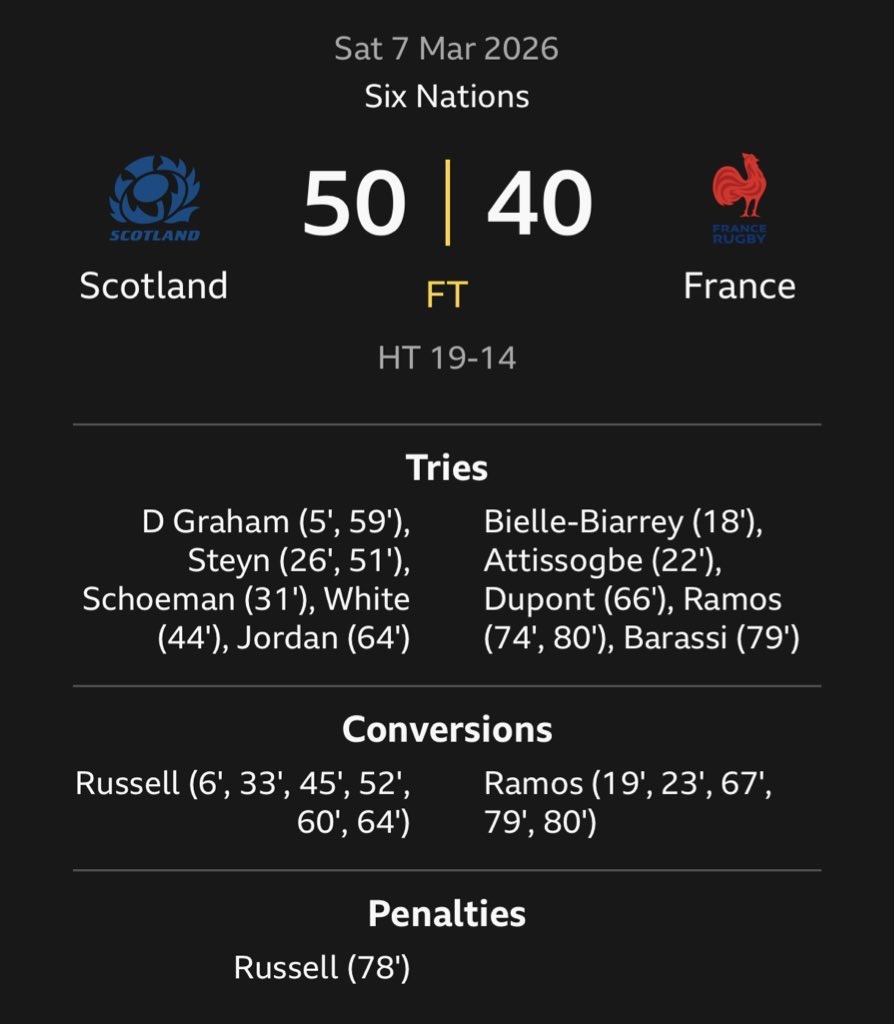
90 points and 13 tries are the incredible bare statistics of a match that emphasises what a wonderful and unpredictable tournament the Guinness Six Nations is.
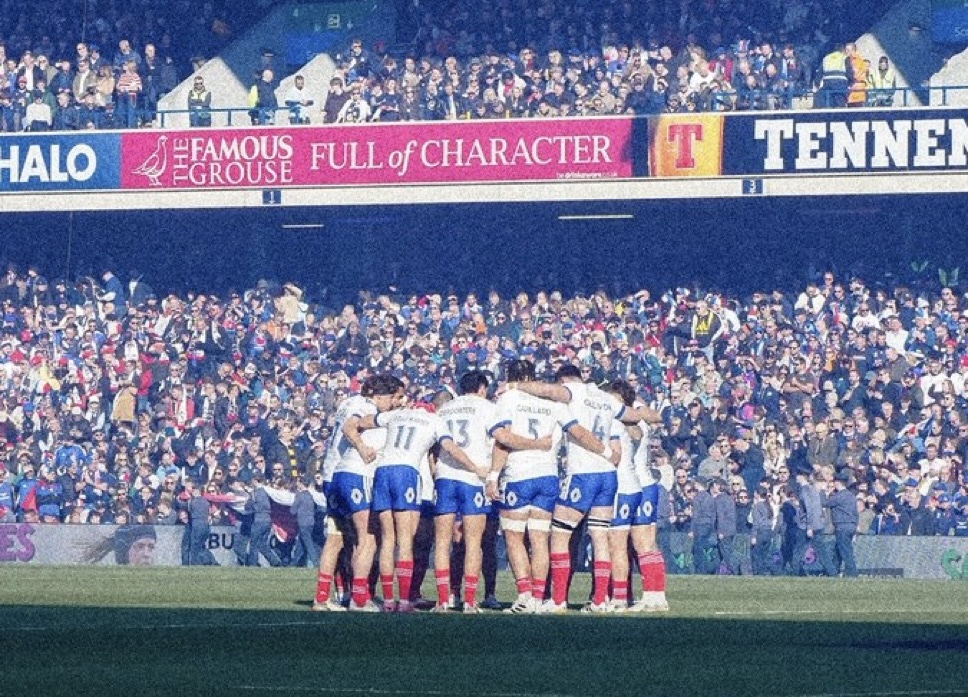
White shirted France with 15,000 of their fellow countrymen occupying the Murrayfield stands appeared to be blinded by the Scottish sunshine in a first half.
The unusual weather was not the only surprising factor as the French scrum creaked and the home backs outshone their illustrious counterparts.
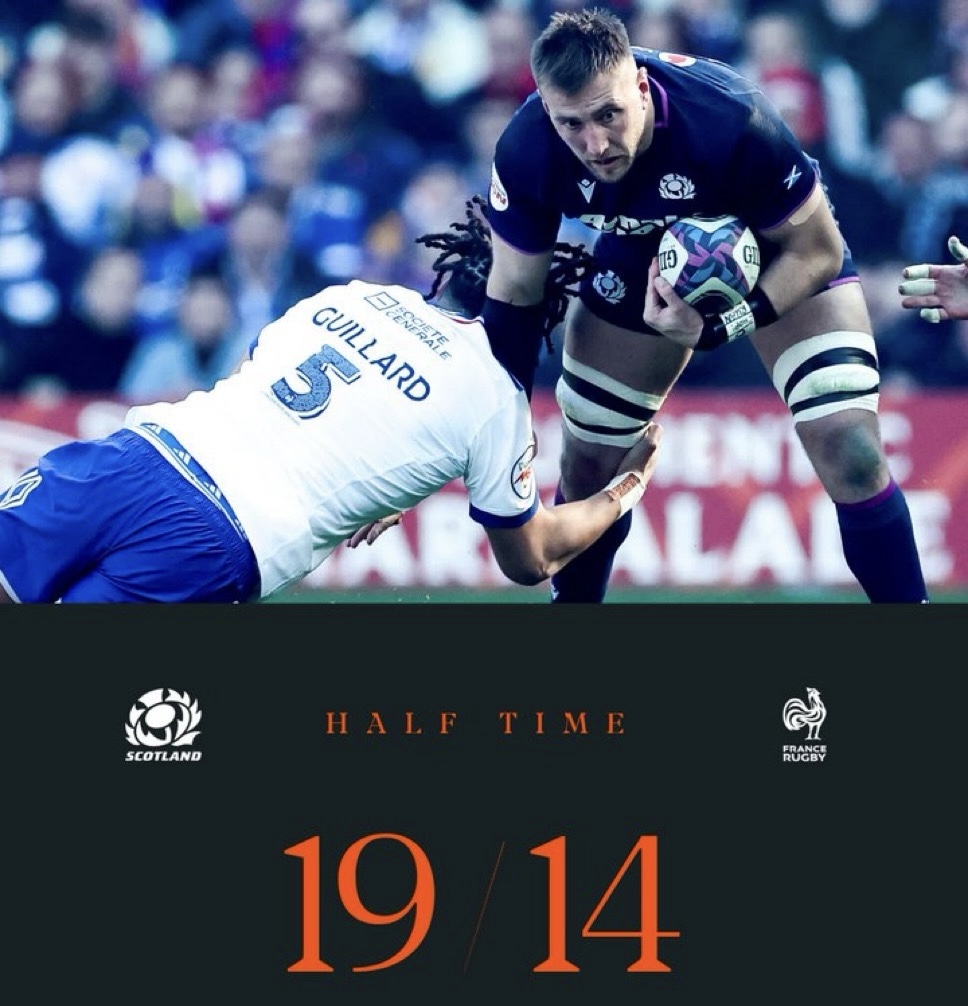
Trailing 19-14 at half-time, surely the real France would come out for the second half, but the real France were nowhere to be seen, even the great Antoine Dupont was looking flustered and making uncharacteristic errors.
It was only when Scotland led 47-14 that France found their mojo. Four tries in the final fourteen minutes made the scoreboard respectable and ensured the visitors gained a try scoring bonus point that could prove crucial to their championship hopes, which despite the 50-40 defeat are still alive and kicking.
Only Scotland, Ireland, or France can now win the 2026 Guinness Six Nations championship. In next Saturday’s final round of matches, Scotland and Ireland face each-other at 14:10 GMT, before France host England in the final match of the tournament in Paris (20:10).
A bonus-point win for Scotland would mean the French need the same to deny them the title.
Ireland, too, could still claim the title with a victory over the Scots and a favourable result in Paris. The way this Six Nations has gone so far, be prepared to expect the unexpected.