Bleus And Bouchons As France Beat Italy In Lyon

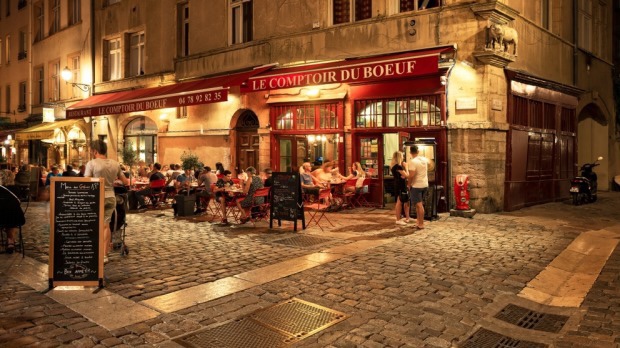
Lyon I discovered is not a place for the gastronomically feint hearted. Bouchons are traditional lace-curtained, wood-lined little bistros particular to Lyon, a city often called the “stomach” of France. They began as local inns that sprang up to serve simple home-cooked meals to the Lyon’s silk workers (les canuts), in the 18th century. By the period between the world wars, the bouchons were run by “les meres”, formidable women who had worked as cooks for the wealthy bourgeois families of the region. Their menus were local, their tables check-clothed, with humble rooms humble, and relatively small bills.

The bouchon is all about tradition. Their ethos is that to dine properly, you must surrender to the god of pork fat, giving yourself over to it with full heart and empty belly. Well my heart is probably fairly full already, but not necessarily of good material, so my pre-match meal was of a much lighter variety.

Tonight’s Group A encounter between France and Italy was effectively a knock-out match, with the winner progressing to the quarter finals, and the loser heading out of the tournament.

Fabien Galthie’s men made their final road show stop at the Groupama Stadium, via Lille and Marseille, before heading north to join the bedbugs of Paris for the knock-out stages.

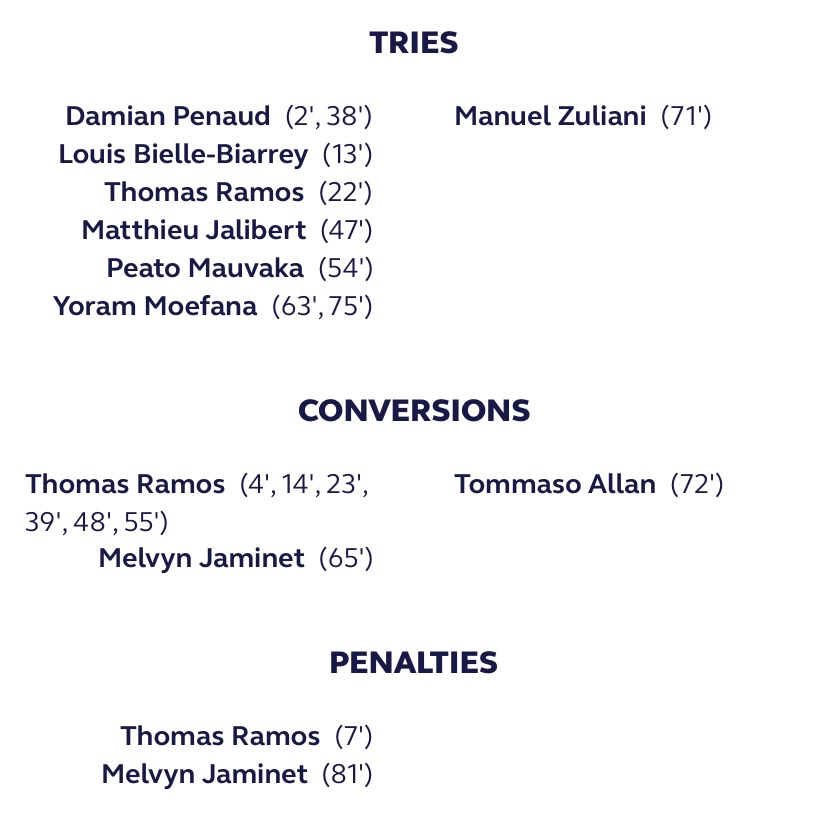
It took just over a minute for France to score their first try as their forwards steamrollered Italy to create a wonderful touchdown for none other than Damian Penaud.
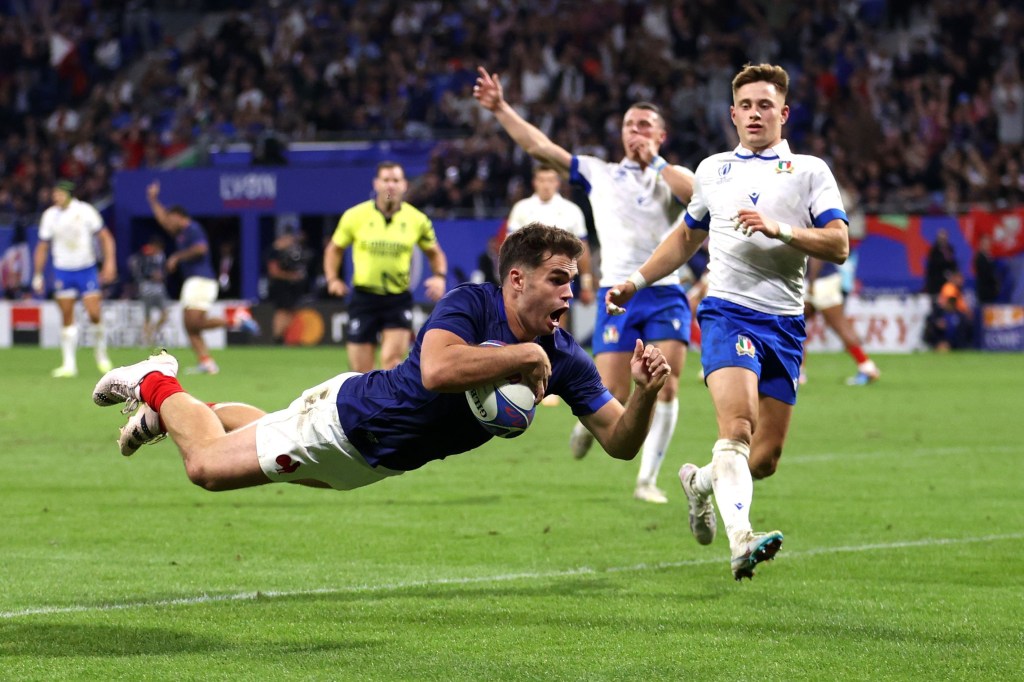
The power, pace and accuracy of France was evident from minute one, and four first half tries gave them a bonus point after 37 minutes and a 31-0 Half time lead.

Roared on by a racous home crowd France started the second half as they did the first. Jalibert’s 46th minute try was followed by touchdowns from Mauvaka and a Moefana brace

Italy’s error count was as astronomical as France’ ruthlessness, and the final score reflected both elements. A late consolation try for Manuel Zuliani was a small crumb of comfort for the Azzuri.

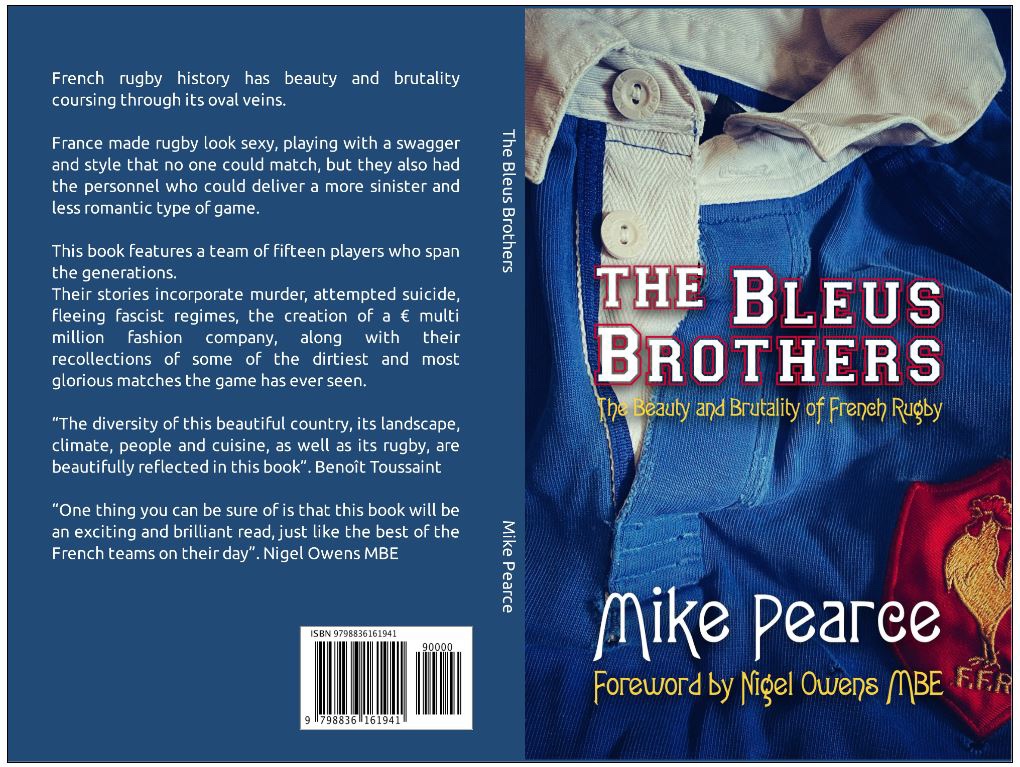
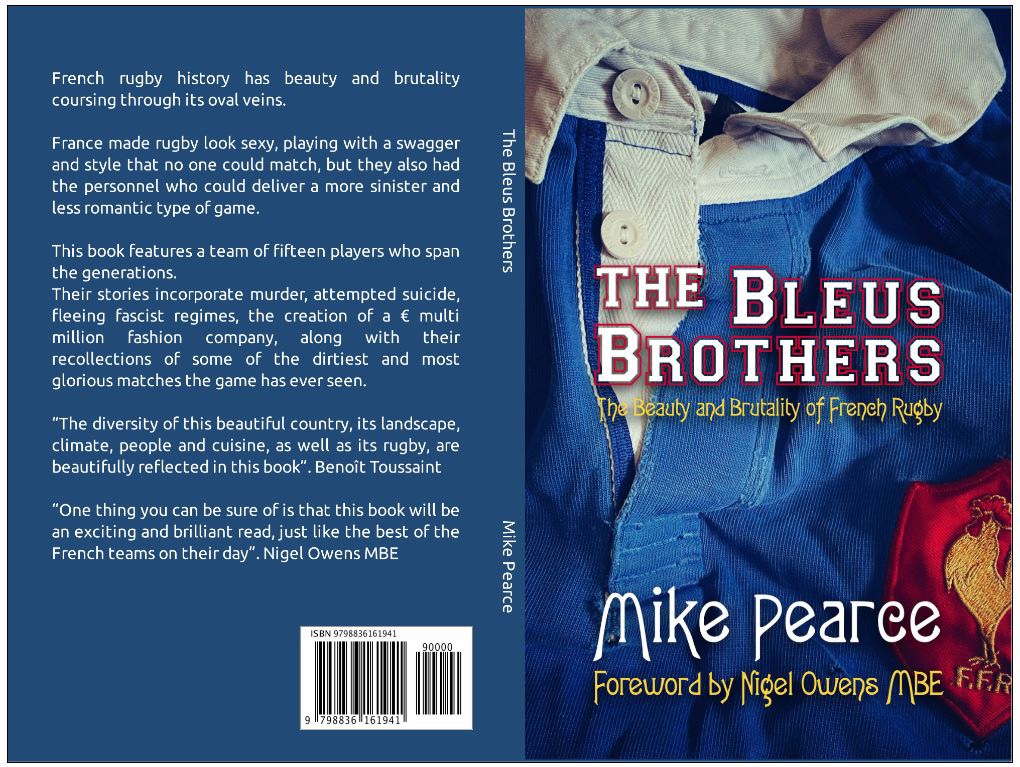
My book is available via this link for only £7.99 post free
https://amzn.eu/d/6H8pN8D

Malbec Merlot And Muscadet Argentina v Chile In Nantes

Mendoza, nestling at the foothills of the Andes is one of Argentina’s most important and spectacular wine regions producing the Malbec grape. Its vineyards sit at high altitude and have become the adopted home of a French grape variety that failed to flourish in its homeland in quite the same manner.

The history of Malbec in Mendoza can be traced back to the 19th Century when cuttings were first brought over from France over to Argentina.

With Argentina facing Chile in Nantes the battle of two wonderful wine producing countries was bound to produce something tasty. Two tasty reds facing each other in the home of a delightful dry crisp white, if there were a wine World Cup then Malbec, Merlot and Muscadet would be a tough trio to beat.

The whine really flowed following the Pumas abject display in their opening match against England but they recovered with a 19-10 win over Samoa.

Chile have a different rugby pedigree but they have won many friends at this World Cup with their derring-do attitude, and to play their South American amigos at the Stade de la Beaujoire was something very special, an experience to recount to their children and grandchildren, tales that will no doubt get taller as the Merlot gets shorter.

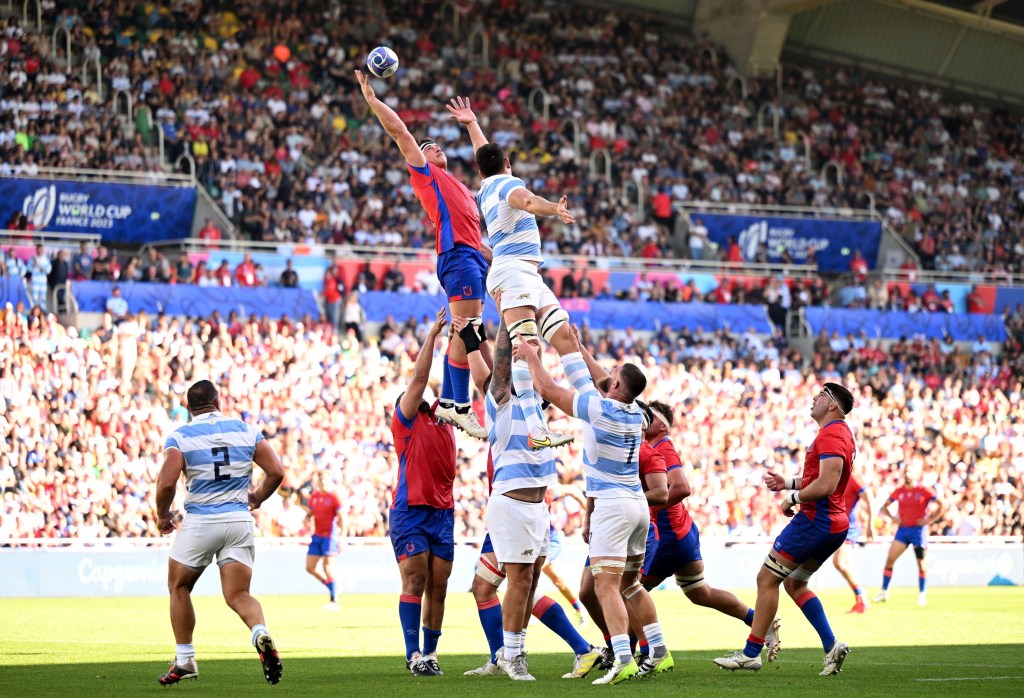
This was the first ever Rugby World Cup match between two South American teams.

The beautifully named Perpignan centre Jerónimo de la Fuente captained the Pumas on the occasion of his 77th cap, and with players from Clermont, Toulon, Racing, Bordeaux and Toulouse in the Argentinian line-up there was plenty of home interest in this Latin rugby fiesta.

Chile may lack experience at this level, but with 27 players out of the 33 man squad playing for the same club, Selkham Santiago, they were certainly not short on familiarity.

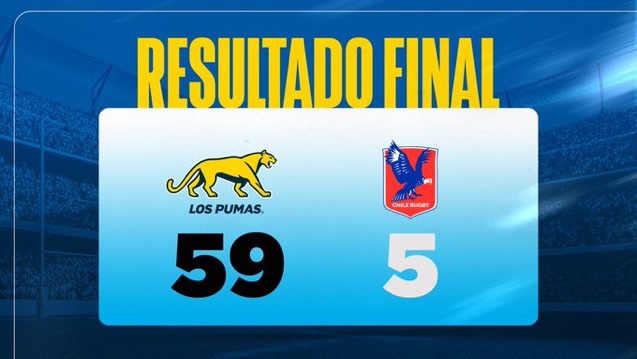
An eight-try 59-5 victory in Nantes means the Pumas return to second in Pool D, level on points with Japan, who they will face next week, the winner of that match will qualify for the quarter finals.

But the biggest cheer of the day from the raucous Latin crowd came in the 73rd minute when Tomas Dussaillant crashed over for Chile’s solitary try.

The Condors fly home with their heads held high having made many new friends and admirers. There were a few glasses of Malbec, Merlot and Muscadet raised in the wonderful bars and restaurants of Nantes on Saturday evening to toast a colourful heart lifting occasion under beautiful warm sunny French blue skies. This is what the Rugby World Cup is all about.

My book available for only £7.99 via this link
https://amzn.eu/d/6H8pN8D

Antoine Dupont The Waiting Game

Early Friday morning in Marseille, as I trudged wearily from the Vieux Port uphill to Gare St Charles for my train to Paris, the usual sunny blue skies had been replaced by grey somber clouds, dampness was in the air, it was as if light tears were falling from the sky.

As the lights of the cafés pierced the mirky gloom, the locals yawning wearily to work were talking in hushed tones about the match the night before, one that had given us all an emotional battering, taking us from wonderment, to concern to sadness, all in the space of eighty minutes.

On a day when Pope Francis was due to visit the southern port, there were more people than usual saying their prayers, most of them centred on one individual, Antoine Dupont.

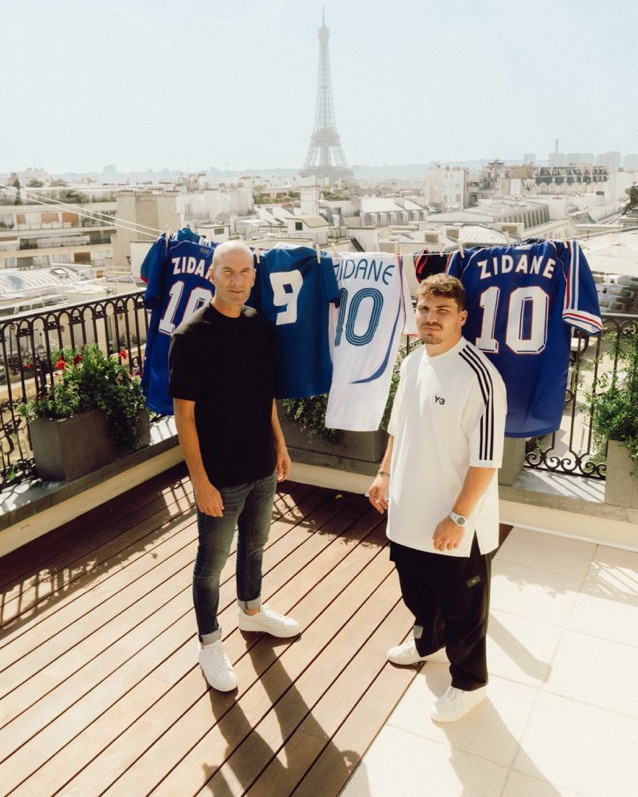
There are certain participants in global sporting tournaments that stand head and shoulders above the rest. Jessica Ennis at London 2015, Pele at the 1970 FIFA World Cup, Zinedine Zidane at France 1998, their faces appeared everywhere and their involvement, the true greats that they are, enhanced those sporting landscapes.

The Rugby World Cup in France has Antoine Dupont adorning station concourses, bus shelters and every available billboard.

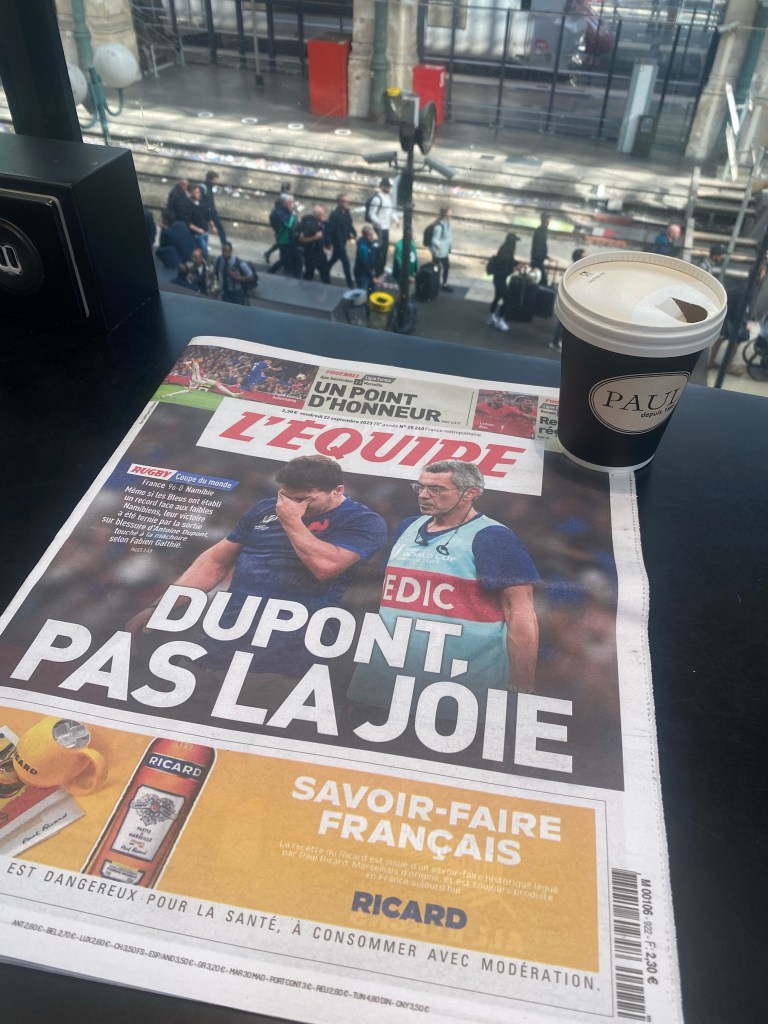
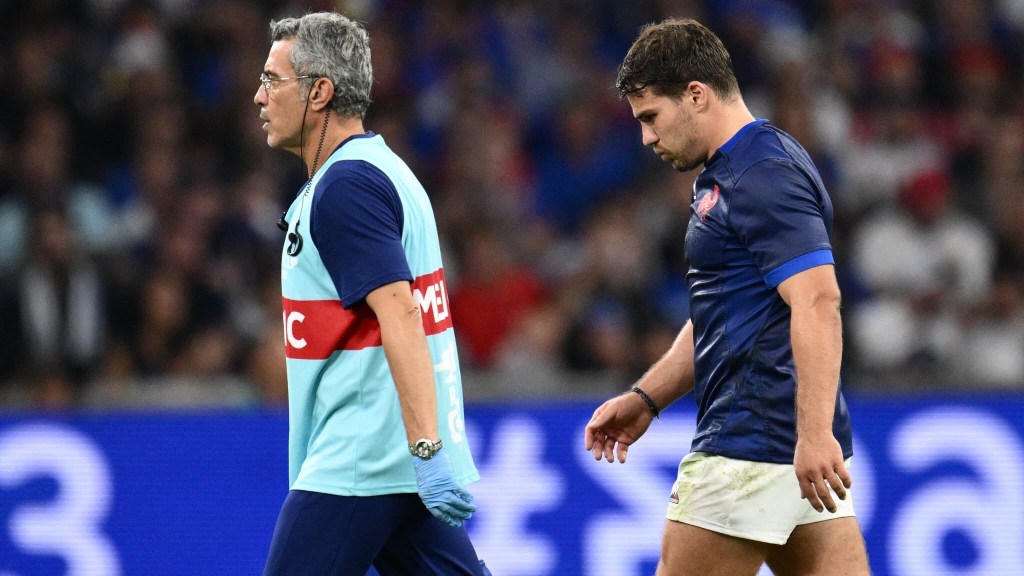
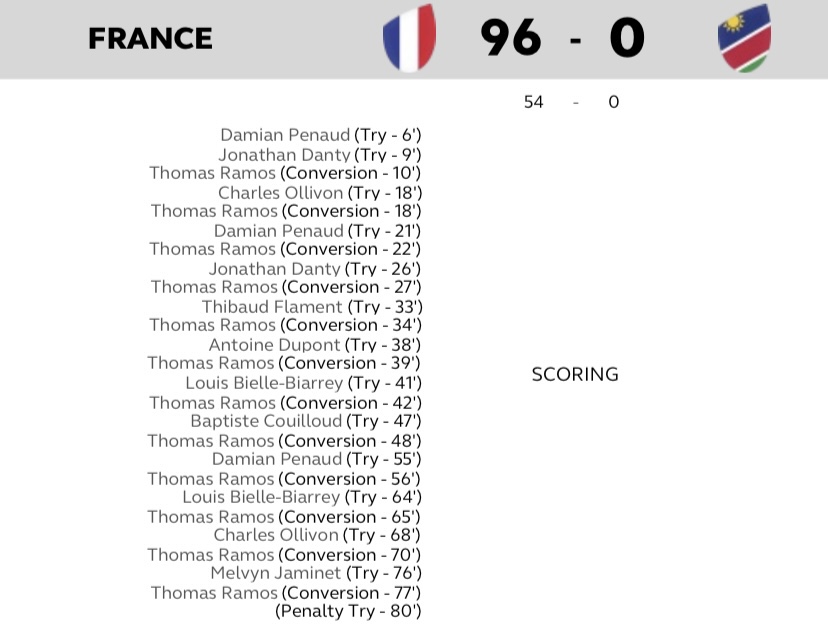
In the glory of France’ 96-0 win over Namibia, where Dupont was at his glorious best, a clash of heads with Namibia captain Johan Deysel, could have ended his tournament.

Friday’s front pages in France had only one story, and the image of the diminutive scrum half leaving the field of play in tears reached out from the news stands. Pope Francis had been relegated to page two.

The collective angst waiting for a medical diagnosis was unsurpassed, social media was awash with pleas for updates, fingers and toes were crossed for a medical outcome that would at least give the scrum half a chance of recovering in time for the latter stages of the tournament.

By Sunday the full chain of events had become clear.

Dupont was taken to the Private Hospital of Provence at 1am on Friday morning direct from the Orange Velodrome with the French team doctor and accompanied by his brother Clement following a police motorcycle escort.

He was desperate to see his team mates and returned to the France team hotel in Aix for breakfast where he managed,despite the pain, to digest some protein shakes and yoghurt.

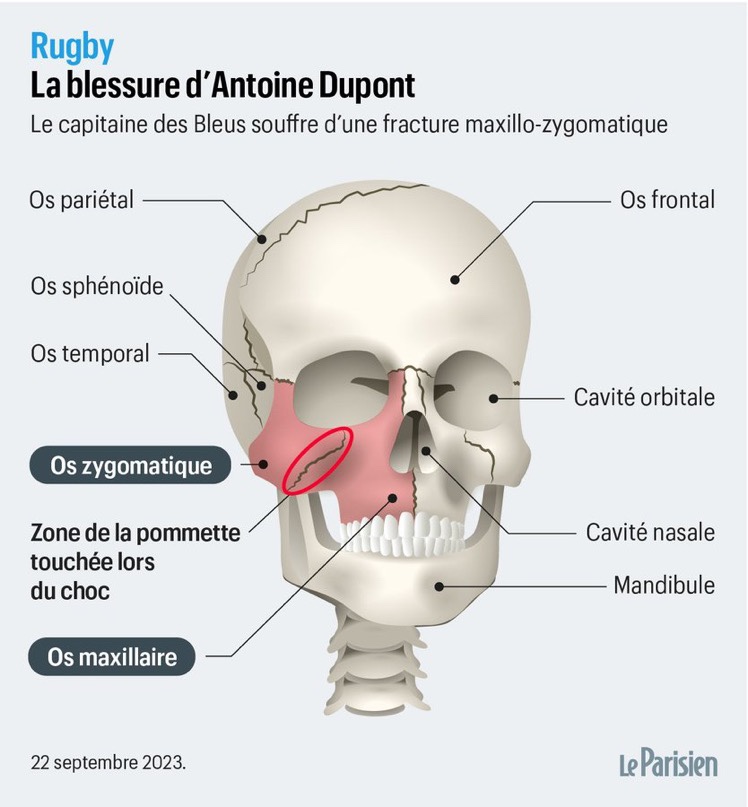
Dupont then travelled from Aix to Toulouse where at 6pm he saw Professor Nicolas Sans,who after an MRI scan confirmed a Zygomaticomaxillary complex fracture resulting from blunt trauma to the peri orbital area.

At 11pm on Friday night, Dupont underwent surgery at the CHU Purpan hospital in Toulouse. A titanium plate was inserted by Professor Frédéric Lauwers, a surgeon specialising in maxillofacial traumatology who had already operated on Romain Ntamack after the double maxillary fracture he suffered in 2020. Dupont left the theatre at 2am.

There are hopes that the scrum half “could” be fit for the quarter finals, mere mortals take around six weeks to recover from this type of injury but as we all know “Toto” is way above mere mortal status.

More medical appointments are scheduled this week to discuss the option of wearing a protective mask, and Antoine will definitely return to limited training with the France squad on Thursday.

Maybe page two’s Pope Francis has had a quiet word with his boss, we shall find out in a few weeks time. A nation is holding its breath.

Wales Reap Rewards On Fields Of Gold

Wales and Australia have been familiar foes in the professional era. Having personally lived through many days of humiliation from Messrs Campese, Gregan, and the hundreds of Ella brothers, recent history has been somewhat kinder to the men in red.

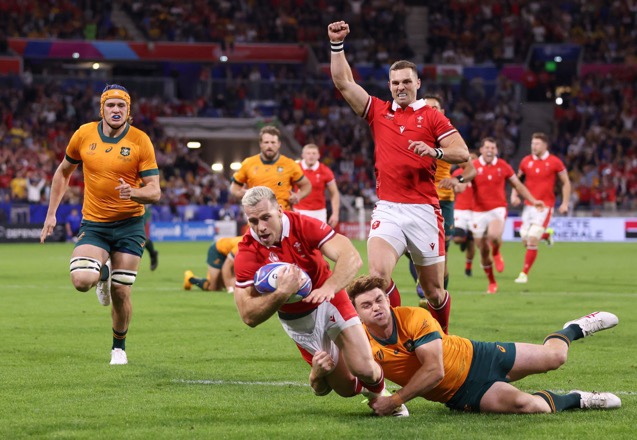
Wales wonderful win over the Wallabies at the last Rugby World Cup was a truly memorable one, and yesterday in Lyon the two teams met once again to effectively decide qualification for the knock-out stages of RWC 2023.

Wales needed a win, any old win to guarantee a place in the quarter finals, but surely no one in their wildest dreams anticipated the performance that emanated from the men in red, and indeed the margin of victory.

Australia were poor, but Wales gave an eighty minute accurate, precise and intelligent performance, and after the year they’ve have had, on and off the field, this was bread of heaven and it fed us until it would have been greedy to ask for more.

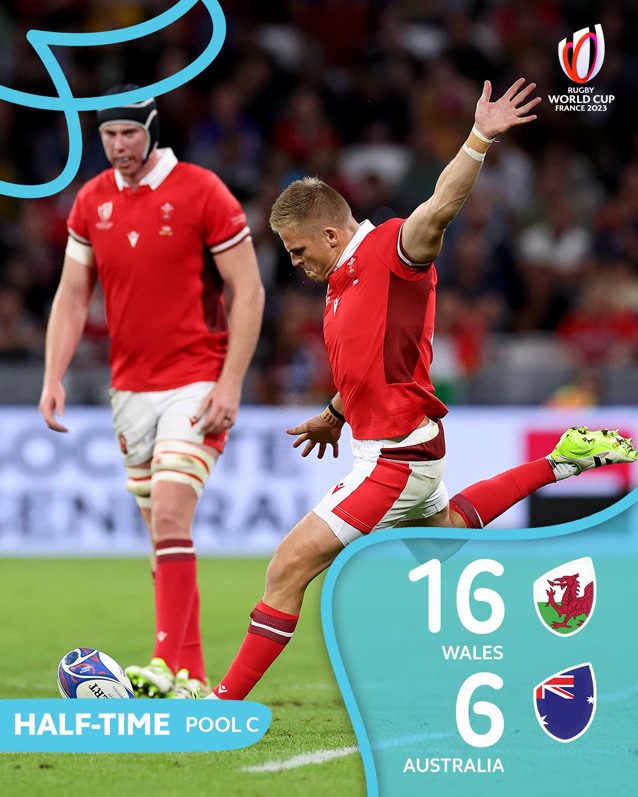
The feast began after three minutes when a superbly executed try from Gareth Davies got Wales off to a flying start. A 16-6 half time lead built by the boot of Gareth Anscombe was a nice little cushion to build on in the second period, and boy did Wales build on it.

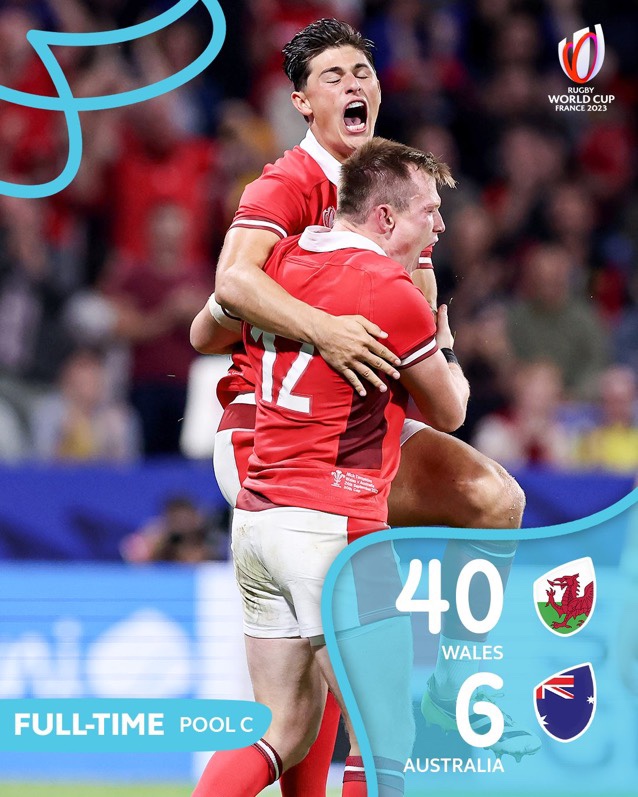
Nick Tompkins 48th minute try and the metronomic boot of Anscombe gave Wales a 32-6 lead with twenty minutes remaining.

This is normally the time when we Welsh retire to our default location, behind the sofa, peeping through our fingers, but for once, like a pit pony glimpsing daylight, we were drawn to a comfortable seat front of house basking in a victory that was already in the bag.

A 78th minute Jac Morgan try applied the coup de grace and Wales headed to the quarter finals with a game to spare.

Pre tournament no hopers to the the first guaranteed Quarter finalists is some journey, and whilst many Wales fans missed the start of this match stuck on the Lyon trams, there is no doubt that Wales are on track, and poor Australia have gone off the rails.

Midnight In Marseille France v Namibia

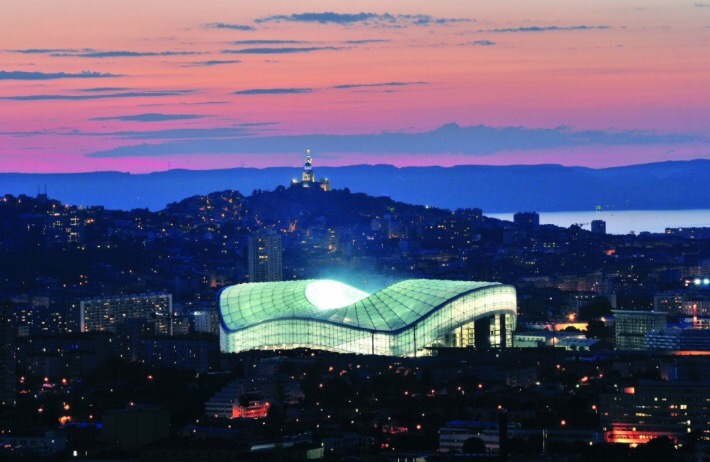
It is midnight at the Orange Vélodrome in Marseille, the distant twinkling lights high in the mountains behind the stadium flicker through a veil of thundery mist as Thursday night reaches gently into Friday morning.

France’s Rugby World Cup caravan came south tonight from Paris via Lille to the balmy Mediterranean, and what a welcome it received.

The African coast is the next southerly landmass from this ancient port, so it was fitting that the host nation entertained the African qualifier Namibia in this Group A pool match.

To hear “La Marseillaise” sung in Marseille is something very special. As stirring a national anthem as you could wish for.

When you hear it sung at the Stade de France, the hairs on the back of the neck stand on end and a shiver goes down the spine.

But I have noticed the further south the anthem travels, the more passionate it is sung. When it down gets here to the south coast it swirls and echoes around the Orange Vélodrome and with the mountain tops visible through the gaps in the grandstands, it is an utterly glorious experience and last night it was extra special.

The temperature also appears to affect the tempo that the anthem is played at. In Paris it can be slow, but it accelerates the further south it travels so by the time it has reached Marseille, the transformation from “largo” to “allegro” is complete.

Tempo was something the boys in bleu were anxious to stick to, following a tricky time up north against Uruguay in their last match.

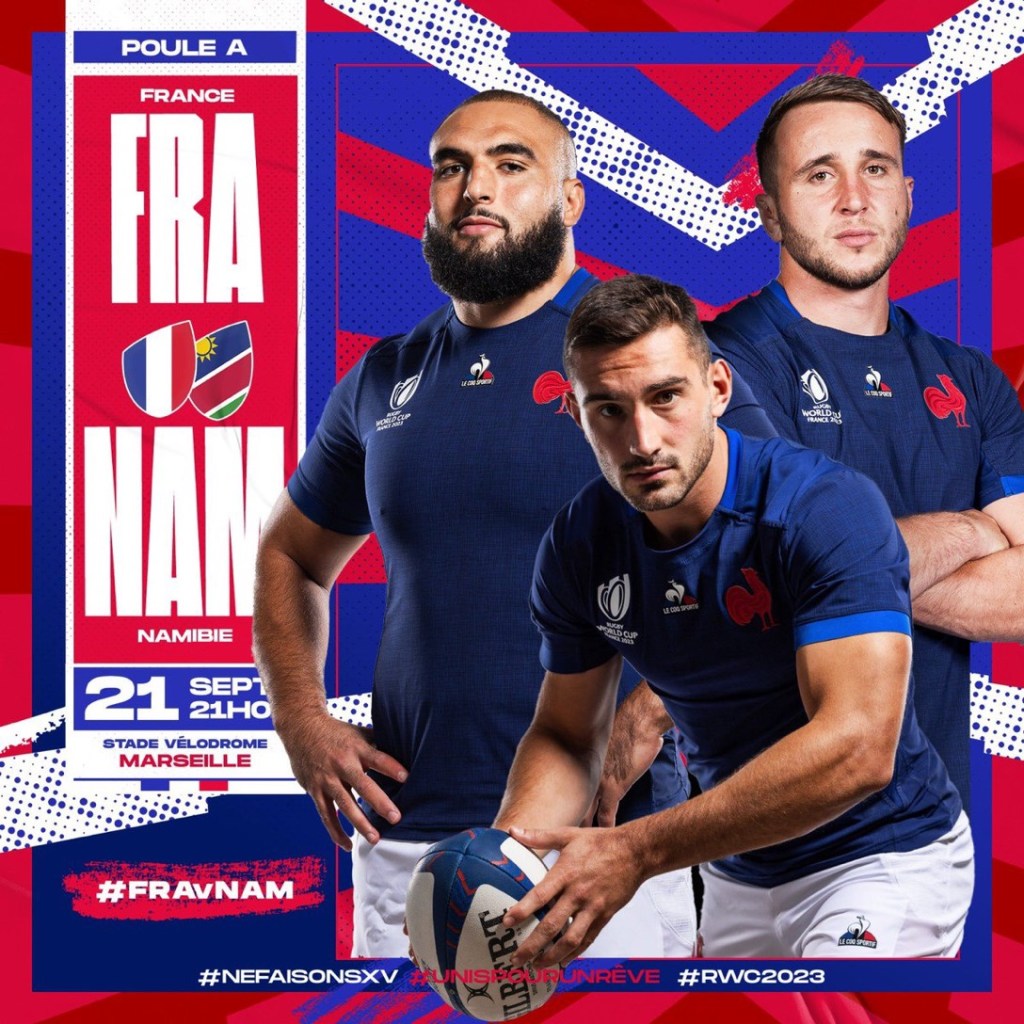
A fervent capacity crowd roared France on from the start and the boys in blue responded with a 6th minute try from Damian Penaud. 13 tries later it was a 96-0 win for France.

In between we witnessed rugby from the gods, one handed spin passes from Dupont, sleight of hand and angles of running that would have had a maths teacher purring.

But those rugby gods can be cruel and Johan Deysel’s red card for a head shot on Antoine Dupont could be a massive downer on a massive win.

There’s a suspicion of a crack or fracture in his jaw,” Galthié said. “He’s gone for tests. We’ll wait for the results before moving forward. We need to take advantage of this great victory and the players’ fine performance.”

The concern over Dupont muted the celebrations down at the Vieux Port, and Galthie must be in torment for not taking him off at half time when France were leading 54-0, but for now after a wonderful show down south a nation holds its breath.

https://amzn.eu/d/6H8pN8D
Wales Rugby World Cup Winners By Design

It’s not just on the field where Rugby World Cup’s are won and lost, it is also off the field where capturing hearts and minds is an essential ingredient.

Whilst Wales rugby players have had a mixed reception on the field, the Welsh Rugby Union design team have been peerless off it.

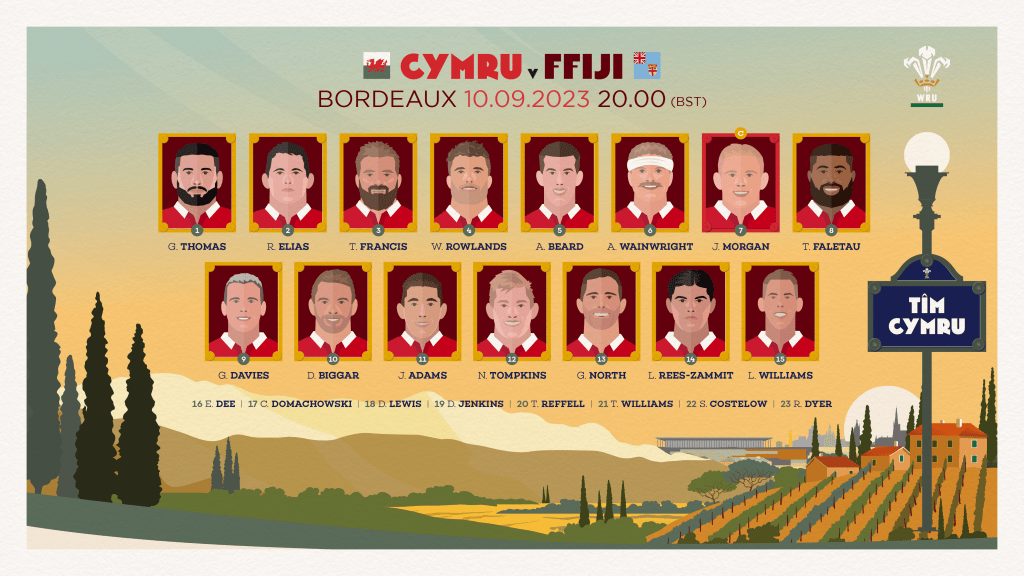
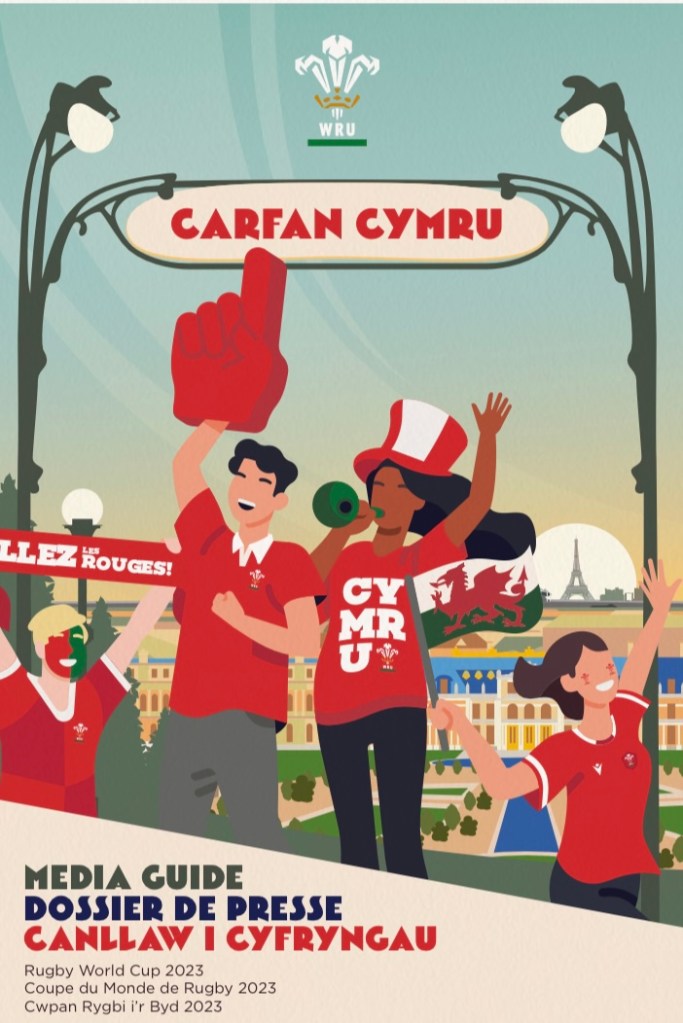
Their colourful and imaginative graphics have been the talk of the tournament and quite frankly no one else has come close to matching them.

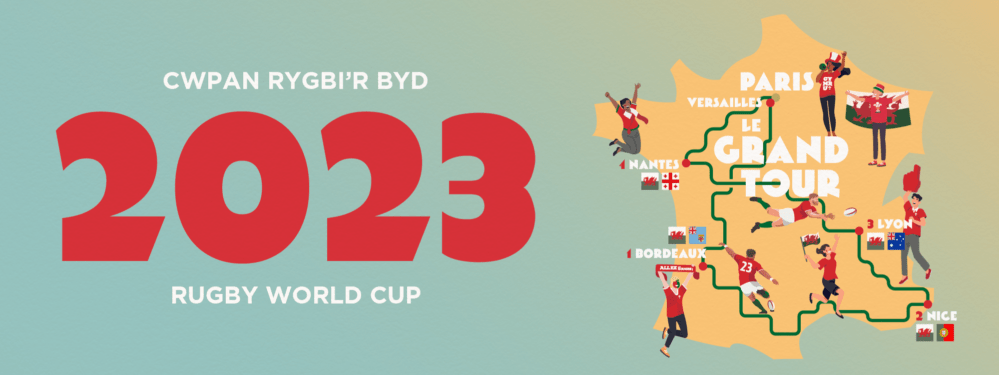
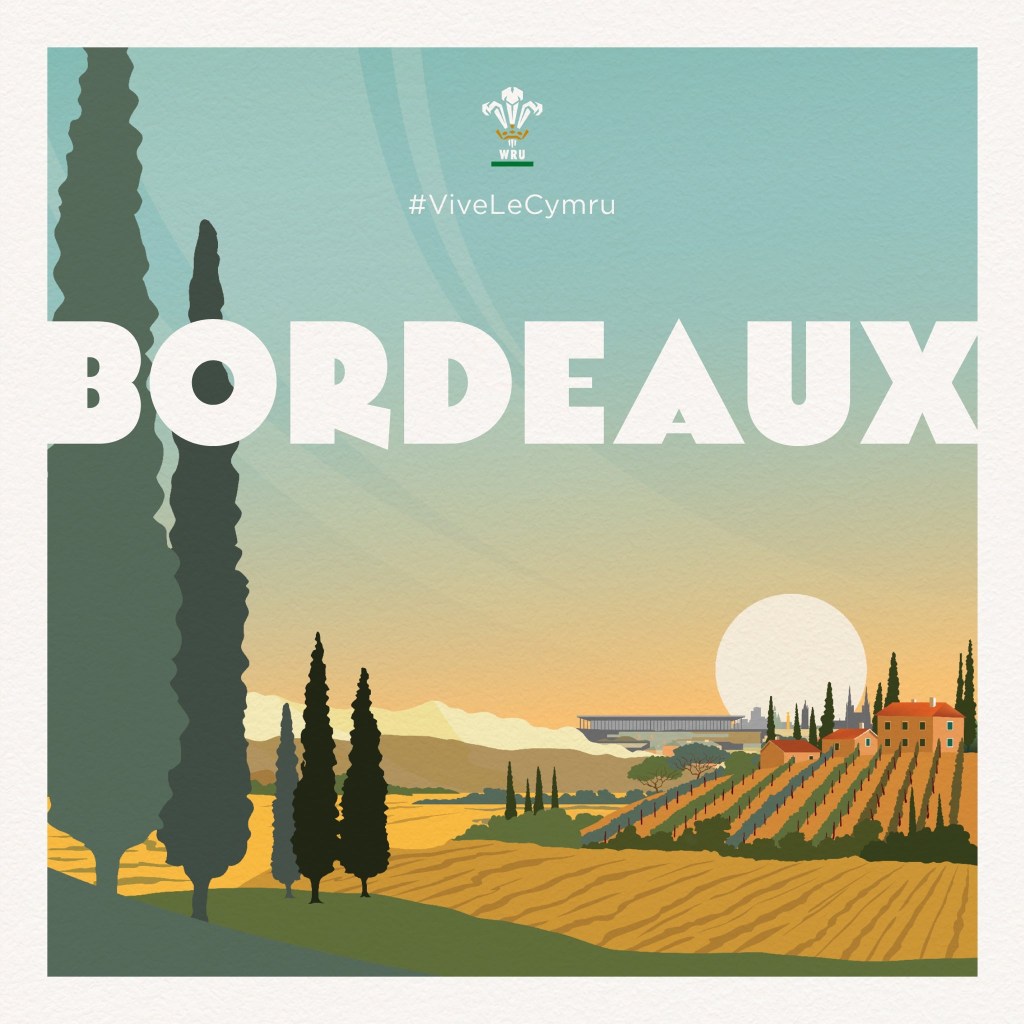
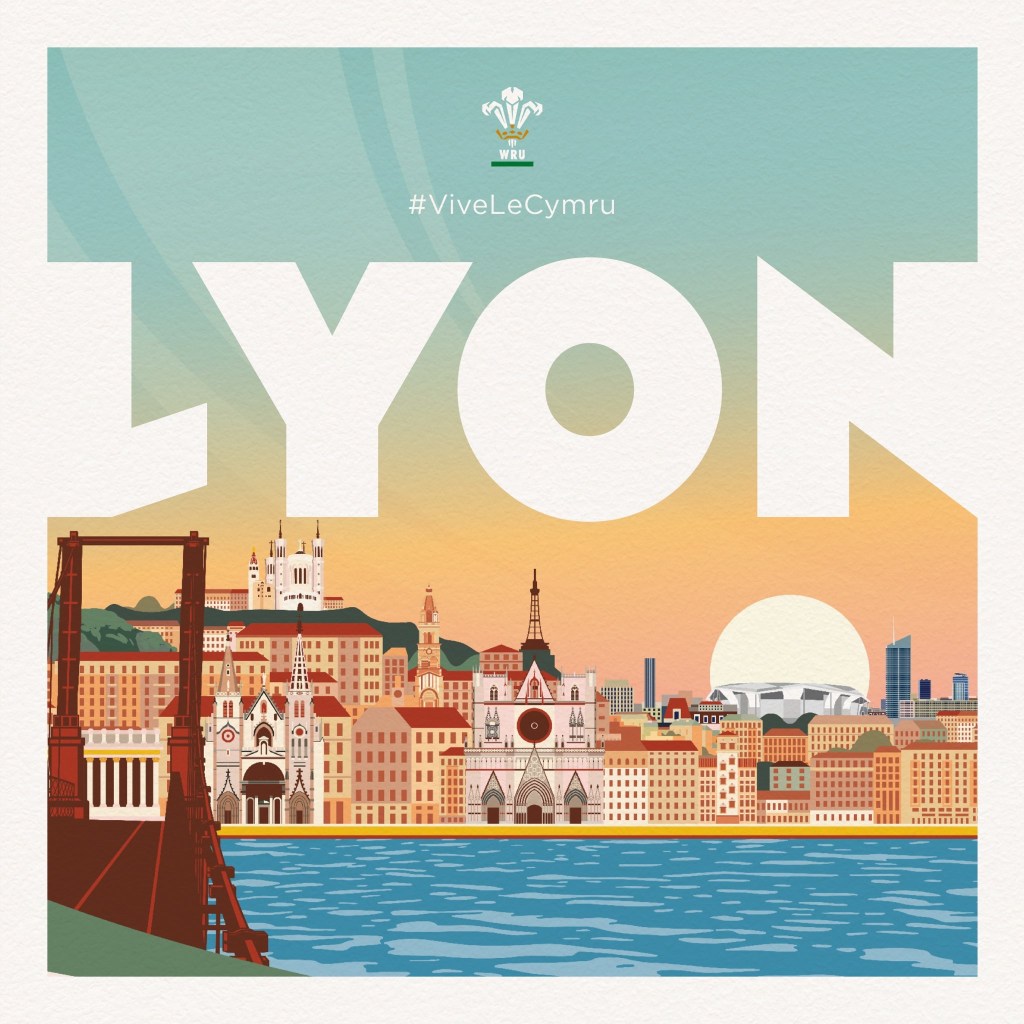
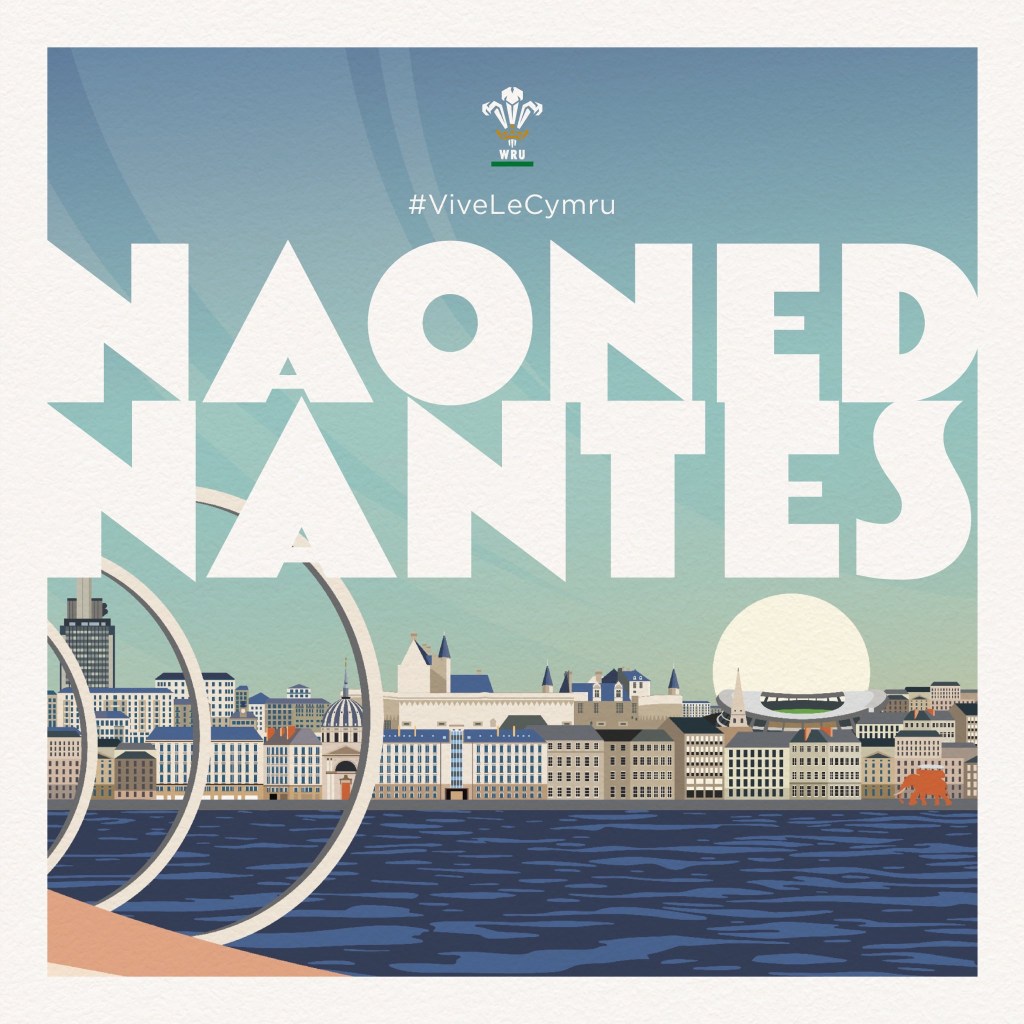
In Marseille French journalists were waxing lyrical about the beauty and colour of the Welsh graphics and what a wonderful advertisement it has been for Nantes, Nice, Bordeaux and Lyon the cities where Wales have played their pool games.

The team announcements have been given added colour and impetus and even the guide for us old hacks in the media has reflected the wonderful theme created by our people back home.

Plus the bi-lingual aspect has helped promote the Welsh language, something that the WRU have made it their mission to highlight and support .

However far Wales progress in the Rugby World Cup, there are definitely a group of winners back in the Principality Stadium not by luck but by sheer design.

Cymru am Byth

Postcard From The Edge Waiting And Hoping In Marseille

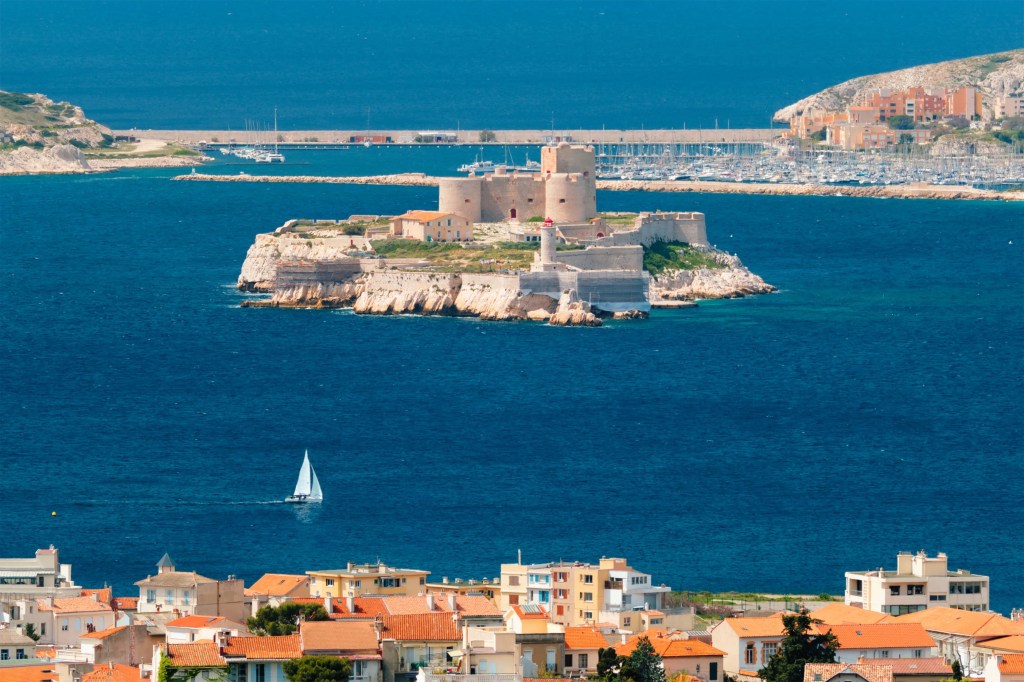
As I sit at the Vieux Port in Marseille with a coffee, gazing out at the nearby island of Chateau D’If, I’m reminded of the words of Edmund Dantès “All human wisdom is contained in these two words, “wait and hope”.

Dantes, the vengeful hero of the novel “The Count of Monte Cristo” was imprisoned in the chateau d’if by the pen of Alexandre Dumas.

And on a warm summers evening by the Med, we are all waiting and hoping. France face Namibia just a short journey up the road at the Orange Vélodrome in just under twenty-four hours. The wait is acceptable in such pleasant surroundings, and the hope is for a display of French flair under the coastal twilight colours that enticed Van Gogh southwards from Paris.

Summer is slow to depart this city, which despite all the recent modernisation still has a wonderful Northern African vibe, it really does feel like the junction of two continents.

The temperatures here are a very pleasant twenty-three degrees and at tomorrow’s 9pm kick off they are likely to be a muggy, thundery twenty-one degrees.

France after victories over New Zealand and Uruguay are all but assured of qualification to the knock out stages

After the less than perfect performance of the largely second XV in Lille, Galthie has brought back all the big guns for this one.

Having played in Paris and Lille this is France’ most southerly World Cup match before they begin their journey northwards starting with a final pool game in Lyon against Italy on October 6.

For now as the sun slowly sets at the port it’s time for a glass of red and a little bit more waiting and hoping.

That Riviera Touch Wales v Portugal

“The French Riviera, a sunny place for shady people.”

Somerset Maugham

Promenade des Anglais in Nice stretches for seven kilometers and provides an uninterrupted view of the bright blue sea and the plethora of palm trees.

Its name comes from the English aristocrats who came to Nice in the 18th century to enjoy the health benefits of the climate. At that time, the shoreline was not so regular, and because the lords and their wives wanted to walk comfortably, a seaside promenade was built The English names of the hotels, such as Westminster and West End, still bear witness to the influence of the islanders on this place.

Since Friday it has become, temporarily, Promenade Pays de Galles the stretching human sea of red a beautiful contrast to the blinding azure Mediterranean and the cloudless skies.

There was also a hint of the Algarve as Portugal fans, enjoying a tournament with all the big boys, were savouring every last drop, quite literally, at Café Simone on Rue Rossetti.

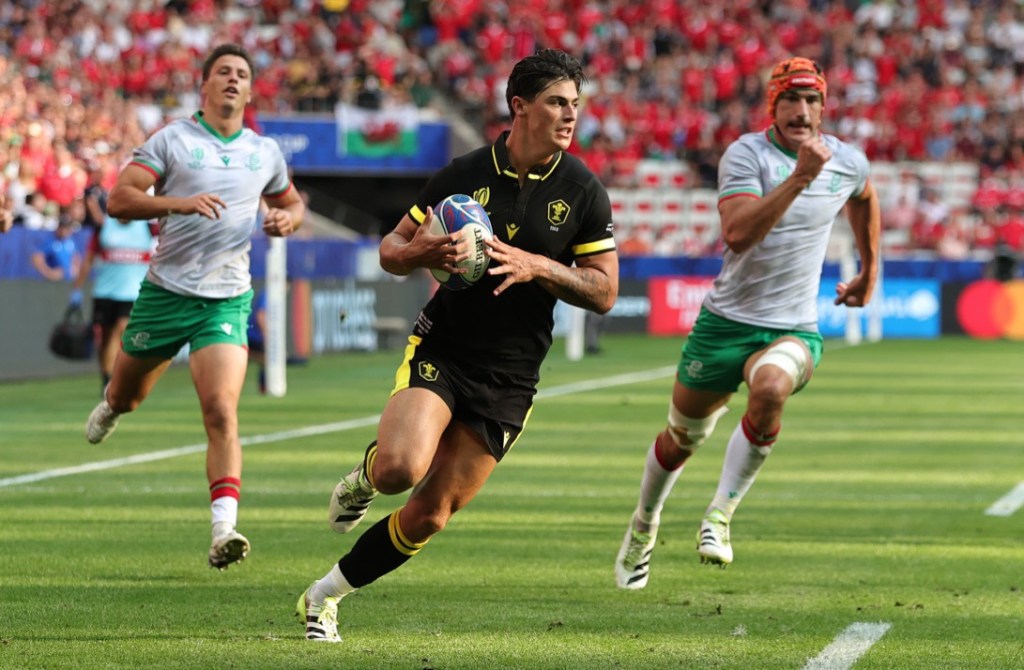
Wales 102 Portugal 11 was the scoreline in 1994 when these two met in a Rugby World Cup Qualification match, times have changed and no one was realistically expecting a similar margin of victory at the Allianz Riviera stadium in Nice.

This match was very much France v Uruguay revisited. Louis Rees-Zammit set Wales on their way with a try in the 9th minute but Wales’ second touchdown did not appear until minute 43 when Dewi Lake crashed over from a self taken tapped penalty to give Wales a 14-3 half time lead.

In between those two scores it was Portugal who looked the more organised in defence and attack, Wales looked uncoordinated and panicky with the ball in hand.

The second half saw Jac Morgan’s 56th minute try give Wales a 21-3 lead but they never looked comfortable, losing four line outs, and their quest for a fourth try, and the resulting bonus point, looked to have passed them by until the peerless Taulupe Faletau scored near the posts with 83:51 on the clock. Sam Costello’s conversion secured a 28-8 victory for Wales.

But the biggest cheer of the day came with Portugal’s 63rd minute try, a beautiful well worked line out move which resulted in Nicolas Martins diving over.

The so called tier two nations are causing the big boys quite a few tears in this Rugby World Cup and it looks like those massive score-lines of previous tournaments are become fewer.

Portugal next head to Toulouse to face Georgia, whilst Wales, who have maximum points head to Lyon for an almighty clash with Australia.

Cafe Simone should do quite well for business tonight.

My book is available post free from Amazon £7.99

Uruguay Create A Special Brew In Lille

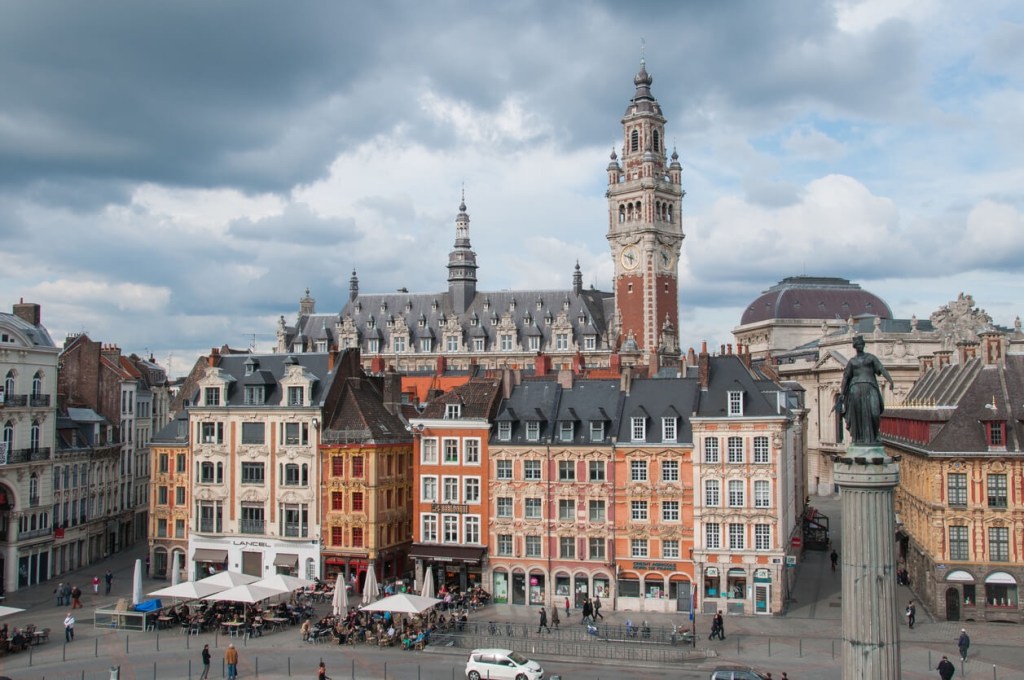
In a country where wine is generally king, Lille is France’s beer capital. Pelforth is a French brewery founded in 1914 in Mons-en-Barœul by three Lillois brewers. It was originally called Pelican, after a dance popular at the time, but changed its name to Pelforth after World War II. The name is a mash up of Pelican and “forte”, which means strong – and this is the style of beer they brew, including a blonde, brune and amber.

Northern France is not a hotbed of rugby, but as France’s Rugby World Cup roadshow travels the country in its quest for World Cup glory, it was time for the folks of Hauts-de-France to cheer on their boys in blue.

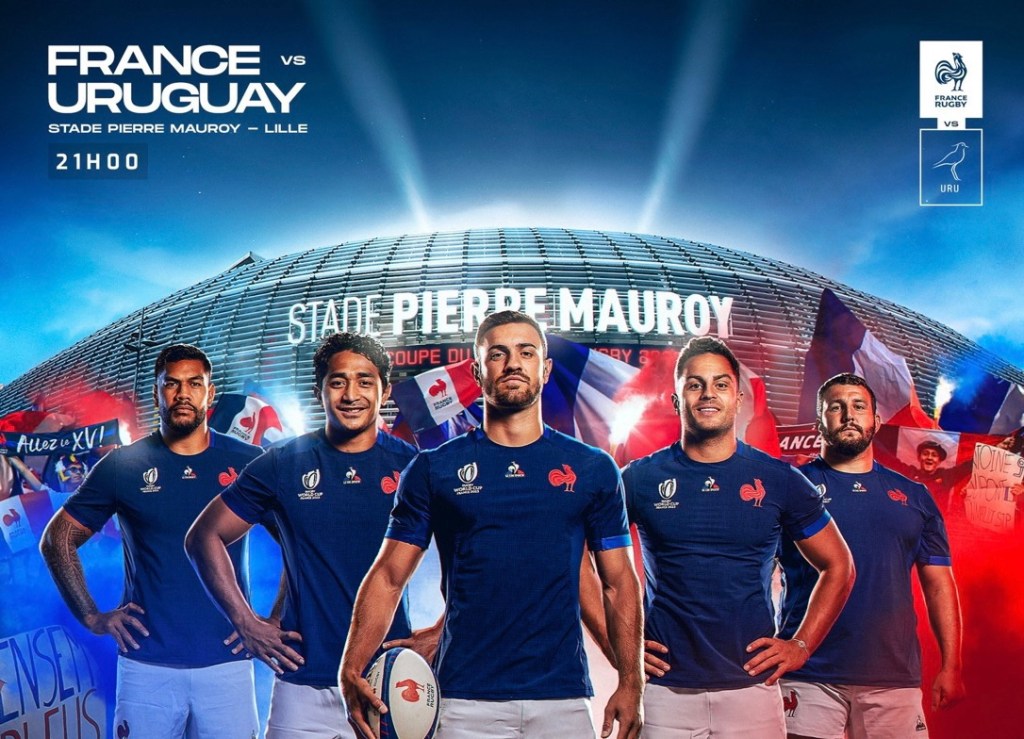
Stade Pierre Mauroy is tucked away in one of those out of town complexes at Villeneuve d’Ascq, a suburb 6km southeast of Lille City Centre, just a gentle meandering fifteen minute metro ride from Gare Lille Flandres.

Last night France entertained Uruguay the 1930 World Cup winners, ok that was with a round ball, but as we are in football territory let’s give them a notable mention.

Les Bleus made twelve changes from the team that beat the All Blacks on that steamy Friday night in Paris, but the cast list makes you realise just how much strength in depth the host nation have at their disposal.

A bonus point win and a display of French flair were expected by the packed crowd of 48,861.

But Uruguay ripped up that script and wrote their own pushing France all the way.

Uruguay stunned the home crowd with a Nicolas Freitas try after 6 minutes before Antoine Hastoy crossed for France 5 minutes later.

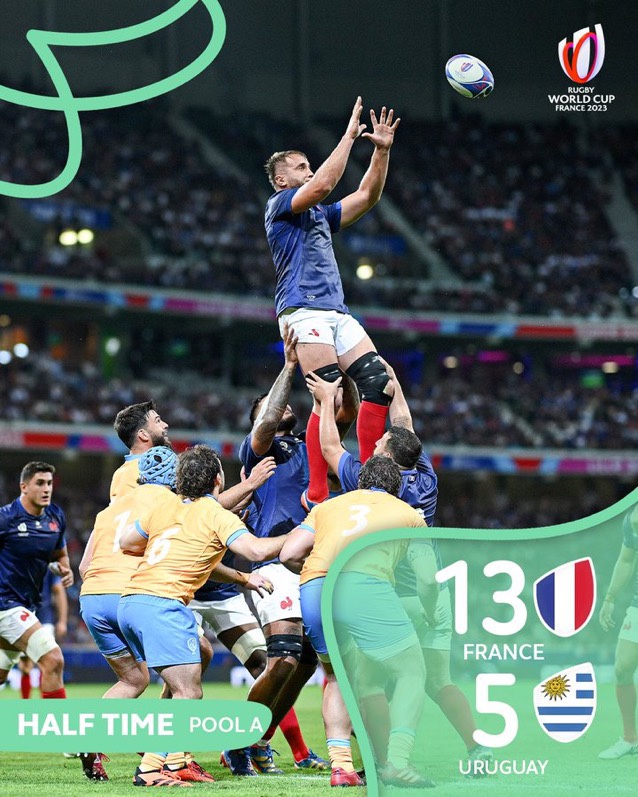
A 13-5 half time score in favour of France was perhaps harsh on Uruguay who also had a well worked try disallowed for obstruction in midfield.

After a half time glare from Shaun Edwards a fast start to second half was expected from France, but it was Uruguay’s Baltazar Amaya who touched down after 53 mins. Etcheverry’s conversion reduced France lead to a single point (13-12)

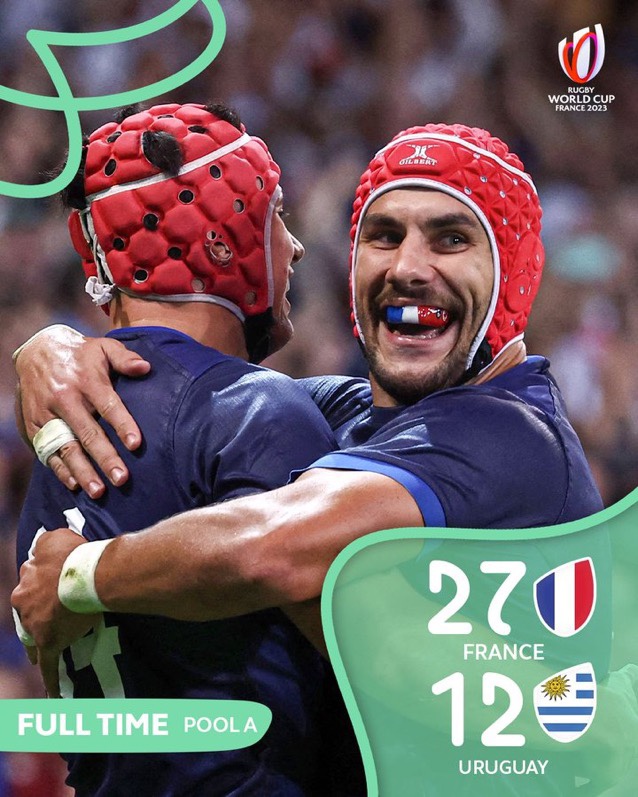
Mauvaka (55mins) and Bielle-Biarey (73mins) scored tries for France but Uruguay would not go away and their organised defence prevented France from getting a bonus point, an amazing achievement in itself.

But a win is a win as the cliche goes, the Bleus Brothers have two wins out of two and are within touching distance of the knock out stages.

A relieved France now head to Marseille, the southern tip of the country, and indeed the continent, to face Namibia, but for now it’s au revoir to our friends in the north, and as we sip on an ice cold Pelforth, it’s job done for Les bleus.

Salut

https://amzn.eu/d/6H8pN8D
Fabien Galthie Creating A Spectacle

Fabian Galthie is probably the only national coach who can get away with wearing white trainers and a suit.

His coolness turned many a head when he took over as France coach at the 2019 Six Nations tournament.

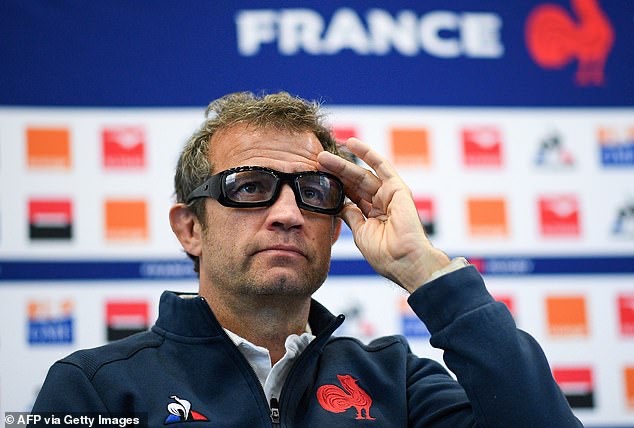
One of the main talking points ever since has been his glasses. When we met at the 2019 launch I assumed he had just been doing a spot of welding, but I should have known better.

Those spectacles were a topic of conversation among supporters, journalists and players. At press briefings and post-match interviews, those bulky dark frames stood out whilst resting upon that noble French proboscis.

Those who know me realise all too well that I am no male fashion icon, so in a vain attempt to appear trendy I asked the man from Cahors all about them.

“These are plastic sports glasses that allow you to run, and to fall because I broke all my glasses before,” he explained, needing glasses once he reached his forties. “My eyesight deteriorated around 46-47 years old. I had to put on stronger glasses, but above all I had to stop breaking them”

They are in fact a model frequently worn by basketball players, and not welders.

The former scrum-half, who does not save himself during training for the Blues, often putting words into action, found his sturdy specs “with an optician friend in Toulon”, where he coached the RCT in 2017-2018. “They do not move, I can play squash, golf, I can run with the ball in training”, as for the futuristic look provided by the frames, everything is a matter of taste, my mum doesn’t like it and my kids don’t say anything, they’re nice to their daddy. “

Galthie has always done things in his own way, in November 2019, he chose to hold his first official press conference as France head coach in Montgesty, a village of 335 people of which his father is mayor. Galthie grew up in the village in the south-west of France and it was there “I discovered the sport that changed my life”.

Fabian has no intention of swapping his current frames for rose tinted spectacles during France quest for Rugby World Cup glory.

Even with those fabulous spectacles, Fabien Galthie refuses to look too far ahead and it’s a case of one game at a time for Les Bleus, he is making sure his charges keep their focus with as much accuracy as his striking optical attachments