Swansea Sunday Samoa

“I’m going home to Swansea town, the day is nearly dawning, I’m going home to that seaport sound, one lovely seatown morning”. John Davies.

There have been many great nights in Welsh sporting history. Somehow dark nights, combined with floodlights, add an extra dimension to the drama played out on our fields of dreams.

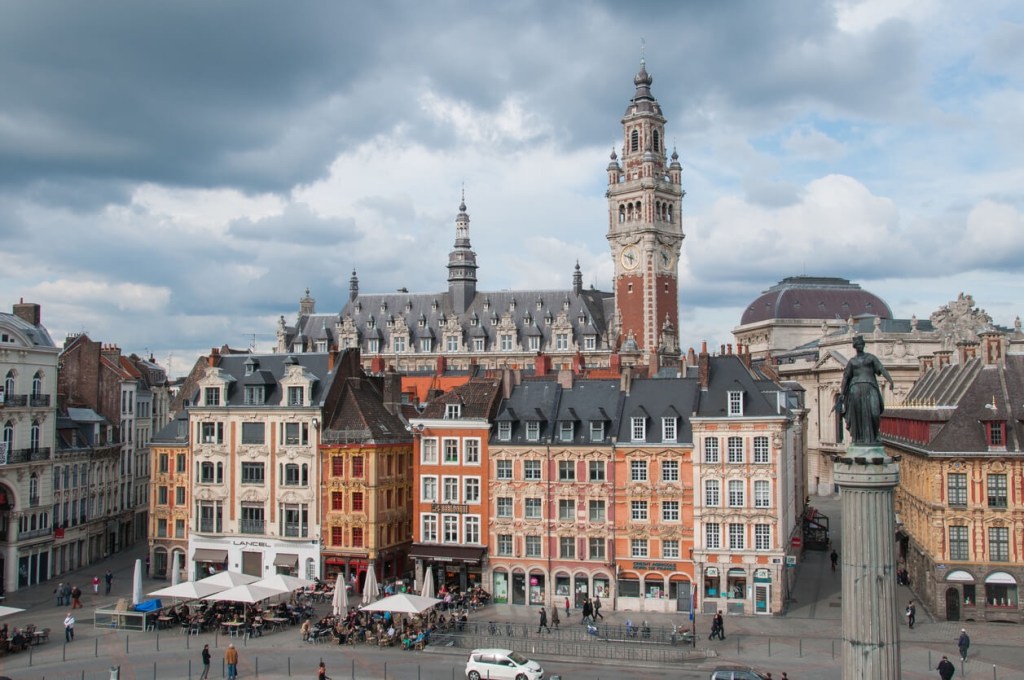
Take Lille, for example, in 2016 when Chris Coleman’s team beat Belguim 3-1 to reach the semi finals, yes the semi finals of the Euros, that was a night we will never forget.

Newbridge boxer Joe Calzaghe at the MEN Arena in Manchester 2006, defeating Jeff Lacey to become the undisputed middleweight champion of the world, or Colin Jackson’s finest hour in Stuttgart, 1993, when he won World Championship gold, and set a world record time for the 110 metres hurdles of 12.91 seconds.

Sunday October 15 1995 was another one of those magical nights that has gone down in Welsh sporting folklore, and it all happened in Dylan Thomas’ Swansea “An “ugly lovely town, crawling, sprawling by the side of a long and splendid curving shore”, or as described by character Terry Walsh in the 1997 cult Welsh film Twin Town, directed by Kevin Allen,“A pretty shitty city”.

Wales is a pretty tribal environment, and those folk who hail from Swansea are often referred to as “Jacks”.

There are several theories as to how this nickname arose, but the most commonly agreed version is the connection with a certain black retriever born in 1930 called Swansea Jack.

He lived in the North Dock area of Swansea, and would always respond to cries for help from the water.

His first rescue came in June 1931, when he saved a 12 year old boy, and a few weeks later, in front of a crowd of people, Jack rescued a swimmer from the docks. His photograph appeared in the local paper and the local council awarded him a silver collar.

Numerous awards followed including ‘Bravest Dog of the Year’ and the canine Victoria Cross. Legend has it that Jack saved 27 people in his lifetime. Sadly, in 1937, he died after eating rat poison.

His statue stands on the Promenade near St.Helen’s Rugby Ground. In 2000, Swansea Jack was named ‘Dog of the Century’ by NewFound Friends of Bristol who train domestic dogs in aquatic rescue techniques.

Swansea was made a city fairly late in life on 3 July 1969.

Prince Charles during a tour of Wales to celebrate his investiture year, made the announcement that the Swansea was to become a city.

It was the second Welsh town to be granted city status although it had to wait until 15 December before it formally received its letters patent from the Queen. On that day the Prince of Wales made a return journey to the new city to grant the charter to the people and the civil dignitaries of Swansea at the Brangwyn Hall.

Between 19 February and 21 February 1941 Swansea was reduced to rubble during what became known as the “Swansea Blitz”.

About 35,000 incendiaries and 800 high explosive bombs were dropped by the German Lufftwaffe during the raids and the raging fires could be seen from the other side of the Bristol Channel in Devon.

A total of 230 people were killed and 397 were injured. Swansea was selected by the Germans as a legitimate strategic target due to its importance as a port and the destruction of the docks and the nearby oil refinery was key to Nazi German war efforts as part of their strategic bombing campaign aimed at crippling coal export and demoralising civilians and emergency services.

Amazing Swansea Town’s football ground, the Vetch Field was undamaged by the blitz, there were rumours long circulated that the Vetch was used as a central point to which the authorities carried the bodies of those killed in the bombing, although this has never officially been confirmed.

The Vetch Field smelt of Welsh sport, it had an aroma that reeked of sweat, deep heat and down to earth toil and guts, it was South Wales working class chic in every crash barrier and urinal.

On Sunday 15 October 1995 it had this stuff oozing out of its pores.

Wales v Western Samoa was one of the most gladiatorial, bone jarring rugby occasions I have ever witnessed.

For the uninitiated The Vetch was the home of Swansea Football Club.

Opened in 1912, it hosted the Wales Rugby League team for the first time in 1981, when Wales defeated Papua New Guinea 46-0 in front of 11,422 spectators.

Wales scored 13 tries that day through Phil Ford (3), Jonathan Davies (2), Anthony Sullivan (2), Rob Ackerman, David Bishop, Kevin Ellis, Jonathan Griffiths and Adrian Hadley.

The Vetch also had an artistic side, hosting a Stevie Wonder concert in 1984, and in 1985 Carl Douglas performed his one hit wonder “Kung Fu Fighting”, a very suitable theme tune for the match against Western Samoa.

On this particular Sunday afternoon the pubs in the Sandfield area around the Vetch Field were awash with excitement.

Western Street had three pubs in the opening 100 metres of its parish.

The Clarence and The Garibaldi the traditional pre match watering holes were jam packed ahead of the 6pm kick off.

The Sandfield residents were stood on chairs and ladders, their properties offered a good view of the ground for those with a head for heights and a good sense of balance.

The manner in which Western Samoa had destroyed France in the opening pool game, gave Wales much cause for concern, their sheer physicality looked ominous.

Many hundreds were locked out of the ground, and kick off had to be delayed to allow the capacity 15,385 crowd to enter.

This was a match everyone had been looking forward since the draw was made. There was no doubt in anyone’s mind as to exactly what time of game this was going to be, and it didn’t disappoint.

Welsh language television channel, S4C, showed the game live, and attracted the stations largest ever audience figure.

Wales coach, Clive Griffiths, brought in an Irish sports psychologist, during the lead up to the game to provide motivational talks for the players, whatever he told them seemed to do the trick.

Scott Gibbs, who had played in Wales rugby union defeat to Western Samoa in the 1991 Rugby World Cup, pulled out with a knee injury an hour before kick off.

As a result John Devereux switched to the centre, with Adrian Hadley coming in on the wing

Scott Quinnell was also called up to make his international debut.

For Wales captain Jonathan Davies, the occasion was made extra special as his young son Scott was the Welsh mascot.

Oh those two little words, Western Samoa, for Welsh rugby fans they are the stuff of nightmares. In the Rugby Union World Cup of 1991, they came to Cardiff Arms Park and produced one of the greatest shocks ever recorded in the history of the game, when they beat Wales.

This team hoped that lightning wasn’t about to strike twice, although on this occasion the South Sea Islanders were no minnows, they had already captured the imagination, and they had Schuster and Tuigamala in the side, they really fancied their chances against Wales .

In the lead up to the game, Wales prop Dai Young spoke to the press.

“There is no doubt Western Samoa have some great individual players, what nobody knows is how well they will perform as a team, but with the obvious talent they have, it is safe to assime they will provide very tough opposition”.

The Wales Team To Face Western Samoa

1 Iestyn Harris (Warrington)

2 Anthony Sullivan (St Helens)

3 Allan Bateman (Warrington)

4 John Devereux (Widnes)

5 Adrian Hadley (Widnes)

6 Jonathan Davies (Warrington) (Captain)

7 Kevin Ellis (Warrington)

8 Kelvin Skerrett (Wigan)

9 Martin Hall (Wigan)

10 Dai Young (Salford)

11 Paul Moriarty (Widnes)

12 Scott Quinnell (Wigan)

13 Richie Eyres (Warrington)

14 Neil Cowie (Wigan)

15 Kieron Cunningham (St Helens)

16 Rowland Phillips (Workington)

17 Paul Atcheson (Oldham)

Western Samoa’s team came with a government health warning, with ex union converts John Schuster and Va’aiga Tuigamala,, in the back line, they were a very serious threat. Coach Graham Lowe was a wily customer who possessed one of the shrewdest brains in Rugby League, he had been at the helm with Brisbane Norths, the New Zealand international side as well as Wigan and the Queensland state of origin team.

He picked his strongest side to face Wales, perhaps the one surprise was Apollo Perelini on the bench.

Nine of their World Cup squad were former international union players.

When Wigan’s Tuigamala announced his intention to play rugby league for Western Samoa along with Schuster, Esene Faimalo, Tea and Iva Ropati, Apollo Perelini , Tony Tuimavave and Sam Panapa it gave a clear indication that the South Sea Islanders were not over here just to make up the numbers.

Western Samoa

1 Paddy Tuimavave (North Harbour)

2 John Schuster (Halifax) (Captain)

3 Tea Ropati Auckland Warriors)

4 Va’aiga Tuigamala (Wigan)

5 Brian Laumatia (Cronulla)

6 Sam Panapa (Salford)

7 Willie Swann (Auckland Warriors)

8 Se’e Solomona (Auckland Warriors)

9 Willie Poching (Auckland Warriors)

10 Fa’ausu Afoa (Penrith)

11 Tony Tatpu (Auckland Warriors)

12 Via Mata’utia (St Helens)

13 Tony Tuimavave (North Harbour)

14 Mark Ella (Albi)

15 Apollo Perelini (St Helens)

16 Joe Vagana (Auckland Warriors)

17 Des Maea (Auckland Warriors_

With the delayed kick off Wales’ Mark Jones was butting walls and doors in the changing room things were reaching fever pitch, and as dusk fell the twinkling lights of Port Talbot illuminated the skyline a tribute from one steel producer to 30 players whose steel production was about to reach record levels, as they came out of the tunnel to a deafening roar, you had a feeling something very special was about to happen.

A passionate rendering of Hen Wlad fy Nhadau gave way to the Samoan war dance, the Siva Tau.

The Siva Tau declares that Samoa are ready for the war and fight fiercely, not that we needed reminding

John Devereux takes up the story. “We said we would respect the Siva Tau, and face it standing on the half way line with our arms linked”.

“I was in the middle of the line with hooker Martin Hall and when Samoa come to the end of the war dance, they start to walk towards you”.

“As they started walking towards us Martin started walking towards them, dragging me with him, we became an arrowhead with us two at the tip I ended up face to face with Inga Tuigamala”

Straight from the kick off the hits came in. Kelvin Skerrett set down a message very early on, when he took exception to a Samoan pat on the head following his knock on. Wales were awarded a penalty and it set the tone that Wales were not going to take a backward step.

Scott Quinnell was tackled inches short of the Samoan try line, Tea Ropati prevented Quinnell getting to his feet for a quick play the ball and received a yellow card for his troubles. Jonathan Davies put the resulting penalty kick wide of the posts.

The choral Welsh legions did not have to wait long for a slice of bread of heaven. With 7 minutes played, Brian Laumatia was bundled into touch on Samoa’s first tackle.

From the Welsh scrum put in Kevin Ellis sent out a glorious pass to Iestyn Harris who sidestepped majestically past Tony Tuimavave, to touch down under the sticks. Jonathan Davies converted to give Wales a 6-0 lead.

Wales were on fire, uncharacteristically, Davies missed a second penalty, and Quinnell was once again held up short of the try line.

On the 19 minute mark, and very much against the run of play, Sam Panapa gave a short pass to Bryan Laumatia who raced in for a Samoan try, Schuster’s conversion brought the scores level at 6-6.

Wales reaction was tremendous, three minutes later, following a Welsh scrum, Jiffy kicked down the right hand touchline for wing Anthony Sullivan to chase, “Sully” gathered outpaced Laumatia and raced over for a wonderful try, Jonathan Davies found his kicking boots to land the conversion and Wales in the blink of an eye were 12-6 ahead.

John Schuster clawed back two penalties for Western Samoa, and Davies added one for the home side to make the half time score Wales 14 Western Samoa 10.

Wales were even more magnificent in the second half, they took the constant cheap shots and kept their cool admirably in extenuating circumstances.

Western Samoa, on the other hand, became more and more undisciplined and the penalty count continued to rose.

Six minutes after the restart a superb Jonathan Davies drop goal extended Wales lead by a point.

The Welsh forwards were running themselves into the ground. Paul Moriarty who had been a constant target put in a huge shift and was replaced on 55 minutes by Rowland Phillips.

Kelvin Skerrett who was immense all game continued to inspire as he snarled in the faces of the opposition front row, and Scott Quinnell who hadn’t played for five weeks was a colossus, constantly driving forward, tiring out the South Sea Islanders defence.

Des Maea hit Allan Bateman with a high shot on 58 minutes, which earned him a yellow card from referee Russell Smith, it was Western Samoa’s second one of the night and proved costly as Jiffy landed the resulting penalty to extend Wales lead to 17-10.

Willie Poching had a try disallowed for Western Samoa after a blatent forward pass from Sam Panapa, before a Iestyn Harris drop goal in the 75th minute looked to have given Wales an unassailable 20-10 lead.

As the crowd sang Hen Wlad Fy Nhadau, with the match in injury time, scrum half Kevin Ellis took a pass from Rowland Phillips, Ellis broke left to score in the corner. Davies conversion drifted wide as the hooter sounded, Wales were through to the Rugby League World Cup Semi Finals, they had beaten Western Samoa 22-10, and the Vetch Field went mental.

The Wales team were still on the pitch twenty minutes after the final whistle, such was the acclaim and clamour from the ecstatic crowd.

Red shirted heroes were on their knees, the battle had been brutal, a young fresh faced Iestyn Harris stared into the Swansea night looking almost mesmerised as he took in what had occurred.

” I have never experienced a more passionate occasion, the crowd must have been worth at least 10 points to us tonight. It’s going to take a remarkably good team to beat us in this World Cup”

Man of the match, Scott Quinnell had a grin as wide as the Severn, “It was one of those games where you just had to take the bull by the horns, it was one of the hardest games of rugby I’ve ever played in”.

Captain, Jonathan Davies told the assembled media, “There’s a word in Welsh called Hwyl, and it’s that spirit that keeps coming through with this squad”.

“Scott Quinnell had ice packs on almost every part of his body post match, the Swansea City apprentices who were looking after us coudn’t believe their eyes with all the blood and stiching going on”.

Adrian Hadley “It was great to back in Cardiff and all back together. The game against Western Samoa was probably the toughest game of rugby I’ve played in.

Clive Griffiths “They wanted to play a big power offloading game against us, but we met fire with fire”

The Final Group Three Table made very pleasurable reading for Wales and their ever growing legion of fans.

Even more exciting was the approaching semi final against the old enemy, England.

But perhaps the most amazing fact amidst all the celebration and anticipation was the realisation that everyone In Wales was talking Rugby League.

You could almost hear the wailing ghosts of past rugby union administrators turning in their graves.

Wales Rugby World Cup Squad

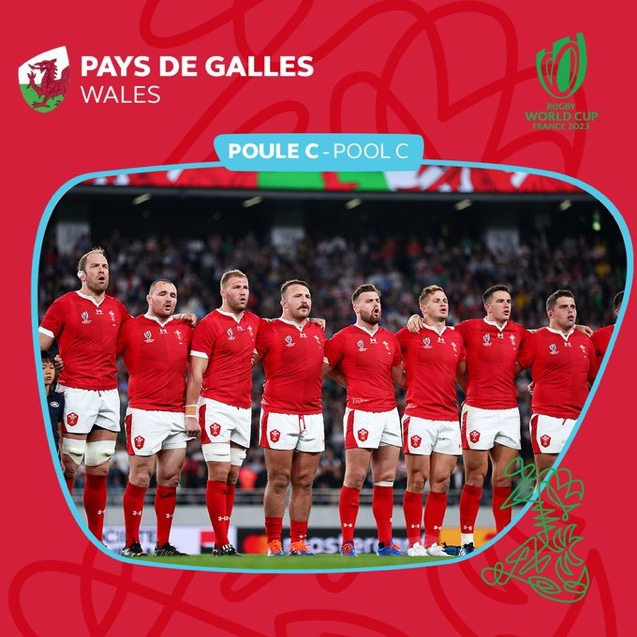
Wales senior men’s head coach Waren Gatland has named a 54-player preliminary training squad for Rugby World Cup 2023.

Players will start to come in for training sessions with Wales on a rolling basis from 25 May, with entry into camp depending on when an individual’s club season has ended.

In addition to sessions at the National Centre of Excellence in Hensol, Wales will travel to Switzerland and Turkey in July for specialist training camps. The squad size will be reduced ahead of each trip.

Wales then have three Summer Series Test matches against England (home and away on 5 and 12 August) and South Africa (19 August at Principality Stadium) before the official 33-player squad to head to Rugby World Cup 2023 in France is named.


Gatland said: “We’ve picked a large squad for a number of reasons. We will reduce the squad to about 45 before we go to Switzerland so there’s a bit of jeopardy in the first part of the campaign.

“It’s a great opportunity for some players that were involved in the Six Nations and some youngsters for the future to show us what they are capable of doing in the first part of the preparation.

“In the past we’ve prided ourselves on how hard we’ve worked and how fit the squad has been. So that’s the message to the players to come in and make a statement, work really hard, make the coaches sit up and take notice and get yourself in great shape physically.

“A lot of skill work needs to be done and there’s an opportunity to work on the detail you often don’t get when you go into Six Nations or Autumn campaigns when you have limited preparation time.”


Wales preliminary training squad for Rugby World Cup 2023

Forwards (31)

Rhys Carre (Cardiff Rugby – 20 caps)
Corey Domachowski (Cardiff Rugby – uncapped)
Kemsley Mathias (Scarlets – uncapped)
Nicky Smith (Ospreys – 42 caps)
Gareth Thomas (Ospreys – 21 caps)
Eliott Dee (Dragons – 41 caps)
Ryan Elias (Scarlets – 33 caps)
Dewi Lake (Ospreys – 8 caps)
Ken Owens (Scarlets – 91 caps)
Keiron Assiratti (Cardiff Rugby – uncapped)
Will Davies-King (Cardiff Rugby – uncapped)
Tomas Francis (Ospreys – 71 caps)
Dillon Lewis (Cardiff Rugby – 50 caps)
Henry Thomas (Montpellier – uncapped)
Adam Beard (Ospreys – 46 caps)
Ben Carter (Dragons – 9 caps)
Rhys Davies (Ospreys – 2 caps)
Cory Hill (Yokohama Canon Eagles – 32 caps)
Dafydd Jenkins (Exeter Chiefs – 6 cap)
Alun Wyn Jones (Ospreys – 157 caps)
Will Rowlands (Dragons – 23 caps)
Christ Tshiunza (Exeter Chiefs – 5 caps)
Teddy Williams (Cardiff Rugby – uncapped)
Taine Basham (Dragons – 11 caps)
Taulupe Faletau (Cardiff Rugby – 100 caps)
Dan Lydiate (Ospreys – 68 caps)
Josh Macleod (Scarlets – 2 caps)
Jac Morgan (Ospreys – 9 caps)
Tommy Reffell (Leicester Tigers – 9 caps)
Justin Tipuric (Ospreys – 93 caps)
Aaron Wainwright (Dragons – 37 caps)


Backs (23)

Gareth Davies (Scarlets – 67 caps)
Kieran Hardy (Scarlets – 17 caps)
Rhys Webb (Ospreys – 40 caps)
Tomos Williams (Cardiff Rugby – 45 caps)
Gareth Anscombe (Ospreys – 35 caps)
Dan Biggar (Toulon – 107 caps)
Sam Costelow (Scarlets – 2 caps)
Owen Williams (Ospreys – 7 caps)
Mason Grady (Cardiff Rugby – 2 caps)
Max Llewellyn (Cardiff Rugby – uncapped)
George North (Ospreys – 113 caps)
Joe Roberts (Scarlets – uncapped)
Nick Tompkins (Saracens – 27 caps)
Johnny Williams (Scarlets – 5 caps)
Keiran Williams (Ospreys – uncapped)
Josh Adams (Cardiff Rugby – 49 caps)
Alex Cuthbert (Ospreys – 57 caps)
Rio Dyer (Dragons – 7 caps)
Cai Evans (Ospreys – uncapped)
Leigh Halfpenny (Scarlets – 99 caps)
Louis Rees-Zammit (Gloucester Rugby – 25 caps)
Tom Rogers (Scarlets – 2 caps)
Liam Williams (Cardiff Rugby – 84 caps)

Gaëlle Warning For South-West London

Gaëlle Hermet was born in Clermont-Ferrand on 12 June 1996, then moved to Carmaux in the Tarn region when she was 6 years old.

Rugby in the garden with brothers Dorian, Jorys and Hugo, rugby on television, chatting rugby at the meal table like so many families in the rugby mad Tarn region, ignited her passion for the game.

“My rugby life began when I was eleven. I did it for a year before starting athletics. But I was addicted to rugby and I resumed at the age of thirteen at US Carmaux in the Tarn. It must be said that in my family, everyone played my father played it, my three brothers play it. Even if I am the eldest, I wanted to follow them. After Carmaux, I did a year younger in Albi because I had to go to a women’s team, then I left for two years in Saint Orens, and then to Stade Toulousain”.

“I joined the Pôle Espoir Jolimont in Toulouse and then I did internships in elite centres. At the time when I was 15 years old, I knew nothing about all this, the first time I was summoned to the French team, it was a big surprise and I enjoyed it. The selections for the Under 20s were a very beautiful human adventure and the first experience of what the high level can be“.

“From the under 20s to France Féminines, it is still a big step to take. I am very lucky to have had a fairly linear trajectory in Rugby term and hard work always ends up paying off if you are rigourous and applied. ”

She made her senior France debut on 1 July 2016 against the USA and a year later was made captain at the tender age of twenty-one.

“In 2014, watching the Women’s World Cup was a real turning point for me. Seeing what women’s rugby was for people, and the media recognition makes you want to be part of it. I was 17 years old, it made me dream. And I now understand what it feels like to players who are starting rugby. In the end, I never thought I would have reached this point, at least not to have the status I have today. It’s really pure happiness. I think it’s the grail in a career as a player but you shouldn’t get eaten by your emotions. You have to manage and as it remains rugby, you just have to have fun”

Bravery on the rugby field is a given for those at the elite level, but when bravery is required off the field during a deadly global pandemic, well that is a different matter, but one which the affable back row forward faced up to on a daily basis.

During the awful days of the Covid-19 pandemic Gaëlle spent her time fully focussed on her vocation as an occupational therapist at a care home in Cadours. She had studied psychology at the University of Toulouse-Jean Jaurès before going on to study occupational health.

Captain of France at the delayed 2021 Rugby World 2021 in New Zealand, she won her 50th cap in the victory over Canada, and played a big part in that wonderful semi-final which France narrowly lost 25-24 to the Black Ferns the eventual winners.

Gaëlle has been used off the bench against both Italy and Ireland in this seasons tournament, but won her starting place back for the match against Scotland and scored a try, as was the case yesterday against Wales in Grenoble where she was named player of the match.

With 54 caps and 7 tries for her country she now has Twickenham on her radar and the hope of blowing away a few Red Roses on the way to a Grand Slam.

The Baguette That Ruined The International Career Of Gaston Vareilles 


I take you back to Paris in 1911 when Scotland and France faced each other in the French capital.

The result gave France their first ever win in the Five Nations Championship.

The fact that France won 16-15 is overshadowed by the tragic tale of a young Frenchmen selected to play on the wing that day, no doubt overflowing with a mixture of nerves and excitement as he headed northwards, by train, through the beautiful French countryside, on a day he would never forget, for all the wrong reasons.

Gaston Vareilles was a wing at Stade Francais, and when the train stopped at Lyon station, Gaston popped off the train to visit the station buffet for a baguette, by the time he had been served, he returned to the platform to see his train heading off into the distance.

Back in Paris, one of the spectators, french sprinter Andre Franquelle voulnteered to make up the numbers, and he did rather well, in fact he went on to earn another two French caps.

Poor old Gaston did eventually make it to the stadium in time for the kick off, but was told in no uncertain terms where to go.

He never played for France again, and ended up working as a planter in French Indochina, before his death on 15 January 1929.

 
However Gaston also holds a more uplifting statistic to his name, he scored France’ first ever drop goal against Wales in Cardiff in 1908, a slice of good fortune as the home crowd sang bread of heaven, but sadly it is that station baguette that he will be always be remembered for.

France Enter The Final Furlong To RWC 2023

With the Guinness Six Nations all over, for the men at least, the thoughts of Les Bleus now turn fully to the Rugby World Cup 2023 which is approaching at a rate of knots.

France fly half Romain Ntamack “The Six Nations is over, it was our last deadline before the Rugby World Cup so we now think about it more and more. We tell ourselves that the next time we get together it will be for real. It’s a little weird because we’ve had it in the back our minds for so long, we work for it, it’s getting closer but we must moderate this obsession”

The attritional Top 14 season ends on June 17 and eight days later the 42 man national squad assemble, when France embark on their initial training block at Carpiagne, a military training camp east of Marseille, from there they head to Monaco, before returning to the home comforts of Marcoussis. In August they head to Capbreton north of Biarritz for a few mouthfuls of Atlantic air.

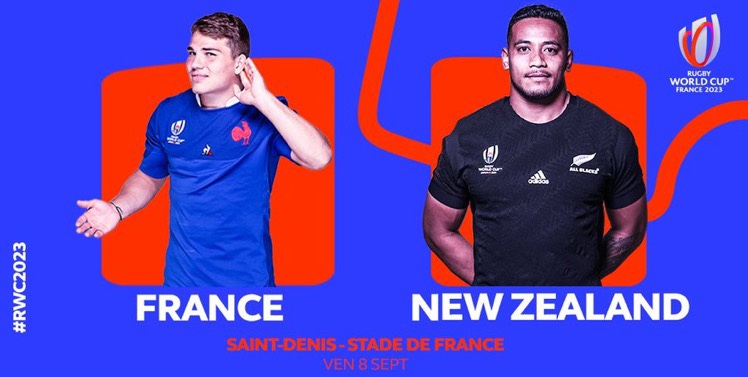
France have four warm up matches prior to their opening RWC match against New Zealand. They face Scotland twice, at Murrayfield on 5th August, and again in Saint-Etienne on 12 August. They then entertain Fiji in Nantes on 19 August.

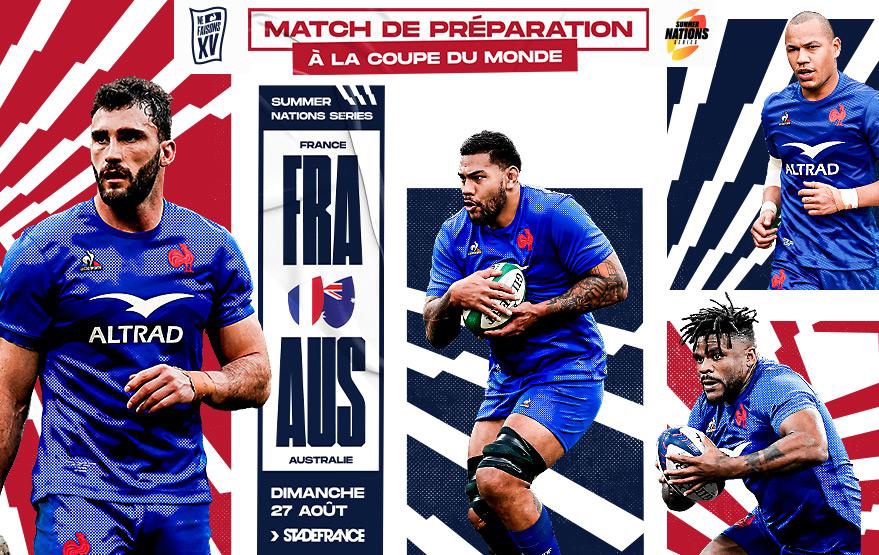
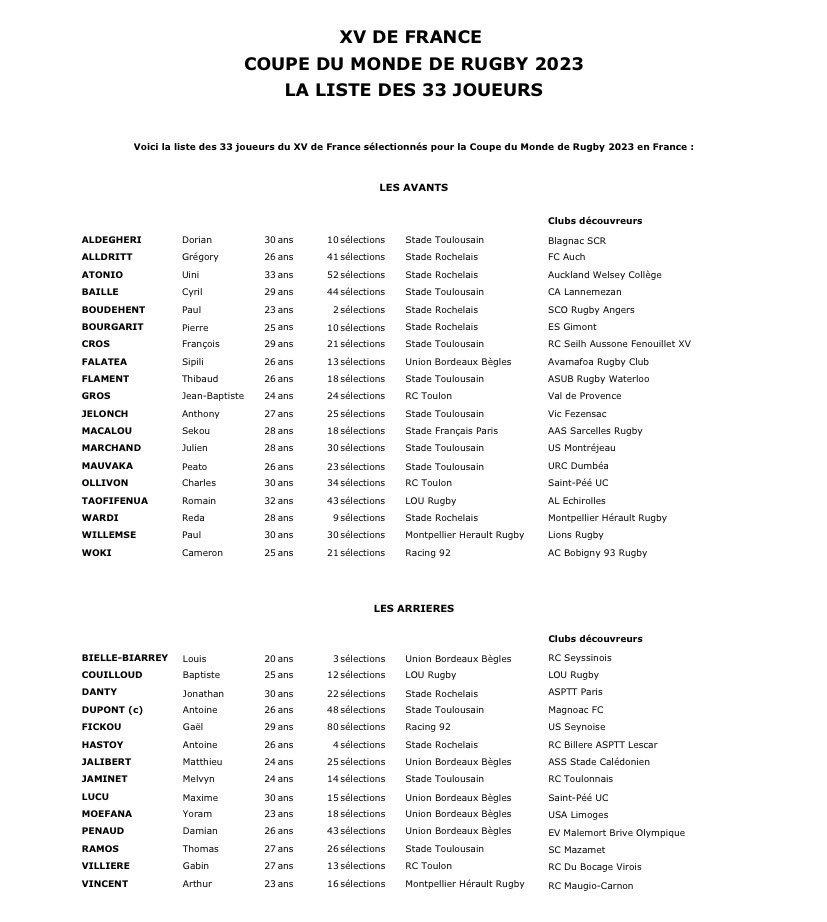
The final 33 man Rugby World squad is announced on 21 August, before the final warm up game against Australia at Stade de France in Paris on Sunday August 27.

After that final warm up game France will take up residence at Rueil-Malmaison in the Hauts-de-Seine for the duration of RWC 2023.

Fede Aramburú Paris Remembers The Murdered Puma

A tribute ceremony in memory of Federico Martin Aramburú shot dead in the early morning of Saturday March 19, 2022, took place last Sunday at 146 boulevard Saint-Germain in Paris. A moment of intense emotion and reflection in the presence of the family and loved ones of the former Biarritz player, murdered at the tender age of just 42.

Under the dark rainy crying skies of Paris a moving tribute was paid to Federico Martin Aramburú, killed in a drive-by shooting in the French capital’s chic Saint-Germain neighbourhood.

In the early hours of that fateful Saturday he and some friends got embroiled in a dispute with another group at a cafe. The argument appeared to have been settled but the men came back and fired at Aramburu, who was hit with three bullets.

Aramburu played as a centre and wing, winning 22 Argentina caps including at the 2007 World Cup in France, where he scored a try as the Pumas beat the hosts in the third-place playoff.

The ceremony on Sunday was organised by the City of Paris on the initiative of Pierre Rabadan, deputy mayor in charge of sport. Many personalities from the world of rugby attended including Stade Francais coach Gonzalo Quesada, Bernard Laporte and the ex-captain of France Guilhem Guirado.

Also in attendance were Federico’s Olympic Biarritz internationals Brusque, Thion, Traille, Couzinet, Yachvili, Thomas Lievremont, Dusautoir, Carizza and rugby legends Philippe Sella, Serge Blanco and Pascal Ondarts.

Current France scrum half scrum-half Maxime Lucu left the team Hôtel des Bleus to take part in the ceremony.

Aramaburu’s parents and other family members arrived from Argentina in the middle of the week. Cecilia Aramburú Federico’s mother, did not hide her disbelief in her son’s tragic death and spoke emotionally.

A stand alone temporary plaque brought by the family carried the message “Never again should a family be bereaved because of the ideas and hatred that nest in fanaticisms like that of the ‘far right”.

It refers to the two indicted individuals Loïk Le Priol and Romain Bouvier, far-right militants suspected of being the assassins. “We will always fight these ideas which led to this tragedy, swore Pierre Rabadan. I will denounce again and again identity ideology, racism. Federico Martin Aramburu will be a face of this fight. “Fede was in Paris to enjoy life in this district so emblematic of rugby. He was coldly murdered”

The ceremony ended with “Dale alegria a mi Corazon” (Bring joy to my heart” a composition by Fito Paez, beautifully sung by Maria Martin Aramburú widow of the former rugby player with her three-year-old son in her arms, her sunny smile a beacon of light under the dark skies of Paris.

Springtime In Paris France v Wales

I love Paris in the springtime.
I love Paris in the fall.
I love Paris in the winter when it drizzles,
I love Paris in the summer when it sizzles.

“I Love Paris” is a popular song written by Cole Porter and published in 1953, and it is very difficult to disagree with the lyrics. Paris is very easy to fall in love with.

I was here for France v Scotland in February, at an arctic Stade de France, so making a delightful return in March has taken me, and the Guinness Six Nations, on a journey from Winter to early spring, although the Cole Porter’s drizzle was very much evident after a beautifully sunny Parisian morning, and it had me thinking maybe Sacha Distel’s 70s hit Raindrops keep falling on my head would be a more apt musical analogy.

France v Wales is always a very special fixture. Back in the olden days, when I was young, this game invariably decided who won the championship with whoever had the home advantage that particular year usually ended up winning the title.

On Saturday in Paris, France and Wales were at totally different ends of the table, but it was Wales that started the brighter with a George North try after just 7 minutes. Penaud and Danty replied tries for France to give them a 20-7 half time lead, but it wasn’t the blue tsunami that many were expecting.

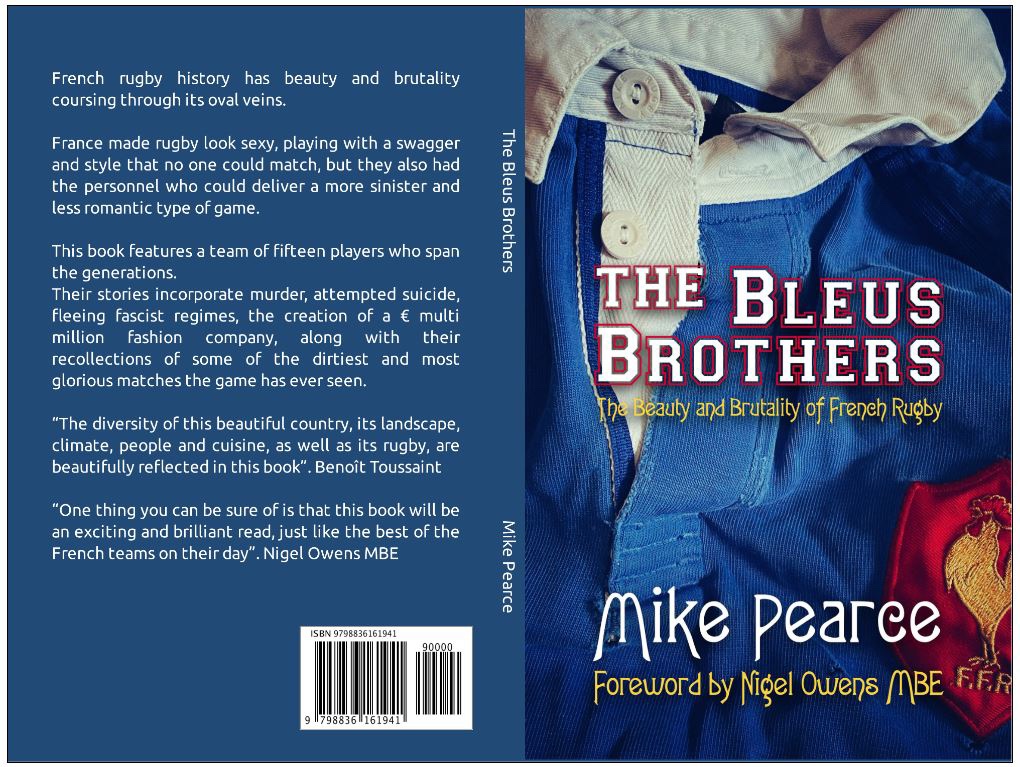
This band of Blue Brothers with an 80,000 backing group played with total disregard for Cole Porter’s seasonal lyrics, Romain Ntamack and Antoine DuPont sizzled and it wasn’t even summer, and when the entire ensemble were in tune they hit all the right notes in a glorious rugby medley.

Despite conceding two early second half tries to Atonio and Fickou, taking the score to 34-7, Wales refused to give in and two touchdowns of their own from replacements Bradley Roberts and Tomos Williams brought the score back to 34-21

Penaud went over in the 77th minute but Wales had the last word with a Rio Dyer try in the final minute, which Leigh Halfpenny converted to make the final score 41-28, a bonus point win for France, with Wales collecting a delightfully unexpected bonus point for scoring four tries.

As the fireworks drifted up into the early evening sky both sides turn their International thoughts fully to the Rugby World Cup to be held here in the republic in a few months time.

The drizzle continued at Cafe du Nord in a much more pleasant manner as the balsamic vinegar cascaded on to my accompanying side salad post match.

If Irish eyes were smiling then French ones were certainly grinning, whilst the Welsh visual organs were wide open staring at the task in front of them.

Defeat in Paris never seems quite as dreadful as it does anywhere else, Cole Porter was not alone in his love for this beautiful city as fans of every rugby playing nation will testify, I will leave the last word to Monsieur Porter himself.

Every time I look down on this timeless town
Whether blue or gray be her skies
Whether loud be her cheers, or whether soft be her tears
More and more do I realize that I love Paris in the spring time

Oh ! That Fellow Dupont

Ok let’s get this straight right from the start, no one, and I mean no one, has, does, or ever will draw comparison to Gareth Edwards as the greatest scrum half I have ever seen in that evocative and glorious number nine shirt.

It has been almost blasphemous where I come from to even whisper the possibility of anyone coming close to the grand master.

Some folks in the dark corners of smoke filled rooms have nervously whispered about pretenders to the throne, but those who were mentioned never quite reached the Edwards benchmark.

Many have tried but as clear as the Welsh Knight follows day no one has really come close.

But Father I have sinned, I find myself harbouring immoral thoughts that there just might be someone perilously close to reaching that exalted pedestal which the man from Gwaun-Cae-Gurwen occupies.

Lannemezan is a town in the Hautes-Pyrenees about 26,000 years old. It is situated between Tarbes and Toulouse with a population of less than 6,000 people, an unremarkable town that is the birthplace of a remarkable scrum half, Antoine Dupont the man who is lighting up the rugby world.

The small French town also produced Pierre Berbizier another outstanding number nine who also went on to become the National coach.

The superlatives keep coming for the 5ft 9ins scrum half, incidentally the same measurements as Sir Gareth, he has it all, speed, strength, can kick off both feet and is a superb passer of the ball.

I count myself extremely fortunate to have seen both players in the flesh, the first time I saw Gareth play was for Cardiff against the All Blacks in Cardiff as a fourteen year old, and my first glimpse of Antoine took place at a packed Stade de France in 2017, the 100 minute match between France and Wales refereed by Wayne Barnes, which France won 20-18 as a fifty nine year old, I’m pretty sure I won’t see another scrum half as wonderful as those two.

Come the end of the Rugby World Cup this Autumn we might just have to make that lofty pedestal a tandem for Edwards and Dupont and If the greatest writer of the written word would have written that story, no one would have believed it. Cliff would have agreed I’m sure.

Italy’s Brothers Off Tune As Wales Triumph In Rome

As National Anthems go, the Italian theme tune is as stirring as they come, and one of the best in the Guinness Six Nations.

Yesterday at the Stadio Olympic under sun drenched blue skies, Italy were looking to continue their progress as a team finally starting to live up to its musical counterpart.

Italy have always had a good anthem, but their rugby team have lagged behind their bel canto team mate in terms of quality and performance.

The opening lines of Goffredo Mameli’s composition could not be more apt, Fratelli d’Italia, L’Italia s’è desta (Brothers of Italy, Italy has awakened).

At the Stadio Olympic Italy’s awakening stalled as Wales finally dragged themselves from their winter rugby hibernation.

Rio started the carnival after 9 minutes with try following a chip ahead by Rhys Webb that gave the young Dyer the kindest of bounces.

Liam Williams beat four Italians on his way to the try line with 18 minutes on the clock before a 34th minute penalty try gave Wales a confidence boosting 22-3 half time lead.

Despite a 43rd minute Italian try from Sebastian Negri Italy continued to spurn chance after chance which was the theme of their afternoon, and a Taulupe Faletau try on 50 minutes, following a sumptuous break from man of the match Rhys Webb, gave Wales a comforting 29-10 lead with half an hour remaining.

As Wales began to look the more weary of the two sides an Juan Ignacio Brex try with 12 minutes remaining gave Italy hope, but Wales hung on to give earn a bonus point victory.

In the current climate this result has come as welcome oasis in a desert of turmoil, unrest, and mistrust back home. The victory will be rightly celebrated before thoughts turn to facing a rampant France on their home patch in a weeks time.

After France’ 53-10 demolition of England at Twickenham facing Les Bleus at Stade de France is a daunting prospect. Wales head to Nice today to start a weeks preparation on the Côte d’Azur, let’s hope they bring that Riviera touch to the capital on Saturday.

RWC 21 ITV’s Nolli Waterman

An established broadcaster, Nolli Waterman will be part of ITV’s 2021 Women’s Rugby World Cup coverage as it offers UK-wide, free to air coverage of the tournament. For the very first time, a UK broadcaster will show all games live in a Women’s Rugby World Cup on free to air television, with matches shown across ITV and ITV4.

Some of you may not know just how good a rugby player Nolli actually was. On the the southern edges of the South-West coast her daring deeds are spoken of in reverential terms.

When the mist rolls in off the Bristol Channel on a cold winters night, the folks that inhabit The Old Ship Aground pub in Minehead tell tales that send shivers down your spine, tales of shipwrecks and smugglers, tales of peril and tragedy in the local waters that have one of the highest tidal ranges in the world.

Inevitably as the night gets darker, and the ale more plentiful, the tales get taller, as indeed do the stories of local heroes who have become legends, largely through many misty ale soaked nights where the thin line between fact and fiction is breached.

One local legend is immune from such treatment, a local Barbarian whose exploits are so incredible in their own right, there is no need for embellishment, even fiction writer Arthur C Clarke, also born in Minehead, would have difficulty making these tales taller, even ale assisted.

Rugby can be a brutal and unforgiving sport but every now and then a player arrives on the scene that can raise the game above the ordinary, a player who amid the bump and grind of top-level sport, manages to make the difficult look easy, a player whose skill and execution provided a sheer beauty, grace and elegance that warmed the soul, set our pulses racing, a player that appeared to have more time and space than those around them, Danielle Waterman was such a player.

A red rose that could always be guaranteed to bloom, whatever the weather, whatever the soil conditions, she graced the white shirt on eighty-two occasions.

It is impossible to calculate how many girls and women have been inspired to take up the game by watching her, but I have witnessed first hand the  “Nolli Effect” around the playing fields of Europe.

She was renowned for her bravery on the field, but perhaps even more noteworthy is her bravery off it, for being part of the RPA “Lift The Weight” campaign and discussing her depression candidly, typically, not for her own benefit, but through a desire to help others who may or have suffered similarly.

Danielle Waterman’s list of achievements make impressive reading, a Rugby World Cup winner in 2014, nomination for World Player of the Year, a member of the first ever Team GB Rugby Sevens squad to compete at the 2016 Olympic Games in Rio.

Nolli captained England A at the tender age of seventeen, and made her full England debut in 2003 whilst revising for her A levels, aged just eighteen.

But in the years to come we will not be discussing the cold statistics, it will be that sidestep, that tackle, or the unique running style, and that joyous smile after scoring a try or making a last ditch tackle.

So if you ever happen to visit “The Ship Aground” on a damp misty moonlit night and you notice the locals huddled together speaking in hushed tones, they may well be telling tales of horticulture, or to be specific their favourite local Red Rose.