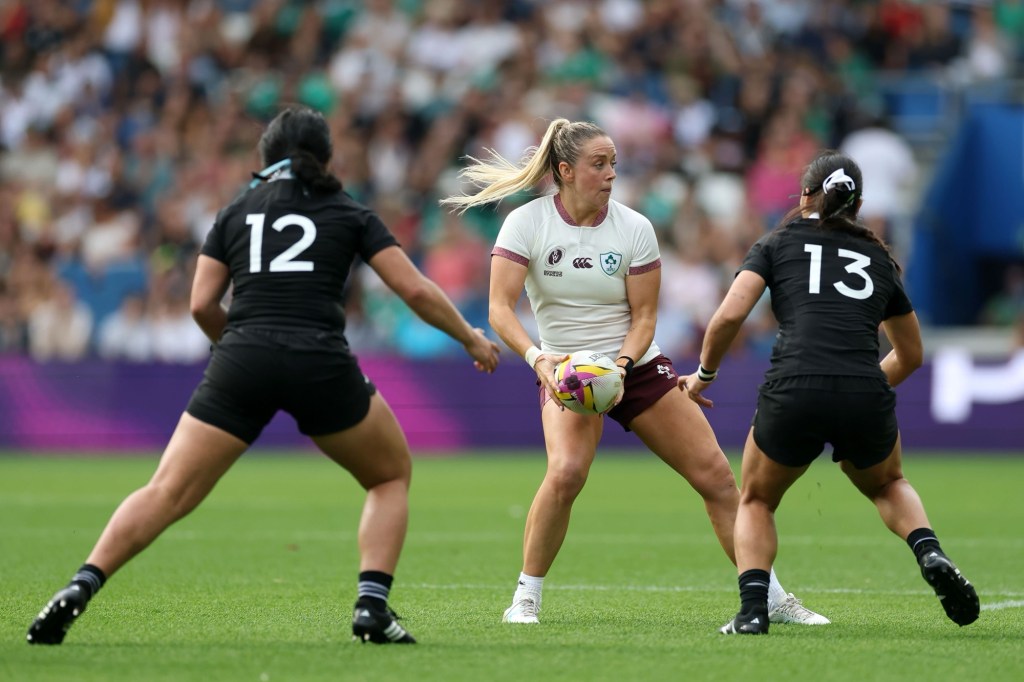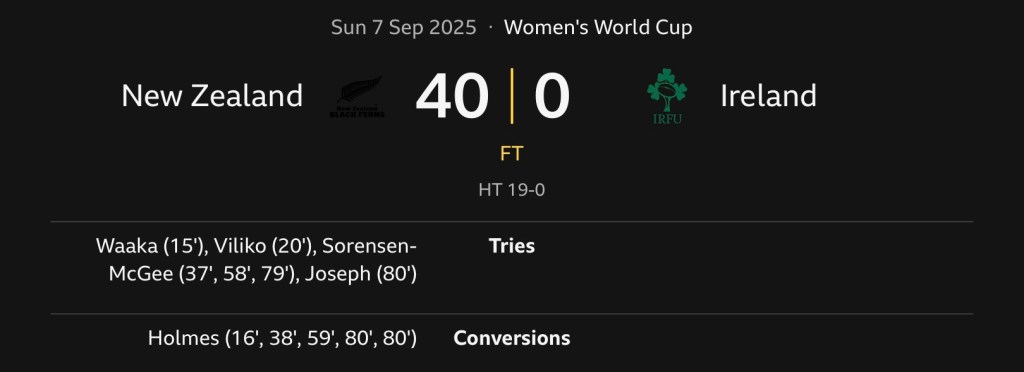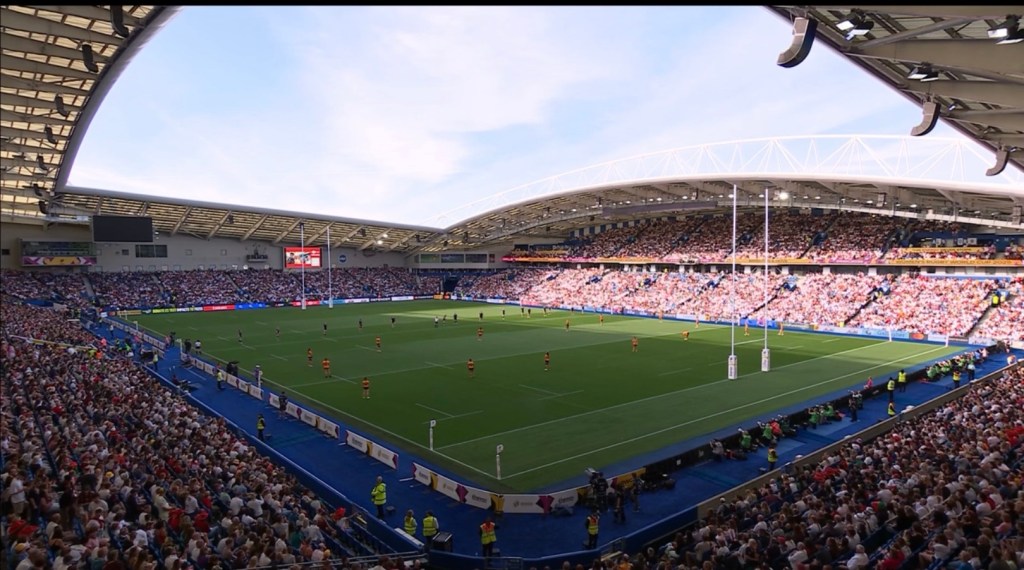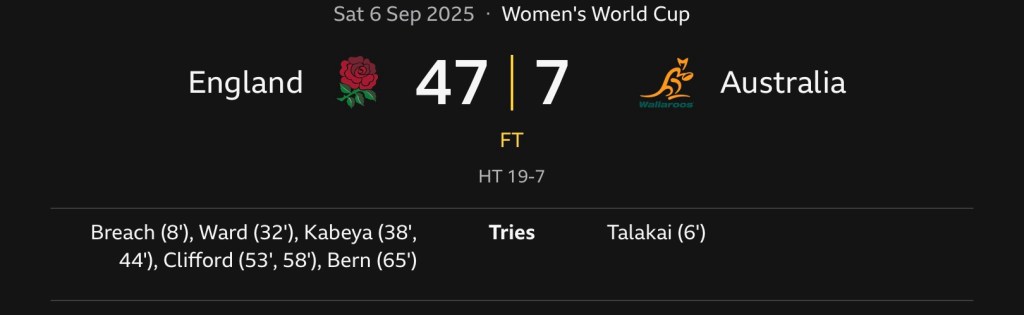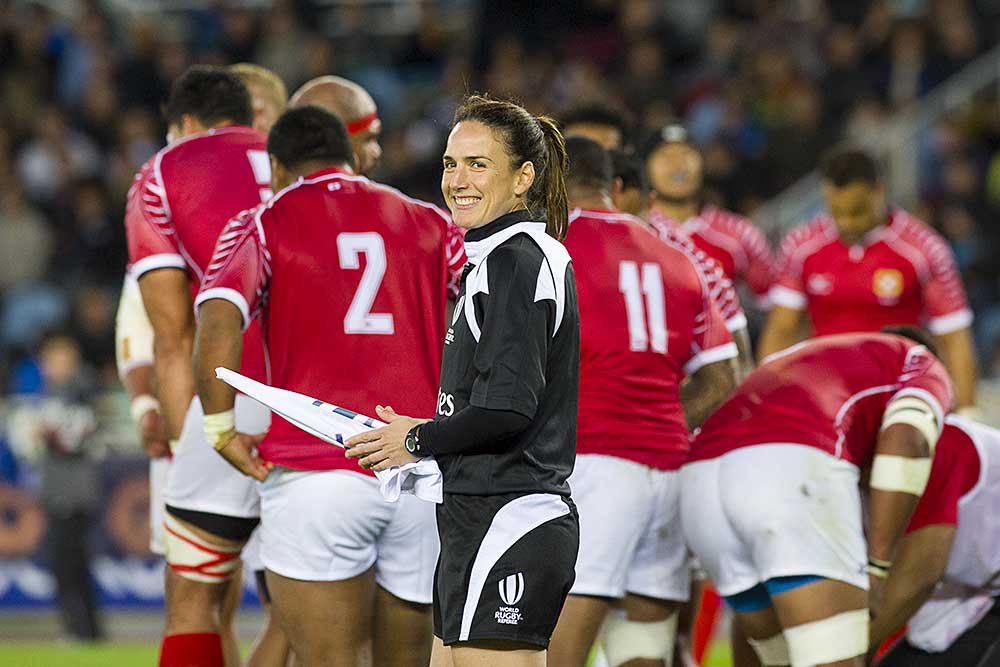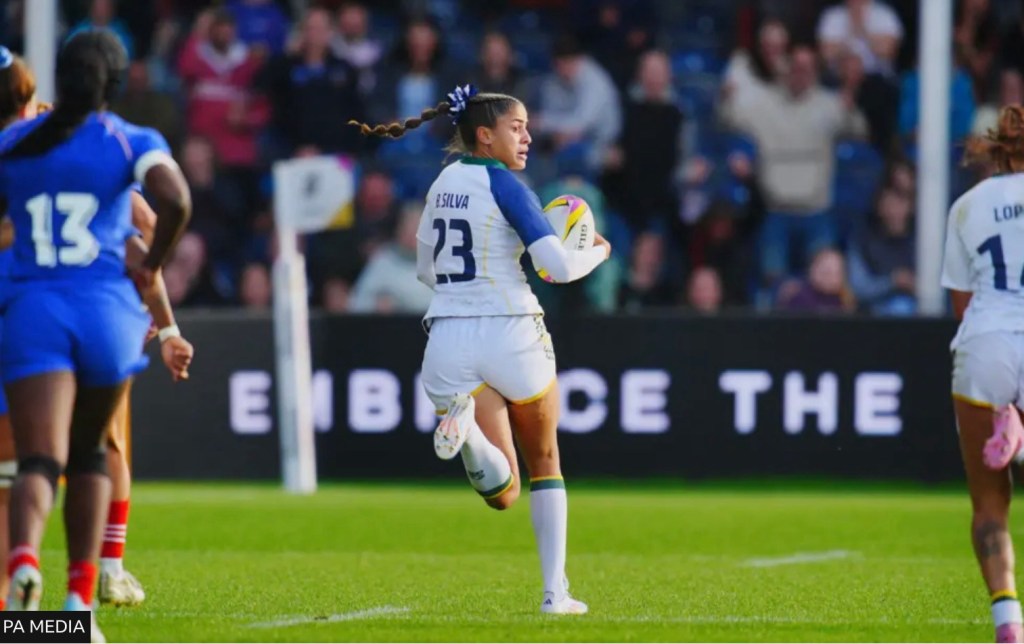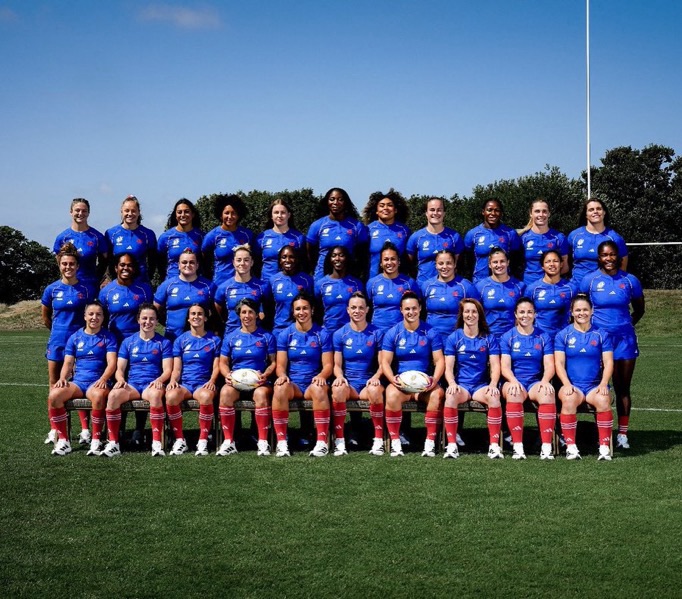
Stage Set For The Women’s Rugby World Cup

With the Lions tour over, the sporting world turns its eyes from Australia to England, a storm is brewing not of the rain and thunder experienced in Sydney, but of passion, pride, and pure sporting glory.

The 2025 Women’s Rugby World Cup isn’t just another tournament. It’s a reckoning. A celebration. A powerful reminder that when the rugby women of the globe take the field, they don’t just play the game—they elevate it.

For the first time, sixteen nations will compete for the most coveted prize in women’s rugby. From the lush green grass of Twickenham to the steep historical stands of Sunderland and Manchester, each venue will bear witness to something more than rugby: the pressure, the will to win, the weight of expectation, and the dreams of millions.

This World Cup will be a cornucopia of contrasts. Seasoned big guns like New Zealand, England, and France return with unfinished business and burning ambition.

England’s Red Roses, heartbreakingly close in 2021, will this time have the home crowd behind them, a nation hungry for redemption.

Meanwhile, emerging nations like Colombia, Japan, and Fiji bring their own unique fire and flare eager to upset the hierarchy and etch new names into rugby folklore.

But it’s not just the results that will matter. It’s the stories. The captain who plays for her country just weeks after giving birth. The teenage winger who grew up watching highlights on a cracked mobile phone screen. The coach who turned a grassroots team into global contenders. These women are architects of a new era, and this World Cup is their blueprint for history.

The 2025 Women’s Rugby World Cup promises lifelong memories, hard hits, and breathtaking tries—but more than that, it offers a glimpse into the fierce, unrelenting soul of the game.

The world is watching, and the women are ready to roar.

Nessun Dorma For The Lions In Sydney

Construction began on the Sydney Opera House in 1959, but due to persistent problems its grand opening did not take place until October 20, 1973 at a total cost, way over budget, of 102 million dollars.

The iconic building is situated on Bennelong Point, a promontory on the south side of the harbour just east of the Sydney Harbour Bridge. 

Nessun dorma, translated as “Let no one sleep,” is a celebrated tenor aria from Giacomo Puccini’s Turandot, an opera that has been performed in this iconic arena on many occasions.

It is sung by Calaf, an unknown prince, who expresses his resolve to win the heart of Princess Turandot. The aria is set against the backdrop of Turandot’s cruel decree that everyone in the kingdom must stay awake until she learns Calaf’s name, or they will all be executed. 

Last night in Sydney for the sea of Red that engulfed the capital of New South Wales, it was most definitely a case of Nessun Dorma as sleep was in very short supply as the final whistle didn’t blow until some ungodly hour.

Fortunately, the only executions that took place were of the try scoring variety as the 2025 British & Irish Lions ended their tour with a defeat, the pain of which of which was amply soothed by a 2-1 test series victory.

With the series already in the bag after victory in Melbourne last Saturday, the match might well have lurched into an anti-climactic contest.

But Australia had other ideas and with the masters of niggle Nic White and Will Skelton displaying their full array of shithousery it was a tough and tetchy test match played in appalling conditions which the Wallabies well and truly dominated.

It had rained non stop since Wednesday in Sydney, so much so that the lines on the pitch had to be repainted prior to kick off after being washed away by the pre match torrential downpours.

Australia dominated the first half building up a narrow 8-0 a narrow gap made much more valuable in the monsoon conditions.

The second half had only been underway for two minutes when the players were taken off the field with lightning strikes in the vicinity

The interruption made little difference to the balance of power. Australia looked sharper and hungrier for victory as the Lions line out began to creak.

Jorgensen’s 54th minute converted try took Australia to a 15-0 lead, and the Lions were struggling.

No race is more accustomed to constant rain than the Welsh, and as if to prove the point, Jac Morgan showed his precipitation mastery with a try seven minutes later that brought the Lions back into contention at 15-7.

The disjointed Lions having lost Itoje, Freeman and Ryan to head injuries and with Huw Jones switching to right wing couldn’t get enough accuracy and quality possession to bridge the gap any further. McDermott’s try with ten minutes to go made it 22-7 and sealed the victory.

Stuart consolation try in the 79th made the scoreboard look a little more respectable, but this was a worthy Wallabies win.

To think that Australia were theoretically 51 seconds away from a series win, if you take into account last week’s events, seems hard to comprehend. It emphasises the small margins that make up the difference between success and failure at the top end of elite sport.

It may have been Nessun Dorma last night, although I am sure there will plenty of shut-eye today on the long flight back home.

Victory In Victoria Seals Lions Series Win

The first ever set of traffic lights in Australia were installed in Melbourne in 1928.

As if that wasn’t enough kudos in the claim to fame stakes the iconic Australian spread, Vegemite, was invented and is still produced in Melbourne the state capital of Victoria which is the second most populous city in Australia.

Yesterday, the British & Irish Lions were given the green light to drive all the way to Sydney with a test series win under their seat belts.

At the MCG, that wonderful sporting cathedral, the Wallabies were hit for six in the final minute after producing a performance that puts Lazarus in the shade.

Even that endangered species the Welsh lion made an appearance off the bench in the 54th minute Jac Morgan who should be afforded world wildlife fund protection brought a smile to a desperately depressed rugby nation back home.

With 79:09 on the clock, the Lions were trailing 26-24 and were fifty-one seconds away from defeat and the prospect of having to face a nerve jangling series decider next Saturday in Sydney.

One second later, Hugo Keenan glided through a gap to touchdown for a try that gave the tourists the magical triple treasure trove of the lead for the first time in the match. It was a heart stopping victory, and a test series win.

Chalk and cheese are not diverse enough to describe Australia’s transformation from the first test. Skelton and Valetini were immense and the Wallabies first half performance was powerful and passionate, with accuracy and imagination to match.

It was a case of advance Australia flair right from the kick-off, and the 25-3 lead they built up was thoroughly merited.

Huw Jones 38th minute try and Russell’s conversation made the half-time score 23-17 and brought the Lions right back in contention.

Australia stretched their lead to 26-17 with a 53rd minute penalty from Lynagh before Beirne’s converted try brought the Lions back to within two points (26-24) with twenty minutes remaining.

The Wallabies were clinging on and were just fifty-one seconds away from victory when Lions full back Hugo Keenan applied the coup de grâce.

A 90,307 crowd were entertained and enthralled by a proper pulsating test match with a lovely bit of niggle that went right down to the wire.

The lions showed their true roar in clawing back a record points deficit. But the Wallabies when the gut-wrenching feeling of loss eases will realise they are not as far away from returning to the top table of highly competitive rugby nations as it appeared a week ago.

Those Melbourne traffic lights have witnessed an awful lot since 1928, but last night the red lights appeared to be shining more brightly than the amber ones, perhaps their tribute to a Lions test series victory.

Brisbane A Bridge Too Far For The Wallabies

Brisbane, the capital of Queensland on the southern slopes of the Taylor Mountain range, is Australia’s third-largest city.

If you like bridges, then Brisbane is most definitely the place for you. There are eighteen of them spanning the Brisbane River, with the majority of them situated in the inner city area.

However, yesterday proved to be a bridge too far for the Wallabies as the British & Irish Lions emerged victorious in the first match of their three test series against Australia.

With Finn Russell in sparkling form the Lions bossed the first half building up a 17-5 lead, the only blemish being Australia’s 28th minute try that gave them a lifeline to cling onto at the interval.

The first score of the second half was likely to be pivotal in deciding the outcome of this match, and it was the men in red who in the first minute scored a try through Dan Sheehan. Russell’s conversion made it 24-5 to the tourists.

With all the momentum and a healthy lead, you felt the Lions would pull away and the prospect of a big victory was a very realistic possibility, but they took their foot off the gas.

In fact, they not only took their foot off the gas they parked the car, and turned the engine off.

Tries from Tizzano and McDermott, both converted by Donaldson brought the Wallabies right back in contention as they dominated possession and territory.

Only a Marcus Smith penalty between those two scores kept it beyond a one score game.

The Lions will be delighted with a 27-19 win but the manner in which a clunky and disjointed Australian side came back will cause them a few restless nights, particularly as Nick Skelton and Rob Valetini will be back in the gold Cadbury’s emblazoned shirts next weekend.

Australia will be much improved in the second test, but if the Lions can replicate that first half performance for a full eighty minutes next weekend in Melbourne, they will be hard to live with.

But for now it’s time to savour the sweet taste of victory, and like the Brisbane River, the Lions will cross that bridge when they come to it.

Crouching Lions Hidden Dragons

“It simply isn’t an adventure worth telling if there aren’t any dragons” -J.R.R Tolkien.

For the first time since 1899 there will not be a Welshman present in a British and Irish Lions test team another damning statistic to underline the heart breaking steep decline of Welsh rugby on the world stage.

Since 1899, when Wales were first involved with a tour and the Lions played a Test series, at least one Welshman has been selected to start every Lions Test.

They have stood proudly in rugby history as the only nation to have provided players for every Lions Test for the last century.

Scotland last failed to provide a starter in 2017, Ireland in 1989 and England in 1950.

Wales have supplied a record ten players for a Lions test team on two occasions.

On Saturday August 19, 1950 a fullback from Gorseinon named Lewis Jones made history when he lined-up next to a record nine fellow Welshmen as the British Lions beat Australia in their own back yard.

Lewis Jones, Jack Matthews, Bleddyn Williams (c), Malcolm Thomas, Rex Willis, Dai Davies, John Robins, Rees Stephens, Bob Evans and Roy John stood alone – as members of the most Welsh dominated Lions test team in history.

In 2013 another ten Welshmen lined up against Australia in the third test that produced a rousing 41-16 victory for the Lions to clinch a series win.

Leigh Halfpenny Jonathan Davies Jamie Roberts George North Mike Phillips Richard Hibbard Adam Jones Alun Wyn Jones Dan Lydiate Toby Faletau, and if Sam Warburton had not been injured it would have been eleven players from Wales.

Sadly this time around there isn’t a single Welshman in the matchday 23 an indication of how far a mighty proud rugby nation has fallen.

WARNING: Watching The Lions Can Seriously Damage Your Health

Is it really four years since the Lions left South Africa in face masks with their tails between their legs ?

A pandemic has thankfully come and gone and for those unable to travel to Australia and who cannot afford, or are not allowed to own a Sky sports subscription, the time has come to embark once again on the dreadful early Saturday morning pub experience that for many unfortunates is part and parcel of a Lions tour.

Apart from the out-of-body experience experienced as a result crossing the threshold of your local Ember Inn at such an ungodly hour, there are other serious health implications to consider.

Now, when I was young there were no such dilemmas.

It may seem hard to believe but in 1971 all international rugby matches kicked off in the middle of the afternoon, also television coverage was not available, so it was under the bed covers with a transistor radio the size of a microwave at 4am trying to tune in to a New Zealand radio station commentary via the short wave.

It was tough, but on the plus side we never had to endure three hours of Will Greenwood previewing each test match.

The cumulative effect of more than three consecutive test match Saturday mornings will inevitably increase your exposure to these dangers, and of course the long term repercussions.

But back to the health implications I spoke about earlier, I am of course referring to the dietary minefield that comes with watching early morning rugby in a pub, or wine bar, if you happen to live in Richmond.

Do you start with a cappuccino or a Guinness ? And as the aroma of sausages cooking in the pub kitchen invades the lounge bar, can you be strong enough to stick to your original choice of wholemeal toast and flora ?

 It takes nerves of steel to stick with the courage of your convictions, and a stomach of steel to survive the results of any lack of will power, so there are no real winners here.

Sufferers of high blood pressure, or hypertension as travel insurance providers prefer to call it, are particularly at risk due to several factors.

Firstly there is the almost cast iron certainty that the seat you have carefully selected and occupied since the pub opened, to give you optimum view of the screen, will be totally eclipsed when the largest resident of the town drags his, or her, bar stool in front of your line of vision five minutes before kick off, just breathe deeply and count to ten.

Secondly, as the referee blows his whistle to start the game, the television will mysteriously switch channels. Instead of watching Tommy Freeman steaming down the wing, you will be gazing at James Martin on Saturday morning kitchen, steaming his dumplings. I would suggest counting to twenty for this one.

Finally, there is the post noon exit into bright daylight that has you blinking watery eyed like a pit pony with hay fever. Your befuddled brain reminds you that there are still twelve hours of the day remaining for you to somehow negotiate.

I don’t pretend to know all the answers, and more illustrious scribes than I have wrestled with this problem.

Unsympathetic partners may take advantage of your lethargic state and lure you to the supermarket or other shopping establishments with coffee and pastry enticements, but beware. before you know it, you will be pushing a fully loaded trolley between the dog food and homeware aisles, with your latte and pecan Danish a distant dream.

Good luck my friends, if it’s any consolation you are not alone.

Do Not Adjust Your Sets Wales Win A Rugby Match

“The secret of life is to fall seven times and get up eight times”

Some of the rarest things in the world include unique gemstones like painite and pure blue diamonds, rare animals such as the Amur leopard and the Vaquita, and extremely rare elements such as Astatine.

Additionally, there are rare natural phenomena like the Sea of Stars and glowing forests.

In sporting terms, a Welsh rugby victory is on the same scale of rarity as rocking horse poo.

A well-known Japanese saying about rarity is “Ichi-go-ichi-e which translates to “treasure every encounter, for it will never recur in exactly the same way”.

Thankfully for Wales, this proved to be the case as they put the misery of last Saturday’s defeat to Japan behind them and made the second test an “Ichi-go-ichi-e moment.

Rome wasn’t built in a day and a Welsh victory has been in the building stage longer than Gaudi’s Sagrada Familia but finally after twenty-one months-644 days- it finally arrived in Kobe under the familiar settings of a closed roof.

It had a feeling of Tokyo revisited as Wales built up a decent 21-3 lead but similar to the previous weekend Japan came alive in the second half and with four minutes remaining Wales were clinging on to a 24-22 lead.

But this time the Dragons found their fire and instead of capitulating they roared forward and a delightful behind the back pass from Tane Plumtree sent Dan Edwards over the line.a

As Edwards converted his own try, a nation exhaled and began to breathe in the rare clean, embracing air of victory.

Does this win solve all or any of the problems in Welsh rugby ? Of course not, but everyone who loves and follows Cymru deserves to celebrate this victory.

Captain Dewi Lake’s Tokyo tears of sadness were replaced by tears if not of unadulterated joy, then most definitely ones of relief.

There will be plenty more optical precipitation shed in the near future, but for now Wales and its people can dry their eyes and even allow themselves the luxury of a mild grin.

さようなら Sayōnara

Wales Hit New Depths In The Land Of The Rising Scrum

Halley’s Comet returns to Earth’s vicinity approximately every 75 years, making it possible for a person to see it twice in their lifetime. A Welsh victory is assuming similar proportions following a disappointing defeat to Japan earlier today.

Eight thousand miles away from their previous bitter heartbreaking embarrassing defeat in Cardiff to England, they hit new depths at Prince Chichibunomiya Memorial Stadium in the Aoyama district of central Tokyo.

An eighteenth consecutive defeat was earth-shattering for Welsh rugby fans, who have been witnessing a total eclipse in the winning stakes for what seems like a lifetime.

The BBC made a request to move forward the kick-off time, I imagine with a genuine concern for the health and safety of viewers in Wales.

The collective injury toll from half asleep victims operating kettles and coffee machine before the 6am kick off could well have placed unprecedented demands on the NHS accident and emergency departments. But Japan coach Eddie Jones decided otherwise and may well have blood on his hands.

The excruciating heat and humidity were undoubtedly a factor, but Wales after building up a 19-7 half-time lead were pointless in the second half in both senses of the word.

Wales took advantage of an ill disciplined and inaccurate Japanese side in the first half, scoring three tries through Ben Thomas, Tom Rogers and a penalty try. But in the second period they offered nothing and at the final whistle looked a demoralised and shell shocked outfit.

Japan’s seventeen unanswered second half points came from tries by Nakakusu and Vailea converted by Matsunaga and a penalty by Lee.

This latest Wales defeat puts them at a new low in the Word Rankings, placed 14th, below Japan and Samoa.

The sight of Welsh captain Dewi Lake in tears provided a snapshot of the desperation and sadness that has engulfed a proud rugby nation, and there appears to be no prospect of those emotions changing anytime soon. 

Lions Win The Battle Of The Reds In Brisbane

After victory in Perth on the western edge of Australia the Lions made the long trip coast to coast to the far east and to the third most populous city in Australia Brisbane, a journey of some 4,225 kilometres, a forty-six-hour drive or a four and a half hour flight. Luckily, the Lions chose the latter.

The whole squad devastated by the news that Tomos Williams’ tour is over with a hamstring tear had to quickly regain a sharp focus on matters in hand, namely their second tour match against Queensland Reds at the Suncorp Stadium.

Going coast to coast over this vast country incurs a time difference. Brisbane is two hours ahead of Perth, and even this relatively small adjustment when added to previous jet lag can disrupt the body’s circadian rhythm.

In the wild, Lions sleep between sixteen and twenty hours a day, But in the rugby jungle there is no time for slumber that will come after the fight. 

With thirteen changes to the team that beat Western Force in Perth, continuity and familiarity were inevitably going to be in short supply and as in the first game of the tour the first half was clunky.

The opposition scored a try in the opening seven minutes as was the case against Western Force and Déjà vu continued when the Lions created beauty and precision in a dominant second half.

Repetitions and time on the training field will only improve this side, as much of the tour so far has been taken up with travel and administration. But there is no doubt the raw materials are there.

 Maro Itoje looked a true Lions captain, leading by example and being involved in many key moments. The youthful irritations of screaming with joy at every successful ruck and maul appear to have been replaced by cool, calm intelligence that his troops respect and follow.

As the World Wildlife Fund declared a new endangered species, the Welsh Lion, it was wonderful to see Jac Morgan in sparkling form and justifiably awarded the man of the match award.

So the Lions move on to Sydney with 106 points from the opening two games, including 16 tries. The only fly in the ointment is the injury to Elliott Daly. He left the field in the 67th minute, grimacing with pain from an arm injury.

Daly has been faultless so far on tour and has definitely put his name forward for a starting test place, as was the case with Tomos Williams last Saturday. One only hopes the outcome of his injury does not have the same end result.

Toulouse Parisian Walkways The Top 14 Final

The Top 14 season that began on 7 September 2024, ended last night close to midnight after nine months and twenty-eight weekends it finally decided to call it a day.

The Top 14 Final is a rugby and cultural event like no other. It is Mardi Gras and Oktoberfest all rolled into one.

From early morning the TGVs roll into Gare de Lyon and Gare Montparnasse with their colourful human cargo disembarking and immediately heading for a station buffet espresso with the speed and footwork of Louis Bielle-Biarrey.

The day of the final is an extremely long one with kick off post 9 p.m. Wherever you go in the French capital on the day of the final there are lines of families in team shirts sitting out in geometric lines of cafe tables as far as the eye can see soaking up the sun’s rays amid the wafting aroma of steak frites.

The glass carafes of red, white and rosé glisten in the sun. This is as much a part of final day as the match itself, and just as grueling, with cheese and coffee and maybe even a brandy to get through before setting off for Stade de France with a heavy heart an even heavier stomach and a much lighter wallet.

If you have never been to Paris for a Top 14 final, I would recommend you add it to your bucket list.

Paris on a June summer’s night the temperature a simmering thirty degrees at 9pm and an intoxicating rugby occasion at Stade de France is truly one of life’s pleasures.

This Top 14 Final between Bordeaux and Toulouse two teams who are no strangers to matches of this magnitude will be remembered for a very long time.

As colourful sporting occasions go this was blindingly vivid, a feast for the senses in colour and sound enhanced by the speed of Penaud, the elegance of Ntamack and the raw and brutal collisions where Big Ben and Massive Meafou instead of swapping jersey’s exchanged rib cages.

A penalty from Bordeaux scrum half Maxime Lucu in the 80th minute brought the scores level at 33-33 and forced the contest to go to extra-time

In those red hot nerve jangling added twenty minutes the ice cool Thomas Ramos landed two penalties to give Toulouse victory (39-33) and their third consecutive Top 14 title.

The 78,534 present witnessed a pulsating contest as the lead changed hands on six occasions. When Toulouse established a ten point lead (33-23) with fourteen minutes remaining it looked game over but Bordeaux had other ideas and a 69th minute try from Petti Pagadizabal converted by the immaculate Lucu brought the defect back to three points.

Saturday night reached over to Sunday morning as the midnight hour passed whilst Julian Marchand lifted the Bouclier de Brennis a trophy the size and shape of a wardrobe door.

For Toulouse a dark season that has been touched by tragedy and blighted by injuries had finally seen some sunshine and there were many tears shed by players and staff alike.

So the Top 14 and the season that never ends finally ended but we do it all again in the blink of an eye when the teams start their pre season training next month. Oo La La !