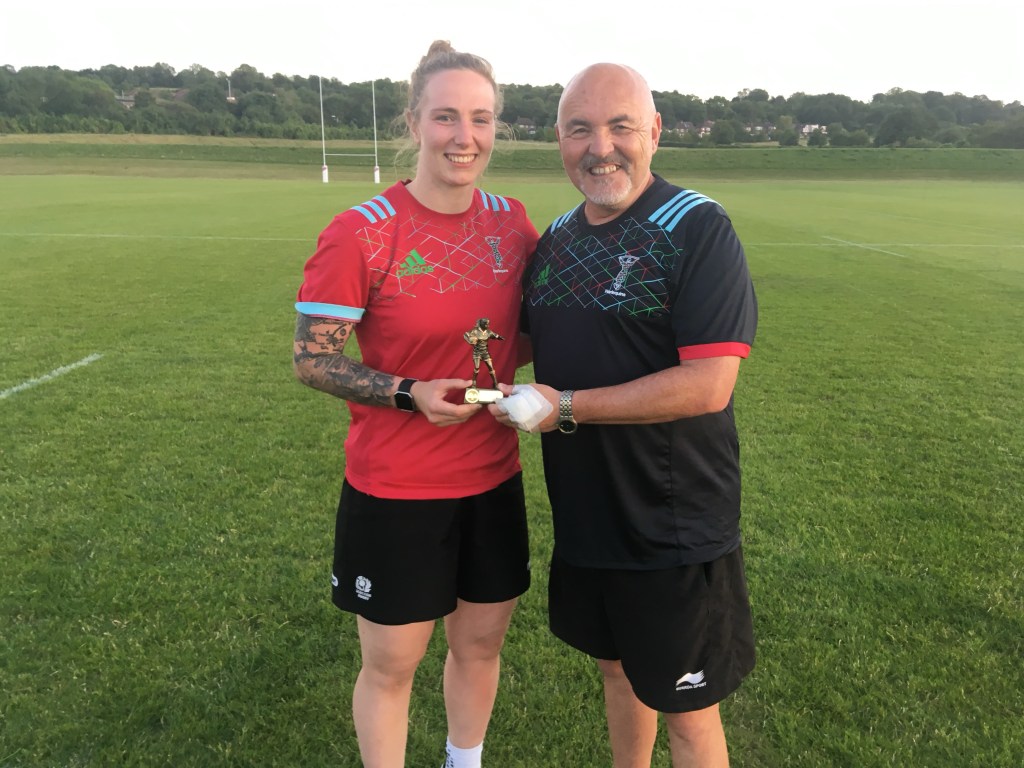
When Jade Konkel laced her boots for the last time, it wasn’t just the end of a career. It was the quiet closing of a chapter I had the privilege of witnessing up close both with a notebook in hand, and with the easy familiarity of friendship.
I have watched her from press boxes and the depths of Surrey Sports Park battling in the snow, wind and rain, from muddy touchlines where the cold seeps into your bones, to stadium seats buzzing with anticipation before a Six Nations kick-off. I have watched her in the player’s tunnel, jaw set, eyes forward. I have watched her in the scrum, where there are no cameras close enough to truly capture the strain, the technique and the raw will.
And I have watched her after the final whistle, bruised and bloodied a smile cutting through the fatigue, always more interested in how the team performed than in any individual praise.
For more than a decade, Jade didn’t just carry the ball she carried expectation, possibility and belief. As a journalist, I wrote about her metres made, her tackles landed, and her tries.
I described the collisions, the work rate, the way she anchored a pack. I searched for the right phrasing to explain why her presence mattered so much to Quins and indeed Scotland.
But statistics never quite captured it. There is something visceral about watching Jade at work when you understand what is truly happening in those dark, grinding exchanges. The scrum is not glamorous. It is pressure, pain and precision. And Jade made it her art form.
When scrums held firm against heavier packs, when it edged forward with quiet authority, you could feel the psychological shift ripple through a match. I learned, over years of covering her, to watch for the small tell tale signs.
As a journalist, I admired her consistency she gave absolutely everything in every game she played. As a friend I admired her, and still do, as a human being.
When she became one of the first openly gay women to represent Scotland in rugby, it was reported as a milestone in what it meant for visibility in sport, for inclusion, for young players searching for someone who was like them in elite competition. But she wasn’t trying to be groundbreaking. She was simply being herself. The courage was in the ordinariness of it. In the refusal to compartmentalise who she was for the sake of comfort or convention.
I’ve witnessed the unseen parts too, the all too regular rehab sessions that seem endless, the frustration of countless injuries, the mental toll of professional sport where contracts are short and expectations long. Rugby careers are brutal in their brevity. Bodies absorb so much so that the jersey can be worn with pride. Retirement, when it comes, is never just about stepping off the pitch. It’s about renegotiating identity.
For someone whose life has been structured around training cycles, selection announcements, and matchday rituals, that shift is seismic. And yet, if there’s one thing I know about Jade, it’s that her impact was never confined to eighty minutes.
Teammates leaned on her. Younger players measured themselves against her standards. Coaches, the good ones, and they weren’t all good, trusted her implicitly. She was the cornerstone, the player every side needs and one who is often only truly appreciated until they’ve gone.
From the press box or the Touchline I often tried to find new ways to describe her and her game. Powerful. Relentless. Industrious. None ever felt sufficient. Because what set her apart wasn’t just physicality it was a presence. A steadiness. A refusal to yield.
Now, looking back not as a journalist but as someone who has shared conversations, coffees, frustrations and celebrations, the memories feel layered. The roar of the crowd blends with quieter moments.
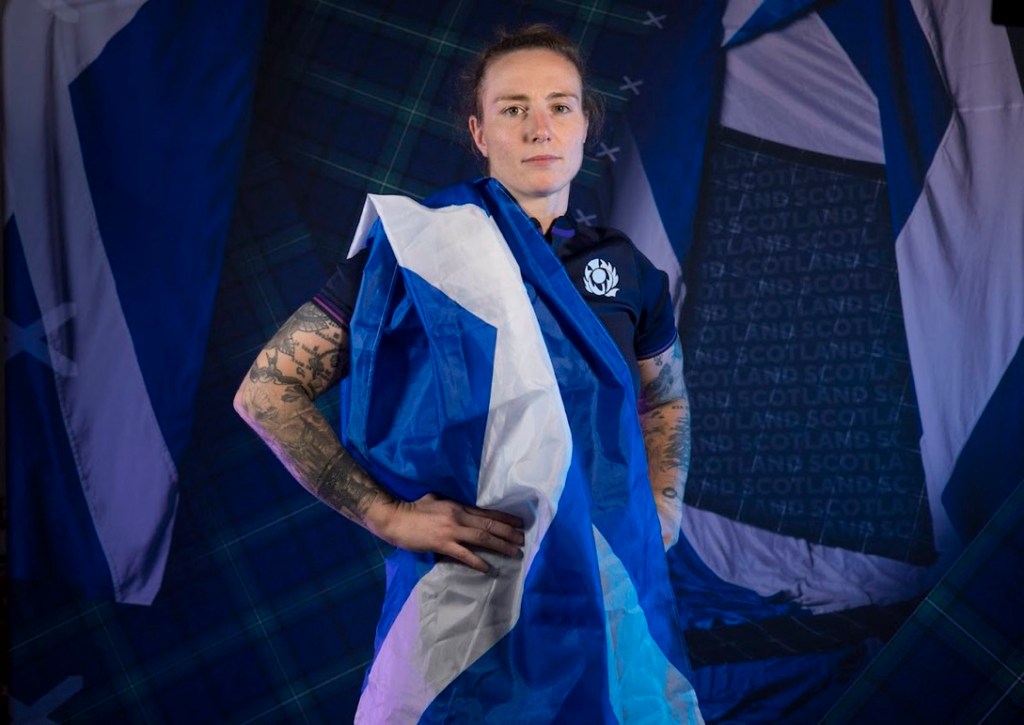
Somewhere in Scotland or indeed Surrey, a young number eight will crouch for her first scrum and believe, perhaps without realising why, that she belongs there. She will benefit from the ground Jade helped break, from the standards she set, from the visibility she embodied.
I was lucky enough to chronicle her career. Luckier still to call her a friend.
The boots may be hung up now. The collisions may cease. But the imprint remains, in the culture of the team, in the pathways carved wider, in the belief that women’s rugby is stronger for having had her at its heart.
As a journalist, I can say she helped change the game. As a friend, I can say she changed lives. And that feels like the greatest legacy of all.
Thank you Jade.