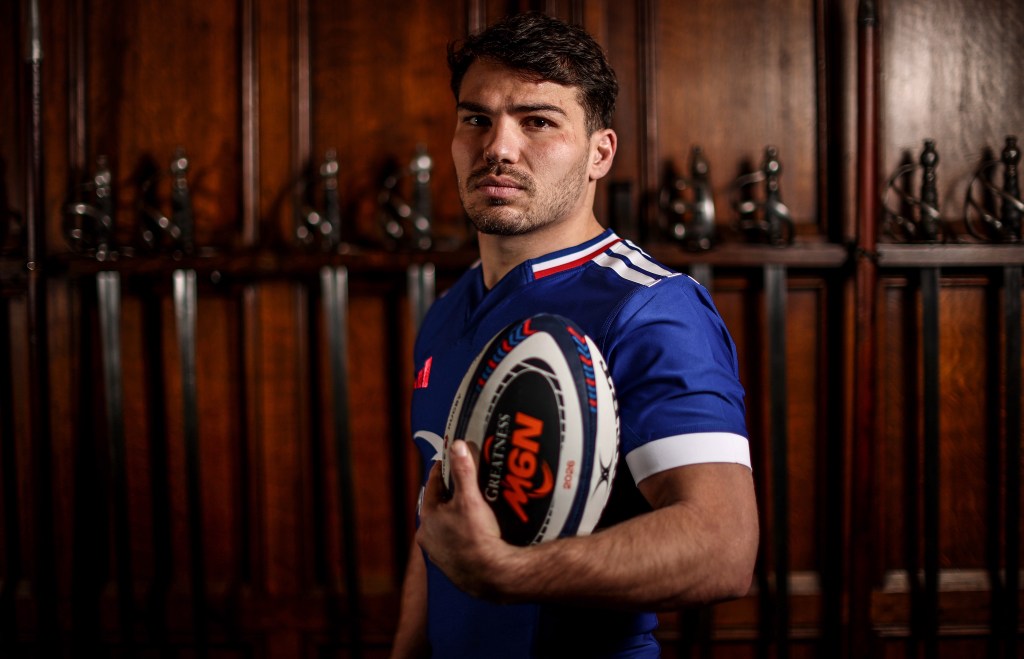
Ahead of the 2026 Guinness Six Nations which begins on Thursday night in Paris, France captain and global rugby superstar Antoine Dupont is raring to go after almost a year out of international rugby following a serious knee injury.
He spoke to the gathering media earlier this week.
How are you feeling going into the game against Ireland?
Antoine Dupont:
We are motivated and excited about the first game at home. It will be a bit strange to play on Thursday night, but we are taking the opportunity to play the opening game of the Six Nations. It is always special, and we know everyone will be watching, so we have to be ready for that.
You have a number of uncapped players in the squad. How are we going to see this new side gel?
Antoine Dupont:
They are doing very well at the moment in the Top 14, so it is rare for them to be available for selection. We all know that when you are on the field, you have to give 110 percent. I think it will help the team to bring a lot of energy and motivation, and to create a different atmosphere during the preparation for these games.
Has that changed how you prepare for matches like this?
Antoine Dupont:
Not really, because the game plan is the same for most of the players as it has been for the last few years. We know each other very well. Even the uncapped players have been involved in November or in the last Six Nations, even if they did not play. This is just the next phase of our group.
For you personally, there is always so much excitement around you. Even here, everyone wants a photo when you step on stage. How do you handle that?
Antoine Dupont:
I have been in this position for the last few years now, so I focus on myself, the team, and my personal objectives. I am demanding enough of myself already, so I do not put extra pressure on myself because of the environment. I try to stay focused on that.
How important is it to get off to a strong start here?
Antoine Dupont:
We know this tournament is very demanding. There is no room for mistakes. If you lose the first game at home, it becomes very difficult to win the tournament. So it is extremely important to start well.
After the Six Nations, there is also a big year of rugby ahead.
Antoine Dupont:
Like every year, we will experience a new competition, the Nations Cup. We do not know much about it yet, so we will see how it goes. It is always tricky for French players, because the first summer international is just one week after the Top 14 final. That is always a challenge for us. Sometimes it makes these games difficult, and it can be disappointing. We will see how we manage that.
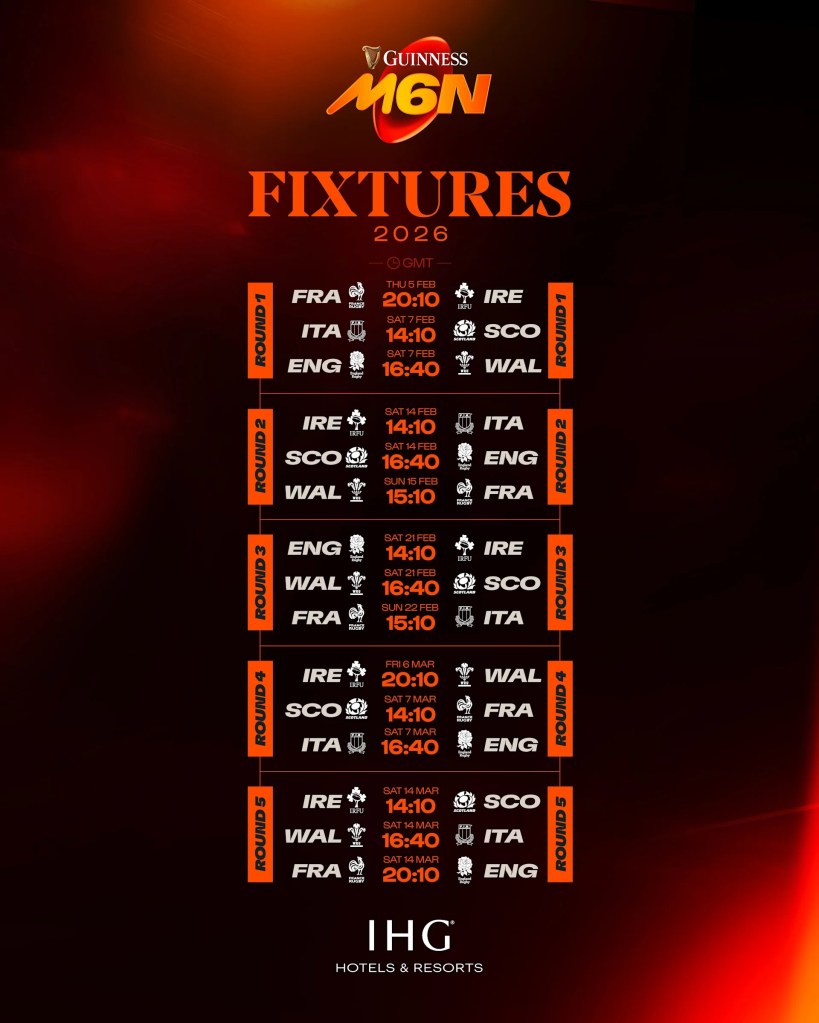
France face Ireland on Thursday evening at Stade de France kick off 2100 CET 2010 GMT live on ITV
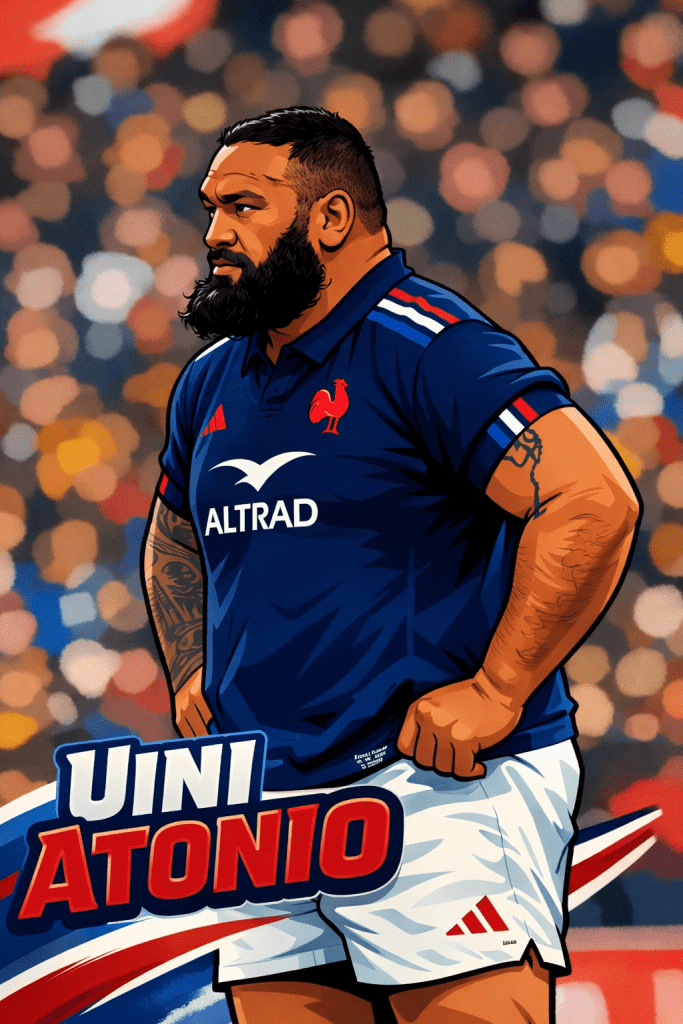
On Wednesday morning La Rochelle released a statement that left the rugby world in shock
“Uini Atonio was admitted yesterday to the La Rochelle Hospital Centre following a suspected heart problem. Medical examinations confirmed a heart attack. His condition is now stable and he remains, under supervision, in intensive care.”
“At the end of his hospitalisation, Uini will have to observe a long period of convalescence. It is now established that he will not be able to continue his playing career.”
“Uini occupies a special place in history and in the heart of our Club. This news touches us deeply. The entire Club wishes to send him and his family its total and unwavering support in this ordeal.”
Rugby prides itself on being a game for all shapes and sizes Atonio was the literal definition he was all shapes and all sizes depending on the time of year needless to say the varying shapes and sizes were all large ones.
Born on 26 March 1990 in Timaru, New Zealand, to Samoan parents, he began playing rugby at a young age before moving to France in 2011 after being spotted at a rugby tens tournament in Hong Kong.
Atonio spent his entire professional club career at La Rochelle, making over 300 appearances and helping the team rise from the second division (Pro D2) into the top tier (Top 14). He was a key figure in their back-to-back European Rugby Champions Cup triumphs in 2022 and 2023.
After qualifying for France on residency grounds, Atonio made his international debut in 2014 and went on to earn 68 caps for Les Bleus. He played a central role in France’s successful Six Nations campaigns, including the 2022 Grand Slam and the 2025 title win.
At 6ft 5ins and nearly 24 stones a smile was never far away from the big man’s face even in the heat of battle and off the field he is the kindest of gentle giants.
The abrupt end to his playing career is overshadowed by the huge relief that he is still alive and as well as can be expected with a good recovery anticipated.
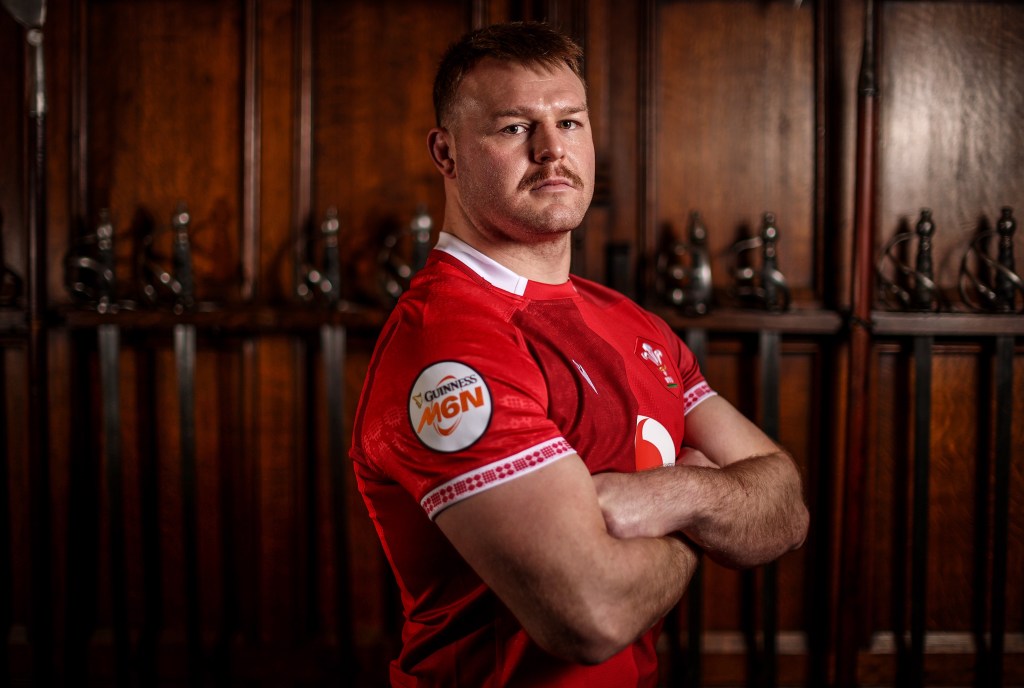
So, with a new coaching set-up and new faces, how are you feeling going in?
Dewi Lake:
Yeah, I am feeling great with the new coaching set-up and the new faces. I think it has been a breath of fresh air for us as a group. It has brought a real sense of change, and the passion and energy the new coaching staff have brought has filtered down into the players and the environment. We are excited to get started. The level of detail the coaches bring is only going to make us better as players, and it will drive performances on the field as well.
Obviously there is respect for all nations, but with that in mind, England v Wales must be some first fixture to go into.
Dewi Lake:
Yeah, it is unbelievable. Wales against England away from home as a first fixture. The hostility you face from the crowd, evenarriving on the bus, is something special. That rivalry is still as big as ever, and it is a great game for us to target.
Everybody knows how important momentum is in this competition. A strong performance in game one against Italy and that momentum could soon be on your side going into the first three fixtures before the break.
I think it is crucially important that we put in a strong performance.
How much are you looking forward to rugby being the main focus now?
Dewi Lake:
I think that is what this competition gives us, the chance to focus our attention on Test match rugby. Ultimately, it allows us to focus on what we all want to be doing with our time anyway, which is playing rugby. It is easy for me to talk about rugby, and a lot harder when there is other stuff going on off the field. Getting into this competition and being able to focus on England first up will be a breath of fresh air for everyone, and it will allow us all to really lock in on that.
Are you able to put into words the emotions you will feel as captain on that first day?
Dewi Lake:
It is always difficult to put those emotions into words. Every time it feels more special, rather than more normal. Each opportunity makes me more appreciative, because I know how quickly you can get injured or miss out on selection. That is the nature of the game we play. I do not think the emotions could be any higher for a first match anyway, especially Wales against England.
Rugby fans are rarely the first group of people to be considered when fixtures are arranged, in fact they are often the last.
For many years, Six Nations matches taking place on a Sunday or indeed a Friday night have made life difficult for the thousands of loyal followers that fork out hundreds of pounds and euros to support their national team.
Whether it be attempting to catch one of the ethereal non-existent post-match trains from Cardiff Central, or the last midnight metro from Stade de France, the logistics are a fraught stressful energy sapping experience that can ruin your entire day.
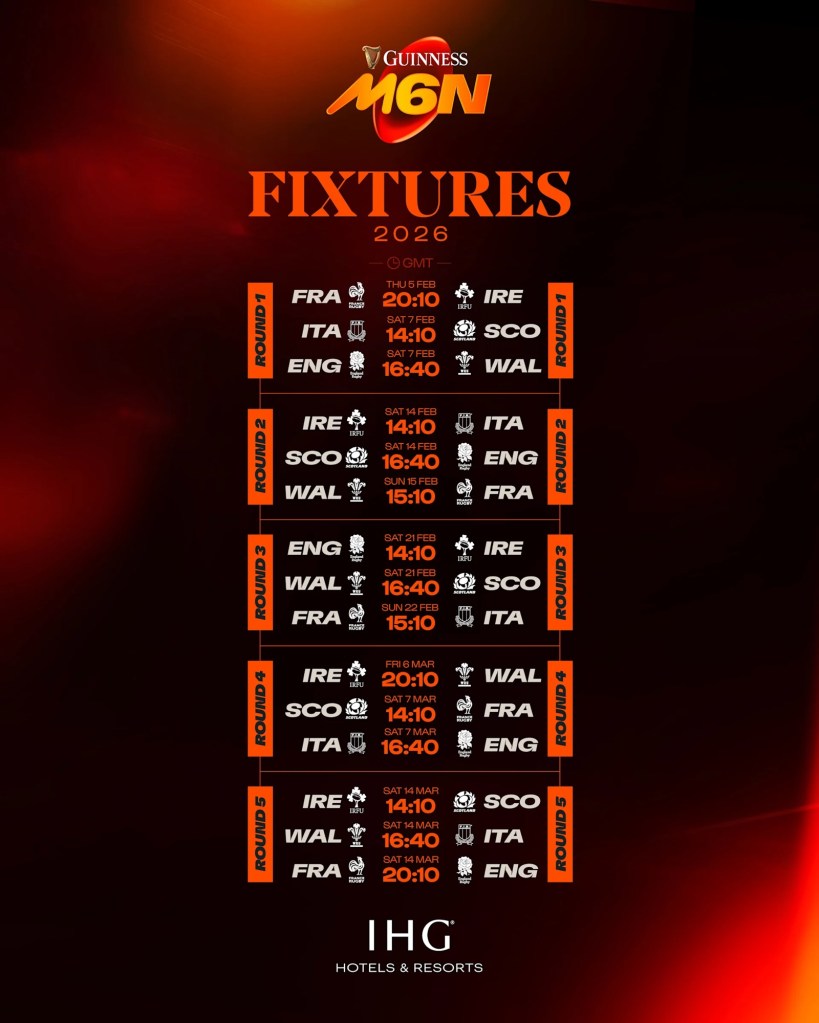
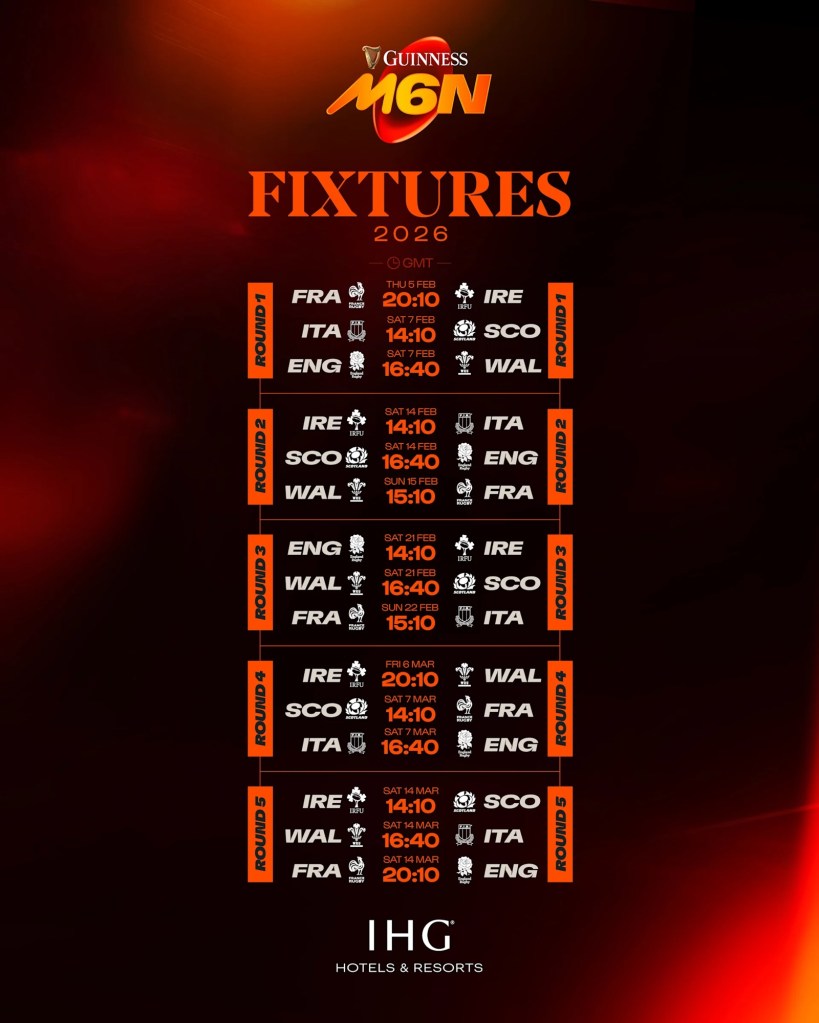
Just when you thought things couldn’t get any worse, the 2026 Guinness Six Nations kicks off on a Thursday night… yes, a Thursday night in Paris and with a post 9pm kick off on February 5th.
Television rules the rugby roost I guess, so you may wonder what the programme schedulers had in mind when they pushed for this “prime” slot ?
Well, the reason the match was moved back a day from the originally scheduled Friday to Thursday was apparently due to a clash with the Winter Olympics starting in Cortina on the Friday, although I’m sure both events could be accommodated perfectly well.
Having said all that, France v Ireland is a mouth watering opening fixture irrespective of which day of the week it takes place and should ensure the 2026 Guinness Six Nations tournament hits the ground running.
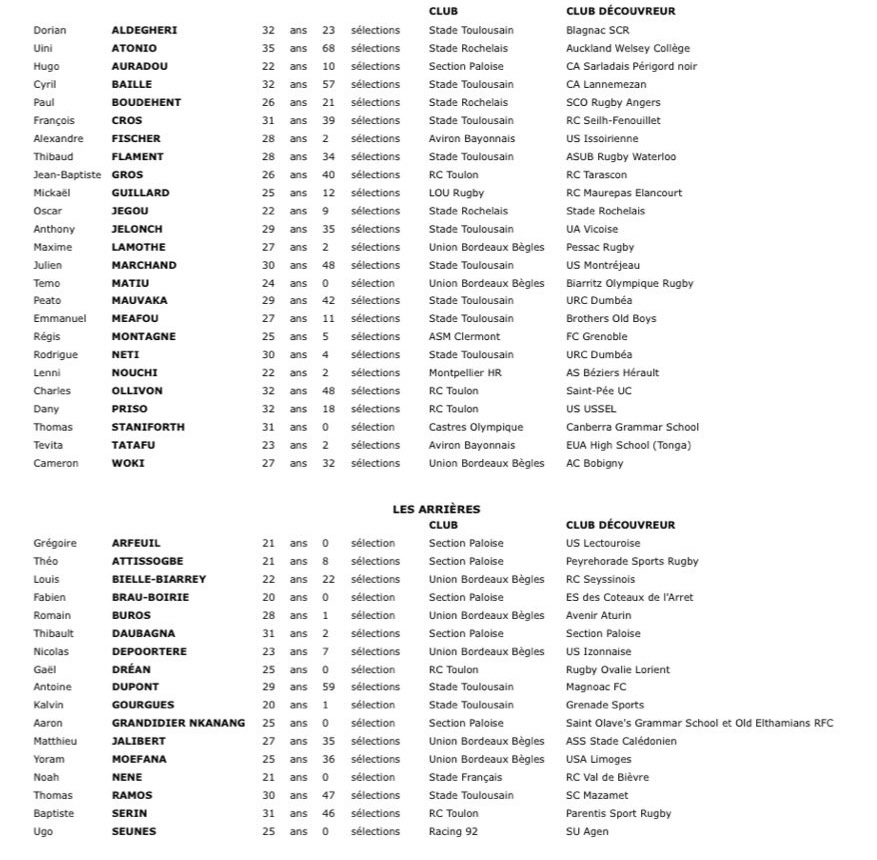
France Guinness Six Nations squad has been affected by a bit of a number nine crisis it appears a neuf isn’t a neuf with Maxime Lucu, Nolann Le Garrec and Baptiste Juneau all injured.
This news is of course tempered by the return of Antoine Dupont who is scheduled to make his first international appearance for eleven months.
Elsewhere, Romain Ntamack will miss the early rounds of the tournament with a kidney injury which allows the in form Mathieu Jalibert to step in at fly half and spare coach Fabian Galthie the unenviable task of having to decide between the two wonderfully gifted tens.
And perhaps the biggest shock of all is the dropping of record try scorer Damian Penaud and former captain Gregory Alldritt, only the French with their depth of talent could perform such an act of high treason.
That big Thursday night in Paris can’t come soon enough.
January in Wales has always been a time of anticipation and excitement as the Six Nations tournament looms into view.
For Wales and its fans this is the tournament that sets the pulses racing, the history, the noble successes and memories of wonderful days With family and friends.
But this year amidst the doom, gloom and infighting that hangs over the game in these parts the mood is much different.
Perhaps the one thing many of us feared most of all has taken hold-Apathy.
Wales have three home games this year and at the time of writing there are still 25,000 tickets available for the match against France on February 15th a fixture that not so long ago would have sold out long before 2026 had even begun.
It appears that even the lure of seeing Antoine Dupont in the flesh is not enough to entice many of the general public.
34,000 tickets are unsold for Wales’ final home game of the championship against Italy, whilst the Scotland fixture has around 13,000 available.
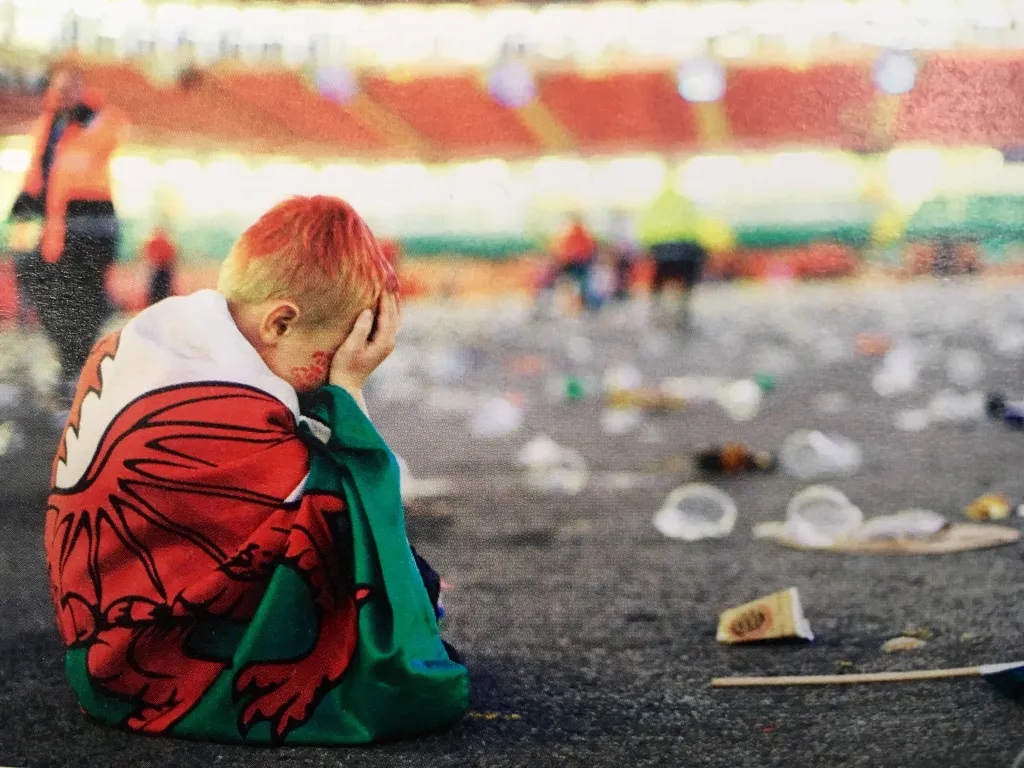
Supporting Wales has never meant guaranteed success. Fans are used to pain. But this feels different. It feels like watching something you love struggle to remember itself.
Now we find ourselves celebrating small things. A decent defensive set. A half-break. A winger having a go even when the game’s already drifting away. Moments instead of matches. There is effort, but belief feels like a coat that is too thin to keep out the rain and bitter sleet.
And the worst part isn’t even the losing, it’s the familiarity of it. The way hope leaks out earlier each match. The way you brace yourself before the final whistle, already managing the disappointment.
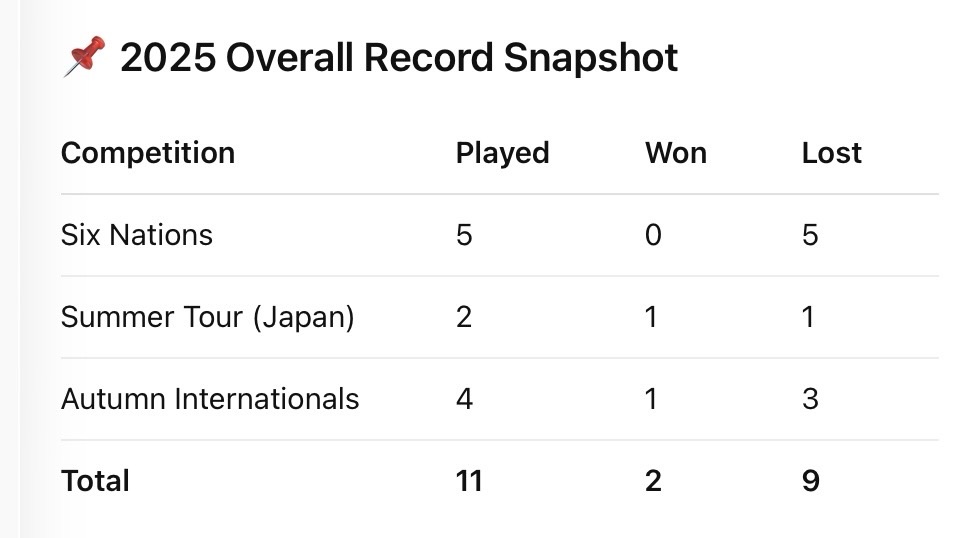
Wales have lost 20 of their last 22 Guinness Six Nations matches and open their 2026 campaign against England on Saturday, February 7th at Twickenham, many folks have already adopted the brace position.
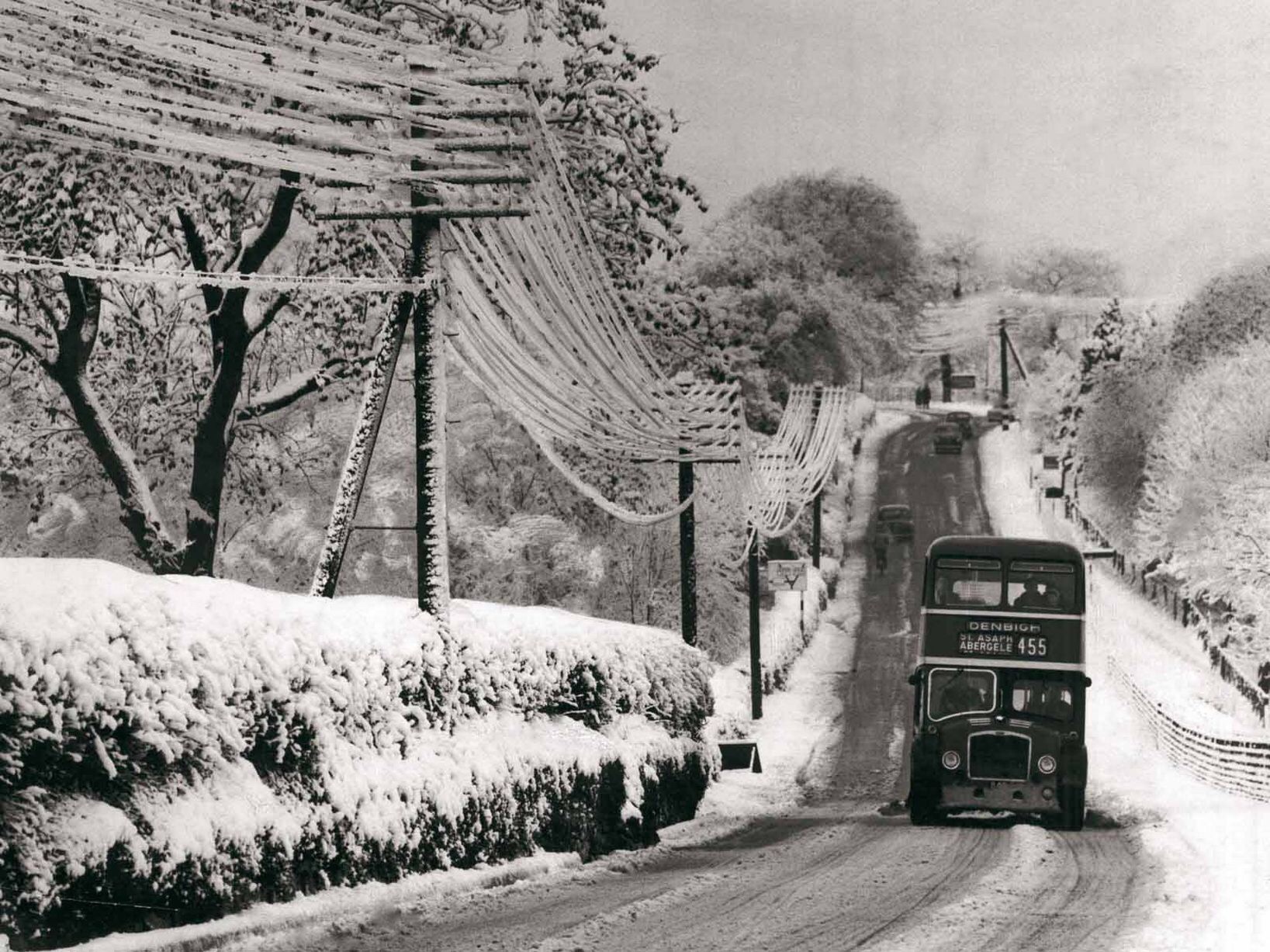
The winter of 1963 will go down as one of the coldest and most disruptive, certainly in my lifetime.
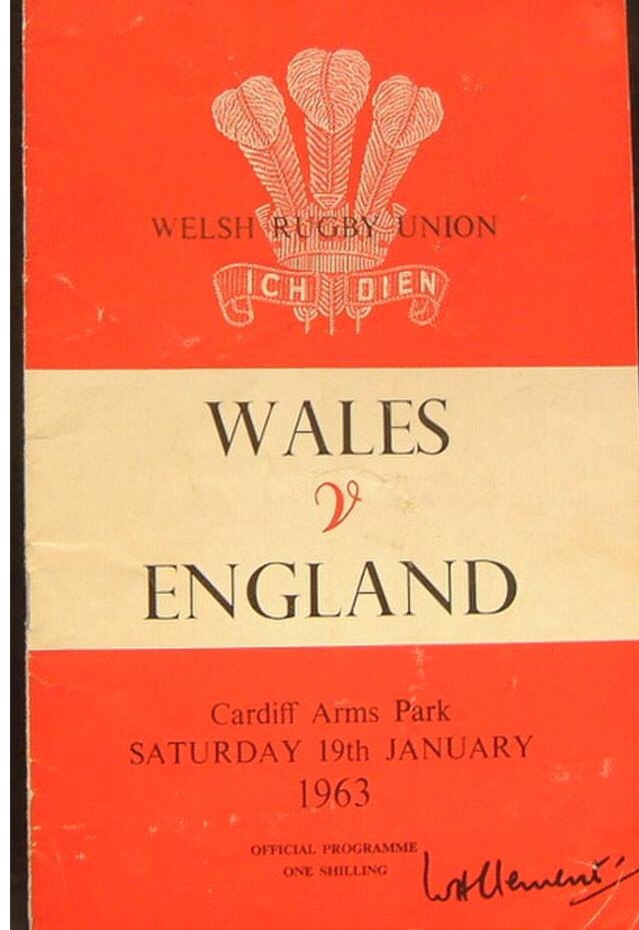
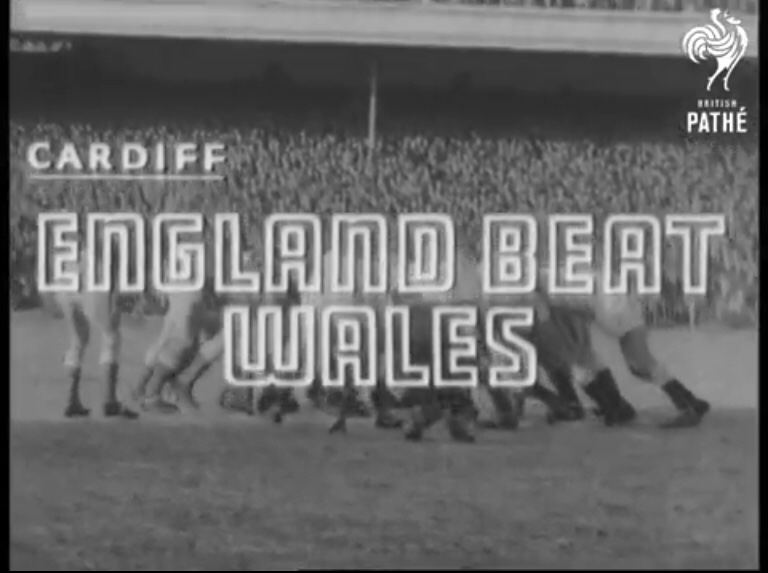
In the final days of 1962 a blizzard swept across South Wales with snow drifting more than 20 feet, this was the start of one of the worst winters on record, and the fact that Wales lost to England in Cardiff on January 19, just added to the misery already being endured meteorological.
Average maximum temperatures in January were 0 degrees and the snow and ice did not shift in many places until March.
Such was the severity of this dreadful winter, the sea actually froze in Whitstable, Kent.
Despite the weather the Five Nations tournament somehow struggled on in dreadful conditions
England had to train at Porthcawl beach as it was the only snow free area available
Fifteen tons of straw had been laid to protect the pitch for the showdown between Wales and England after Cardiff arms Park had been covered with nine inches of snow which had fallen in a single day.
Sport had been brought to a standstill all over the country but despite the bitter cold and risk of more snow, everyone involved was determined that the match should go ahead.
Tractor drivers, grounds staff and volunteers spent ten days, working from dawn until dusk, mostly shovelling snow and straw away by hand until the pitch was clear.
Work started and within a couple of days we knew how much snow we could clear. It turned out that the Wales v England game was the only sports event held in Britain that day. “The atmosphere among the clearers was fantastic. The president of the union would come down every day with bottles of whisky for the men because it was so cold, but everybody enjoyed themselves.”
After the big clear-up operation the pitch was covered with straw again to stop the grass freezing. groundstaff weren’t allowed back onto the pitch to clear the straw until two hours before the match.
Hundreds of volunteers covered the pitch with straw and braziers were lit
The Welsh captain that day was Clive Rowlands on his international debut, and he believes the match should never have been played
“It was awful underfoot, someone could have been seriously injured, it was so hard the players sounded like a herd of cattle running at you”
“As it was my first cap I was, of course, happy to play”
The England wing Peter Jackson said ” A bright day was forecast and they assumed that a couple of hours sunshine would make all the difference”
“The biggest problem was the change in surface. One minute you would be running on a part of the pitch which had been under or near a brazier and the next you’d be in the rock hard stuff, players were slipping and sliding all over the place”.
Referee Kevin Kelleher wanted to call of the game just before kick off, but with 55,000 inside Cardiff Arms Park he was persuaded that it might be in his best interests to go ahead with the game.
The temperature at kick off time was -6 degrees, and both teams remained in the changing rooms during the playing of the anthems.
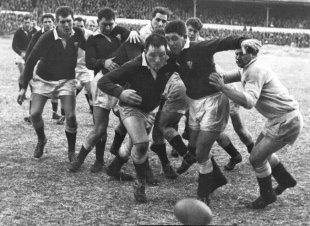
The game itself was won by England 13-6, Mike Phillips (no not that one !) and John Owen scored tries for England, whilst Richard Sharp kicked two conversions and a drop goal.
Wakes points came from a penalty by Graham Hodgson and a Dai Hayward try.
After the match the teams returned to the changing rooms to find the pipes had burst and they had to go to the local swimming pool to shower.
England would not beat Wales again in Cardiff until 1991.
Annus Horribilis. Definition: A of disaster or misfortune, the perfect description of the year Welsh rugby has suffered in 2025. Although perhaps just using the word ‘Anus’ would be a more apt.
But just as one ‘anus’ ends another appears to be on the horizon with the prospects for 2026 looking pretty horribilis.
11th March 2023 was a pretty unremarkable date for most people unless of course you happen to be either Chinese or Welsh.
On that date In the far east, China’s government appointed Li Qiang, as the country’s new Premier and in the far west Wales beat Italy 29-17 in Rome.
11 March 2023 was also the last time Wales won a home Guinness Six Nations rugby match.
And if the Christmas editions of Eastenders didn’t do it, then I will take the liberty to depress you. The last time Wales won a Six Nations game in Cardiff was on 12 February 2022 when they beat Scotland 29-7.
So here we are two or three years later depending on your reference point, desperately searching to change the narrative if only briefly.
First up for the men in red are England at Twickenham, not an easy start, but in all truth there are no easy starts for Wales these days.
Three home games against Scotland, France, and Italy, with the latter being probably their best chance of a victory, plus an away fixture with Ireland have the appearance of a daunting schedule for a team and a nation desperately low on confidence, optimism, and physicality.
Hope springs eternal they say, but in Wales hope is heading towards the horizon with its anus on fire, expectation has long disappeared and apathy is waiting just around the corner ready to taser anyone who dares to dream.
2026 will not be an Annus Horribilis it will be a last chance saloon. Let’s hope, no let’s make sure, Welsh rugby does not ride off into the sunset.
The winters are dark and cold in this part of the world, the daylight is in short supply during the days following Christmas, it is a bleak time for everyone, everyone that is apart from rugby fans.
For us, it is the rebirth of the sporting year, and the start of the weekly countdown to the first weekend in February when the 6 Nations tournament begins.
The tournament starts in the depths of winter, and takes us through to the weak sunshine and gentle warmth of early spring, when the tournament concludes in the middle of March.
February 14th, which is, of course, Valentine’s Day, sits perfectly in the middle of the tournament. For the romantically inclined, what could be a better way to show your undying love for your partner than to take them away for a 6 nations weekend.
But I would offer a word of caution. I would suggest you inform “your other half” that rugby is involved before you travel. I have witnessed couples in Paris having a “domestic” as the non rugby partner is informed, over coffee and croissants on Saturday morning, that a large part of the romantic weekend ahead in the city of light will be taken up at Stade de France watching an international match.
But the 6 nations is about far more than just rugby, it’s about making and renewing friendships, it’s about the history, it’s about the fans, the wonderful memories of 6 nations weekends past, and those wonderful ones yet to come.
Memories of matches and weekends shared with family, loved ones, and friends, some of whom are sadly no longer with us, come flooding back, and their spirits are with us this at this time of year, as we prepare to enjoy a winter sporting festival like no other.
The 6 nations weekend has a heartbeat, a soul, it is a living entity, that has been enjoyed and handed down from generation to generation.
Uncles, fathers, grandparents cousins, have all taken pride in guiding their offspring on their first 6 nations weekend, and those youngsters who have taken over the baton, keep the traditions alive, and when the time comes, they will take their young on a similar rite of passage, and that is why the 5 Nations, as it was, and the 6 nations as it is now, is so unique.
Only in this tournament would you find a middle-aged Englishman wearing a Roman centurion outfit sitting outside a café and calmly enjoying a beer in the Piazza Navona.
Each wonderful host city has its own unique atmosphere, sight, sounds and smells.
Whether it’s welsh fans dressed in dragons costumes under the Eiffel Tower, English fans masquerading as medieval knights handing out roses to the scary French riot police, or Italians meeting their ancestors at one of the plethora of Italian restaurants in Cardiff, the joy and friendliness of the tournament are plain to see, which ever match you happen to attend.
Add to that the kilted Scots sitting around the fountains at Trafalgar Square, with their whisky filled hip flasks to keep out the cold, the Irish a sea of green in leprechaun hats clutching a pint of the black stuff, or the stylish French looking cool in their shades, whatever the weather, and whatever the venue, you begin to get a feel of what a thrill to the senses this tournament really is.
Cardiff is the only city where supporters can watch the game, celebrate, and collapse into bed, all within the distance of a Leigh Halfpenny goal kick.
The Principality stadium is squeezed in between the flats, shops, houses, and pubs right in the heart of the city centre, and more importantly, in a country where rain is a frequent, if not permanent resident, it has a roof.
Cardiff is also the home of Brains Brewery, whose products are rather popular on rugby weekends, one of their products is a beer called “Brains SA” the locals will tell you that “SA” stands for skull attack, which informs you all of you need to know about the side effects of this particular beverage.
Talking of beer, Dublin is of course the home of the silky smooth black stuff, Guinness, and the most popular excursion for 6 Nations fans visiting the Irish capital, is a tour of the Guinness brewery where you actually get a free sample.
The French fans simply adore Dublin, they fly over in the thousands to watch Ireland face “Les Bleus” they used to bring live cockerels with them and release them on the field of play, obviously this is now outlawed, or it may just be that chickens find Air France air fares a bit too expensive these days.
The Irish will charm you, entertain you, smile and then kick the living daylights out of you on the rugby field, there aren’t many more hospitable capitals on this planet than Dublin, as any 6 nations fan who has been there will happily tell you, once they have recovered from their lack of sleep and mind-numbing hangover.
Rome is the 6 Nations “new kid on the block” as Italy did not join the tournament until the year 2000 and the shock for fans here, especially those from Scotland, is that you are likely to experience sunshine, now a famous Scotland player once told me that Scots are born with blue skin, and it takes them three weeks in the sun to even turn white, so the Tartan Army are easily to spot, not only because they are wearing kilts, but due to the fact that they are all clutching bottles of factor 50 sun cream.
Italy joining the Six Nations created an added pressure for the regular fans and there is a big downside to the Azzuri’s inclusion.
Partners, wives, girlfriends, and boyfriends who previously had no interest in rugby, and could be visibly seen yawning when you even mentioned the word, suddenly took a rather disturbing interest in the game, when they discovered that joining you on a potential weekend to the Eternal City was a distinct possibility.
Rome is a venue like no other, no tradition or historical rugby hang-ups here, it is the brash teenager of 6 Nations rugby, and is determined to enjoy La Dolce Vita whatever the result.
A colleague, when in Rome for an Italy v England match, told me of a time he found himself standing at a set of traffic lights in Rome, when he suddenly became aware of a twelve-inch sword being waved in his face, wielded by a local man uttering threats in a deep loud Italian voice.
A few seconds later, his “assailant” reassured my friend that the sword was made of plastic and gave him a “high-five” and a “Ciao baby” and went on his merry way.
If Rome is the brash teenager then Twickenham, the bastion of Englishness, is the grumpy old grandfather, but even so is a shrine for visiting fans, and a shrine that obviously makes visitors extremely thirsty.
At the England v Ireland match in 2014, 160,000 pints of beer, were sold at the stadium, another victory over the Welsh who only managed a mere 77,184 pints in Cardiff at a match between Wales and France.
As you walk from Twickenham station to the ground, every inch of pavement is filled with providers of fast food frying their wares, as the aroma of burgers, sausages, and onions fills the air with a smokey haze you can almost touch the cholesterol.
For Welsh fans, the favourite trip is Edinburgh, this all started due to the fact that until 1977, the matches at Murrayfield were not “All Ticket” so people paid at the gate, as a result, the Welsh always travelled in heavy number.
It is a like a red tsunami flowing down Princess street as the Scarlet hordes make their way to Murrayfield, framed by the beauty of the castle, and the Scott Monument.
Things went horribly wrong in 1977 when at least 110,000 were squeezed into Murrayfield for Scotland v Wales, and it was a miracle that no one was seriously injured, and since that day, Scotland matches became ticket only affairs.
That weekend trip to see Wales play Scotland in Edinburgh was perceived to be a test of manhood undertaken by many generations of Welsh fans.
The journey to this game was known as “The Killer”, leaving Cardiff at 2100 on Friday night, the train would arrive in Edinburgh at 0700 on Saturday morning, the return journey commenced immediately following the match, with the train leaving Edinburgh at 2100 on Saturday night, and arriving in Cardiff at 0500 on Sunday morning, it was not a journey for the faint-hearted.
Mind you I know of people who have travelled on this weekend marathon and never even got to see the game, due to socialising a bit too fervently, they returned home with very little memory of the whole weekend, but the moment they got back they started saving, weekly, for the next trip in two years time.
But putting romanticism aside for one moment, the stark economic factors of the tournament are worth a mention.
Supporters spending makes the championship worth £375 million per year to the participating countries economies, whilst the cities that host the matches (London, Paris, Rome, Dublin, Cardiff, and Edinburgh) benefit by around £150 million.
The main sectors to benefit are food and drink and accommodation, in a study undertaken by previous tournament sponsors RBS, £59 million is spent in bars and restaurants, and £38 million on hotels and other accommodation, and £19 million spent in shops.
In addition, the tournament creates around 3,100 jobs, and all this very real boost to economies occur during what is a quiet time of year for tourism.
In 2017 two matches in Cardiff, where Wales faced Ireland and England, resulted in £52 million coming into the Welsh economy, of which £30 million was enjoyed by the city of Cardiff itself, so it seems everyone is a winner in the 6 Nations, off the field at least.
As the 2026 tournament approaches, many of us, in the middle of a cold dark winters night will lie awake, and as the wind and rain beat against the window, we will feel a cosy warmth, as we remember with fondness, the matches, the weekends, the laughter, the tears, but most of all we will remember the people we have shared the matches with, and those friends we have met because it is they that make the six nations tournament so very special.
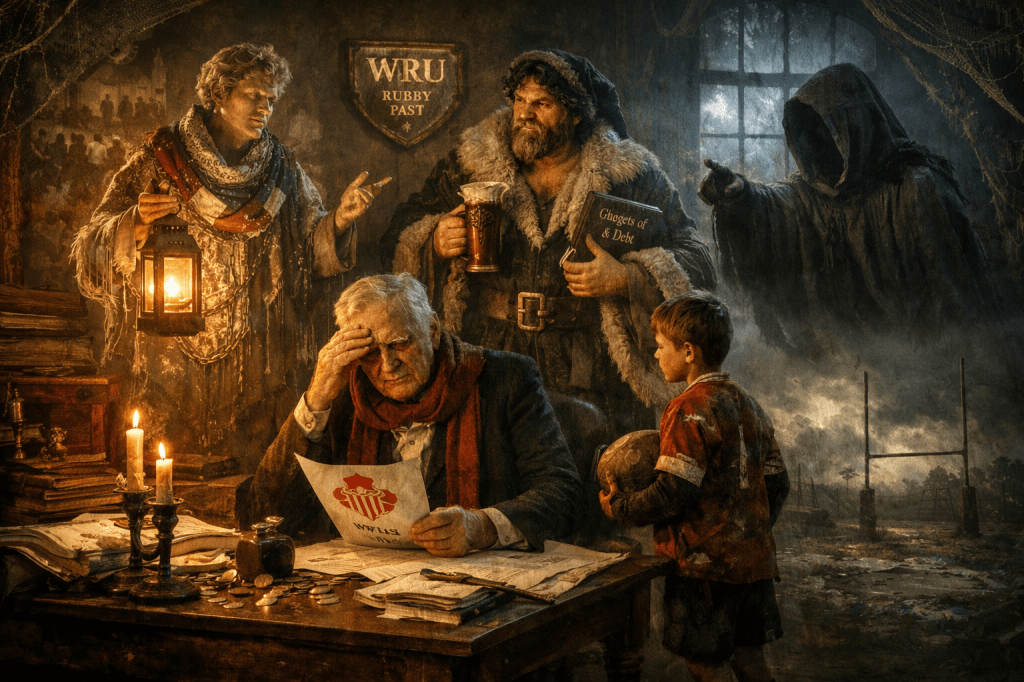
It was Christmas Eve, and the WRU was dead dead as the crowds that once shook the Arms Park. There was no doubt whatever about that. The door-knocker bore the dragon still, but it was tarnished, as if it had not known polish since the last Grand Slam.
The Ghost of Rugby Past came softly, wrapped in old programmes and coal smoke, its face at once youthful and ancient.
“Rise,” it said, “and walk with me.”
They walked through streets alive with song. Miners in caps stood shoulder to shoulder with teachers, choirs swelled before kick-off, and mud-streaked heroes ran not for contracts but for county, chapel, and pride.
“Do you remember this?” asked the Ghost.
The WRU trembled, for it remembered and could not return.
The Ghost of Rugby Present strode in with a balance sheet under one arm and a festive scarf under the other, though neither brought warmth. It showed the WRU a table set poorly: regions scraping by, players overworked, supporters counting pennies where once they counted tries.
In a cold meeting room sat men speaking warmly of “strategy” while outside, clubs shuttered like shops on Christmas Day.
“See here,” said the Ghost, pointing to a small, pale boy training alone in the rain.
“Is he a player?” asked the WRU.
“He is Grassroots,” replied the Ghost. “And unless you care for him, he will not long survive.”
The final spirit arrived shrouded in silence, black as a Neath rugby shirt.
The WRU saw empty terraces where songs once rose like prayer. It saw red jerseys worn by few, watched by fewer still. It saw headlines of decline, and a dragon remembered only as a crest on old pint glasses.
“Are these the shadows of what must be?” cried the WRU, “Or only what may be?”
The Ghost answered not, but turned its hand toward a neglected field, overgrown and locked.
Awakening with a start, the WRU found it was Christmas morning.
“No more meetings without meaning!” it cried. “No more gold before game! I will honour the past, support the present, and invest in the future!”
It flung open its coffers (modest though they were), spoke plainly, listened carefully, and remembered at last that rugby was made by people, not paperwork.
And so it was said, in years that followed, that Welsh rugby kept Christmas well — and if not always victorious, then always alive.










 Mike Pearce Rugby