Six Appeal The 2023 Guinness Six Nations

The Guinness Six Nations is the greatest annual international rugby Championship in the sport, and every year delivers truly unmissable experiences to fans all over the world. In 2022, the Championship title came down to the wire, culminating in a game for the ages, in Paris, where France claimed an historic Grand Slam.

This year, fans can look forward to another scintillating Championship, with storylines and plot twists waiting to be written by the teams and players, over five rounds of action, starting on February 4th, at the Principality in Cardiff before all roads lead to another blockbuster Super Saturday, with the final game between Ireland and England on Saint Patrick’s Day Weekend.

At the 2023 Guinness Six Nations Championship launch held in London’s County Hall Ben Morel, CEO of Six Nations Rugby, commented: “The Guinness Six Nations holds an incredibly special place in the sporting landscape and with fans all over the world. The Championship offers fans the chance to experience some of the best teams and players going head-to-head, on an annual basis, in must win Test matches. Combine that with the unique heritage of the Six Nations and the rivalries that are woven into the fabric of the six nations competing, and you start to scratch the surface in explaining why the Guinness Six Nations is such an eagerly anticipated and loved moment in time, each year.

“We have a huge responsibility at Six Nations Rugby to not only respect the precious nature and heritage of its Championships but ensure their continued growth and development. There is also the unrelenting commitment to deliver truly unmissable experiences for fans. This is what drives the entire team

“This commitment is underpinned by unwavering collaboration with all Six Nations Rugby stakeholders, including each union and federation, its broadcast and commercial partners and the media, who all play a part in telling the compelling storylines to fans.

This year’s Guinness Six Nations holds a personal poignancy for me, as it will be my final one as CEO of Six Nations Rugby. My five years in the role has been a humbling and defining experience and I am filled with pride for the achievements of the organisation, alongside each of the unions and federations. It has been a privilege to be a custodian of the role, but my work is not done yet, and go into the 2023 Championships truly excited for what is in store for fans.”

In a Rugby World Cup year the Six Nations takes on added significance, and the tournament that guides us from the depths of winter to the start of Spring promises to be a cracker.
The Day Wales Fell In Love With David Duckham

As a Welshman growing up in the seventies, it was taboo to idolise any England player, fortunately at that time, England were a bit of a sorry mess so it wasn’t that difficult to hold true to those core values.

But there was one exception.

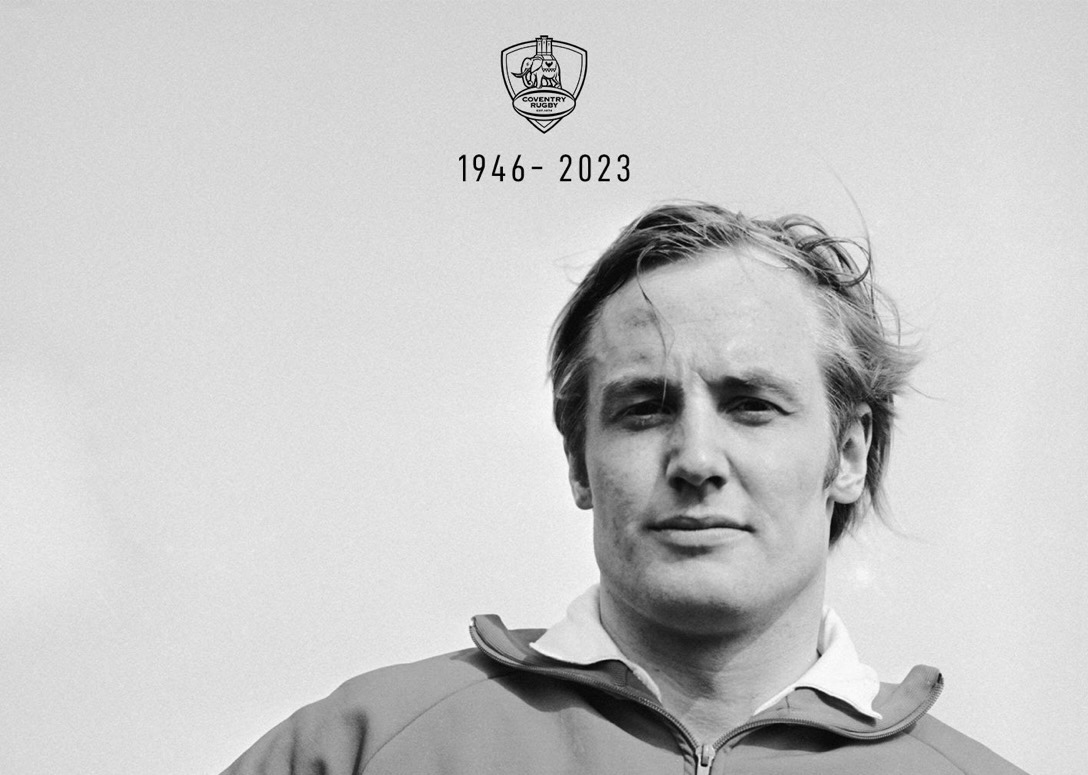
On a winters Saturday in January 1973, the Welsh nation lost their moral compass, and fell in love with David John Duckham.

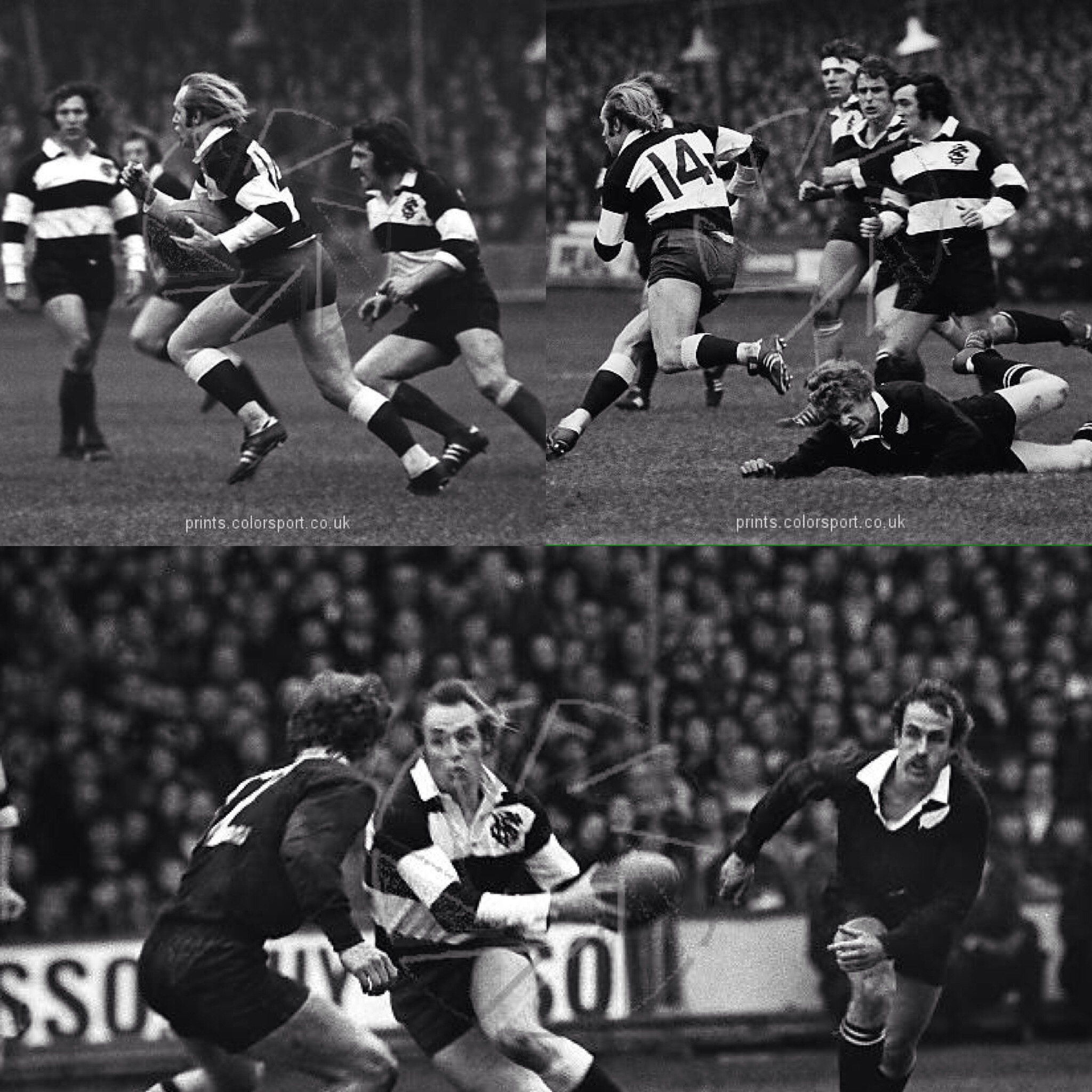
The match in question, of course, was the Barbarians v New Zealand at Cardiff Arms Park.

He played on the right wing that day, in his number 14 shirt, and his Coventry club socks, he entranced us with a display, that in history, has been somewhat overshadowed by THAT try, scored by a certain knight of the realm, Sir G.O Edwards.

I was in the North Enclosure that day, a fourteen year old schoolboy, as Duckham swerved, sidestepped, and wrong footed everyone, his long blonde hair flowing in the breeze, like a viking warrior,as his 6ft 1in frame, graced the field of dreams that was Cardiff Arms Park.

Now when I say he side stepped everyone ! take a look at the DVD of the match, in one move, he sends the BBC camerman the wrong way, Duckham, ball in hand dummied, the camera went to right, and David disappeared out of shot to the left.


David Duckham won 36 caps for England, his first against Ireland in 1969, and his last in 1976 against Scotland, at Murrayfield.

He scored 10 tries for England, but it was under the guidance of Carwyn James, as a British Lion, on the tour to New Zealand in 1971, that we saw the talent and the breath taking running skills that were so evident in that Barbarians match.

On the 71 Lions tour he scored eleven tries in sixteen games.

Against West Coast Buller, on 16 June 1971, he scored 6 tries, a Lions record that still stands to this day.

His form on the tour resulted in him playing in 3 Lions test v New Zealand on that famous tour, keeping Wales’ John Bevan out of the test side, which was no mean feat.

The ultimate compliment, from Wales, and its rugby fans, was bestowed on David Duckham after the Barbarians v New Zealand match, he was forever referred to, from that day onwards as “Dai” Duckham, an honour that he cherished, so much so that he titled his autobiography “Dai For England”

Dai, it was an honour, and a privilige, to watch you play.


Haere rā New Zealand Hello England

There is a Peculiar feeling when World Cup tournaments come to an end, an emptiness, a void that is difficult to fill, weeks and months even years of hope and expectation suddenly evaporate, and we are left with the vagaries of so called normal life.

Ruby Tui’s feet had barely touched the ground before the rugby circus had packed up its tent, and the mass migration to Auckland airport commenced.

But as the sun sets in the land of the long white cloud, a new dawn has already risen in the northern hemisphere, as England take over the RWC torch for 2025.

The number of teams participating will be increased to 16 with England, New Zealand, France and Canada already awarded qualification as a result of reaching the semi-finals of RWC 2021.

The prospect of a sold-out Twickenham for the 2025 Final is now a very realistic one, the tournament down under has been another Neil Armstrong type giant leap for the women’s game.

For the Red Roses there is no doubt that the heart breaking pain of yesterday’s final will be the fuel to ignite their challenge for 2025 at the moment though there are wounds to heal and a long 24 hour flight to re-live events from a tournament that gave us all so much.

Thank you New Zealand see you in London.

Eddie Butler A Humble Tribute

How do you attempt to match Stephen Jones and Rob Kitson’s wonderful written tributes to Eddie Butler ? Well the answer is you don’t. All I can do is speak from my Welsh heart, a heart that has taken a severe pounding over the last few days.

Eddie commanded the press rooms of international rugby stadiums, not in an assertive macho way, but in a wonderfully warm comforting manner, this big bear of a man seemed to fill the room as he entered it and in his wonderfully gentle manner he always shook everyone by the hand, it didn’t matter if you were an established hack or a new kid on the block you got the same warm greeting, and it made you feel all was well with the world.

Most of my work has been covering France home games, and Eddie nearly always got the commentary gig at the Stade de France in Paris, along with Jonathan Davies, the comforting presence of those two Welshman entering the salon de presse was always a moment I looked forward to.

It was my huge privilege to have met and known Eddie Butler, I feel a stomach churning loss so I can only imagine the pain those with a closer relationship to the big man must feel, I hope all the love and respect that has been shown in print and every other form of media will be of some comfort to them.

For me personally the press areas of the Stade de France and the Principality Stadium will have an empty corner that no one else can possibly fill, I will miss that big pre match outstretched paw so much.

Sleep peacefully Eddie anyone who has ever had the privilege to work alongside you will never forget you. I certainly won’t.

Son Et Lumière Wales v France

Late night kick offs in Paris are “de rigueur”, providing fans with just enough time for a semi leisurely pre match dinner, or at the very least a croque monsieur and frites, accompanied by a smooth glass of red.

In Cardiff these nocturnal rugby soirées are an exception rather than the rule, a long day for the fans and players to get through before finally heading to the stadium.

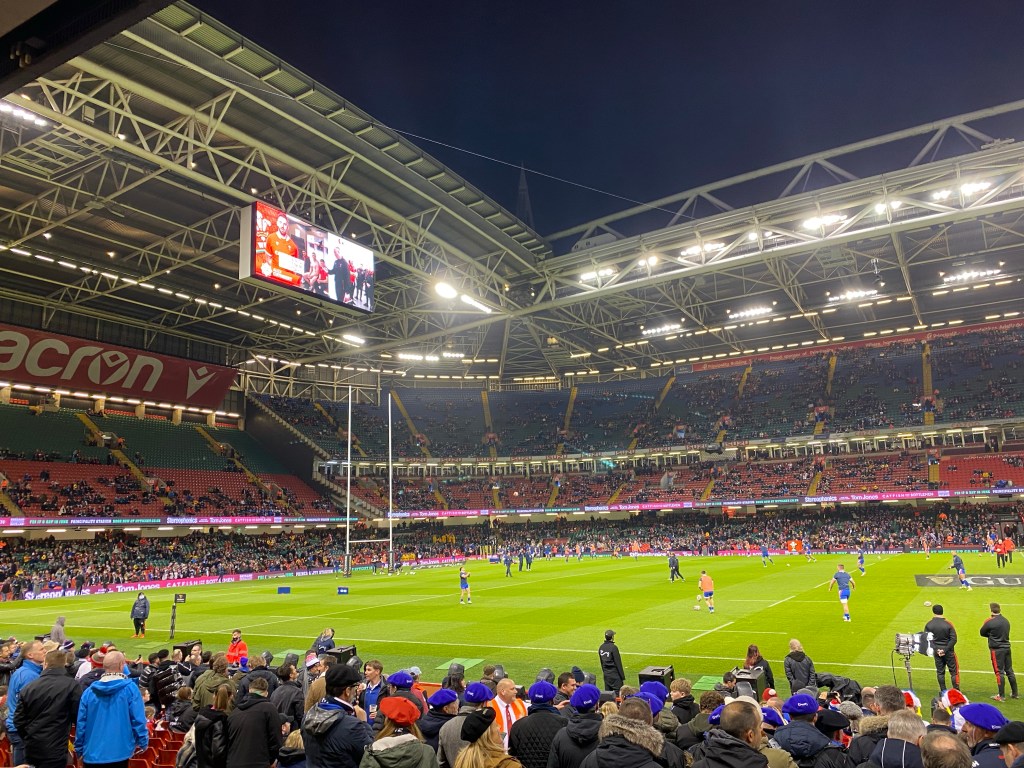
On Friday night in Cardiff, as the skies darkened, the emerald green dewy grass glistened under the floodlights, even the starry sky peeped through the open roof at the Principality Stadium.

The heavenly stars were matched by those down below on lush green terra firma. Dupont, Ntamack, and Penaud just three of the blue constellation that have lit up French rugby in the last couple of years.

But it was the men in Red who almost caused a total eclipse of France Grand Slam hopes as they went tantalisingly close to causing a major upset.

Wales pressured France led superbly by Dan Biggar, they caused France to look nervous and fractious but ultimately their rock solid defence kept Wales from gaining that one crucial score that would have given them a memorable victory.

A French win in Cardiff in recent years has been seen as rarely as Halley’s Comet, but these Bleus Brothers play rugby on a different planet, and back to back wins in the Welsh capital have put them eighty minutes away from a Grand Slam.

The stars may not have sparkled as brightly as expected, but on a night when France took a step nearer a title and a Grand Slam, that has eluded them since 2010, the planets have aligned to create a mouth watering late night spectacle next Saturday in Paris against England. A victory for The Boys in blue could result in it being a very late night indeed.

England v Wales Its The Hope That Kills You

We Welsh are an emotional race, we laugh or we cry, and rarely bother with the run of the mill stuff in between.

Our National team takes full advantage of this Celtic mindset, and constantly provides us with similar polarised emotional experiences, this can happen seasonally, or as happened at Twickenham yesterday, in the space of a single afternoon.

With 79 minutes on the clock Wales trailed England by four points, the Cymric Dr Jekyll we experienced for the opening fifty three minutes of the match had transformed into a free flowing, confident, silky handling Mr Hyde, alas it was all just a little too late to transform us from tears to laughter.

We started welling up early on, or maybe it was just a speck of dust in the eye, as Marcus Smith kicked two penalties in the opening six minutes to give England a 6-0 lead.

After half an hour we began to get the tell tale full lump in the throat as Smith kicked another two penalties, to give England a 12-0 half time lead.

Laughter seemed to be heading down the M4 with its backside on fire as full blown tears loomed ever closer in the rear view mirror. Wales were struggling to put any phases together, struggling at the breakdown, and along with 82,000 thousand others, struggling to understand the referee.

Three minutes into the second half an Alex Dombrandt try completed the dreaded emotional transformation, Wales were 17-0 down making more errors than a Boris Johnson speech writer.

At this stage in the proceedings I would like to introduce you to that cruel Celtic emotional add-on: HOPE.

This is the toughest one of all to deal with, especially when you have already resigned yourself, with extreme difficulty, to the certainty of defeat.

Josh Adams scored a try on fifty four minutes, ok a great consolation but nothing more, Nick Tompkins scores a try on sixty one minutes, Biggar converts to bring the score to 17-12 to England and then it hits us like a runaway train, that HOPE thing is about to kick in.

But of course as we suspected, and as inevitably as night follows day, HOPE disappeared into the Middlesex dusk as another two Marcus Smith penalties, in the space of four minutes, took England’s lead to 23-12, that hope thing can be a heartless creature.

So it’s a fairly swift return to that resigned defeat, but at least we know it’s over, time to come to terms with the fact once and for all, and prepare for the tears.

As if ! when you’re Welsh my friends the emotional tsunami doesn’t end there, not whilst there is still time to wring out a bit more from our emotional flannel.

With the bright Twickenham scoreboard showing 79:31, Kieron Hardy scores from a quick tap penalty, Dan Biggar converts and its 23-19, surely Wales can’t do this, can they ?

Hope springs eternal as the saying goes, and at this stage it is springing like Michael Flattly on steroids, Wales go through seventeen phases with the clock in the red, one last hurrah for HOPE, then with 84:18 on the clock it has gone, like a thief in the night, nowhere to be seen, and we my friends have once again been emotionally mugged.

Laughter to tears is in our DNA it’s how we roll and we have learned to live with that, but it’s the hope that kills you.

Scotland Head Homeward To Think Again

It is 401 miles from Edinburgh to Cardiff, a journey, or rather a pilgrimage that is definitely not for the faint hearted.

That weekend trip to see Wales play Scotland in Edinburgh was perceived to be a test of manhood undertaken by many generations of Welsh fans.

The journey to this game was known as “The Killer” leaving Cardiff at 2100 on Friday night, the train would arrive in Edinburgh at 0700 on Saturday morning, the return journey commenced immediately following the match, with the train leaving Edinburgh at 2100 on Saturday night, and arriving in Cardiff at 0500 on Sunday morning, it was not a journey for the faint hearted.

I know of people who have travelled on this weekend marathon and never even got to see the game, due to socialising a bit too fervently, they returned home with very little memory of the whole weekend, but the moment they got back they started saving to do it all again in two years time.

Yesterday it was our friends from the North who had the dubious honour of travelling, and they did so for once in expectation rather than hope, an unusual and maybe troubling mind set for many of the Tartan Army.

Scotland had not tasted victory in Cardiff for 20 years, their last success a 27-22 win over Steve Hansen’s Wales in 2002.

After a memorable victory against England in the Edinburgh rain, the previous Saturday, a Welsh drizzly version of precipitation welcomed them to a packed Principality Stadium.

In a pulsating match Wales found a physicality so sadly missing in Dublin, and got the better of the exchanges against a tough and talented Scotland side.

For Wales this match was old school, it was about passion, desire and sheer bloody mindedness, it was also old school in the stands with a 73,000 choral legion backing track of Bread of Heaven, Hymns & Arias and Calon Lan.

Nobody epitomised this spirit more than Wales fly half and captain Dan Biggar who received the quantity of in-match medical treatment that would make BUPA shareholders wince. Biggar is a warrior, he eventually limped off just before the end, but not before kicking a 50 metre penalty to within metres of the Scottish try line.

It was Biggar’s One hundredth test appearance and he kicked 15 points including the match winning drop goal in the 69th minute after Finn Russell had been yellow carded for a deliberate knock on.

Scotland with Hogg and Russell can light up the darkest of days, but on this occasion they couldn’t turn up the dimmer switch, the Scots in fairness did very little wrong, it was just that sort of day, Wales simply refused to be beaten.

Ryan Jones the 2005 Wales Grand Slam captain coined a phrase for Wales which was Bouncebackability”, they very rarely give back to back poor performances, Yesterday in the twilight and the cascading misty rain of Cardiff the three feathers shone through the gloom, and honour was restored.

Wales head to Twickenham in two weeks time and Scotland entertain France, this wonderful championship still has a few surprises up its sleeve. Murrayfield has never been a happy hunting ground for France so watch this space. But for now we can all take a deep breath, and after all we have been through in recent years give thanks for big crowds great rugby occasions and most importantly our rugby friends.

The Wales Team Of 1914 True Heroes

RNP_MAI_081114Team1914_1001JPG

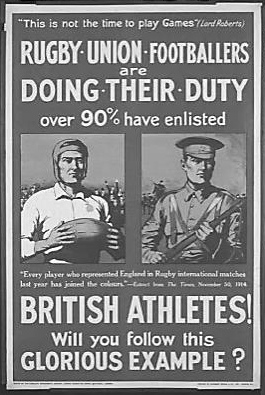
They were rugby heroes but became heroes of the battlefields.

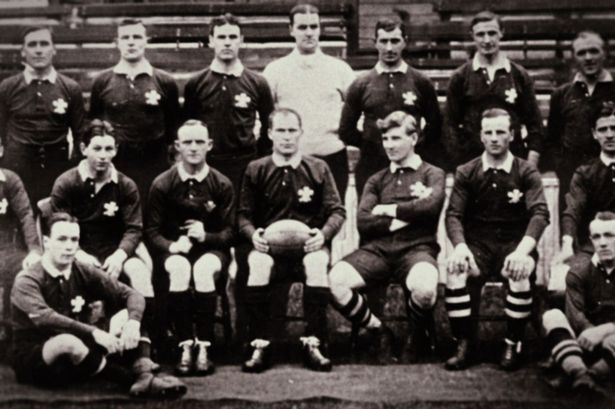
The 1914 team were hugely successful and included many players who had won three Grand Slams between 1908 and 1911.

They were physically tough, and their front eight were known as the “terrible eight”.

Many decades before the game turned professional, the players all worked in various trades, from scholars to coal miners.

One of them, Jenkin Alban Davies from Aberaeron, was both captain and a Christian minister.

Six weeks after their game against Ireland, the First World War was declared, and the 15 players enlisted in the UK war effort.

They played an open style of rugby. We had a good team in 1914, and they had won the Grand Slam several times. They were a close-knit side, and worked hard. Their appearance and athletic ability made them role models to the nation.”

Among the players turned soldiers was Jack Wetter. He was awarded the Distinguished Conduct Medal as a Corporal in the 8th Battalion South Wales Borderers in Salonika, Greece for his gallantry in bringing in the wounded while in charge of stretcher bearers in December, 1916. He won 10 caps for Wales between 1914 and 1924, captaining his country three times. He died in 1967.

140207-rugby-poster-1914

Other soldiers included:

Edgar Morgan who served as Second Lieutenant South Wales Borderers was awarded the Military Cross for capturing a machine-gun post in October 1918. He won his four caps in 1914 and played in two tests against New Zealand on the 1908 Lions (Anglo-Welsh) tour. He also survived the war.

John Morris Clement Lewis served as a Captain the 16 Battalion (Cardiff City) Welsh Regiment, 38th (Welsh) Division. He was wounded in the Battle of Pilckem Ridge but went on to play in the First Five Nations tournament after the First World War in 1920.

*Maesteg Coal miner Dai Watts was killed in action in July 1916 just after the capture of Mametz Wood. His name is on the Thiepval Memorial to the missing of the Somme as his body was never found.

One of the so-called terrible eight, Jenkin Alban Davies was Wales captain in 1914. He enlisted early in the war in the Royal Army Chaplain’s Department and served as Chaplain to the 6th Battalion of the Welsh Regiment and later became Chaplain to the Royal Field Artillery. He became a prison chaplain in South Africa after the war and emigrated to California. He died Los Angeles in 1976.

The Wales v Scotland 1914 team with caps in brackets:

Percy Jones (Pontypool – forward eight caps);

Thomas John (“TC”) Lloyd (Neath – forward seven caps);

Edgar Morgan (Swansea – forward four caps); (Referee);

Dai Watts (Maesteg – forward four caps);

Harry Uzzell (Newport – forward 15 caps);

Jack (“Bedwellty”) Jones(Abertillery – forward four caps)

Ivor Thomas Davies (Llanelli – wing three caps);

Clem Lewis (Cardiff – outside-half 11 caps);

Jack Bancroft (Swansea);

Alban Davies (Llanelli – forward seven caps);

George Hirst(Newport –wing six caps);

Jack Wetter (Newport – centre 10 caps);

Tom Williams (Swansea – forward six caps).

William Henry Evans (Llwynypia – centre four caps)

 Robert “Bobby” Lloyd(Pontypool – scrum-half seven caps).

Wales In The Autumn Deja Vu All Over Again

It has always been this way in Wales, in rugby we do not enjoy the mellow fruitfulness of Autumn, it is as if we descend into a semi hibernation, saving ourselves for winter, and the heralding of a new year that brings about a renewed vigour and an oval ball restoration, as a new Six Nations Championship appears on the horizon.

This year has been no different. Wales have struggled. As the leaves continue to fall, the players, like the dark brown leaves, have also fallen in significant numbers.

The injury list was extensive at the start of the campaign, and it has only increased week by week over the hectic bruising and exhausting month.

On Sunday night the Welsh casualty list had increased even further, the roll call of the wounded alarmingly high. Alun Wyn Jones, Justin Tipuric, George North, Ken Owens, Ross Moriarty, Will Griff John, Leigh Halfpenny, Josh Navidi, James Botham, Dan Lydiate, Josh McLeod, Dewi Lake, Leon Brown, Will Rowlands, Rhodri Jones and potentially Louis Rees Zammit.

Autumn 2021 began with a heavy defeat against by the All Blacks. Wales battled and rattled the World Champions, South Africa, in the Cardiff rain, a week later, and fell agonisingly just short.

Fiji followed, now if there are two words that conjour up images of Welsh rugby anguish, they surely must be Autumn and Fiji, combine the two and you have the perfect storm, as was reflected on a sunny Remembrance Day in the capital, despite the flattering scoreline in Wales favour it was, as famously quoted by Yogi Berra “Deja Vu all over again”

Yesterday the last men standing took on the Wallabies in a match that incorporated just about every rugby thrill and spill possible, red card, yellow cards, a disputed try, and a last minute penalty that gave Wales victory by the narrowest of margins.

For a Wales a victory over Australia however ugly, will be rightly celebrated, and with the blooding of so many new faces, maybe for Wales this will bear fruit in future challenges that lie ahead.

The month of November is nearly over and thoughts will soon turn towards the Guinness Six Nations, there will be a spring in the step and pulses will race that little bit quicker, for Wales, winter is coming.

Somewhere Over The Rainbow

The rainbow that appeared above the Principality stadium yesterday evening had a notable omission at the end of it. Instead of a pot of gold it had a crock of something far less fragrant, at least as far as Wales were concerned.

In Welsh international sport the 1950’s are a permanent milestone, or should that be millstone ? around the National neck, and the efforts to overcome two particular sporting barriers seem to become more desperate and elusive as each year passes.

In the round ball game Wales heartbreaking efforts to qualify for a World Cup tournament have not been successful since 1958, the incidents and accidents are catalogued and replayed every four years, crossbars and hand balls fill our thoughts in the wee small hours.

When it comes to rugby, Wales wonderful recent history, and indeed a large part of its glorious past, has one notable date that we cannot shake off, December 19 1953, the last time Wales beat the New Zealand All Blacks.

The 2021 All Blacks were in town at the weekend, determined not to become the team henceforth known as the side that lost to Wales. Their fears, if indeed they had any, were very quickly dispelled.

It took barely three minutes for Beauden Barrett to race fifty metres and touchdown between the posts for the All Blacks opening try.

A Wales team missing 20 players battled bravely and were still in touch until the 64th minute when the All Black tsunami hit with three tries in seven minutes which ripped the heart out of Wales, and secured a 54-17 win for the men from the land of the long white cloud.

An awful lot has happened since Feb 2021 when 75.000 turned up to watch a new exciting young French side steered to victory by the equally young and exciting half backs Ntamack and Antoine DuPont

It had been Twenty months since Wales last played a competitive home game in front of a capacity crowd at the Principality Stadium

On Saturday It was just like old times, the streets were packed. The City Arms and the Owen Glyndwr bursting at the seams with Scarlet clad men clutching pint glasses, whilst at the Duke of Wellington, quite aptly, there were more Fern leaves than feathers, as the All Black supporters congregated for pre Haka hydration.

During the stresses and strains of lockdown, amidst the awful casualties and losses of a cruel pandemic, an evening like this was always in the back of our minds, a mental oasis filled with images of floodlit dewy emerald green grass, a national anthem being belted out, and those wonderful red shirts shining brightly in the Cardiff evening, and here it was, at last, for real.

If Carlsberg did National Anthems then there is no doubt that Hen Wlad Fy nhadau would be available in bottles, cans and on draught, on this memorable evening it had an extra dimension, Gwlad, Gwlad released an awful lot of bottled up emotion for those who have suffered in human and sporting terms.

For the 75,000 that were there to witness it, this was a night that warmed the heart, despite the result, as sporting normality returned to this magical patch of green in the centre of the nation’s capital city.

As the sea of red streamed out of the stadium, it parted down Quay Street and syphoned off into the City Arms, the Owen Glyndwr and down the Hayes to the Duke of Wellington, sorrows had to be drowned before attentions turn to next Saturday when the World Champions arrive in town, when hopefully the beverages imbibed will be of a celebratory nature.