Doom And Gloom Following A Triple Crown With Van Morrison

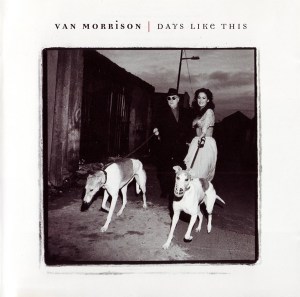
When it’s not always raining there’ll be days like this

When there’s no one complaining there’ll be days like this

When everything falls into place like the flick of a switch

Well my mama told me there’ll be days like this“.

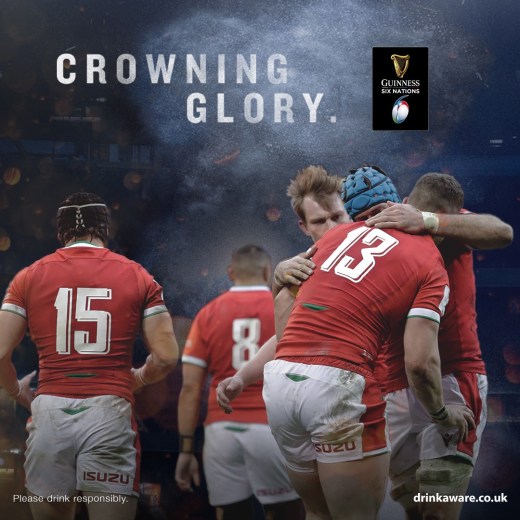
The words of that great songsmith Van Morrison beautifully sum up Saturday at a sunny Principality Stadium, But only if you happen to be Welsh.

As is the way in Welsh rugby, hopes for the 2021 Guinness Six Nations were extremely low, based on a dismal Autumn Nations Cup.

We Welsh are wonderful exponents of doom and gloom, even in the most positive of circumstances, but on this occasion it was justified, as performances before Christmas allowed us to be nothing else.

Maybe this gloom is a Celtic thing, we feel very uncomfortable when things are going well, far better to err on the side of pessimism.

A writer once said “When a group of Welshman sit in a bar talking about their lives, the one who has had the worst thing happen to him most recently is elevated to the top of the social ladder”. There could well be some truth in that.

My weekly phone call to my late Mother used to be a roll call of the sick and deceased Welsh people, from her home town, none of whom I had ever even heard of.

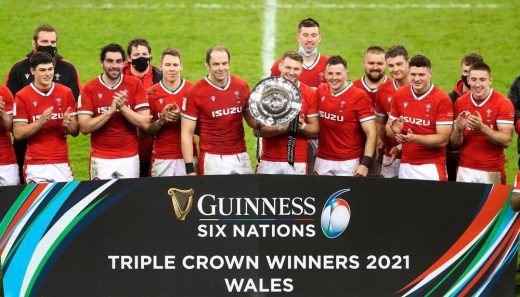
So from the vain hopes of a couple of victories in this years championship, we find ourselves with a problem, we have a Triple Crown in the bag, and hopes of a Grand Slam, the challenge for us Welsh is to try and find some doom and gloom in all that, I guess we’ll just have to keep on trying.

So I leave you with the words of Van the man, and memories of a sunny Saturday when doom and gloom were off the agenda, at least for a short while.

Maybe just this once we can celebrate, and dare I say it, be optimistic.

“When no one steps on my dreams there’ll be days like this

When people understand what I mean there’ll be days like this

When you ring out the changes of how everything is

Well my mama told me there’ll be days like this”.

France Covid Chaos The Full Story

The old adage you never know which French team will turn up, takes on a whole new meaning this weekend when one will actually fail to turn up at all.

In the eternal soap opera that is French rugby, the last ten days have been dramatic even by their high standards.

Here’s how things unfolded.

Tuesday February 16

The first announcement came from the FFR revealing a positive case of Covid-19 within the staff, the victim has remained anonymous ever since. There was also the suspicious case of Fabien Galthié who passed his test on Monday evening, the day after the victory in Ireland (13-15 ). The head coach was retested on Tuesday morning and tested positive in the afternoon.

Wednesday February 17

Another positive case announced, scrum coach of William Servat, bringing the number of cases within the staff to three. No positive case among the players who were are all authorized to return home with instructions maintain isolation.

Friday February 19

Star scrum half Antoine Dupont, became the first player officially to be infected with Covid-19. The eleven other players results announced that day were negative.

Saturday February 20

Prop Mohamed Haouas and wing Gabin Villière test positive, bringing the number of players affected to three. Assistant coach Karim Ghezal also tests positive.

Sunday February 21

Hooker Julien Marchand and centre Arthur Vincent to be test positive.

Monday February 22

Following the tests carried out the day before in Marcoussis, the list grows to five new players: captain Charles Ollivon, Cyril Baille, Peato Mauvaka, Romain Taofifenua and Brice Dulin.

Baptiste Pesenti tested positive on Monday morning before his arrival at the training base so he could not join the France group. That brought the total to 11 infected players.

Two “suspicious cases” within management were also mentioned. According to my sources, one of the two has since tested positive.

Tuesday February 23

No new cases reported.

Wednesday February 24

No new positive Covid cases, collective contact training resumes and the France v Scotland match get the go ahead.

Thursday February 25

A positive player case is revealed, the twelfth, despite the player not being named it is common knows that the victim was Uini Antonio, making him the seventeenth person in the France group to test positive

The entire France group is once again placed in isolation. The game against Scotland is postponed indefinitely.

The Fall Out

The Ministry of Sport has asked the FFR to conduct an internal investigation and requires answers by next week.

At a Press conference, Prime Minister Jean Castex was asked if sanctions could be taken against France rugby’s management.

“Before we talk about sanctions, we still need to know exactly what happened. I think the players themselves are already being penalised for not being able to play against Scotland on Sunday, and I think they are very unhappy about that”.

A phone call on Monday from Roxana Maracineanu, Minister Delegate in charge of Sports, to Bernard Laporte, President of the FFR, was followed by a formal letter on Wednesday evening to ask him to return within eight days an internal investigation into the implementation and compliance of the Covid protocol validated before the Tournament.

Bernard Laporte declared “The first one who will conduct an investigation and who wants to know the truth, it is indeed me! ”

“As far as I know, there is no fault in the team,

It is unclear how this investigation will proceed and whether the findings be made public or reserved for the ministry.

With the French Federation likely to be judge and jury how credible can it be ?

Infectious disease specialist Éric Caumes claimed to know the origin of the infection: “The Blues applied the procedure exactly as it should but, unfortunately, there is a player who slipped between the cracks that is to say a guy who had a negative PCR test but who was in the incubation period he is a rugby sevens player.

“What was decided is that people only fit in bubbles if they have tested negative, but the problem is, if they are in incubation, they can test negative and be positive 48 hours later. This is what happened and this is how the virus entered the bubble. ”

However there is also a suspicion that the source of Fabien Galthié himself. L’Equipe reported that the coach has, violated the Covid protocols before the match in Ireland .

Bernard Laporte has dismissed this theory defending his friend and coach tooth and nail without waiting for the conclusions of the investigation: “Fabien told me that he respected the protocol and I believe it. For me, there is no fault. If the report says people have failed, sanctions will have to be taken, for sure. Which ones? Could Fabien Galthié’s post be threatened? ” Of course not ! ”

France Sports Minister

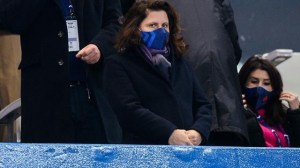
The Minister for Sports, Roxana Maracineanu, has increased the pressure stating who Bernard Laporte himself came to see us before the Tournament to present the protocol to us and tell us that everything was going to be fine, that the bubble was going to be strictly respected with entries and controlled exits. Now that we see that this is not the case, I am waiting for him to come and explain to us what it has been,”the minister said.

When asked about possible sanctions, she was very explicit: “If nothing ever happens, if we don’t look for this chain of contamination and we don’t explain how it could have happened, then the authorisation that has been given to play the Six Nations Tournament may be withdrawn.

The Ministry of Sports, after having requested additional guarantees from the FFR in January, gave the green light it, on February 2, to participate in the Six Nations Tournament, and in particular to travel abroad to Italy, Ireland, England.

Maracineanu a former top swimmer was surprised at some of the France squad behaviors: “I don’t think it was marked in the protocol that players could go out to eat waffles (as happened in Rome after the Italy v France match on February 6, or else, if they go out to eat waffles, they had to be retested when they re-entered the bubble in contact with others. We want to know if it has been done because it is the conditions of entry and exit in the bubble that make it a bubble, by definition. ”

The source “Patient zero” has changed three times, quipped Minster Roxana Maracineanu, and I await the full report with interest from the person who presented the health protocol to me before the Tournament (Laporte).

So this coming week could be an interesting one for the French national team and everyone involved, Bernard Laporte has not earned the nickname “Teflon” for nothing but Roxana Maracineanu is no pushover, watch this space.

France And Scotland In Deserted Paris The Auld Alliance

There is something special about Paris in the winter, the moment you step off the train at Gare du Nord, the aroma of coffee engulfs your senses as you hit the dark misty grey gloom, lit up by the neon lights of the cafes and bars in rue dunkerque.

Paris does the cold dark miserable season like no other city, with its inimitable style and class.

But Paris is different this year, the pavement cafes are shuttered and deserted, the tartan army sipping their cafe cremes with an insouciance and panache, is just a distant memory.

Historically France and Scotland have a very special bond, in 1942 Charles DeGaulle described it as the oldest alliance in the world.

“In every combat for five centuries when the destiny of France was at stake, there were always men of Scotland to fight by the side of the men of France, and what Frenchmen feel is that no people has ever been more generous with its friendship”.

The auld alliance with France was first agreed in 1295 built on France’ need to curtail English expansion.

The canny Scots were given the pick of the best French wines as a result of this accord.

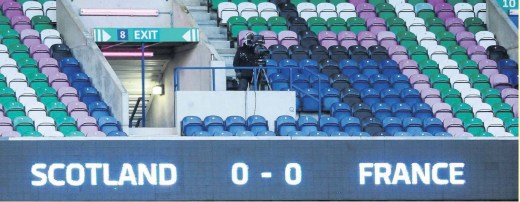
The Auld Alliance will be put on hold next Sunday when the battle of the blues takes place at Stade de France.

France having lit up our dark Covid infested year with flair and panache, showed they can also win ugly, victory in Dublin in the rain could be a watershed moment for this team, if you’ll pardon the pun.

Scotland are hoping they can go the whole hog and win in Paris, especially with the whole Stuart Hogg in such fine form, and of course the boy from down the road at La Defense, Racing 92’s Finn Russell.

Scotland’s championship chances are over if they lose, whilst a France win will see them heading to meet their Waterloo, this time the station not the battle, and a mouthwatering encounter with England at Twickenham.

Ecosse will be hoping that they can bounce back after a heartbreaking defeat to Wales, and do not succumb to a case of the Bleus, thereby sent homeward to think again.

Yellow Cards Wayne’s World And Valentines Day

International rugby on Valentine’s Day, is a feature that pops up every now and then due to the seasonal location of the Six Nations calendar.

This year the French, surely one of the most romantic rugby nations, both on and off the field, face Ireland in Dublin.

Now Valentine’s Day holds a special significance for Phillipe Sella and myself, we were both born on this romantic day of days. Sadly that is where all my similarities with the legendary French centre end.

Cards of course are an essential part of the Valentine occasion, and it provides me with a very tenuous link to those of the yellow variety.

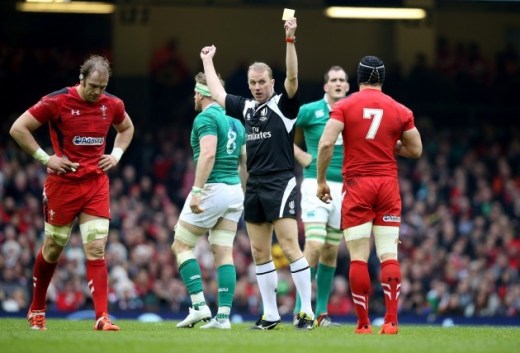
The referees selected for the 2021 Guinness Six Nations tournament have differing degrees of generosity with the brandishing of the yellow peril, but top of the charts is Wayne Barnes, who has given Clintons a run for their money with regard to dishing out cards.

Valentine’s Day in the Barnes household could be an interesting one, as Wayne’s wife Polly awaits a romantic missive from her husband, hoping for an elegant card with a lovely verse, she may well end up with just plain yellow one for hinging at the coffee machine, or coming into the garden from the side, rather than through the gate.

The World’s top referee has issued more yellow cards in the Guinness Six Nations than any other official, this of course is mainly due to his longevity having refereed 22 championship matches over a period of 15 years.

He will however be in the Emerald Isle this Valentine’s Day, as an assistant referee at the Aviva, his 24th as an AR in the Six Nations, and the French connection will continue when he takes charge of France v Scotland in Paris on Feb 28.

Wayne’s yellow pages directory includes some of the greats of the game:

Only 4 Six Nations red cards have been issued by the class of 2021, two by the South African whistle blower Jaco Peyper, when he dismissed Rabah Slimani and Michele Rizzo in the 71st minute of the France v Italy match in Paris in 2014.

The third red was issued last Sunday, by none other than Wayne himself, in Cardiff, when Peter O’Mahoney was given his marching orders in the 14th minute of Wales victory over Ireland.

And then yesterday just as I had finished this article Matt Carley produced a red out of his pocket for Zander Fagerson of Scotland, in the second half of the match against Wales, which the men in red won by the narrowest of margins 25-24.

Allan Lewis of Ireland, former international referee, holds the record for the most yellow cards issued in a match, when he handed out 5 during the France v Italy match in 2002. He almost repeated the feat in 2002 when he issued 4 in Rome during Italy v England.

Yellow is the most luminous of all the colors of the spectrum. It’s the color that captures our attention more than any other color.

In the natural world, yellow is the color of sunflowers and daffodils, egg yolks and lemons, canaries and bees. In our contemporary human-made world, yellow is the color of Sponge Bob, the Tour de France winner’s jersey, happy faces, post its, and signs that alert us to danger or caution.

As for cards, yellow is quite appropriate, whilst it is the color of happiness, and optimism, enlightenment, creativity and sunshine, there is also the dark side of yellow, which portrays cowardice, betrayal, egoism, and madness.

Happy Valentine’s Day everyone.

Guinness Six Nations Launch A Mute Point

Many of us of a certain age find technology quite bewildering, coming from a time when Zoom was an ice lolly, and tik tok was the sound that a grandfather clock made on a Sunday afternoon when the whole family was cocooned in front of the telly for Rugby Special, these are dark times for a Luddite like myself.

The Six Nations is a huge challenge for everyone involved, but no one in any national squad will have to cope with the pressure I had to endure last Wednesday, when due to COVID-19 the annual tournament launch took place, on line, in a virtual capacity.

For someone who is just about fully competent in texting this was my Everest.

Earlier this season I spent around half an hour happily chatting away on a radio interview with the mute button on, so I do have some form with regard to technology ineptitude, and the prospect of incurring the wrath of Eddie Jones or Fabian Galthie in a chat room was appearing to be a realistic prospect, presuming of course I could even get passed the dizzy heights of logging on to the session correctly, which I have to admit was not a given.

As I logged on to the Six Nations site at 0900hrs things did not look good, Puccini blasted out of my iPad, not the best of starts.

One of the catchphrases of this dreadful pandemic is “The new normal”, in my case the new abnormal would be more apt. Pressing every button on my keyboard in a frantic manner I magically managed to locate the virtual area I was meant to be in.

Despite giving Alun Wyn Jones a birds eye view of my nostrils due to poor iPad camera technique the launch went fairly well.

However one piece of technology I am very comfortable with is the TV remote, in fact I would humbly regard myself as world class in this department, with the ability to flick between BBC One and Netflix in the blink of an eye.

The next few weeks give me the perfect opportunity to showcase those skills, happy viewing everyone.

Masking Our Feelings The 2022 Guinness Six Nations

The winters are dark and cold in this part of the world, the daylight is in short supply during the days following Christmas, it is a bleak time for everyone, everyone that is apart from rugby fans.

For us it is the rebirth of the sporting year, and the start of the weekly countdown to the first weekend in February when the 6 Nations tournament begins.

The tournament starts in the depths of winter, and takes us through to the weak sunshine and gentle warmth of early spring, when the tournament concludes in the middle of March.

But the 6 nations is about far more than just rugby, it’s about making and renewing friendships, it’s about the history, it’s about the fans, the wonderful memories of 6 nations weekends past, and those wonderful ones yet to come.

Memories of matches and weekends shared with family, loved ones, and friends, some of whom are sadly no longer with us, come flooding back, and their spirits are with us this at time of year, as we prepare to enjoy a winter sporting festival like no other.

The 6 nations weekend has a heartbeat, a soul, it is a living entity, that has been enjoyed and handed down from generation to generation.

Uncles, fathers, grandparents cousins, have all taken pride in guiding their offspring on their first 6 nations weekend, and those youngsters who have taken over the baton, keep the traditions alive, and when the time comes, they will take their young on a similar rite of passage, and that is why the 5 Nations, as it was, and the 6 nations as it is now, is so unique.

Each wonderful host city has its own unique atmosphere, sight, sounds and smells.

Sadly this year it will all be very much different, and yet despite the lack of crowds and the dreadful situation we all find ourselves in, there is no doubt that the tournament has an important role to play.

The wonderful distraction of sport can be a great comfort in these difficult times.

As the 2022 tournament approaches, many of us, in the middle of a cold dark winters night will lie awake, and as the wind and rain beat against the window, we will feel a cosy warmth, as we remember with fondness, the matches, the weekends, the laughter, the tears, but most of all we will remember the people we have shared the matches with, and those friends we have met, because it is they that make the six nations tournament so very special, and we will hope and pray that next year those precious reunions will taste all the sweeter.

2020 Those We Have Lost

André Abadie. France international prop, who played twice as his country won the Five Nations in 1968.

Roger Austry. Former international referee from France. Awarded the Coq d’Or in 2002 for his career achievements, Austry refereed the French Championship final between Bègles and Toulouse in 1969 and during the Five Nations three years later.

Paul Bayvel. Golden Lions and South Africa scrum-half. Bayvel made his Springbok debut in the second test against the British and Irish Lions in 1974 and went on to win 10 caps for his country.

Steve Blackmore. Prop who played 169 games for Cardiff RFC between 1982-1996. Blackmore appeared four times for Wales, and played in the bronze final win over Australia at Rugby World Cup 1987.

Logie Bruce-Lockhart. Fly-half who played five times for Scotland between 1948-1953, helping his country to a famous 8-5 win over France in 1950. Bruce-Lockhart played in two Varsity matches for Cambridge and was also a schoolmaster, journalist and writer.

Michel Celaya. Former France captain who won 50 caps and helped the team to its first outright Five Nations Championship title in 1959. A forward, Celaya spent his entire club career at Biarritz and later coached the club.

Peter Cronje. Golden Lions and Sharks centre who played seven tests for South Africa. His third and final try for his country, scored against the British and Irish Lions in 1974, was the first four-point try scored by a Springbok.

Éric de Cromières. Became ASM Clermont Auvergne president in 2013 and oversaw a period of success in which the club won the Top 14 and European Challenge Cup while reaching the final of the European Champions Cup twice.

Corra Dirksen. A winger who scored three tries in 10 test appearances for South Africa between 1963-1968. All of those scores came against France in 1967, with his second in the first test considered one of the best ever scored by a Springbok.

Christophe Dominici. Scored 25 tries in 67 tests for France between 1998-2007. Arguably his finest moment came in the RWC 1999 semi-final when he helped to inspire Les Bleus’ 43-31 defeat of tournament favourites New Zealand.

Garrett Fitzgerald. Former player and coach who served as Munster CEO for 20 years between 1999-2019. During that time Munster won three PRO14 titles and two European Champions Cups.

Greg Growden. Australian journalist who covered every men’s Rugby World Cup for the Sydney Morning Herald and ESPN. 

Andy Haden. Played 117 times for the All Blacks, including 41 tests. The outspoken second-row played his club rugby for Auckland, and enjoyed spells at Harlequins and Algida Rome in Europe.

George Hastings. Primarily a prop, the versatile forward also played in the second- and back-rows for Gloucester. Hastings won 13 caps between 1955-1958, all in the front-row, scoring one try and kicking a conversion and two penalties.

Raymond Hunter. Won 10 test caps for Ireland and toured South Africa with the British and Irish Lions in 1962. Also represented Ireland at cricket, taking 33 wickets and scoring 800 runs in 28 matches.

Iain Laughland. Known affectionately as ‘Logie’, Laughland won 31 test caps for Scotland between 1959-1967, captaining his country on two occasions. He was also a gifted, and innovative proponent of sevens and a skilled administrator.

Terry Lineen. Played 12 tests for the All Blacks before his career was cut short at the age of 24 by a shoulder injury suffered against South Africa in Bloemfontein in August 1960. Lineen wore the silver fern a total of 35 times between 1957-1960.

Victor Luaces. Deputy Secretary of the Unión Argentina de Rugby between 2014-2018 and Sudamérica Rugby Honorary Secretary. Luaces played a pivotal role in the foundation of the Súper Liga Americana de Rugby.

Jean-Pierre Lux. A member of France’s Five Nations Grand Slam-winning team in 1968, Lux won 47 caps for Les Bleus and scored 12 tries. He later held roles on the boards of both the Ligue Nationale de Rugby and the Fédération Française de Rugby, and served as president of European Rugby Cup between 1999-2014.

George Mackie. Former Scotland number eight, who won four caps for his country between 1975-1978. His debut came in a 10-3 victory against Australia at Murrayfield in December, 1975.

Dougie Morgan. The scrum-half played 21 tests for Scotland, and captained the team during the Five Nations in 1978. He also made two appearances for the British and Irish Lions during the 1977 tour of New Zealand. Morgan coached Scotland between 1993-1995, leading them to the quarter-finals of Rugby World Cup 1995.

Arthob Petersen. Former Springbok manager, who held the post on four separate occasions between 1997-2009. In 1992, he was elected as a member of the executive committee of the South African Rugby Football Union, the forerunner to SA Rugby.

Ray Prosser. A prop who played 22 times for Wales between 1956-1961, and appeared in the final British and Irish Lions test against New Zealand in 1959. A proud Pontypool player, Prosser went on to coach the club for almost 20 years, bringing success on the pitch and producing a long line of international forwards for Wales.

André Quilis. A flanker who played five times for France between 1967-1971. Quilis went on to coach Perpignan, Nîmes and Montpellier.

Mat Ratana. Head coach of East Grinstead RFC. Born in Hawke’s Bay, Ratana moved to London in 1989 and spent the next 30 years working for the Metropolitan Police either side of a five-year spell back in New Zealand between 2003-2005.

Mike Slemen. England’s most-capped winger (31) when he retired from test rugby in 1984. Slemen scored a try in the 30-18 defeat of Scotland that secured a Five Nations Grand Slam in 1980, and toured South Africa with the British and Irish Lions that summer. Went on to coach the England backs under Geoff Cooke.

Jock Steven. Scottish Rugby President between 1993-1994, Steven represented the Barbarians during his playing career and was also an unused travelling reserve for Scotland. In 1988, he was team manager for the unbeaten Scotland Development XV tour of Zimbabwe.

Arthur Summons. A fly-half who won 10 caps for Australia between 1958-1959. Summons switched to rugby league in 1960, and captained and coached his country.

Alan Sutherland. A tall, powerful number eight who played 54 matches for New Zealand between 1968-1976, 10 of which were tests. A member of the Marlborough team that won the Ranfurly Shield in 1973, he later moved to South Africa.

Eddie Tonks. New Zealand Rugby Chair between 1990-1995, Tonks was first elected to the board in 1986 and was made a life member in 2004. He was involved in the preparations for the inaugural Rugby World Cup in 1987 and also served as World Rugby Chairman.

Matthew J Watkins. Centre who played 18 tests for Wales, and also represented his country at sevens. He revealed in 2013 he had a rare form of pelvic cancer and fundraised for cancer charities following retirement.
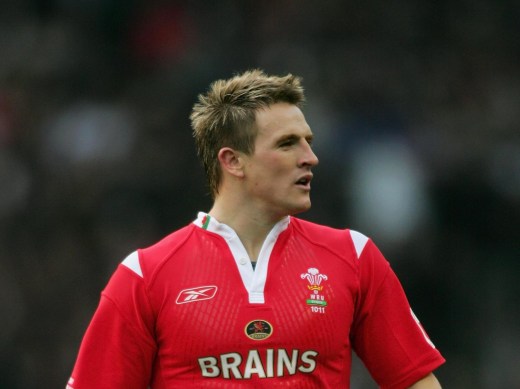
Grant Weatherstone. Scotland winger who won 16 caps and scored three tries between 1952-1959. Weatherstone also represented the Barbarians and was selected for the British and Irish Lions tour of South Africa in 1955, but withdrew through injury.

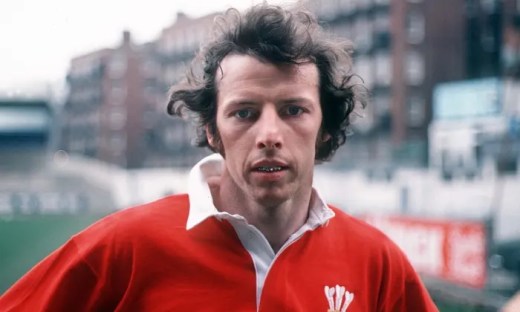
JJ Williams. Having represented Wales as a sprinter at the Commonwealth Games in 1970, Williams became an iconic figure on the wing for his nation’s rugby team. He won 30 caps for Wales between 1973-1979, scoring 12 tries, and added five more in seven tests for the British and Irish Lions.
Dennis Young. Hooker who played 22 tests for New Zealand between 1956-1964. A talented tap dancer in his youth, Young also represented Canterbury 139 times.

John Young. A talented athlete as well as a rugby player, Young played nine tests for England on the wing between 1958-1961, scoring two tries. In 1959 he was selected to tour New Zealand and Australia with the British and Irish Lions. Following retirement he became an England selector.

Hiroki Yuhara. The hooker was capped 22 times by Japan and was a member of the squads that travelled to RWC 2011 and RWC 2015, playing one match at the former. Following retirement he was working as forwards coach at Toshiba Brave Lupus.

It All Ended In Tiers

Chestnuts roasting on an open fire was more likely to be an ailment rather than an old Christmas song, considering the way 2020 panned out.

Maybe your Ding Dong didn’t merrily on high this year, but hey Cliff Richard didn’t release a Christmas song, so every cloud and all that.

Rugby wise even covid couldn’t stop some Boxing Day rugby from taking place, and the only new strain that affected me, touch wood ,was the strain put on the trousers by my rapidly expanding waistline.

It looks like 2020 is going out as it came in , with disruptive wind, nothing to do with the brussel sprouts, but rather Storm Bella, which is hitting the west coast as I write.

In Wales Boxing Day rugby was always centred around local derbies, where there was no love lost, the NHS was put under enormous strain even in those far off days, as local rivalries took a pugilistic turn on the field, prior to alcohol poisoning setting in post match.

In the professional era the local derbies in South Wales are not quite so brutal, but they are still bruising hard fought encounters.

This year in Newport the Dragons fire was finally drowned out after 68 minutes in the Gwent rain, and Cardiff Blues sneaked a narrow win by a single point.

The weather conditions were no better 63 miles due West in Llanelli, where Scarlets beat Ospreys in another close result.

A time of Tiers and tears as no spectators were present due to Covid, so it was yet another afternoon on the sofa.

So as the third mince pie bites the dust and the Nespresso machine works it’s magic, it’s time to switch channels to BBC 2 for Wallace and Grommit: A Close Shave, not too dissimilar to the earlier Welsh derbies… at least it’s not the wrong trousers. Maybe Its time to reach for the Wensleydale ?.

2020 Sorry You Were Out

It was a year when Amazon delivered our international rugby, and for once they didn’t just leave it behind the wheelie bin and put a card through the letter box. 

We should be eternally grateful that Yodel didn’t get the contract, otherwise England v Wales could have ended up in a neighbour’s porch, or half way up your silver birch.

Rugby limped through 2020 like an aged prop with a dodgy hamstring and a massive hangover, and whilst Wimbledon had been cancelled due to covid, the Autumn Nations Cup provided us with kicking rallies that Rafa and Roger would have been proud of.

Thank goodness for the dear old French, who not only found their mojo but stole everyone  else’s as well, Dupont and Ntamack proving to be one of the best partnerships since Prince Andrew and Pizza Express.

We got used to our televised rugby sounding like an episode of “Friends” as the canned crowd noise became the norm, fortunately Andrew Cotter remained the constant despite threats of a takeover from the new commentary kids on the block Olive and Mabel.

Everyone’s mental health suffered, and is still suffering this year, to a greater or lesser degree, but rugby still provided those magical moments, as it always does, when for a split second we were transported away from the anguish and tragedy that engulfs us.

As many of us enter Tier 4, or the national equivalent, being deprived of our loved ones over Christmas has created an emotional experience that is difficult to comprehend, there is nothing in the memory bank to turn to on this occasion to help us cope.

Today  I was fortunate enough to be at the Stoop where in these dark times, the stars shone brightly. Finn Russell, Kurtley Beale Teddy Thomas and co dropped in from Paris, the city of lights and lifted the gloom for a few precious moments, and crikey, even the sun broke through.

These are tough times but let’s hope in 2021 these brighter moments will be more frequent, that crowds will replace canned noise, and that life in general will upgrade us to Amazon Prime.

Fijians Flying In The Edinburgh Dreich

The Scots have over 400 words to describe the weather, from flaggie (snowflake) to Haar (a mist rolling in from the east). 

In a 24 hour period at the weekend, Edinburgh experienced a meteorological smorgasbord, as Friday’s thundersnow gave way to smirr (fine drizzle) 

But nothing could dampen Fiji’s joy following two weeks in quarantine, at a motel in St Etienne, after 27 of their players tested positive for Covid-19.

The squad were left isolated in individual rooms with meals left outside their doors. They were allowed outside to stroll in the motel car park one by one, so to finally play a game of rugby against Georgia at Murrayfield must have been a mighty release.

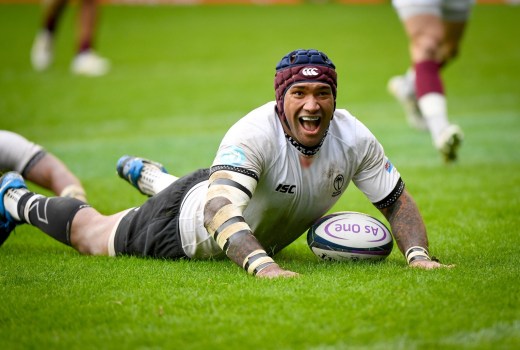
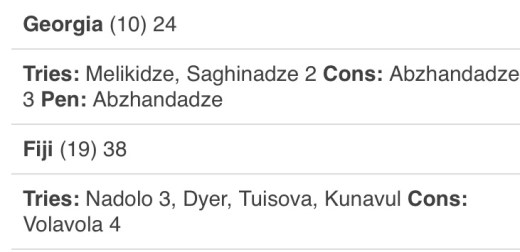
It had been 423 days since Fiji last played an international match, and a victory that included 6 tries, 3 of which came from Nemani Nandolo, was a testament to their character.

Coach Vern Cotter said that the lockdown experience in France had made the players grow and become better both individually and as a team.

Georgia played their own part in an entertaining match, with 3 tries of their own, and they will have benefited hugely from playing quality opposition in the Autumn Nations Cup.

As the mist cleared on top of Arthur’s Seat and a patch of blue appeared above Murrayfield, the Fijians thoughts may have turned to sunny Suva, but “Auld Reekie” and its dreich will do just fine for now.