Louis Augustus Phillips Wales International Killed 14 March 1916

220px-Lou_Phillips_-_Wales_modified

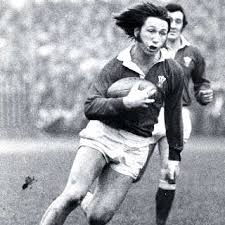
Lou Phillips

Louis Augustus Phillips was born on 24 February 1878 in Newport.

He attended Monmouth Grammer school, and was a great all round sportsman excelling at water polo and cricket, as well as rugby.

He played for Newport, his debut taking place during the 1897/98 season.

Lou played scrum half for Wales on four occasions, making his international debut against England in 1900, and he was part of the Triple Crown wining side of that year.

In 1901 he badly damaged his knee playing against Scotland, whist earning his fourth cap, an injury which put an end to his international career.

He subsequently excelled at golf winning both the Welsh and Irish amateur championships.

At the outbreak of World War One, he enlisted with the 20th Battalion Royal fusiliers

At the age of 38, on active duty in France, he was shot in the chest whilst out with a wiring party on 14 March 1916.

He is buried in Cambrin Churchyard Extension, Pas de Calais (Grave L1.10B

Lest We Forget

index

Wales Ladies Raising The Profile Of Womens Rugby

B8hv0MhCAAM5khI.jpg large

Wales Captain Rachel Taylor

If you haven’t seen a women’s international rugby match, you are in for a shock.

The women’s RBS 6 Nations match, between France v Wales, a couple of weeks ago, was brutal, and I have seen many mens’ games with less physicality.

So go to St Helens, Swansea on  Sunday and you will be in for at treat, as well as the possibility of witnessing a Wales Triple Crown.
Caroline Spanton, who leads the development of women’s and girls’ rugby in Wales, at all levels, wants her side to replicate their triumph in that memorable opening weekend win against world champions England.

The win over England has been crucial,” she told the BBC. “The amount of communication and profile we’ve had since that win has just spurred the women’s game on.

“We’ve got a fantastic squad of players and a fantastic management set up.

“The team have worked so hard to achieve the success that they’ve had and they’ve thoroughly deserved that.

“The profile for the women’s game will go through the roof if we have more wins and we have more success.

“We need people behind us so we need people to come down and join us at St Helen’s next Sunday.

“It’s a 12pm kick off and a big home crowd will really boost us – hopefully we’ll get that Triple Crown that the girls and the squad deserve.”

Womens Rugby In Spain

image

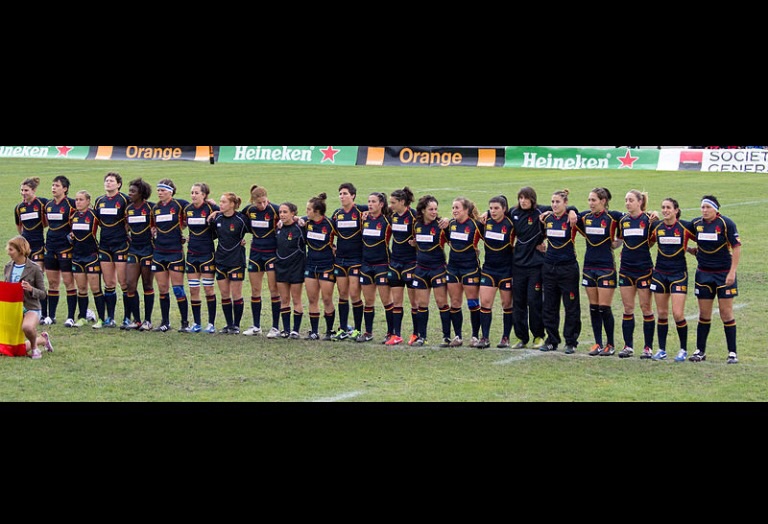
Spain national women’s team

All talk in the bars and cafe’s of Spain is of Ronaldo and Bale or maybe Messi or Xavi, but you may be surprised to know that Spain has a thriving Women’s rugby scene.

Currently there are over 200 women’s teams in Spain and a very competitive league.

The origins of women’s rugby in Spain can be traced back to 1913, when women played in secret in school, but rugby first began to be played seriously at the School of Architecture of Madrid in the early 1970s by a group of architecture students.

In the late seventies a group of female PE students taught by Jose Antonio Sancha, a professor of Rugby at Barcelona INEF, decided to train with the men and played the game seriously, although they were not recognised by the Catalan Federation rugby until 1983.

The first game was played in Barcelona between the BUC and INEF, other clubs quickly formed in different parts of Spain, but in the early years most of the clubs were centered around Barcelona and Madrid.

The game then spread to the Basque Country and Valencia, and In 1991 there were 27 women’s teams participating in regional competitions.

Spain played their first international match on 2 May 1989, against France, losing 8-0. For

The Spain national women’s team played in Cardiff at the Rugby World Cup, where they were placed fifth, behind the United States, England, France and New Zealand.

In 1994, the Spanish team suffered because of budgetary problems, and were unable to travel for international tournaments.

In 1995 Spain became the unexpected champions of the first European Championship by defeating France, in the final 21-6, and 1996 championship brought a repeat of that final but this time the Spanish lost 15-10.

In January 1997 Spain visited England to take on the World Champions and nearly caused an almighty shock, they led England until 10 minutes from the end of the match, and only a last-minute try by England gave them the win.

The 2002 World Cup was held on home soil in Barcelona, New Zealand retained its title beating England 19-9 in the final at the Olympic Stadium.

Spain were also members of the Five and Six Nations from 2000 to 2006, finishing third on three occasions and winning 10 of the 33 games they played.

However in 2007 they were replaced by Italy because the Six Nations Committee wished to align the women’s tournament with the men’s,and  they were replaced by Italy.

This severely reduced Spain’s opportunities to play top-level international rugby, and may have been a factor in Spain’s failure to qualify for the 2010 World Cup.

However in the last World Cup held in France, in 2014, Spain beat South Africa 36-0 in the 9th place play off, having beaten Kazakhstan 18-5 , and losing to England and Canada in the group stages.

Spain could be a leading light in the future of women’s rugby.

England v Scotland The Origins Of The Calcutta Cup

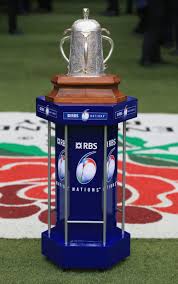
The oldest and probably most famous trophy in rugby, is the Calcutta Cup, played for annually between Scotland and England.

However many people are unaware of the origins of this famous piece of silverware.

The story begins with the popular introduction of rugby to India in 1872, the Calcutta  Rugby Football Club was established by former students of Rugby School in January 1873, and the club then went on to join the Rugby Football Union in 1874.

However, with the departure of a local British army regiment (and perhaps more crucially the cancellation of the free bar at the club!), interest in rugby diminished in the area and sports such as tennis and polo began to thrive as they were better suited to the Indian climate.

Whilst the Calcutta Rugby Football Club was disbanded in 1878, members decided to keep the memory of the club alive by having the remaining 270 silver rupees in their bank account melted down to be made into a trophy.

The trophy was then presented to the Rugby Football Union  to be used as “the best means of doing some lasting good for the cause of Rugby Football.”

The trophy, which stands at approximately 18 inches (45 cm) high, sits on a wooden base whose plates hold the date of each match played; the winning country and the names of both team captains.

The silver cup is delicately etched and decorated with three king cobras who form the handles of the cup and sitting atop the circular lid is an Indian elephant.

The original trophy is still in existence but years of mistreatment (including a drunken kick about in 1988 on Princes Street in Edinburgh by the England player Dean Richards and the Scottish player John Jeffrey in which the trophy was used as the ball) have left it too fragile to be moved from its permanent home at the Museum of Rugby in Twickenham.

Instead both England and Scotland have full size models of the cup to be displayed by the winning team and when England are the victors the original trophy is displayed by the Museum of Rugby in a purpose-built trophy cabinet with revolving stand.

Grand Slam To Great War England Team 1914

england 1914

My small tribute to the England team of 1914, who bravely faced the Scots for the Calcutta Cup, but sadly five months later they were forced to show bravery and courage that we can not possibly imagine.

Pictured here in their pristine white shirts, proudly displaying the red rose, they pose for a team photograph before the match against their arch-rivals Scotland in March 1914.

England won the crunch international 16-15, and a month later defeated France to clinch a Grand Slam in the Five Nations Championship.

But after playing for their country, five of this team would go on to die for it, laying down their lives in the great war.

We will remember them.

index

R

The Betrayal Of The Beauty That Was French Rugby

The lights of the Sacre Coeur were visible twinkling in the distance, between the gaps in the tribune sud stand, at Stade de France.

As one, the thronging crowd exited the stadium heading for the nearby bars and cafes, and the RER metro station at La Pleine, their collected breath billowing a rising cloud of mist into the chilly parisian night air.

French fans, silent, heads bowed, with longing in their eyes, longing for the days of Blanco, Sella, Maso, Cantoni, Maso, longing to witness once again the sublime French angles of running, and the sleight of hand that took your breath away.

French rugby used to be poetry and opera, the brutality of the grizzled old forwards, and the artistry of the backs, not the soulless, stodgy slog that recent years have produced

Heading back to the centre of Paris, the steamed up windows of the railway carriage trace the outline of a still lit stadium, as soulless as the French team.

Back at the Gare du Nord a stroll down to the Seine, and the groups that have travelled north from the rugby hotbeds of Agen, Brive, Dax, Beziers, Toulouse ,Toulon and from the Catalan sunshine of Perpignan, congregate on the pont neuf and stare down into the waters of the river below, with disappointment and sadness in their eyes, and a feeling of betrayal to the “rugby ghosts of yesteryear.

The moon light glints against the silvery towers of notre dame, it is time to forget.

Time for “steak frites” and a large glass of rouge.

It is awful to lose, and it is awful to lose betraying the talents that exist in French rugby, but there isn’t a better city in the world to taste defeat than Paris.

As a Welshman I pray that one day soon I will see those angles of running, and sight of hand, from les bleus once again, the game is all the poorer without them.

France 13 Wales 20

Wales came away with a convincing win, from the Stade de France, of course we had to endure a nervous final five minutes which is standard procedure for Welsh fans.

But the hiding behind the sofa was over pretty quickly as France ran out of ideas, although to be honest they ran out of ideas pretty soon after kick off.

Apart from a period at the beginning of the second half, and when Bruce Dulin scored a try, France were outplayed.

Wales were magnificent in the set piece, the scrum was rock solid, and the line out as  safe as houses.

Dan Biggar scored Wales only try after magnificent sleight of hand by Dan Lydiate

B-8-wb0XAAEhwA2

Leigh Halfpenny was faultless with his kicking, Jamie Roberts outstanding in attack and defence, indeed it was hard to find fault with any Welsh player.

French fly half Camille Lopez continued with chips kicks over the onrushing Welsh defence, which were ill directed and merely turned over possession to the men in red.

Lopez for some strange reason seemed fixated with short, unchallenged re-starts which once again just handed over possession to Wales.

Wales have now beaten France four times in row, something even the great sides of the 70’s never acheived.

We are all scarred by the last defeat, of course, the 2011 World Cup semi final….will we ever get over that one !!!!

For now, we can look forward to watching a thriller in Dublin tomorrow, and relish the fact that Wales are still in this years title race.

It’s a Wales win to savour, and it means I might get a goods night sleep .

Parisian Walkways and Parc Life My First French Trip

Next week I will be heading to Paris to report on the opening game of the 2016 RBS 6 Nations

I remember vividly my first visit for the France v Wales match in Paris, it was on 17 February 1979, three days after my nineteenth birthday.

The whole of Northern Europe was engulfed in sub-zero temperatures, and snow was on the ground as I headed to Heathrow to catch a Gulf Air flight to Paris.

In fact the match itself was in doubt earlier that week, due to a piece of the roof falling off at Parc Des Princes attributed to the Siberian weather that had hit the French capital.

These were the days when airport security was unnecessary and virtually non-existent, the great Wales prop Denzil Williams walked through the gate swigging from a large bottle of brandy, and no one batted an eyelid.

Arriving at Charles de Gaulle airport was like entering another world, it was the first time I had seen a policeman with a gun, in fact the entire staff of the airport appeared to be armed, including the cleaners.

But, the biggest shock of my life was about to occur, my first visit to a French toilet.

Now I had never been outside the UK, and nothing had prepared for the experience of “using” a urinal, whilst a French woman sang and polished the one next to me.

I was from West Wales, where even making eye contact with someone in a lavatory was deemed to be depraved behaviour, and then to cap it all, there was another woman sat at the exit of the establishment, with a saucer full of francs to which I embarrassingly had to make a contribution.

All weekend Paris was engulfed in a freezing cold, misty blanket, which didn’t help my main problem, dog mess !

Now I have never seen, before or since, so much dog mess in one city, as I did in Paris that weekend, I never saw any of the sights as I was too busy looking down at the pavement, leaping around like Rafa Nadal to avoid slipping on either canine excretion or ice.

The epicentre of this problem was right outside the Port de Saint Cloud metro station, the nearest station to the Parc Des Princes, where France played in those days, as did the football team Paris St Germain.

The Parc Des Princes was like a bear-pit inside, but unfortunately looked like an NCP car park from the outside.

The atmosphere in the ground was very hostile, unlike the sanitized Stade de France of today. The Wales time were roundly booed when they entered the fray, but the French saved their ire for the Gendarmerie brass band who were heckled so loudly that it was impossible to hear a note they played.

Having a ticket was a waste of time, as every row of ten seats contained at least twenty people in situ, I had a burly Basque farmer on my lap for most of the first half, and in fact it was so cold, I was glad of the warmth.

He had a leather satchel around his neck, that made him look like a Gallic St Bernard, which I discovered was filled with his home-made Pyrenean brandy.

The bearded, beret clad St Bernard insisted every time Wales, or France, were awarded a penalty that we both take a swig from his attachment, in the interests of Cymric/Gallic relations I felt it only polite to comply.

Wales were coming to the end of their golden era in 1979, JPR Williams was still around, and captained the team, and a new young star was emerging at scrum half in the shape of Terry Holmes.

For the record

France won 14-13, with the score at half time level at 7-7

Jean Francois Gourdon scored two tries for France, and Aguirre kicked two penalties.

For Wales, Terry Holmes scored a try, and Steve Fenwick kicked three penalties

jpr

Wales Captain JPR

JPR Williams summed the game up perfectly afterwards “The French took everything we could throw at them, and in reality were so much better than us on the day that it is amazing we ran them so close. Steve Fenwick took a long-range shot at goal, near the end, which could have won the match for us,but defeat would have been a terrible injustice to our opponents”

So my baptism had been completed, The French trip is always something special, but you never forget your first

Up And Running Scotland v Wales

B96v-8QIYAE88lh

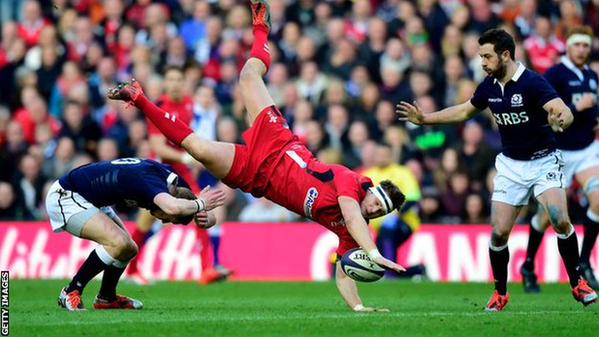
Wales is a happier place this morning, the tortured memories of the dark night at the millennium,can now be replaced by images of hoards of smiling red shirted “Warrior’s” heading to Edinburgh airport, or Waverley station, with a spring in their step.

The long journey home from the glens to the hillsides will be filled with tales, and laughter, and many sore heads, no doubt.

There is no analysis this morning, just relief, watching the last few minutes through my fingers, as is the case with most Wales matches, I would have hidden behind the sofa, but I didn’t want to disturb the cat..

Enjoy this moment, we now have a two-week break before the next round of matches, so we can bask in the temporary tranquillity of body and mind that winning a game brings.

Supporting Wales is not for the faint hearted, but that’s why we love our boys in red, we Welsh are not for the simple easy way of doing things, we like a bit of “cachu” in our lives it spurs us on.

So get the papers, read about the win, have a safe journey home, and see you in two weeks for more hand wringing torture in the Stade de France.