The First Wales Rugby International Killed In World War I

index

Charles Gerald Taylor was born on 8 May 1863.

He was a Royal Navy officer and Welsh international player who played club rugby for Blackheath.

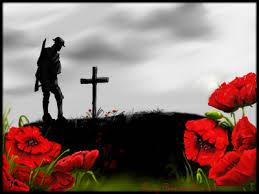
He was the first Welsh international to be killed in action during World War I

Taylor was an all-round athlete, and at one time was the Welsh pole vault champion, he joined the Royal Navy on 1 July 1885, when he was an acting assistant engineer.

Much of Taylor’s career was spent at training or other shore establishments, however, shortly after the outbreak of World War I,  on 16 September 1914 he was posted to the HMS Queen Mary, then on 20 November he was transferred to HMS Tiger.

On 24 January 1915, Tiger was one of the vessels engaged in the Battle of Dogger Bank. HMS Tiger was struck by fire from a German cruiser, and Taylor died during the engagement.

Unusually Taylor was not buried at sea, and his body was returned to Britain to be buried at Tavistock New Cemetery n Devon.

His international rugby career began in 1884 when he made his debut for Wales against England.

Wales lost the game but Taylor played in the two remaining games of the championship  against Scotland and Ireland.

In 1885, Taylor made his first international score when he converted a try, though as no points were given to conversions at the time he is recorded with no career score.

Taylor was instrumental in setting up a rugby club for Welshmen exiled in London.

A club was formed in June 1885, and Taylor became a committee member,and on 21 October became a member of the very first London Welsh team.

Taylor’s final game for Wales was in 1887 against Ireland in a win at Birkenhead.

How A Welshman Grew To Love Brian Moore

brian moore

I love Brian Moore, it is a relationship that didn’t begin well.

I’m Welsh you see, and in the 1980’s Brian was the “go to” man for us Welsh supporters who were witnessing an annual thrashing by England.

Wales v England 1995, at Cardiff Arms Park, he was a snarling ball of sweat and saliva, he terrified me, (and I was sat at the back of the west stand).

Fortunately the French seemed particularly susceptible to his Anglo saxon charm, and found Brian and co the rugby equivalent of Waterloo. (The battle, not the station)

Les Bleus front rows would visibly dissolve, physically and emotionally, until they were either totally P’d off, or sent off.

My view of Brian began to change, when in a magazine article, he recommended a particular cabinet Sauvignon that was economically viable for me, and it actually tasted good.

Sadly I went at it in the manner of Vincent Moscato, as a result I no longer drink alcohol.

I will not dwell on Brian’s playing career, as it gives me horrific flashbacks of trips, to Twickenham, and Cardiff that I, and most of Wales, would wish to forget.

But for me it is Brian’s media career that has totally won me over.

He speaks for us, the people who spend our lives in the grip of this wonderful game, he also, somehow manages to remain totally impartial and don’t we just love it when he starts on Eddie Butler ?

If someone had told me 20 years ago, that I would writing an article praising Brian Moore, I would have thought they were suffering from an overdose of the afore-mentioned cabinet Sauvignon.

Don’t change a thing Brian, keep on keeping on, and who knows maybe one day, in yours and my lifetime, we may see the scrum refereed according to the letter of the law.

Now that would be a birthday present worth getting.

Gerald Davies My Hero

images

“Never meet your idols, they’ll only disappoint”… is a well worn phrase, well let me tell you, when I met the great “Gerald of Wales” my hero worshiping increased to a degree that could be measured on the Richter scale.

I was on a flight from Cardiff to Dublin, for the 1988 triple crown decider, between Ireland and Wales. We shook hands and had a chat, where he revealed his friendliness, modesty, and unassuming nature.

Maybe it was due to the gin and tonic I bought him, but I don’t think so.

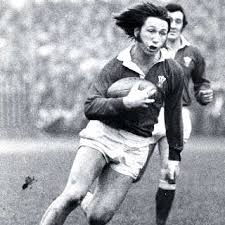
For those of you unlucky enough not have been around in the 1970’s, Gerald Davies, or “Reames” as he was known by his team mates, was a winger, actually he was “the” winger.

At 5ft 9ins and 11st 7lbs, he would not have the physical attributes to become a “ball boy” in today’s modern game.

To cut a long story short he played 46 times for Wales, and 5 times for the British Lions

I was born in the West Wales village of Kidwelly, and Gerald was born in Llansaint, a stone’s throw away.

Locals would look up to the misty green hills of Llansaint, to see where Gerald was born, with a reverence only otherwise seen on the faces of pilgrims arriving at Santiago de compostela.

Always looking immaculate, both on and off the field, in the scarlet jersey of Wales he had his trade mark turned up collar, and with his neat moustache he looked like a Dickensian “well to do”

Tries, great tries, too many to mention. I’ve lost count of the number times he squeezed in at the “Taff end” at the old Arms Park. The touch in goal flag uprooting like an Exocet missile every time he launched himself into the corner

It was like “groundhog day”  Delme palms, Edwards to John (I can hear BIll McLaren as I write !!) Bergiers, Arthur Lewis, Gerald Davies… what a try !

The one performance that sticks in my mind, is for the British Lions against Hawkes Bay in 1971, the great man scored four tries that day. The black and white TV footage of one try, looks like a keystone cops silent movie, with defenders throwing themselves in all directions as Gerald side steps, shimmies, swerves to score untouched in the corner.

Gerald retired from international rugby in 1988, and has served rugby, and Wales, in various roles with the respect of everyone associated with the game, his integrity shines like a beacon, even in the cut throat world of modern day professional sport.

He also wrote wonderful poetic, evocative articles for The Times newspaper.

The poem “How fast was Gerald Davies Dad ?” written by the immortal bard, Max Boyce, produced a tribute that cannot be matched.

With apologies to Max, for paraphrasing,

Basically, Gerald Davies can turn his bedroom light off, and be in bed before it’s dark, thats how fast my son !

Whistle While You Work Clive Norling

_45674590_b00jzvxc_512_288

When I started refereeing in 1980, at the tender age of 22, I wrote to Clive, for advice. I sent the letter addressed to “Mr Clive Norling, Referee, Birchgrove, Swansea.

Such was his fame,the letter got to its destination, in two days (and I posted it 2nd class)

Clive kindly wrote back with all the advice and inspiration you would expect, such was the detail, he even advised me which whistle to use (the acme thunderer)

Sadly I have lost the letter, but the one bit of advice I still remember is “the referee is the least important person on the field, the game is for the players” that I think summed up Clive’s philosophy, although you could never accuse him of being anonymous on the pitch, whether it be the tight shorts, the perm, or the huge and somewhat portly frame, sandwiched into that red shirt, with the three feathers bursting to escape from the left pectoral region.

My first match with the Dorset and Wilts society on a Boxing day in Weymouth, came with a request from the home hooker to move the scrum five metres to the right, when I enquired somewhat puzzled  “why” ?, he replied “my hooker has just been sick”

Clive’s letter didn’t cover advice on this kind of situation.

From his first international in 1978, between Ireland and New Zealand, to his last in 1991, he had a real empathy for the game, and funnily enough most of the games he refereed were entertaining to watch, although the light aircraft flour bombing the New Zealand v South Africa match, at which he was officiating was a somewhat added extra.

All I know is that he inspired me to take up the whistle for 10 years with  Dorset/Wilts and briefly the London Society, I even grew a moustache to make me look more like him.

After he hung up his whistle Clive inspired at an even greater level.

He publicised his battle with depression in an effort to help others combat the illness, and to raise awareness of this still somewhat taboo subject.

Perhaps this will be his greatest legacy

We are very lucky in Wales when it comes to our top referees, and Clive’s spirit lives on with the wonderful Nigel Owens, long may it continue.