Hadleigh Parkes The Centre Of Attention


Just off Highway 1 in the Rangitikei district of New Zealand’s North Island , there lies a small community called Hunterville.

The township on the Porewa stream had a population peak of 546 way back in 1896, but in the census of 2013 its population had declined to 429, the railway station closed in 1988, the maternity hospital in 1989 and in the 1990’s three of its banks closed.
The town is best known for its statue of the Huntaway, a herding dog that uses its voice to control sheep, the steep hills of the Rangitikei would be impossible to farm without the dogs.

But Hunterville may be getting a new statue the way things are going, as it is also the home of Hadleigh Wayne Parkes.

The geographical similarities between home and Carmarthenshire are evident, and as the likeable Kiwi comes from a proud farming heritage, it may explain why the international centre feels so at home in Llanelli.

The people of Wales have taken Hadleigh to their hearts, a down to earth humble bloke, who Scarlets fans adopted as one of their own quite some time ago, but since December the whole country has grown to respect and appreciate the Kiwi centre, for his performances on the field, and his demeanour off it.

His debut for Wales on December 2 2017 against South Africa was treated with scepticism in some quarters, this was soon quashed after a superb performance scoring a try after 8 minutes, another after 33 minutes, topped off with the man of the match award.

He looked like he had been on the international stage all his life, if there were any nerves they certainly didn’t show once the match kicked off.

Pre match is another story, learning the national anthem from hours spent with his Scarlets team mates,  Hadleigh was anxious to sing it and to sing it properly, another act that endeared him to the people of Wales.

“It was a huge opportunity and privilege to be able to represent the Welsh people”

His parents Bill and Janet missed his Wales debut, but his partner Suzy arranged for a video tribute to be sent from New Zealand from family and friends, which brought a tear to all our eyes as well as his.

Thankfully Mum and Dad made it to the Principality Stadium, in February, to see their son make his 6 Nations debut against Scotland.

“They were waiting until the team was picked, with their bags packed, were ready to go” says Hadleigh and when the call came they set out on the 12,000 trip to see their son in action.

Bill and Janet became celebrities themselves when shown on the big screen during the match and there was a lovely moment when their boy in the heat of battle glanced up to view Mum and Dad having a whale of a time.

“I caught them out of the corner of my eye, it was just a good laugh to see Mum and Dad enjoying themselves, and we were playing a good game of rugby as well”

It was a tough decision for both him and Suzy to leave home (New Zealand), but they were both keen to explore new cultures in the Northern Hemisphere.

Rugby playing offers came from France but having known Scarlets coach Wayne Pivac from his Auckland and provincial rugby days Hadleigh opted for the West Wales side.


Since then he has become the glue of the national team with his superb rugby brain bringing a coolness and consistency to the number 12 shirt.

The Northern Hemisphere experience could switch to Asia in 2019, as I have no doubts that he will be an integral part of Wales Rugby World campaign in Japan next year.

Hopefully Suzy and Hadleigh will partake in some further European exploration in the Basque city Bilbao in May, a champions cup win there with Scarlets, and there could well be another statue erected to a Hunterville citizen, this time one with two legs.

But the biggest match of all takes place in New Zealand in June where there will be two certain winners, Suzanne and Hadleigh, when they become Mr and Mrs Parkes.

That will be some “Shemozzle”

Tempus Fugit The 2018 Six Nations


There is a theory that time passes quicker as you get older, if this years 6 Nations is anything to go by then that theory has some substance.

It only seems yesterday that the Christmas special of call the midwife came to a tearful end, and the glorious anticipation of the 2018 tournament filled our hearts and minds with that wonderful warm glow that it always does.

Now all of sudden here we are on a damp Monday morning, with snow still on the ground, after the final weekend that saw Ireland win the Grand Slam.

This years tournament seems to have flown by even faster than usual.

Maybe the fact that I reached the tender age of 60 halfway through the tournament has increased the speed in which time has passed.

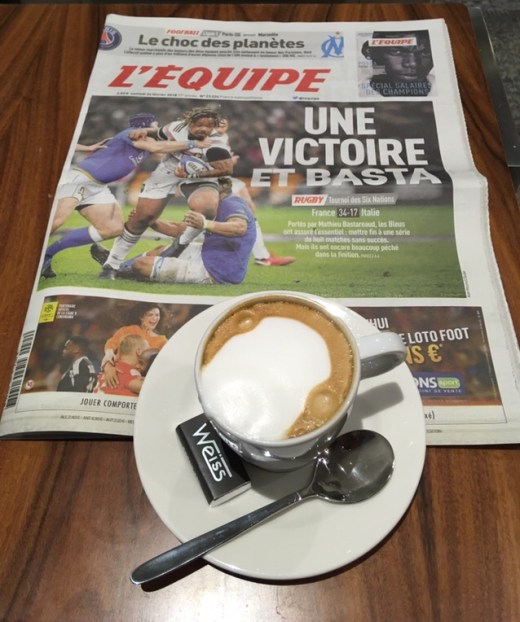
Such is the rapidity at which the tournament has unfolded, I still have croissant crumbs from Marseille (after France v Italy) in my iPad holder that require removal.

Einstein theorised that time slows down or speeds up depending on how fast you move relative to something else.

Try telling that to whoever is stood ten metres away from a runaway Matthieu Bastareaud, I would imagine that physics theory is rapidly replaced by a more basic fight or flight reaction.

The passage of time has been a crucial factor in this years tournament, on the opening weekend in Paris with 80+3 minutes on the clock a Johnny Sexton drop goal snatched a victory for Ireland against France.

In Dublin Ireland took on Wales and with the score at 33-30 to Ireland, one pass with 80 minutes on the clock from Gareth Anscombe and time stands still for the briefest of moments.

If it goes to Tipuric it’s almost certainly a win for Wales, but an interception for Stockdale results in an Irish try that seals victory for the men in green.

Indeed Ireland seem to be the Time Lords, they have scored 31 points in time added on after either at 40 or 80 minutes during the championship, so we could be looking at Joe Schmidt as the next Dr Who at this rate.

For Italy, facing Wales in Cardiff, the opening six mins must have seemed like an eternity as the rampant red raiders raced in for two tries, that gave the Azzuri an impossible chance of recovery.

There are a number of French players who would love to turn the clock back to the start of the fateful night in Edinburgh, that resulted in a police investigation and their subsequent dropping from the France squad, and there are a group of Scottish players who hoped their Saturday night in the capital would never end, after their wonderful victory over England.

Time is not measured by clocks alone, but also by moments, and the 2018 Nat West 6 Nations has provided us with plenty of moments, moments of joy and sadness, of hope and despair, of ugliness and beauty.

We’ve had France’s version of Beauty and The Beast in Teddy Thomas and Mathieu Basteraud.

Poor Sergio Parisse reached the incredible milestone of one hundred Italian defeats, whilst the Flower of Scotland sent England home to think again, and indeed they did think again, and again, and then lost their next two matches against France and Ireland.

Wales finished as runners-up and with eleven players out injured have acquired an unexpected strength in-depth, just in time for next years Rugby World Cup in Japan.


So it’s finally over and we now file away those moments in our memory bank, to go with all the others we have collected over the years, and some of us are already counting the days to the next tournament.

I’m already thinking about 1 February 2019, when Wales and France open the next six nations tournament, in Paris, at the very gallic kick off time of 9pm.

Undoubtedly time will pass quickly, and if we are spared we will do it all again, how time flies when you’re having fun.

Seeing Red

In Ancient Rome the colour red symbolised blood and courage, whilst in China, it is regarded as a vibrant optimistic colour symbolising success, happiness and warmth, along with good luck and wealth.

But for a select group of men the colour red symbolises a brotherhood whose claim to five and six nations fame is a somewhat dark and shameful one.

There is no highlighted annual glory for them, just a little talked about statistic in the back pages of the guides and previews of this wonderful tournament.

These are the men who have received their marching orders, the recipients of the dreaded red card.

Stuart Hogg 2014

The first 5 Nations dismissal took a while coming, you wait ninety-four years for a sending off then two come along at once.

The late great Willie Duggan of Ireland and Geoff Wheel of Wales were the first players dismissed in the Five nations when Wales entertained Ireland Cardiff on day month 1977.
Scottish referee Norman Sanson did the honours in the days when you could only get cards from Hallmark, it was just a pointed finger to the touch-line, which even the BBC cameras missed, fortunately commentator Nigel Starmer-Smith didn’t.

It will come as no surprise to English readers that France are the Kings of the Red Card three of which were received in their vintage decade of “Le Biff” the 1990’s

The complete antithesis to the French are England, whiter than their white shirts, who have not received a single red card throughout the entire history of the Five and Six nations.

Although when it comes to yellow cards, James Haskell holds the dubious honour of receiving the most individual yellow cards, managing to collect five between 2007 and 2017.

Italy as the new kids on the block, have made up for lost time with three dismissals since they joined the tournament, when five became six, in the year 2000, in addition Italy also hold the most yellow cards with forty-five.

The most recent red card was given by Jerome Garces to Scotland’s Stuart Hogg in Cardiff in 2014.

Teddy’s Life Has Been No Picnic 

Teddy Thomas has lit up this years six nations with the kind of footwork his nursery rhyme ancestors would have been proud of, one step, two-step and a bit of “round and round the garden” before dotting down over the try line three times in two matches.

The man with the”Man Bun” has been the eye-catching speedster follwing the opening two rounds of the tournament, the nicknames are bound to follow, TGV Ted maybe, or the Racing Rapier, I will leave that for my friends at L’Equipe and Midi Olympique to sort out, but my Welsh imput will consist of “Thomas The Try”

Teddy is born and bred French, with some Malian blood from his father.

In an interview Teddy said “My father abandoned me shortly before my birth”

All he knows about his Dad is that he was born in Bamako, and came to France to play professional football with Saint Etienne and Marseille, but when Teddy was born, on 18 September 1993, his Dad disappeared off the face of the earth.

Born within the shadow of the Biarittz stadium, the young winger was raised by Mum Carole, with his uncle and Grandad providing the fatherly guidance.

It was they that took him to training, encouraging him into the Biarittz academy under the guidance of a great former French wing Patrice Lagisquet.

Teddy bears no bitterness towards his father, just sadness that he didn’t know him.

“I don’t want to judge him, I don’t know the circumstances of his departure and I don’t want to know them”


Teddy Thomas stands at 6ft 1 and weighs in at just over fourteen stones, on his left bicep are two tattoos one shows Mali within a map of Africa, the other is written “Dad” in Latin.

On November 8 2014 he made his French debut against Fiji, on the left-wing, scoring a try in the first minute, he went on to complete a hat trick that day.

He has scored eight tries in thirteen matches for his country a pretty good ratio, those of us craving a return of the French rugby flair that lit up our youth, are pinning  an awful lot of our hopes on the young Racing 92 player, to lead French back play from the darkness in to the light.

It is a bitter irony that due to incidents in Edinburgh,after the Scotland gamein February, which resulted in his suspension, the flying winger was unable to face Italy, at the velodrome, the ground where his Dad played professional football for Marseille.

Teddy gives us old folks hope that French flair is still alive and well and with a long season  of Top 14, and international matches ahead “TGV Teddy” can light up the winter darkness before shining at the Rugby World in the land of the rising sun.

Guilhem Guirado The Humble Hooker

Arles Sur Tech is a tiny village, set in a scenic forested valley, in the eastern foothills of the pyrenees, where catalan and French are spoken.

It is less than one hours drive from the Spanish border, a journey which has a major relevance to one of its inhabitants, France captain Guilhem Guirado.

In stature and appearance, he is exactly how you would imagine a French hooker to look like.

At 5ft 11ins and 15 stone 8lbs, he is as tough and solid as the local Pyrenean Boulders on the field, and as calm and gentle as the meandering river tech off it.

A private man who puts his love of his family above all else, his grandparents were part of the 500,000 Spanish exodus, that fled the violence of the Spanish Civil War, and crossed the Pyrenees with the one sole aim of finding refuge in France.

His parents were born in Granada, and were only five years old when they arrived in France with almost nothing to their name.

“Until I was 15 all I knew was this village where my grandparents had arrived, my favourite memories are from here, I loved being that age, it is here everything really started for me and I found a passion for rugby”

Guilhem is a man who knows where he is, and more importantly  where he has come from.

I first met him at the RBS 6 nations launch in 2016, after he had just been revealed as the new France captain, he stood out as a man at peace with himself taking everything in his stride in a calm and measured manner.

“To know where you want to go you need to know about where you came from and the determination that went before” he says philosophically, and when you delve into his family history you get a sense of where that inner strength has come from.

“What I like about rugby is the direct confrontation with an opponent a physical contest and collisions tackles”

But when he gets home he puts his bag down and rugby is finished

“The most important thing for me is my family and the people who are around me, whether my parents, grandparents wife or daughter”.

“It’s my stability it’s something that allows me to put things into perspective, to be able to relax and see life in a different way, I’m not only thinking about rugby and that allows me to perform well on the field”

CAPTAINCY

“I don’t have a specific style it is mainly a feeling, a lot of conversations and a lot of questioning, and the captain is nothing without the players around him”

“It is a great pride, a huge honour for all that it means for me and for France”

WEARING THE FRENCH JERSEY

“I think it’s always an honour to play for and represent France, everything goes more quickly and it is a bit stressful because of the fear of not being up to the mark, you want your family to be proud of you”

“I like to know what has happened in the past and immerse myself in it because I also have to represent all the former players, there have been some huge players, and great hookers who have gone before me”

“For me this shirt really represents the welcome given to the Spanish exiles, I am French I grew up in France, it is a country that was ready to welcome to my grandparents so of course I think of them”

PLAYING CAREER

“My first memory is the first time I played rugby, it was with all my friends in Arles sur tech, and the most beautiful thing is we all got to know each other on the rugby field, and today we are still sharing our lives and great moments together”

“I have been lucky to be able to play for my club that made me dream when I was a kid, the Perpignan team USAP, and finally to be able to play with France a few years later, and now to play with RC Toulon with the best players in the oval world”

He won his first cap on 9 March 2008 , coming off the bench against Italy at the stade de france in a 25-13 victory “I remember my first cap, a special taste, I remember it like it was yesterday”

His first start for France came in the 2010 autumn international against Fiji.

The recently sacked France coach Guy Noves spoke publically of his desire to keep the “Toulon Talonneur”as skipper for the 2019 Rugby World Cup in Japan.

The new incumbent Jacques Brunel was coach of Perpignan when they won the French league some years ago, wearing the number 2 shirt through that campaign was none other than Guilhem Guirado, so he too is well aware of leadership qualities the man himself possesses.

Whatever happens you sense that Guilhem will take it all in his stride, his mother says “He must never forget where he is from, it is his strength” and as we all know, mothers are usually right.

This Roar Is For You Dad

How many of us were taken to our first rugby international by our Dad ? Quite a few I should think.

My father took me to Cardiff Arms Park on October 2 1971 to see Wales play for the very first time against Canada.

Forty seven years have passed but that day still lives with me.

In those days of black and white television to be taken to a new rugby world where the grass was green and the Welsh shirts a blood red was a shock to the senses, the colours were all so vivid after a childhood of grey grainy pictures on a small television that doubled up as a cocktail cabinet.

Those forty seven years have passed in a flash, age has caught up with us all, but this weekend it caught up with one man in particular.

My lovely dad passed away at 2.30pm, a proper old fashioned kick off time.

Like a true prop he gave it all he had but this time he was on the losing side, and now it’s time for him to rest in peace.

As the 2018 six nations is about to begin the glorious irrelevance of rugby will be the great comforter that it always has been, and to all those of you who will going to Edinburgh, Cardiff, Rome, Dublin, Twickenham, Murrayfield and Marseille, enjoy every second, and if you happen to be going with your Dad, hold him tight and give him an extra hug from me.

Quins Thunder Sees Off Lightning

On a dark damp chilly afternoon at Surrey Sports Park, Harlequins Ladies thunderous forward effort saw off Loughborough Lightning to earn themselves a 17-10 win.

Quins watertight defence kept out Lightning during the opening exchanges, as Loughborough controlled the breakdown, but Quins dominant scrum turned the tide in their favour.

Jess Wooden kicked a scrum penalty to touch on the 5m line, and the resulting driving maul gave hooker Davinia Carlin her first try of the match.

The multi talented home team backline bombarded Loughborough, but their defence held out until captain Sarah Hunter received a yellow card for killing the ball on her own line.

A Quins attacking 5m scrum resulted in Fi Fletcher touching down under the posts, and Wooden added the conversion to give the home side a 12-0 lead at the break

Quins made a storming start to the second half, with Catlin getting her second try to give Quins a 17-0 lead.

In the gathering darkness as the light faded ,the Lightning struck.

A yellow card for Loughborough’s Rebecca Noon, reducing them to fourteen players, sparked a two try revival as Lizzy Adam and Sarah Bonar touched down to narrow the score to 17-10.

Quins old heads stepped up to the plate, Rachael Burford, now at scrum half, controlled matters in the back line, whilst lock Deborah McCormack made a couple of powerful galloping runs, breaking the gain line on a number of occasions, and putting lightning on the back foot, at a time when they were looking menacing.

The Lightning storm had passed, and the game ended with Quins throwing the kitchen sink at Loughborough in the opposition twenty two, in an attempt to get a fourth try and a bonus point.

A team who love to play exciting attacking rugby showed that they can also get down and dirty to grind out a win, and that can only be good for their title challenge in 2018.

Wales v France In Years Ending With An Eight

Years ending in the number eight figure eerily, and notably, in the history of matches between Wales and France.


In 1908, on March 2, Wales and France met for the very first time, in Cardiff, with Wales winning 36-4.

It was only the fifth international match ever played by France.


In 1928, on April 9, France recorded their first win over Wales, at Stade Colombes, until recently the home of the Racing 92 club.

Home wing Robert Houdet (pictured above) scored two tries, and a conversion, to give France an 8-3 win.


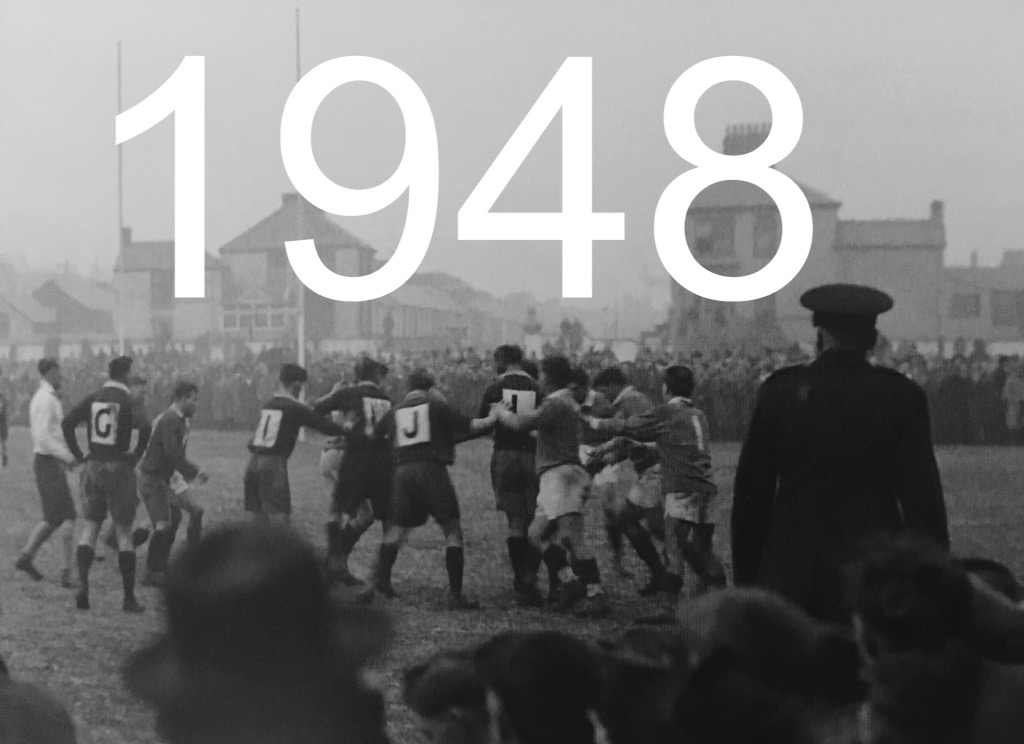
In 1948 France gained their first victory on Welsh soil when they beat Wales 11-3 in Swansea, at St Helens.

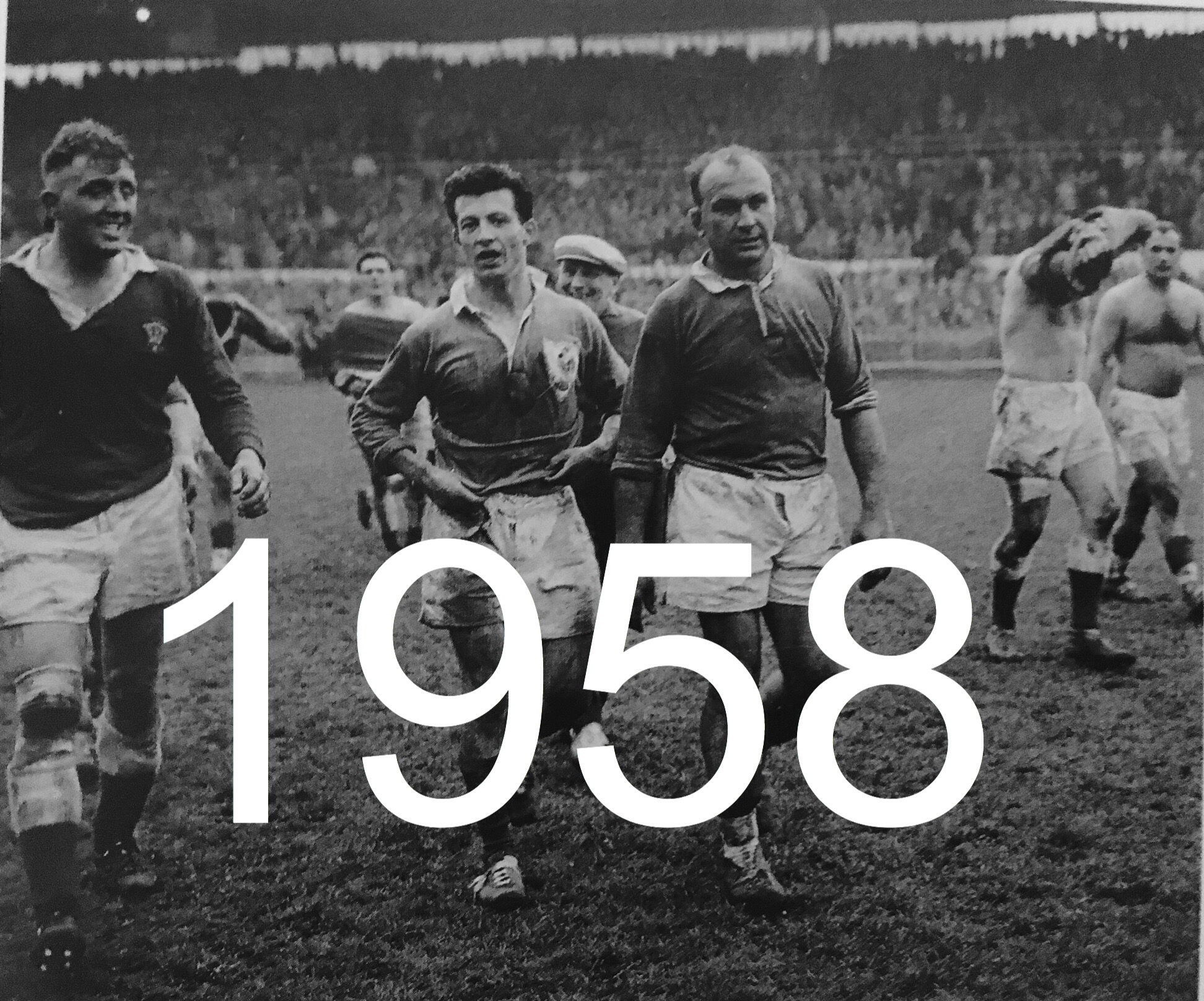
Ten years later, in 1958, on March 29, France beat Wales 16-6, it was their first ever win at Cardiff Arms Park.

The Welsh team was captained by Clem Thomas, and fly half, Cliff Morgan played his last international match for Wales.

France captain Lucian Mias and his team left the field to a standing ovation from the Welsh crowd.


If we fast forward another ten years to 1968, France won their first Grand Slam in the mud and rain of Cardiff Arms Park.

The Camberabero brothers, at half back, masterminded the French victory, with a team that included Christian Carrere, and Walter Spanghero.


1978 saw the fortunes change in Wales’ favour, when a 16-7 win for Wales, gave them the Grand Slam.

It was the final international appearance of two of the worlds greats, Gareth Edwards and Phil Bennett.

Bennett signed off with two tries, whilst Edwards signed off with a towering drop goal.


France’s one point victory, at Cardiff, in 1988 (10-9) deprived Wales of a Grand Slam, and as a result the 5 Nations title was shared between the two teams.

Wales came back with a late Ieuan Evans try and a Paul Thorburn conversion, but they just came up short in appalling Welsh weather.


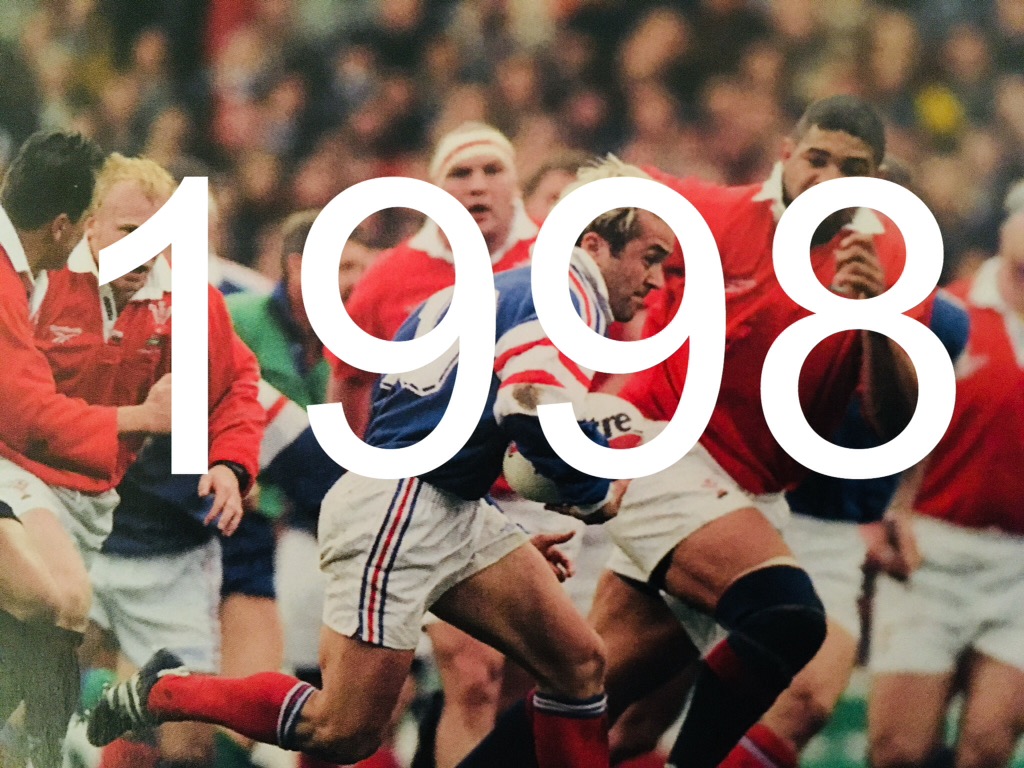
France gave Wales a 51-0 thrashing at Wembley Stadium, in 1998.

The match was played at the twin towers whilst the millennium stadium was being built.

72,000 spectators saw Castaignede and co run riot, scoring seven tries to earn another Grand Slam.


Its hard to believe that ten years have passed since that match, in 2008, when Wales, on the last day of the tournament, won their second Grand Slam in three years.

Having been knocked out of the Rugby World Cup by Fiji, just months earlier, it was most unexpected, and after leading 9-6 at half time, Wales scored two second tries through Shane and Martin Williams, to give them a comfortable 29-12 lead that they never relinquished.

So what will 2018 bring ?

France Brush Off Italy In Friday Night Match On The Med

In 1888 Vincent Van Gogh left a dull grey Paris and headed south by train for the unique almost heavenly light of Provence.
“May artists come together in Provence” was Van Gogh’s wish, and on a winters weekend in February the Impressionists of the Nat West 6 Nations exhibited their art at the Orange Velodrome.

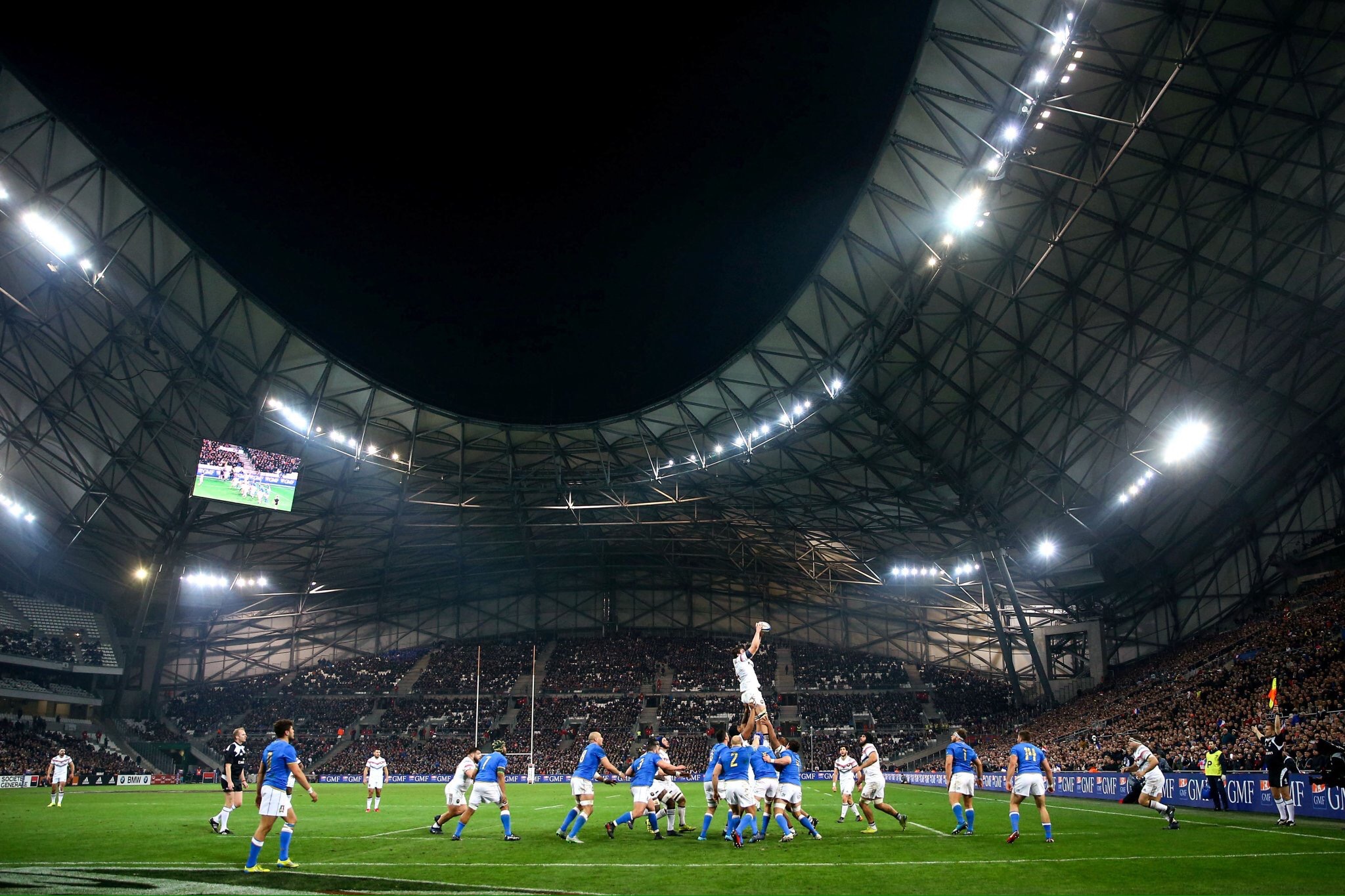
On a Friday night as the dusky colours of the Var framed the brightly lit stadium, France and Italy met in the battle of the blues

France opted to play a home six nations match outside of Paris for the very first time, 774 kilometres due south in the misty Mediterranean moonlight of Marseille.

A 9pm kick off added to the Mediterranean ambience of the occasion.

The French love these late soirees, plenty of time for steak frites with a decent red, followed by cheese and an espresso before heading down Boulevard Michelet to the magnificent Stadium home to Olympique Marseille.

The Romans came here for an extended stay in 49BC but the 2018 version were a much more amicable bunch filling the cafes and bars of Vieux Port,enjoying the wintery sunshine and a spot of sea air.

The artists came but despite the wonderful canvas they could not produce a masterpiece, in fact at times the French impressionists could barely hold the brush, in the end there proved to be plenty of enthusiasm and colour but very little substance.

50,000 attended the exhibition, and the majority left content that France had achieved their first win since March 2017.

As for the Italians, a win for them is now becoming a collectors item after their 15th straight defeat.

The margin of victory should have been much greater than the eventual 34-17 scoreline.

France spurned at least another three or four simple try scoring opportunities, but ultimately the win was the priority, or a few Frenchmen, could well have been heading out to Chateau D’if on the early Saturday morning boat from the port.

The artists came and left Provence, delicate brush strokes were replaced by a big man with a roller and two litres of emulsion as Mathieu Basteraud turned beauty in to beast, it was that kind of night down on the Med.

Time To Prepare For The 2018 Nat West 6 Nations

Yes it’s that time of year. I hear people say “Oh how I hate January it’s so dark and depressing”

WHAT !!!! Are they mad ? it’s nearly the start of the 6 Nations.

As an exiled Welshman the memories come flooding back, quite literally, as the part of West Wales I lived in was so wet, I was  a teenager before I realised you could actually take an anorak off !

But for all you men out there, here’s some friendly advice, It’s time to start rubbing your back, flexing that dodgy hamstring, because you know that you are going to have to get out of all shopping and DIY obligations until March 19th.

My advice is to start sowing the seeds of doubt immediately, just a gentle limp to start, and a few “oh it’s ok, I’m sure it will pass”.

By the end of January I recommend a bit of sniffing and coughing just to be on the safe side, you don’t want to get caught off guard just before the opening weekend.

Don’t forget we’ve got five weekends to get through, so start preparing.

My cryotherapy sessions have already started, and I’m currently at the stage where I’m making at least three trips to the fridge daily.

img_0405

This is the very best time for us Welsh fans, the last few weeks building up to the start of the tournament… we are unbeaten in 2018, it can only get worse !.

We dream again of another Grand Slam, and then we start negotiating with our maker, to decide which games we would be prepared for Wales to lose, in exchange for beating England.

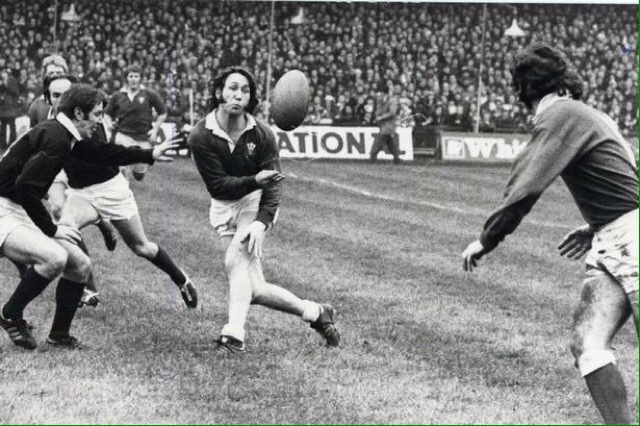
It’s the start of that magnificent winter festival, when we lie awake in the middle of a silent, cold frosty night, and remember trips to Paris, Murrayfield, HQ, and Rome, when those of us of a certain age get misty eyed recalling JPR, Gareth, Benny, JJ, and for those of as old as me, Keith Jarrett and Barry John playing on a grainy black and white television.

The wonderful thing is that each championship brings new ones to add to the memory bank.

This magnificent winter festival never lets us down, even if some match days are harder to cope with than others, whatever age you may happen to be.


My new years message to you all is :

Wherever you are and whoever you support, may the 2018 Nat West 6 Nations send you on your way towards spring, with a long list of outstanding chores, and an even longer list of memories to cherish.