The New Italian Renaissance

The Italian Renaissance period was a revival of the ideals and culture lost during previous years of war, as well as a resurgence in the various social and political differences within Europe during the Medieval age. This revival led to a complete shift in perspectives – quite literally and figuratively – in Italian art and culture. Overall, it was a new time for Europe, and it became a period of history that would live on for ages to come.

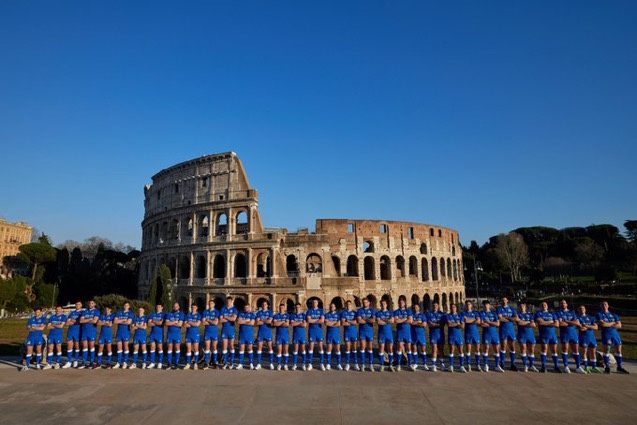
Italy’s rugby renaissance has been slow in coming, but over the last twelve months the Azzuri artists are beginning to display their considerable talents.

If Michelangelo di Lodovico Buonarroti Simoni known as Michelangelo was the Italian sculptor, painter, architect, and poet of the High Renaissance, then Ange Capuozzo must surely be his rugby equivalent.

In a game obsessed with size and big hits this 5ft 10 inch 12 stone full back/Wing is a wonderful breath of fresh air.

Ange Capuozzo was born on 30 April 1999 in Le Pont-de-Claix on the outskirts of Grenoble to French parents. His father is of Italian descent with paternal grandparents from the Naples area where they settled after the Second World War as Children. Capuozzo’s maternal grandfather is from Madagascar and his maternal grandmother is French. So he had multiple options when it came to representative honours.

With a face as angelic as one of Raphael’s cherubs, Cappuozzo tried to bring his light artistic brushstrokes to Twickenham, but it was a day when the emulsion and heavy roller boys in white took centre stage and his masterpieces were kept under wraps.

England with a new coaching team are starting with a blank canvas and very much went back to basics, Italy were starved of ball and physically dominated by the English pack.

Three first half tries all from England forwards gave them a 19-0 lead which they never looked like relinquishing.

The visitors did supply some bright blue moments under the damp murky grey skies with two second half tries but England’s power kept them at arms length.

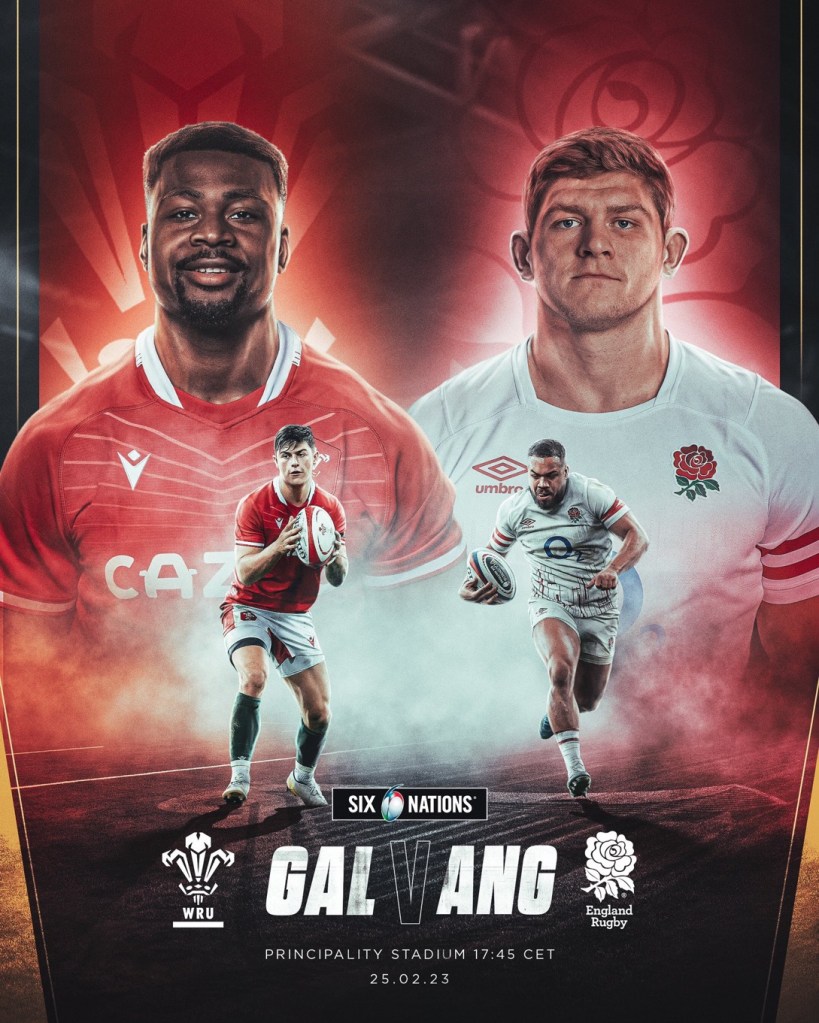
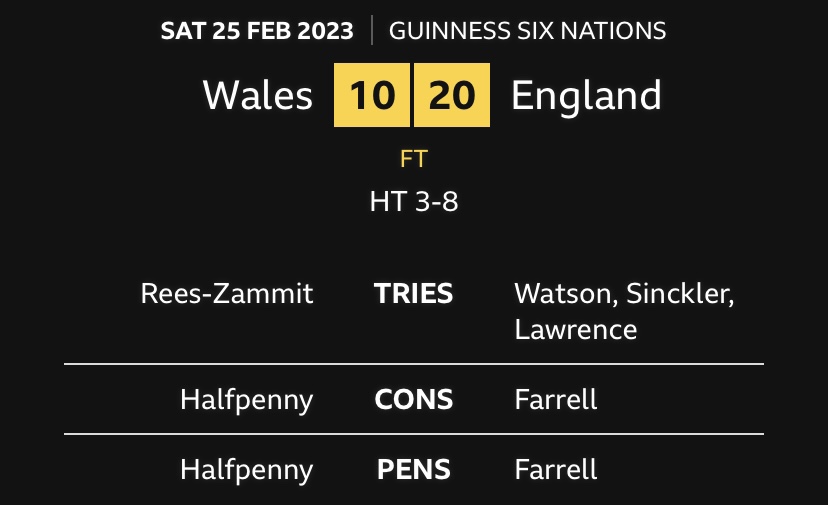
This victory will provide the undercoat for England’s tasty visit to the Principality Stadium in a couple of weeks time where Wales will be hoping and praying for a victory, whoever wins that one will certainly paint the town red.

But for now as the Sunday congregation filed out of their sporting cathedral alongside the A316 it was time to cherish a victory, which unless you are Irish or Scottish is something that is extremely hard to come by in this brutal Guinness Six Nations Championship.

When Irish Eyes Are Smiling

When Irish eyes are smiling, Sure it’s like a morn in Spring, In the lilt of Irish laughter, You can hear the angels sing.

When Irish hearts are happy, All the world seems bright and gay, And when Irish eyes are smiling, Sure, they steal your heart away.


“When Irish Eyes Are Smiling” is a lighthearted song in tribute to Ireland. Its lyrics were written by Chauncey Olcott and George Graff, Jr, set to music composed by Ernest Ball. It was first published in 1912, at a time when songs in tribute to a romanticised Ireland were very numerous and popular both in Britain and the United States. During the First World War the famous tenor John McCormack recorded the song. The song continued to be a familiar standard for generations. The song has been recorded on over 200 singles and albums and by many famous singers, including Bing Crosby, Connie Francis, and Roger Whittaker.

Ireland and Wales Celtic neighbours separated by the Irish Sea, So how close exactly are we? well the Llyn Peninsula and the Wicklow mountains are only just over 31 miles apart.

Eryri (Snowdonia) to Howth is some 85 miles so the closeness is very real. With that closeness comes a fierce rivalry that goes back many decades.

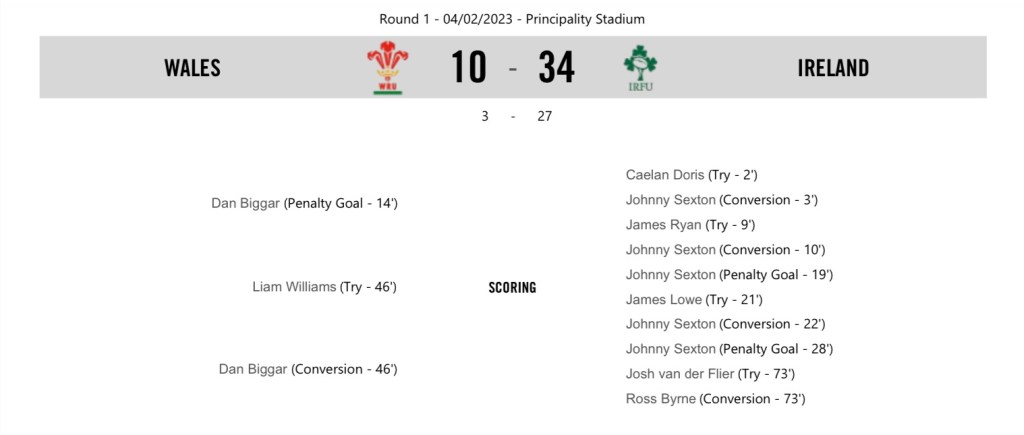
That rivalry was reconvened yesterday in Cardiff in the opening match of the 2023 Guinness Six Nations Championship.

With Warren Gatland back as Wales coach there were hopes for an upset against the Emerald Islanders who are currently number one in the World Rugby rankings.

The hope lasted for just under two minutes before the Irish unleashed a storm that their country’s Wild West coat would have been proud of. Tries for Doris and Ryan and the home side were 14 points adrift after just 10 minutes.

Wales were all at sea, leaking tries and longing for the safe haven of half time. A further James Lowe interception try and the boot of Sexton gave Ireland a 27-3 lead at the interval.

The men in red steadied the ship at the start of the second half with a Liam Williams try 5 minutes after the restart, but their continued indiscipline and line out inaccuracy scuppered the many chances they created.

Ireland had the last word with a Josh Van Der Flier try in the 73rd minute to give all those smiling eyes a bonus point win.

Welsh eyes will be red and baggy this morning as they find their team caught in a generation gap, the old guard are sadly nearing the end and the few bright lights that shone for Wales yesterday were the emerging youngsters. Joe Hawkins, Rio Dyer and Louis Rees Zammit, when fit, are exciting backs to light up the current gloom.

Murrayfield beckons and a Scottish side that will have their tails up. These are difficult days for Welsh rugby on and off the field.

As the audience of 73,931 filtered out of the Principality Stadium there was a eerie quiet in Westgate Street, a stark realisation that there is a lot of rebuilding to be done, and that the prospect of being sent a home tae think again next weekend may well be on the cards.

Price’s Punch And The Prince Of Wales

image Brian Price

The South Wales Echo headlined “A right royal punch up” in its report of the Wales v Ireland match at Cardiff Arms Park, on 8 March 1969, a match attended by HRH the Prince of Wales.

image The Prince Of Newport & The Prince Of Wales

This match was seen as the key to the championship, that year, Ireland and Wales were both unbeaten, and the match was played at a Cardiff Arms Park, resembling a giant airfix kit, as the new North Stand was in the process of being rebuilt, and as a result, the crowd capacity was reduced from 52,000 to 29,000

The pitch appeared to be devoid of even a single blade of grass on it, and was so poor, I think that even the Horse of The Year show organisers would have deemed it unsuitable for their needs.

Ireland had received some criticism from the press as a result of their “robust” play in earlier matches, and Wales were determined to face up to their aggression.

The match began sensationally, within three minutes of introducing his team to the Prince, Brian Price floored Irish flanker, Noel Murphy with a punch that Henry Cooper would have been proud of.

image Noel Murphy takes it on the chin

Brian Price said later that he felt a pair of hands heading towards his eyes, and so he “Let him have it

Later in the first half Irish hooker Ken Kennedy was also floored, resulting in captain Tom Kiernan threatening to take his team off the field, Gareth Edwards spoke to fellow “Lion” Kiernan, but the content of that particular conversation is not suitable for print.

Kiernan then kicked Ireland into an early lead, which Barry John levelled with a drop goal.

The game was brutal, Brian Thomas was led from the field with blood pouring from his face, to be stitched on the touch-line whilst the game went on around him.

In the eighth minute of first half injury time, Wales were awarded a penalty on the Irish 25 yard line, the Irish team turned their backs, expecting an inevitable Keith Jarrett place kick, by the time they looked around, Jarrett had tapped, and fed a trundling Denzil Williams, the Ebbw Vale prop, who ran over unopposed in the corner.

Jarrett converted the try, which gave Wales an 8-6 half time lead.

After the interval Wales stepped up a gear with Newport wing Stuart Watkins, Dai Morris and John Taylor all scoring tries for the men in red.

Mike Gibson scored a consolation late length of the field try for Ireland, but which time the match was well and truly over as a contest.

Wales won 24-11, but the match will always be remembered for Brian Price’s pugalistic efforts in front of HRH.

Ireland v Wales The Legend Of The Terrible Eight

8 The Terrible Eight

IRELAND 3 WALES 11

13 March 1914 Balmoral Showground, Belfast

This match is remembered as ‘The Roughest Ever’ and was the day of ‘The Terrible Eight’,  the Welsh pack that won the battle against eight very strong Irish opponents.

The evening before the game the captain of Wales, The Reverend Alban Davies, decides to take his team for a quiet night out at the theatre

Davies, Alban Rev. Rev Alban Davies

Some versions of the story state that there was brawl in the theatre, and that the police had to be called,  however eye witness accounts state that Doctor William”Billy” Tyrell told Welsh forward Percy Jones: ‘It’s you and me for it tomorrow.’ Jones, a colliery foreman, smiled and answered: ‘I shall be with you, doing the best I can.’

Another Wales forward asked: ‘Can anyone join in?’ And so they did!

Players fought when the ball was not near them and some should have been sent off, but Mr.Tulloch, the referee from Scotland, took little notice.

It was one of the all-time best punch-ups and Jones said: ‘The fun just went on and on.’

But after the match Jones was told by Tyrell that he was the best Welshman he had ever come across, adding: ‘You’re the only Welshman who ever beat me.’

The pair signed each others menu-card and in 1951, the president of the IRU, now Sir William Tyrell, and retired collier and now hotelier, Percy Jones, sat together during the match in Cardiff.

Ireland led with skipper Alex Foster’s try, but Wales clawed back the lead with Bedwelty Jones scoring the equalising try. Two weeks later he signed for Oldham Rugby League club.

Selected Irish captain Dicky Lloyd was photographed before the match with his team, but strained a tendon in the warm-up and Harry Jack was called up for his second cap, playing at scrum half with Victor McNamara switching to outside half. Jack’s third cap came in 1921 and he later became president of the Fiji Rugby Union.

For the first time Wales’s pack had remained unchanged throughout the season, but the First World War now intervened and Wales did not play an official match for five years and one month.

The Rev. Alban Davies died in Los Angeles at the age of 90, while both Tyrell and Jones lived to the age of 82, dying within six months of each other.

Scorers.

Ireland – Try: Alec Foster .

Wales – Tries: Bedwelty Jones, Ivor Davies, Jack Wetter. Con: Clem Lewis.


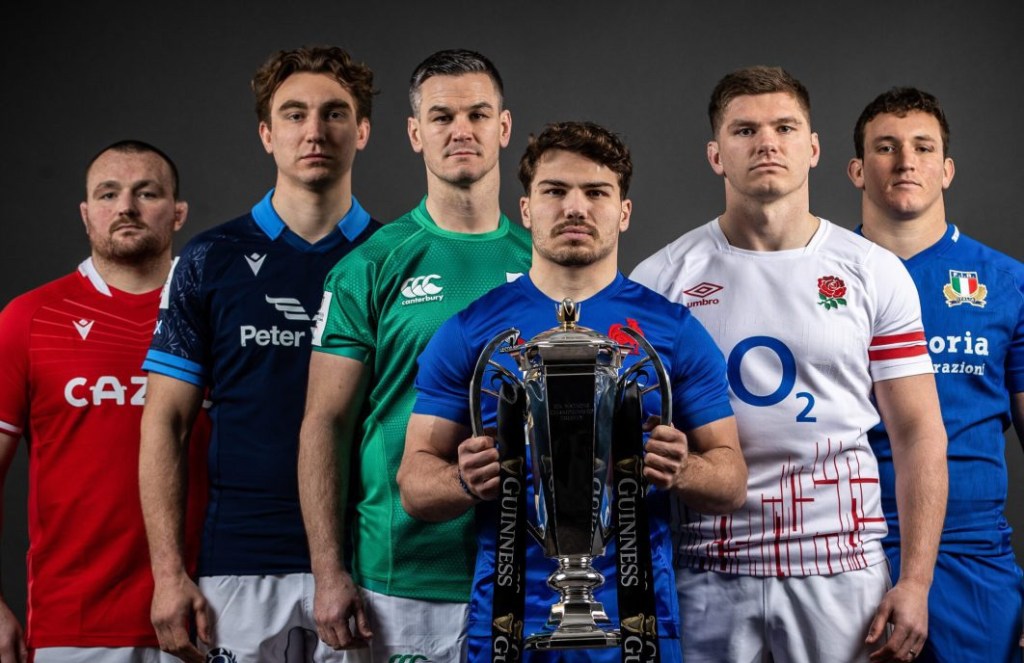
Six Appeal The 2023 Guinness Six Nations

The Guinness Six Nations is the greatest annual international rugby Championship in the sport, and every year delivers truly unmissable experiences to fans all over the world. In 2022, the Championship title came down to the wire, culminating in a game for the ages, in Paris, where France claimed an historic Grand Slam.

This year, fans can look forward to another scintillating Championship, with storylines and plot twists waiting to be written by the teams and players, over five rounds of action, starting on February 4th, at the Principality in Cardiff before all roads lead to another blockbuster Super Saturday, with the final game between Ireland and England on Saint Patrick’s Day Weekend.

At the 2023 Guinness Six Nations Championship launch held in London’s County Hall Ben Morel, CEO of Six Nations Rugby, commented: “The Guinness Six Nations holds an incredibly special place in the sporting landscape and with fans all over the world. The Championship offers fans the chance to experience some of the best teams and players going head-to-head, on an annual basis, in must win Test matches. Combine that with the unique heritage of the Six Nations and the rivalries that are woven into the fabric of the six nations competing, and you start to scratch the surface in explaining why the Guinness Six Nations is such an eagerly anticipated and loved moment in time, each year.

“We have a huge responsibility at Six Nations Rugby to not only respect the precious nature and heritage of its Championships but ensure their continued growth and development. There is also the unrelenting commitment to deliver truly unmissable experiences for fans. This is what drives the entire team

“This commitment is underpinned by unwavering collaboration with all Six Nations Rugby stakeholders, including each union and federation, its broadcast and commercial partners and the media, who all play a part in telling the compelling storylines to fans.

This year’s Guinness Six Nations holds a personal poignancy for me, as it will be my final one as CEO of Six Nations Rugby. My five years in the role has been a humbling and defining experience and I am filled with pride for the achievements of the organisation, alongside each of the unions and federations. It has been a privilege to be a custodian of the role, but my work is not done yet, and go into the 2023 Championships truly excited for what is in store for fans.”

In a Rugby World Cup year the Six Nations takes on added significance, and the tournament that guides us from the depths of winter to the start of Spring promises to be a cracker.

The Day Wales Fell In Love With David Duckham

As a Welshman growing up in the seventies, it was taboo to idolise any England player, fortunately at that time, England were a bit of a sorry mess so it wasn’t that difficult to hold true to those core values.

But there was one exception.

On a winters Saturday in January 1973, the Welsh nation lost their moral compass, and fell in love with David John Duckham.

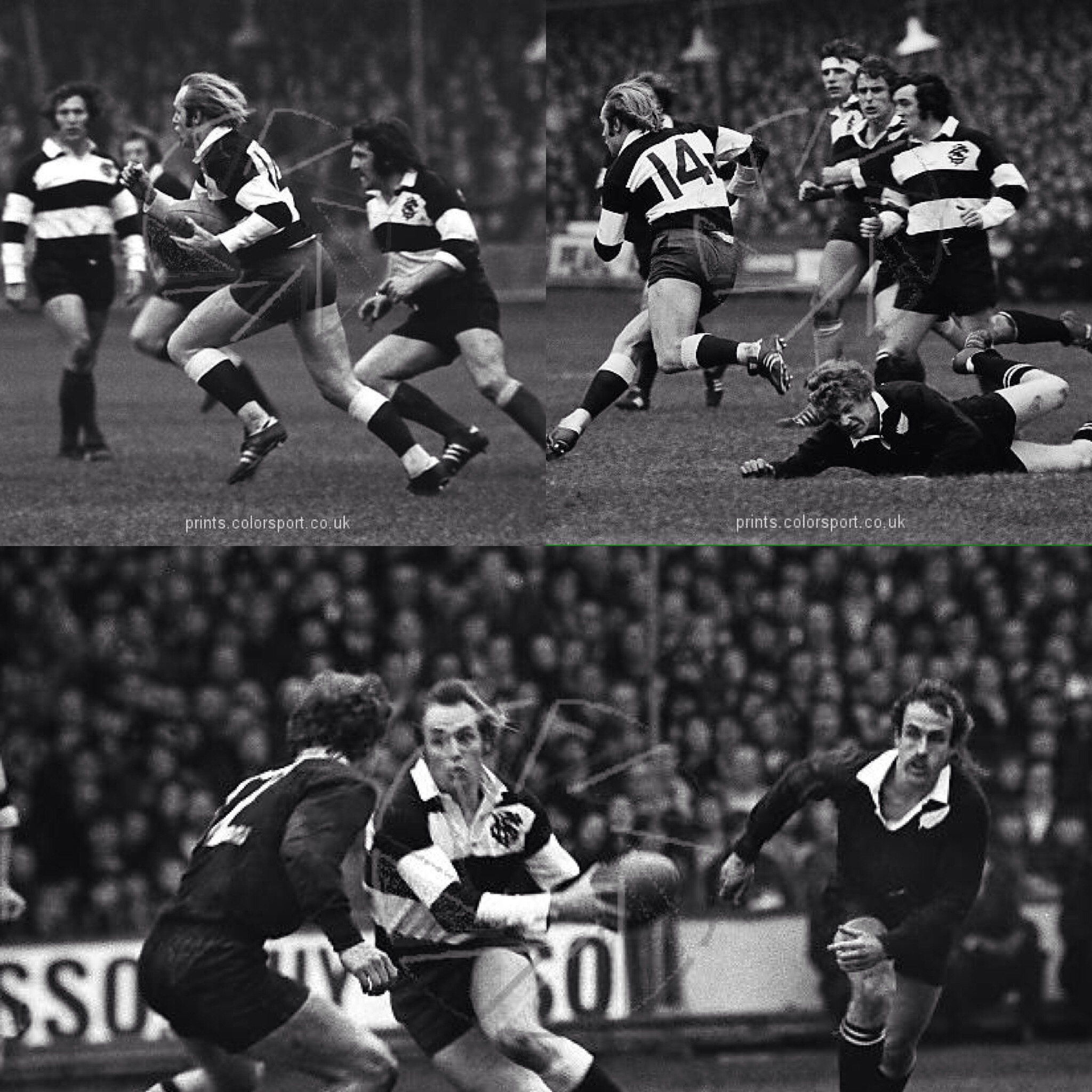
The match in question, of course, was the Barbarians v New Zealand at Cardiff Arms Park.

He played on the right wing that day, in his number 14 shirt, and his Coventry club socks, he entranced us with a display, that in history, has been somewhat overshadowed by THAT try, scored by a certain knight of the realm, Sir G.O Edwards.

I was in the North Enclosure that day, a fourteen year old schoolboy, as Duckham swerved, sidestepped, and wrong footed everyone, his long blonde hair flowing in the breeze, like a viking warrior,as his 6ft 1in frame, graced the field of dreams that was Cardiff Arms Park.

Now when I say he side stepped everyone ! take a look at the DVD of the match, in one move, he sends the BBC camerman the wrong way, Duckham, ball in hand dummied, the camera went to right, and David disappeared out of shot to the left.


David Duckham won 36 caps for England, his first against Ireland in 1969, and his last in 1976 against Scotland, at Murrayfield.

He scored 10 tries for England, but it was under the guidance of Carwyn James, as a British Lion, on the tour to New Zealand in 1971, that we saw the talent and the breath taking running skills that were so evident in that Barbarians match.

On the 71 Lions tour he scored eleven tries in sixteen games.

Against West Coast Buller, on 16 June 1971, he scored 6 tries, a Lions record that still stands to this day.

His form on the tour resulted in him playing in 3 Lions test v New Zealand on that famous tour, keeping Wales’ John Bevan out of the test side, which was no mean feat.

The ultimate compliment, from Wales, and its rugby fans, was bestowed on David Duckham after the Barbarians v New Zealand match, he was forever referred to, from that day onwards as “Dai” Duckham, an honour that he cherished, so much so that he titled his autobiography “Dai For England”

Dai, it was an honour, and a privilige, to watch you play.


Haere rā New Zealand Hello England

There is a Peculiar feeling when World Cup tournaments come to an end, an emptiness, a void that is difficult to fill, weeks and months even years of hope and expectation suddenly evaporate, and we are left with the vagaries of so called normal life.

Ruby Tui’s feet had barely touched the ground before the rugby circus had packed up its tent, and the mass migration to Auckland airport commenced.

But as the sun sets in the land of the long white cloud, a new dawn has already risen in the northern hemisphere, as England take over the RWC torch for 2025.

The number of teams participating will be increased to 16 with England, New Zealand, France and Canada already awarded qualification as a result of reaching the semi-finals of RWC 2021.

The prospect of a sold-out Twickenham for the 2025 Final is now a very realistic one, the tournament down under has been another Neil Armstrong type giant leap for the women’s game.

For the Red Roses there is no doubt that the heart breaking pain of yesterday’s final will be the fuel to ignite their challenge for 2025 at the moment though there are wounds to heal and a long 24 hour flight to re-live events from a tournament that gave us all so much.

Thank you New Zealand see you in London.

Eddie Butler A Humble Tribute

How do you attempt to match Stephen Jones and Rob Kitson’s wonderful written tributes to Eddie Butler ? Well the answer is you don’t. All I can do is speak from my Welsh heart, a heart that has taken a severe pounding over the last few days.

Eddie commanded the press rooms of international rugby stadiums, not in an assertive macho way, but in a wonderfully warm comforting manner, this big bear of a man seemed to fill the room as he entered it and in his wonderfully gentle manner he always shook everyone by the hand, it didn’t matter if you were an established hack or a new kid on the block you got the same warm greeting, and it made you feel all was well with the world.

Most of my work has been covering France home games, and Eddie nearly always got the commentary gig at the Stade de France in Paris, along with Jonathan Davies, the comforting presence of those two Welshman entering the salon de presse was always a moment I looked forward to.

It was my huge privilege to have met and known Eddie Butler, I feel a stomach churning loss so I can only imagine the pain those with a closer relationship to the big man must feel, I hope all the love and respect that has been shown in print and every other form of media will be of some comfort to them.

For me personally the press areas of the Stade de France and the Principality Stadium will have an empty corner that no one else can possibly fill, I will miss that big pre match outstretched paw so much.

Sleep peacefully Eddie anyone who has ever had the privilege to work alongside you will never forget you. I certainly won’t.

Son Et Lumière Wales v France

Late night kick offs in Paris are “de rigueur”, providing fans with just enough time for a semi leisurely pre match dinner, or at the very least a croque monsieur and frites, accompanied by a smooth glass of red.

In Cardiff these nocturnal rugby soirées are an exception rather than the rule, a long day for the fans and players to get through before finally heading to the stadium.

On Friday night in Cardiff, as the skies darkened, the emerald green dewy grass glistened under the floodlights, even the starry sky peeped through the open roof at the Principality Stadium.

The heavenly stars were matched by those down below on lush green terra firma. Dupont, Ntamack, and Penaud just three of the blue constellation that have lit up French rugby in the last couple of years.

But it was the men in Red who almost caused a total eclipse of France Grand Slam hopes as they went tantalisingly close to causing a major upset.

Wales pressured France led superbly by Dan Biggar, they caused France to look nervous and fractious but ultimately their rock solid defence kept Wales from gaining that one crucial score that would have given them a memorable victory.

A French win in Cardiff in recent years has been seen as rarely as Halley’s Comet, but these Bleus Brothers play rugby on a different planet, and back to back wins in the Welsh capital have put them eighty minutes away from a Grand Slam.

The stars may not have sparkled as brightly as expected, but on a night when France took a step nearer a title and a Grand Slam, that has eluded them since 2010, the planets have aligned to create a mouth watering late night spectacle next Saturday in Paris against England. A victory for The Boys in blue could result in it being a very late night indeed.

England v Wales Its The Hope That Kills You

We Welsh are an emotional race, we laugh or we cry, and rarely bother with the run of the mill stuff in between.

Our National team takes full advantage of this Celtic mindset, and constantly provides us with similar polarised emotional experiences, this can happen seasonally, or as happened at Twickenham yesterday, in the space of a single afternoon.

With 79 minutes on the clock Wales trailed England by four points, the Cymric Dr Jekyll we experienced for the opening fifty three minutes of the match had transformed into a free flowing, confident, silky handling Mr Hyde, alas it was all just a little too late to transform us from tears to laughter.

We started welling up early on, or maybe it was just a speck of dust in the eye, as Marcus Smith kicked two penalties in the opening six minutes to give England a 6-0 lead.

After half an hour we began to get the tell tale full lump in the throat as Smith kicked another two penalties, to give England a 12-0 half time lead.

Laughter seemed to be heading down the M4 with its backside on fire as full blown tears loomed ever closer in the rear view mirror. Wales were struggling to put any phases together, struggling at the breakdown, and along with 82,000 thousand others, struggling to understand the referee.

Three minutes into the second half an Alex Dombrandt try completed the dreaded emotional transformation, Wales were 17-0 down making more errors than a Boris Johnson speech writer.

At this stage in the proceedings I would like to introduce you to that cruel Celtic emotional add-on: HOPE.

This is the toughest one of all to deal with, especially when you have already resigned yourself, with extreme difficulty, to the certainty of defeat.

Josh Adams scored a try on fifty four minutes, ok a great consolation but nothing more, Nick Tompkins scores a try on sixty one minutes, Biggar converts to bring the score to 17-12 to England and then it hits us like a runaway train, that HOPE thing is about to kick in.

But of course as we suspected, and as inevitably as night follows day, HOPE disappeared into the Middlesex dusk as another two Marcus Smith penalties, in the space of four minutes, took England’s lead to 23-12, that hope thing can be a heartless creature.

So it’s a fairly swift return to that resigned defeat, but at least we know it’s over, time to come to terms with the fact once and for all, and prepare for the tears.

As if ! when you’re Welsh my friends the emotional tsunami doesn’t end there, not whilst there is still time to wring out a bit more from our emotional flannel.

With the bright Twickenham scoreboard showing 79:31, Kieron Hardy scores from a quick tap penalty, Dan Biggar converts and its 23-19, surely Wales can’t do this, can they ?

Hope springs eternal as the saying goes, and at this stage it is springing like Michael Flattly on steroids, Wales go through seventeen phases with the clock in the red, one last hurrah for HOPE, then with 84:18 on the clock it has gone, like a thief in the night, nowhere to be seen, and we my friends have once again been emotionally mugged.

Laughter to tears is in our DNA it’s how we roll and we have learned to live with that, but it’s the hope that kills you.