Quintessential Togetherness With Harlequins Ladies


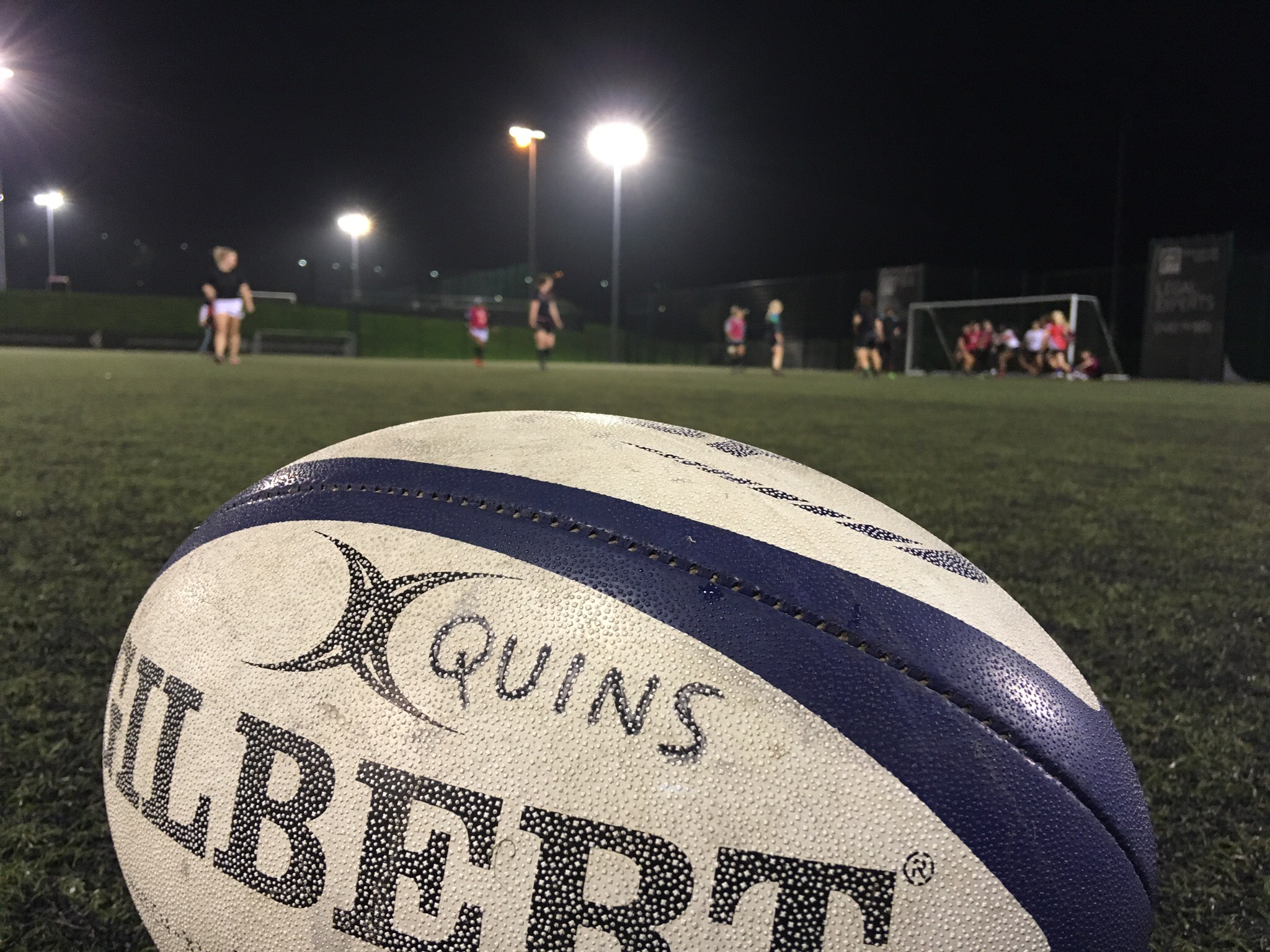
It is a damp mild Autumn night in Guildford, the car headlights from the A3 high above the floodlit pitches, reflect through the leafless trees, and shimmer off the illuminated green turf at Surrey Sports Park.

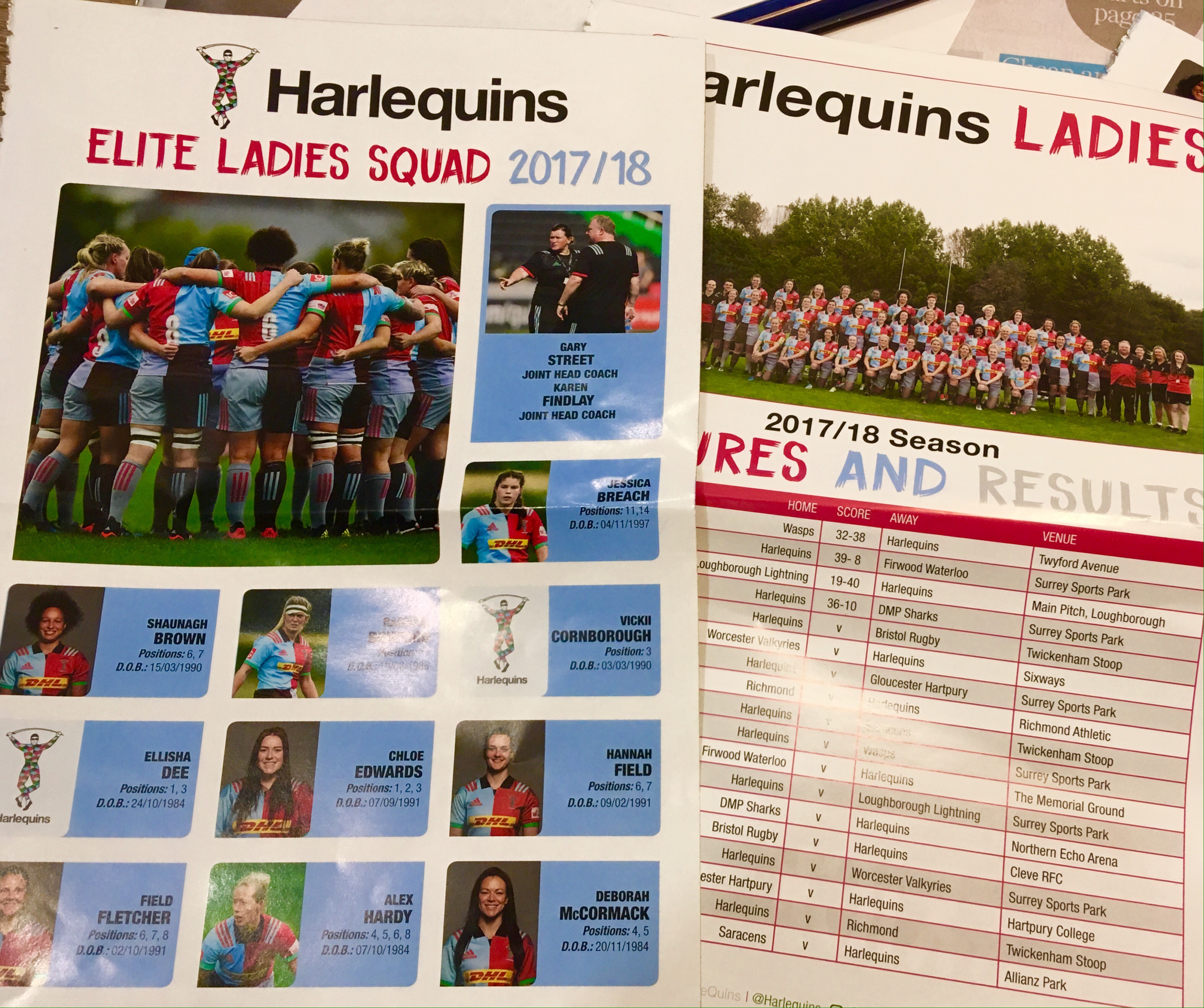
Amid the distant whining engine noise from the cars of the weary commuters driving home from work, Harlequin ladies go through their warm ups under the watchful eye of coaches Gary Street and Karen Findlay.

This is a typical Thursday night training session for the current Tyrrells Premier league leaders, who sit at the top of the table with seven bonus point wins from their opening seven matches.
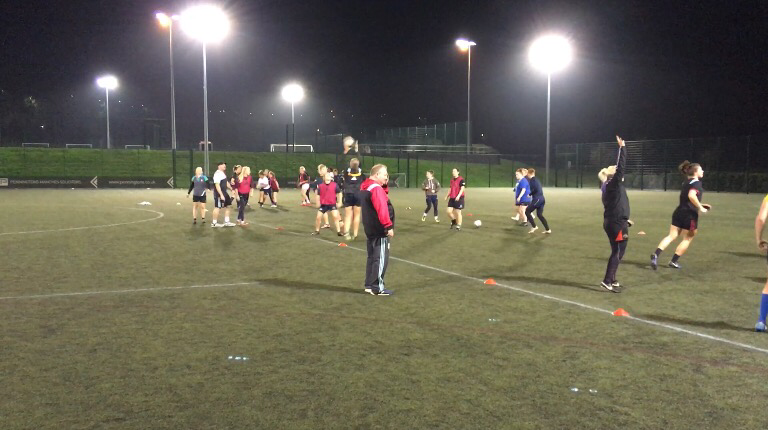

The chemistry teacher, the office worker, are all here straight from a busy days work, something many of us forget when we watch their relatively pampered male counterparts go about their business.

What hits you straight away about this group of players and management, is the togetherness, the friendliness and the lack of cliques in the entire squad, there is no international hierarchy here which is great to see.

But those thorough Hubble and decent qualities are in addition to a steeliness and determination, shown on and off the field, by players coaches, and support staff, the reason Quins are sitting on top of the league is through the sheer hard work and dedication  of everyone involved.

Harlequins Ladies are part of the clubs overall women’s and girls strategy, which encompasses the Harlequins Foundations’ Switch Programme, the Harlequin Amateurs girls section, and the Harlequins Ladies 3rd XV.

At the Womens Rugby World in Ireland last August, Harlequins were represented by nine players across five different nations.

Rachael Burford, Vickii Cornborough and Leanne Riley were selected for England, while Michela Sillari and Manuela Furlan donned the blue of Italy.



Jess Wooden and Kimber Rozier represented the United States, whilst Rebecca Rowe and Sene Naoupu competed for Wales and the hosts Ireland respectively.

Deborah McCormack is also a seasoned Scottish international, but sadly the Scots missed  out on qualification for this years tournament .

Most of their home games are played at Surrey Sports Park, in Guildford, although some games have been, and are scheduled, to take place at the Stoop.

I have been fortunate enough to see most of their home games so far this season, and what impresses me, apart from their style of rugby, is the way the players and management mingle with the fans, chat about the game, and are so friendly and approachable, plus, at Guildford, there is a Starbucks less than one minutes walk from the main pitch, what more could anyone want.


As a rugby journalist  it is a breath of fresh air, these days ,to be able to talk and interact so freely with the players and coaches, and their patience seems to know no bounds, but i’m sure Rachael Burford and Deborah McCormack must think i’m stalking them.

The great ethos and values of rugby, that we cherish so dearly, are alive and well and positively flourishing in this group, and that is the greatest testament and compliment that I can pay them.

Meanwhile back at training, the final latte of the day has been poured at Starbucks, and the traffic on the A3 has descended into a gentle rumble, but last orders on the field are still some distance away as the hard work goes on, and guess what they’re all still smiling.

“Nunquam Dormio


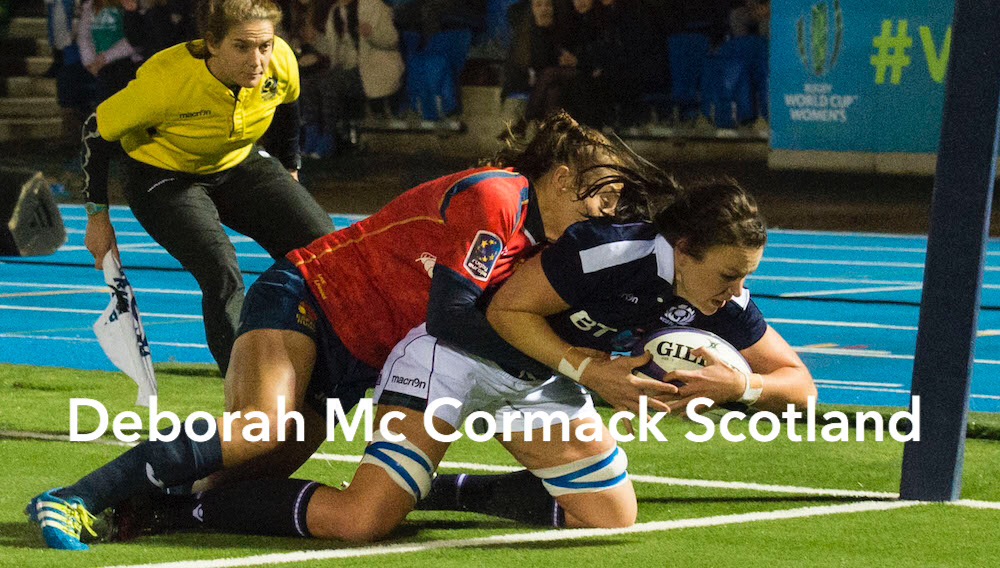
Deborah McCormack The Flower Of Scotland 

Locks can be bruising abrasive sombre characters, it is a dark desolate unforgiving  place in the second row, and the lack of daylight no doubt plays a huge part in their demeanour, but this particular lock is a friendly modest and down to earth computer sciences teacher, who plies her club trade with Harlequins, and internationally in the dark blue shirt of Scotland.

This particular Flower of Scotland is a rare species, blooming in winter, for both club and country, and has sent many an opposition forward homeward to think again.

The deep roots of this particular bloom stretch a very long way, in fact all the way from Scotland to the more temperate surroundings of the garden of England, Kent.

She qualifies to play for Scotland through her gran, who left Motherwell during the Second World War and headed to London to help the war effort, there could surely be no be no worthier qualification criteria than that.

Born in Gillingham, Deborah started playing at the age of ten for Medway RFC, when her brother also began to turn out for the club.

She was encouraged by Karen Findlay, whilst at Richmond, to attend Scottish trials which with the extortionate travel costs for a starving student left her deeply out-of-pocket, but the rest as they say is history, and she made her Scotland debut against Ireland in the 2014 six nations.

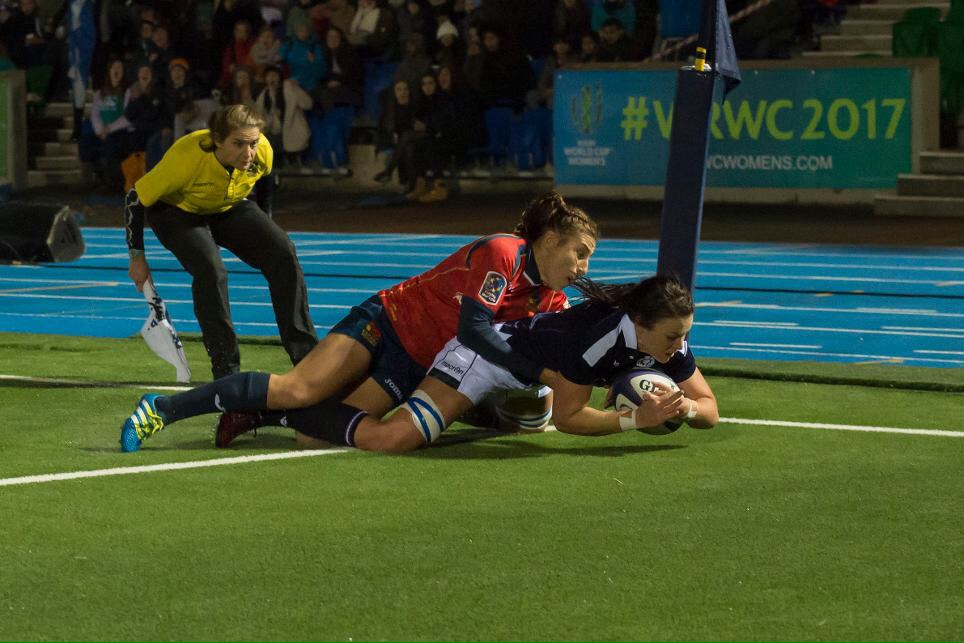
Since then she has won twenty eight caps for Scotland, scoring two tries, both against Spain in 2016 and 2017.

Juggling work and rugby takes some doing, particularly when you have to negotiate the M25 at rush hour, twice a week, to attend training, and then the return journey home after gruelling sessions at Surrey Sports Park.

In common with the majority of all the top women players she is indebted to her family without whose support, at so many levels, it would almost be impossible to function.

A Fort Pitt Grammer school former pupil, Debs views Medway RFC as the greatest influence on her career.

They had a thriving women’s rugby scene at Medway RFC, at a time when the women’s game did not have the popularity and participation availability it currently enjoys, and they at Medway they continue to thrive.

Away from rugby there is very little spare time, but what precious time there is, she spends in the company of a very handsome and dashing male with gorgeous blue eyes, but more on that later.

A heartbreaking defeat against Spain, in two-legged play off matches, resulted in Scotland failing to qualify for the women’s rugby world cup in Ireland, a shattering blow, which inevitably was, and still is, difficult to come to terms with, but those days are past now and in the past they must remain, and with the amount of talent at their disposal, the current Scotland squad really look like they can now rise up and be the nation again, and the 2019 Six nations seems the perfect place to lay down a marker to that effect.

Debs would love to be around for the next women’s rugby world cup in 2021, which would be a fitting way end to her career, so we all hope that this particular flower of Scotland will be nurtured and tended carefully, so that she can bloom annually for a good few years to come.

The immediate future presents a pre six nations warm up game in the thistled jersey against Spain, before a packed 6 nations tournament with three home fixtures against Italy Ireland and Wales and Italy, and away trips to France and England.

There is also the Tyrrells premier league, with Harlequins, who are flying high in the table and playing a brand of rugby which is a joy to watch.

When her playing days are over she has no idea what she will do, and at the moment is totally focussed on the here and now.

A hugely popular figure at Harlequins, her down to earth and friendly manner, as well as her playing ability, have earned her huge respect and popularity, it is wonderful and reassuring to see that the values and spirit of our great game are in safe hands with people like Debs around.

I have met quite a few locks in my time, but this one is definitely the nicest, as Benji will testify, by-the-way Benji is a gorgeous black Labrador

Barbarians And All Blacks A Match Made In Heaven


There is no getting away from it, I am old, and sometimes I stare wistfully and with envy at the youthful figures I see before me striding their fields of dreams.

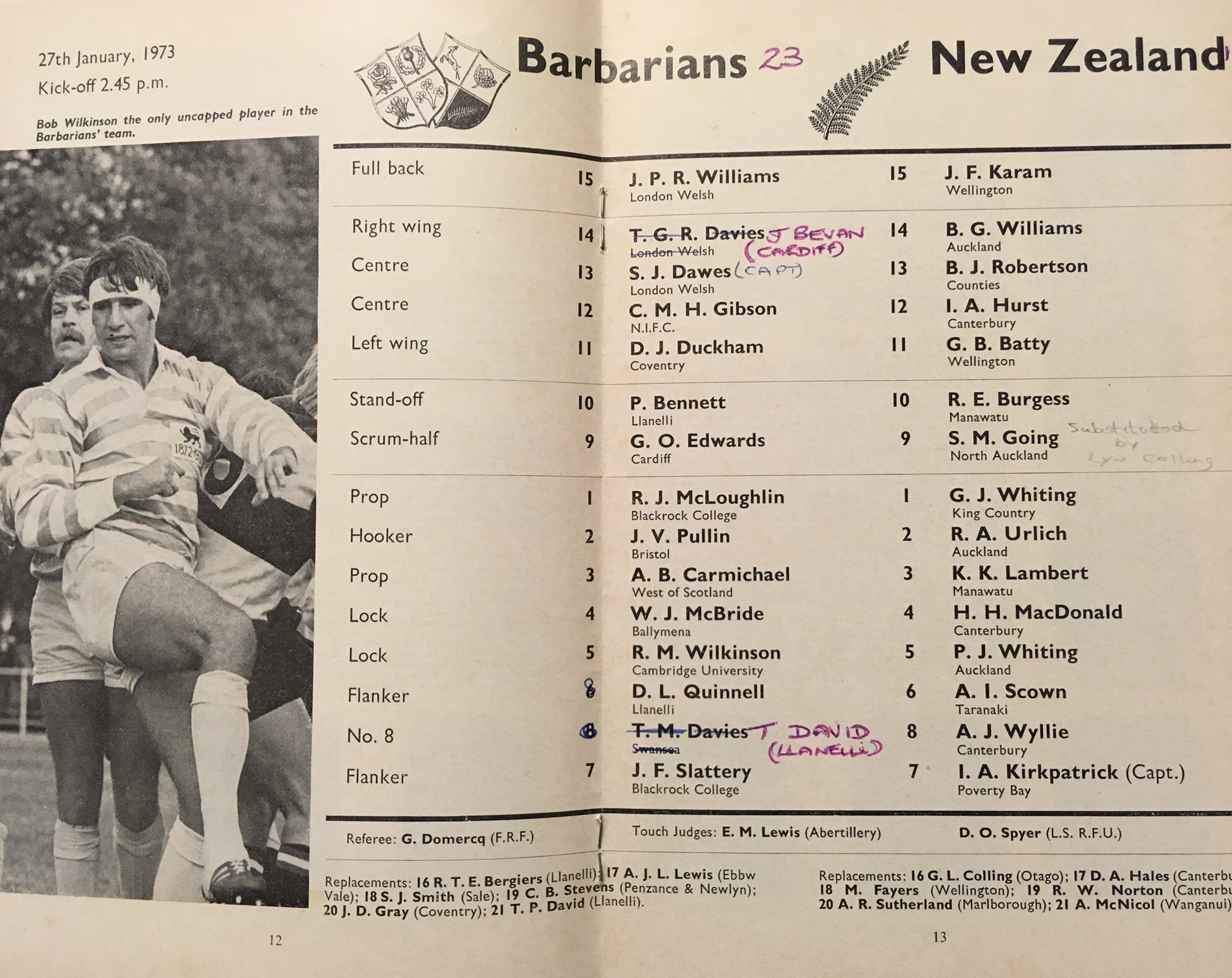
But one huge plus of nearing my sixtieth birthday is that I was alive in 1973, when “that” match was played at Cardiff Arms Park, not only was I alive, but I was there that day as an acne afflicted fifteen year old, standing in the north enclosure.

I was level with Phil Bennett when he started sidestepping in his twenty-five (twenty two’s hadn’t been invented back then) at the start of a try that still makes the hairs on the back of my neck stand up when I watch it.

If I close my eyes I can go back there in an instant, I can smell the damp grass, the liniment, the Brains dark on the adults breath around me, it was the most magical of days.


Fast forward some forty-four years later and this Saturday  I will be in the press box at Twickenham, the exuberance of youth and wide-eyed innocence has long gone, but the thought of seeing those two sets of famous jerseys run out on to the lush turf at HQ still sets my pulse racing.

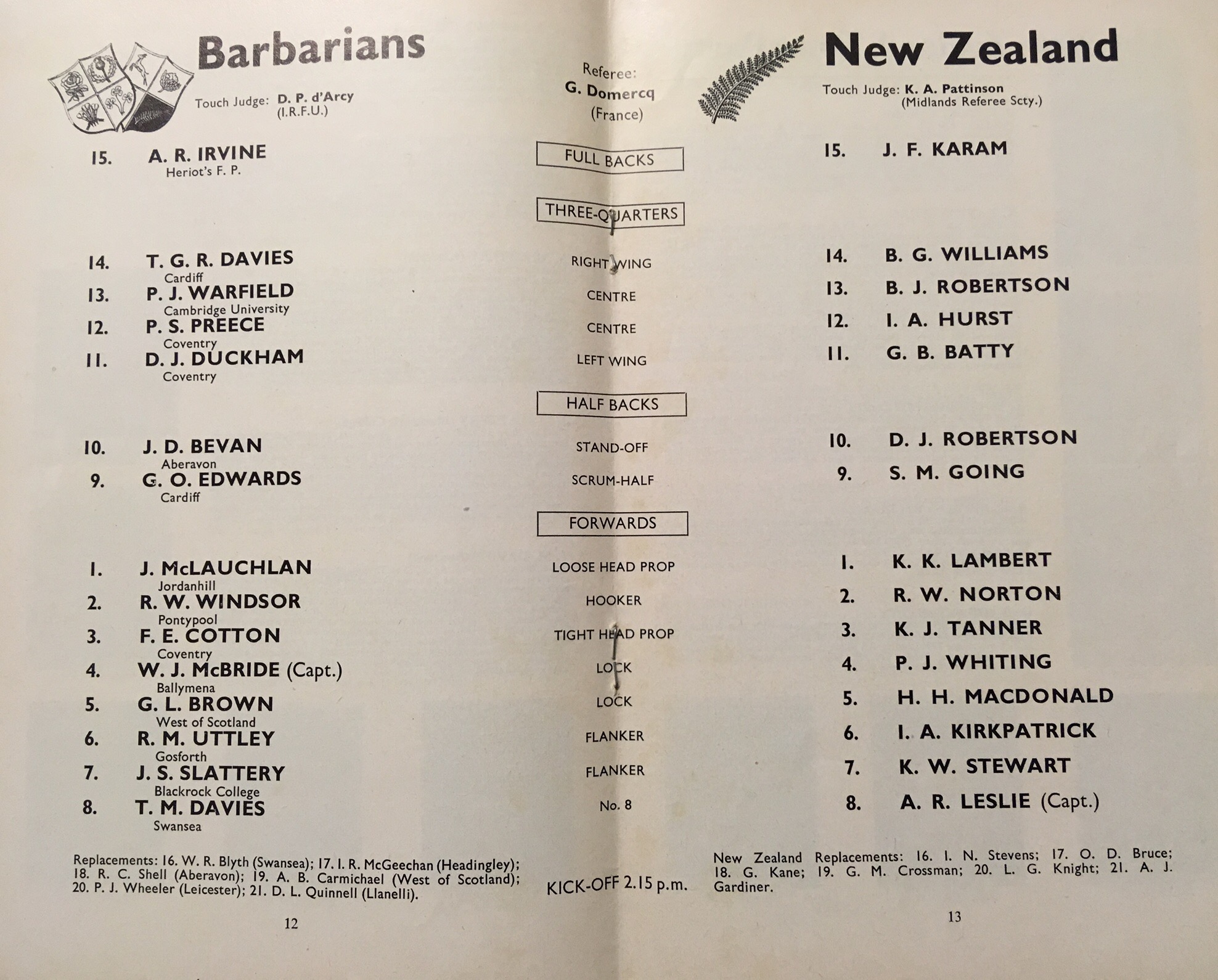
One of the main protagonists of that great game in ’73’ hardly ever gets a mention, yet it was his empathy, and feel for the game, that played a huge part in allowing it to be such a classic, I am referring to Georges Domerq the French referee, he was a diminutive figure socks rolled down clad in green and dwarfed by the Giants all around him.

Georges,pictured above, is now 86 and lives in Bellocq where he has been mayor of the town since before the 1973 epic.

It is not widely known that the match created such euphoria in France, that a crowd gathered to cheer and greet the Frenchman at the airport, when the aircraft bringing home landed in France.

Domerq was invited to referee the Barbarians “re match”with the All Blacks, the following year at Twickenham, when a Mervyn Davies try saved the day and the match ended with honours even at 13-13, the only match New Zealand failed to win on that tour.


There is a symmetry between 1973 and 2017, in that on Saturday we have a man in the middle with an equal empathy, and an equal feel for the game, Nigel Owens.

Ok there may not be a cheering crowd to greet Nigel at the Pont Abraham services, on the M4, when he returns from London, and he is not mayor of Carmarthen, (well not yet anyway) but he is the King of hearts in Wales and indeed in many other realms.

The sales of “Ref Radio” increase dramatically when Mr Owens is on duty, I think it’s about time he got a royalty contract with the providers.

Whilst there is symmetry in the whistle blowers the same cannot be said of the players.

The 1973 team that faced the All Blacks, contained the bulk of the victorious Lions 1971 side that were series winners in the land of the long white cloud.

Also the 1974 Baa Baas contained the Lions pack that were unbeaten in their 1974 tour of South Africa.

Sadly in this professional era the Barbarians can longer call on the cream of British rugby, but there is still a very special feeling about a Baa Baas match with New Zealand.

On Saturday I will think back with nostalgic reverence to the seventies, and I guarantee you that somewhere in the Twickenham crowd, there will be a fifteen year old who will enjoy a magical day, that will stay with him of her for ever, such is the magic of a Barbarians v New Zealand match.

“For it’s a way we have in the Baa Baas and a jolly good way too”.


The Barbarians Get In Touch With Their Feminine Side

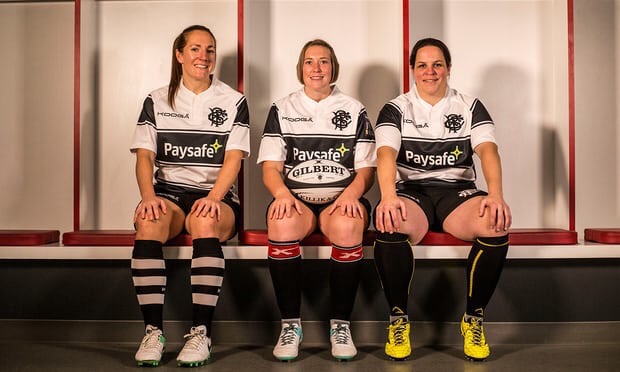
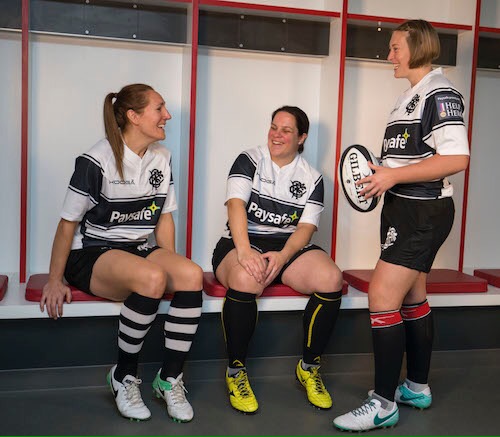
The Barbarians are to launch a women’s team that will take the field for the first time this season. 

The famous invitation club founded in 1890 becomes twice as exciting when the women’s side makes its debut against Munster at Thomond Park on Friday, November 10.

England World Cup winner Giselle Mather will coach the team in the first of a number of matches planned for the 2017-18 season. Managed by Fiona Stockley, the Barbarians will play against club, provincial and international sides with a full schedule to be confirmed later this year.

“We’re delighted to open a new chapter in the Barbarian FC’s history with the creation of our women’s team this season,” said Barbarians Chairman John Spencer.

“Its formation is something we’ve been working towards for a number of years and it is a reflection of the excellence of the global women’s game which was showcased so brilliantly at this year’s Women’s Rugby World Cup in Ireland.

“Our aim is to welcome more talented players into this iconic club to forge new friendships and play with the style and passion for which the Barbarians are famous. We are working with clubs and unions around the world to make sure it benefits the players and the game.”


The Barbarians will field players from seven different nations in their opening women’s game. Those who have already accepted invitations have 440 international caps between them. They are Susie Brown (Scotland), Fiona Coghlan (Ireland), Claire Cripps and Megan Goddard (England), Elen Evans (Wales), Emma Jenson (New Zealand), Christelle Le Duff (France) and Kelly Russell (Canada).

“The Barbarians are one of the reasons I fell in love with rugby and to be coaching this side is a massive honour,” said Mather, the Wasps Director of Rugby and a World Cup winning player in 1994.

“I can’t wait to get these players from all different nationalities together with everything they bring from their different environments. It’s going to be a massive opportunity for all these athletes.

“The state of the women’s game is phenomenal at the moment following events like the World Cup and the launch of the Tyrrell’s Premier 15s in England. With the Barbarians coming in on top of that it’s taking the game to a different level.”

Women’s Sport Trust Joint CEO Jo Bostock said: “Women’s rugby has made great strides in 2017 in terms of high-quality competition, investment and infrastructure, and we support the launch of the Barbarians women’s team. It is a further indication of the progress of women’s sport as a whole. 

“The Barbarians are an iconic rugby club with a long history of giving athletes from different countries the chance to form friendships and perform with the freedom that makes them better players. Extending that opportunity to the growing number of talented women’s players is to be applauded.”


Abi Chamberlain, Head of Leadership Development at Paysafe and a former England Sevens rugby captain, said: “Paysafe is absolutely thrilled to sponsor the Barbarians women’s team. This is an extremely important step forward for women’s rugby and we applaud the innovation and commitment of the Barbarians. 

“Following England’s superb performance in the recent World Cup, women’s rugby has hit new heights of popularity. It is important that cutting-edge advancements in the women’s game continue apace, and Paysafe is proud to be part of this new initiative and to champion the women’s game.”

World Rugby’s General Manager, Women’s Rugby, Katie Sadleir said: “It’s an incredibly exciting development in international rugby to see the first women’s Barbarians team being formed. The talented players that have been recruited from around the world for this team provide an excellent opportunity to deliver more inspirational rugby maintaining the momentum created during the recent World Cup in Ireland.

“It’s fantastic to see the financial partnerships that have come together to support this historic initiative.”

Wales And Australia Lest We Forget

As the darkened leaves blew across the River Taff yesterday, it felt like a proper Autumn day in the Welsh capital.

A feeling of deja vu as yet again Wales faced the Wallabies, a fixture that used to be so rare, and exotic, but these days is an almost annual occurrence, but on this occasion, after thirteen consecutive defeats Wales were the victors.

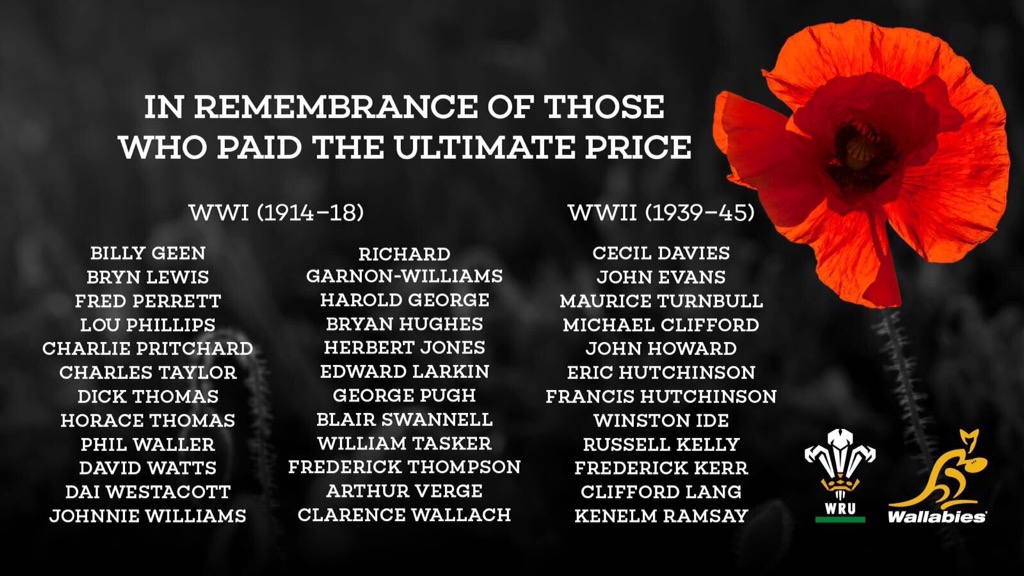
On the eve of Remembrence Sunday it was appropriate to reflect on darker times, when Wales and Australia united, and fought a much tougher battle, on foreign fields, where many of them would pay the ultimate price.

I hope this roll call will continue to keep the names of those heroes alive, and remind us  that when all is said and done, there are much more important things in life than rugby, and although at times this is something we all tend to forget, one thing is for certain, we should always remember those brave men listed below.

WE WILL REMEMBER THEM

THE 13 WELSH INTERNATIONALS WHO GAVE THEIR LIVES IN THE GREAT WAR

Richard Thomas

Born: Ferndale, 14 October 1883.

Killed in action : Mametz Wood 7 July 1916.
Wales: Four caps, 1906-1909.

John Lewis Williams
Born: Whitchurch, Cardiff, 3 January 1882.
Died of wounds: Corbie 12 July 1916.
Wales: 17 caps, 1906-1911.

David Westacott
Born: Cardiff, 10 October 1882.
Killed in action: Wieltje, 28 August 1917.
Wales: One cap, 1906.

Horace Wyndham Thomas
Born: Pentyrch, 28 July 1890.
Killed in action: Ancre, 3 September 1916.
Wales : Two caps, 1912-1913.

Richard Davies Garnons Williams
Born: Llowes, Radnorshire, 15 June, 1856.
Killed in Action: 25 September 1915 while leading his battalion at the Battle of Loos.
Wales: One cap, 1881.

Charles Gerald Taylor
Born: Ruabon, North Wales, 8 May 1863.
Killed in action: 24 January, 1915 at the Battle of Dogger Bank when his ship HMS Tiger was hit by fire from German cruiser SMS Blucher.
Wales: Nine caps, 1884-1887.

Louis “Lou” Augustus Phillips
Born: Newport, Monmouthsire, 24 February 1878.
Killed in action: Cambrai, on 14 March 1916.
Wales: Four caps, 1900-1901.

Charles Mayrick Pritchard
Born: Newport, Monmouthshire, 30 September 1882
Died of wounds: 14 August, casualty clearing station, Western Front.
Wales: 14 caps, 1904-1910.

Phillip Dudley Waller
Born: Bath, Somerset, 28 January 1889.
Killed in action: Hit by shellfire, 14 December 1917, Arras.
Wales: Six caps, 1908-1910.

Brinley Richard Lewis
Born: 4, January 1891, Pontardawe.
Killed in action: 2 April, 1917 Ypres, France, hit by shellfire.
Wales: Two caps, 1912-193.

William “Billy” Purdon Geen
Born: 14 March 1891, Newport, Monmouthshire.
Killed in action: Hooge, Flanders, 31 July, 1915.
Wales: Three caps, 1912-1913.

Fred Leonard Perrett
Born: Briton Ferry, 9 May 1891.
Died of wounds: 1 December 1918, in a clearing station weeks after the armistice.
Wales: Five caps, 1912-1913

David Watts
Born: Maesteg 14 March 1886.
Killed in action : 14 July 1916 at Bazentin Ridge, France.
Wales: Four caps, 1914.

THE THREE WELSH INTERNATIONALS WHO GAVE THEIR LIVES IN WORLD WAR II

Cecil Rhys Davies  (1 Cap)

John R Evans   (1 Cap)

Maurice J.L. Turnbull   (2 Caps)

An estimated sixty Wallabies enlisted in the armed forces to fight in World War I

THE 10 AUSTRALIAN INTERNATIONALS WHO GAVE THEIR LIVES IN THE GREAT WAR

Blair Inskip Swannell   25 April 1915

Edward Rennix Larkin   25 April 1915

Harold Wesley George   10 May 1915

Frederick Herbert Thompson   29 May 1915

Arthur Verge   8 September 1915

George Harold Pugh   5 September 1916

Herbert Jones   4 November 1916

Clarence Wallach MC   22 April 1918

Bryan Desmond Hughes MC   6 August 1918

William George Tasker   9 August 1918

At least 139 Wallabies served in Word War II, including fourteen of the fifteen players that played in the last test against New Zealand, on 13 August 1938, six of this team lost their lives:

THE AUSTRALIAN INTERNATIONALS WHO GAVE THEIR LIVES IN WORLD WAR II

Michael Clifford     9 October 1942

Edwin Sautelle Hayes   12 January 1942

Eric Ebsworth Hutchinson  27 January 1943

Winston Phillip James Ide   12 September 1944

Russell Lindsay Frederick Kelly   25 December 1943

Frederick Raymond Kerr    23 April 1941

Clifford Walter Patrick Lang   4 March 1942

Kenelm McKenzie Ramsay   1 March 1942

Alhambra Nievas The Granada 1983 Vintage Is Still Breaking Down Barriers

Beas de Granada is located in one of the most beautiful places around Granada with panoramic views southwards towards the Sierra Navada.

The town is steeped in history from the time of the Roman Empire, where it grew from being a coach house at a crossroads, to becoming a farmstead with just twenty families when under Arab rule.

It is situated 1072 meters above sea level and is part of the Parque Natural de la Sierra de Huetor.

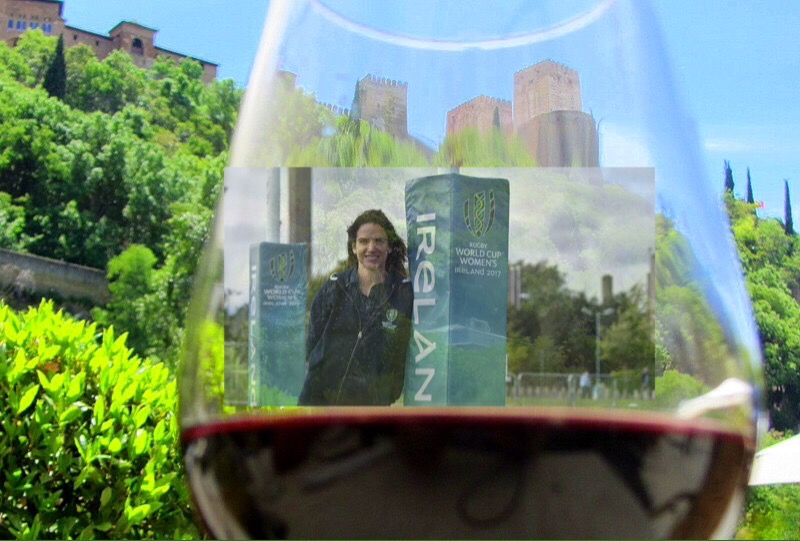
So what has this to do with rugby I hear you ask ?, well this delightful town is the family home of one of the world’s best rugby referees Alhambra Nievas.

The tractor driving, olive harvesting referee never forgets her roots, quite literally come harvest time, the olives have been plentiful as indeed has her rugby harvest.

Some referees like fine wine just seem to get better with age and this 1983 vintage shows no sign of deterioration and is looking better than ever.

Incorrectly listed, much to her delight, as 28 years of age in the official Womens Rugby World programme, Alhambra actually reached the tender age of 34 on the very day the tournament started in Dublin.

Taking charge of the World Cup semi final, at the Kingspan stadium, in Belfast, between New Zealand and USA was a huge thrill for her and her team, and undoubtedly yet another highlight of what has already been a glittering career.

The ultimate team player, it was wonderful to witness her genuine delight for friend and refereeing colleague, Joy Neville, when she was awarded the World Cup Final between England and New Zealand.

Radio, television and other commitments have made things hectic, after the tournament, with not much down time, and never one to rest on her laurels, Alhambra has successfully completed the World Rugby Educator Course, in Romania, resulting in global recognition as a trainer.

Anxious to give back to the sport what the game has given to her, the humble and modest

lady from Granada would not be aware that she has already given far more back to the game, to its values, and to encouraging young women in sport, than she could ever have received in return, but now she will able to officially use her talents to assist others intent on taking up the whistle, and in improving standards both regionally and internationally.

Once again we talk about another breakthrough for women in rugby, and once again Alhambra Nievas is involved.

On October 14th she will take charge, of Finland v Norway in the Rugby Europe International Championship, the first woman to referee a men’s game in this competition.

So whilst the folks back in Beas de Granada celebrate the pilgrimage to the chapel of the virgin del pilar del colmenar, along with the neighbouring residents of Huetor Santillan, Alhambra will be 2086 miles further north in Helsinki, preparing for the match.

It is doubly good news for women’s rugby as Joy Neville will referee the match between Norway and Denmark a few days later.

The breakthroughs don’t end there, in yet another first Alhambra will be the first non Commonwealth referee to officiate at the rugby 7s on the Gold Coast, Australia, in the Fifteenth Commonwealth Games next April.

Six nations duty will hopefully be on the cards after christmas, after her superb handing of last years decider in the Dublin monsoon, between Ireland and England, and then there is the mouth-watering prospect of the Rugby World Cup Sevens Tournament in San Francisco.

Before all that Alhambra, as well as attending to domestic refereeing duties in Spain, undertaking Women’s World Sevens duties in Dubai, and only last week was in Marcoussis, near  Paris, for two days, along with fellow whistling amigo Iñigo Atorrasagasti, as a member of the panel of referees for the prestigious European competitions under the auspices of the EPCR.

Unlike many fine wines the 1983 vintage travels well, but there is no doubt that the native soil of Beas de Granada beneath her feet gives her the perfect balance to the busy grassy rugby fields of the world.

Vamos amigo

 
.


A League Of Their Own Tyrrells Premier 15S 


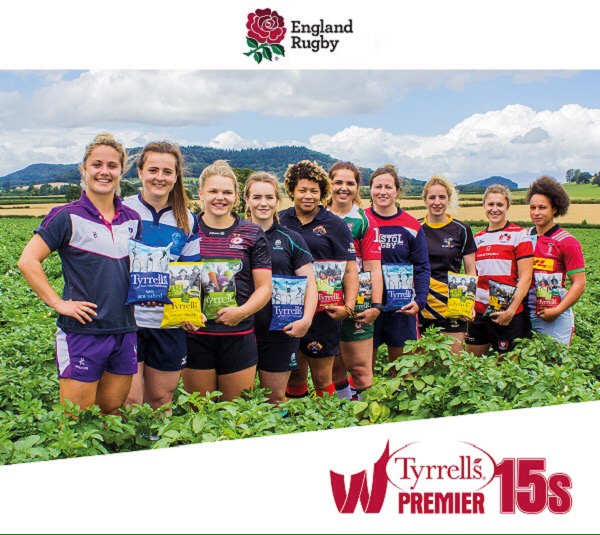
With 10 clubs in a league format, the Tyrrells Premier 15s starts on September 16 and the clubs will play each other home and away, with the top four progressing to a two-leg semifinal stage and the winners to a final on April 29.

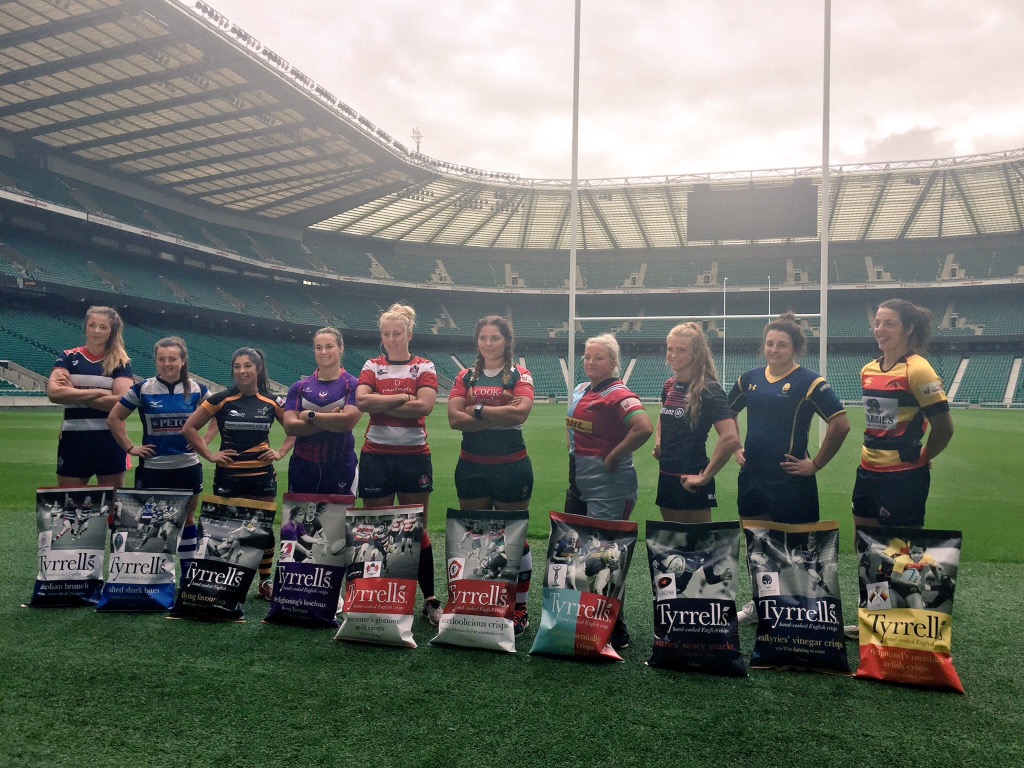
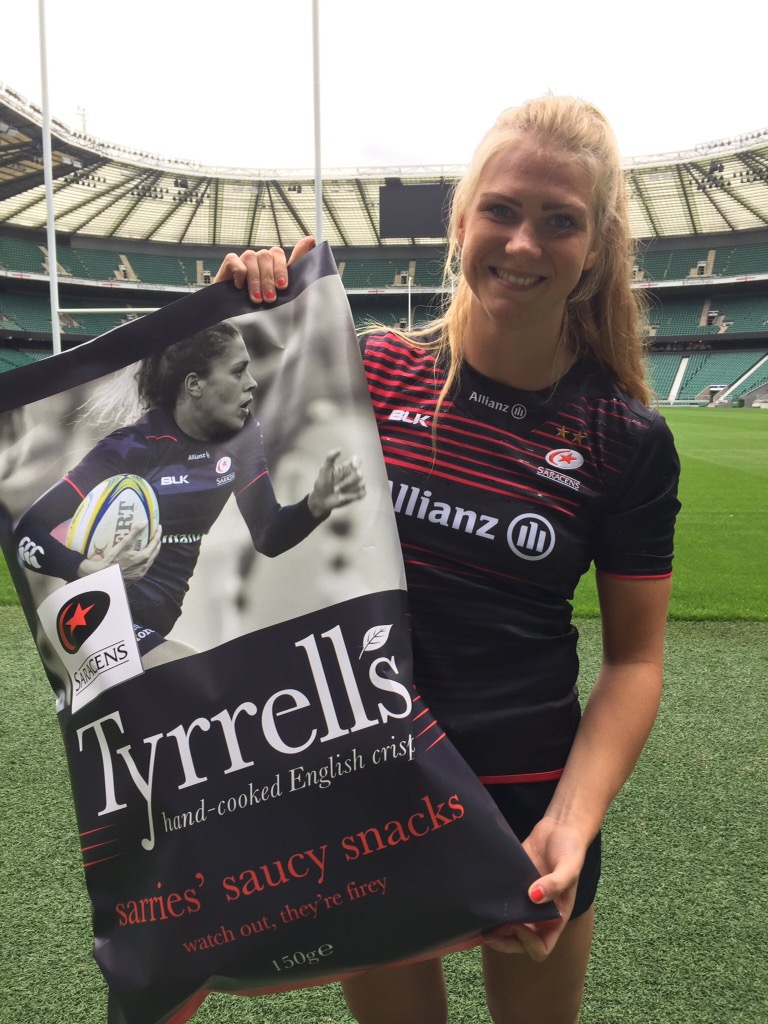
The RFU will invest £2.4 million over the next three seasons in the league and crisp-manufacturer Tyrrells is the first major sponsor of a women’s rugby competition in England.

It is understood these matches will be shown free of charge on the RFU website, although there are also plans to consider streaming via Facebook and other online platforms.

The launch of the new women’s league comes at a crucial moment for the sport after England’s run to the Women’s Rugby World Cup final, which ended with a frustrating but compelling defeat by New Zealand and the controversy over the RFU’s funding of the women’s team.

Following England’s victory at the 2014 Women’s Rugby World Cup in France, the RFU first handed out central contracts to female players in 2014 to help them prepare for the inaugural Olympic sevens competition at Rio 2016, which saw an England-dominated Great Britain side narrowly miss out on a medal.

Fifty central contracts were awarded in 2016, 17 of them full-time, for the build-up to this year’s Women’s Rugby World Cup but it was always planned that some of those contracts would not be renewed after the tournament as the focus reverted to sevens in 2018

Despite wide calls for a rethink on the central contracts decision, the RFU has stuck to its strategy of targeting funding at the most relevant format of the game in each competition cycle and concentrated its efforts on increasing England’s talent pool and developing a sustainable financial model.

This is why it is so keen to promote the Tyrrells Premier 15s, which it sees as a commitment to the women’s game unrivalled in world rugby and a key plank in its strategy to double the number of female players in England to 50,000 by 2021.

The inaugural Tyrrells Premier 15s season launched last Thursday with all 10 club captains, coaches and club directors of rugby attending an event at Twickenham Stadium.


 England Women’s captain Sarah Hunter, Wasps Director of Rugby, Giselle Mather and Nigel Melville discussed how the new competition will revolutionise the existing landscape of women’s domestic rugby.


Nigel Melville, RFU Director of Professional Rugby said: “It’s about raising the standard of the game and giving the athletes and clubs the support they need to be better. There was a gap between our club game and our international game so we wanted to put in a place a competition that was aspirational for younger players. We hope to double the number women and girls playing the game over the next four years to 50,000 players and a lot of them will want to participate in this league. This will help create better players.”


England Women captain and newly appointed Loughborough Lightening assistant coach and player Sarah Hunter said “The new Tyrrells Premier 15s is where the game needs to be in terms of professionalism, high-quality coaching as well as support from strength and conditioning as well as medical teams. The league has been crying out for this for years and for the RFU to come in and transform it is fantastic. It’s great to be involved in it on and off the pitch.”


Wasps Director of Rugby, Giselle Mather said: “I can already see the difference the increase investment is having at my club. The athletes are really excited, there is a huge buzz about the place. We have an strength and conditioning department now, the medical team has improved and everything is there for them because of the sponsorship we have got. The excitement is palpable. We can’t wait until the 16th for the competition to begin”


A new website, Premier15s.com will officially launch ahead of next weekend’s first round of of fixtures.


Tyrrells Premier 15s will operate in a league format with home and away fixtures confirmed today. The top four teams will progress to semi-finals played over two legs, culminating in a final on the 29th April. 

Full list of fixtures


Willie Duggan A Life Lived To The Full

Two weeks ago on a bright Sunday morning, I took the DART railway from Lansdowne Road, which skirted beautifully around sun-kissed Dublin bay, before arriving at Blackrock, a sleepy seaside town that overlooks the bay.

A town synonymous with Irish Rugby, the home of Blackrock College RFC, one of the oldest senior rugby clubs in Ireland, established in 1882, the club that produced so many great players, including Fergus Slattery, Brian O’Driscoll, Alain Rolland, and one William Patrick Duggan.

Little did I think that just a short time later, I would be reflecting Willie’s entire life, after hearing the news, last Monday, of his sudden and untimely death at the age of sixty-seven.

img_7343

Willie Duggan In Blackrock Colours

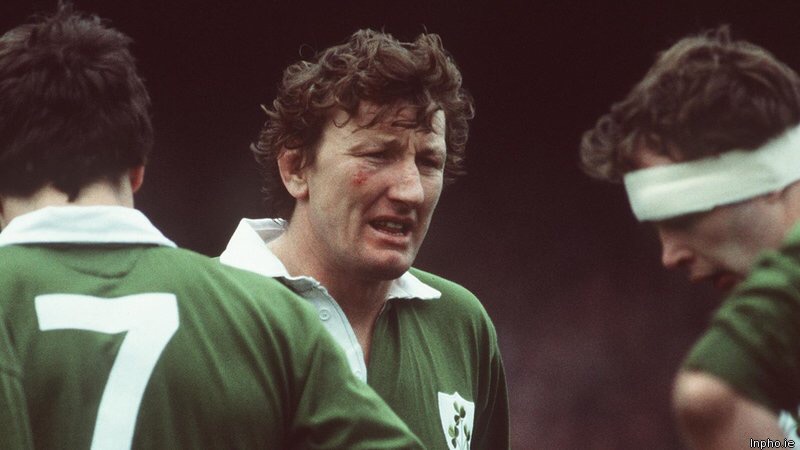
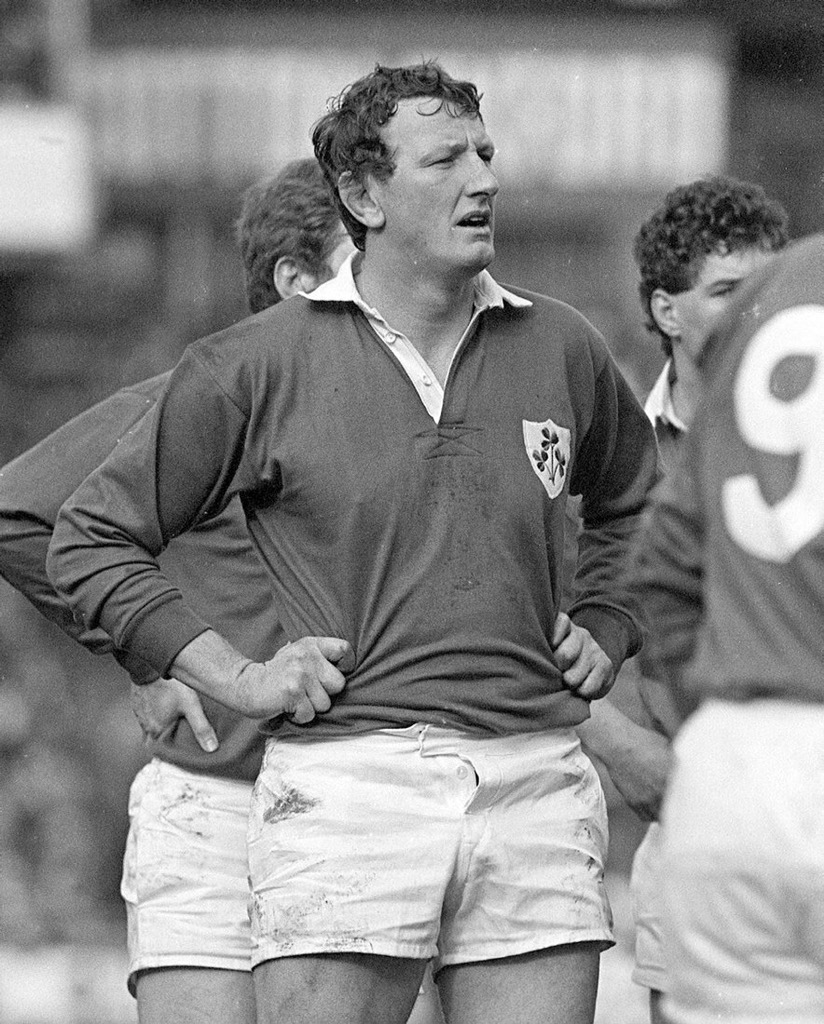
Willie Duggan was a larger than life character from the amateur and wild days of rugby, he was as hard as nails, played 41 times for Ireland, and toured New Zealand with the 1977 British Lions playing in all four tests against the All Blacks.

The 1977 Lions To NZ With Willie Duggan Circled

His first cap for Ireland came in the 12-9 defeat of England at Lansdowne Road, in the 1975 Five nations.


In 1977 he became the first man to be sent off in a five nations match, (along with Geoff Wheel), following a punch up during the Wales v Ireland match in Cardiff.

Duggan always maintained that he was never sent off. “The ref came towards me and said would you mind leaving the field”, I said “Sure not at all, I was b******d anyway”

He scored two tries for his country and captained Ireland in his final international, a 32-9 defeat to Scotland at Lansdowne Road in 1984.

A heavy smoker during his playing days, once when running on to the field at Twickenham, when Ireland were playing England, he handed his cigarette to referee Alan Hosie before kick off.

Willie had what he himself called a pathological dislike of training.

His one concession to fitness being a breakfast of half a dozen raw eggs on the morning of a match.

“I always had the philosophy that if you took 30 players out for a night, and made sure they were p****d before they got to bed at 3am, then got them up at 8am, trained the bejasus out of them, then you would know who was up to lasting 80 minutes in an international”

Willie lived and worked in Kilkenny, where he ran “Willie Duggan Lighting Ltd” the shop he took over from his father, and with his passing one very bright light has certainly been extinguished.

There was never a dull moment with Willie Duggan, particularly when he was in the company of his great mate Maurice Ignatius Keane, and the pair of them became “legends” on the 77 Lions tour for their riotous behaviour, where “Moss” Keane earned the nickname “Rent-A-Storm.

With “Moss” having left us in 2010, the two of them are now reunited, which is desperately  sad for us but heavenly for them.

Rest in peace boys.


WRWC Final 2017 Roses & Ferns Blooming Marvellous !


Cyathea Medullaris and Rosales were nearly everyone’s predictions for the women’s World Cup final participants at the start of the tournement.

Or to give them their non scientific names, Black Ferns and Red Roses, a final that could be described as a horticulturalists dream.

But there are startling similarities between the rugby and flora aspects of both.

The Black Fern can grow quite large, block out Roses and will take advantage of any open space regardless of sun and shade.

Red Roses are extremely versatile, hardy (or even Amy Wilson Hardy) and can be placed in a variety of locations where they will flourish.

Planted in Dublin on August 9 they blossomed in the mixture of rain and warm sunshine that visited the Emerald Isle through the tournament, and were  hoping to reach full bloom in Belfast on Saturday night.

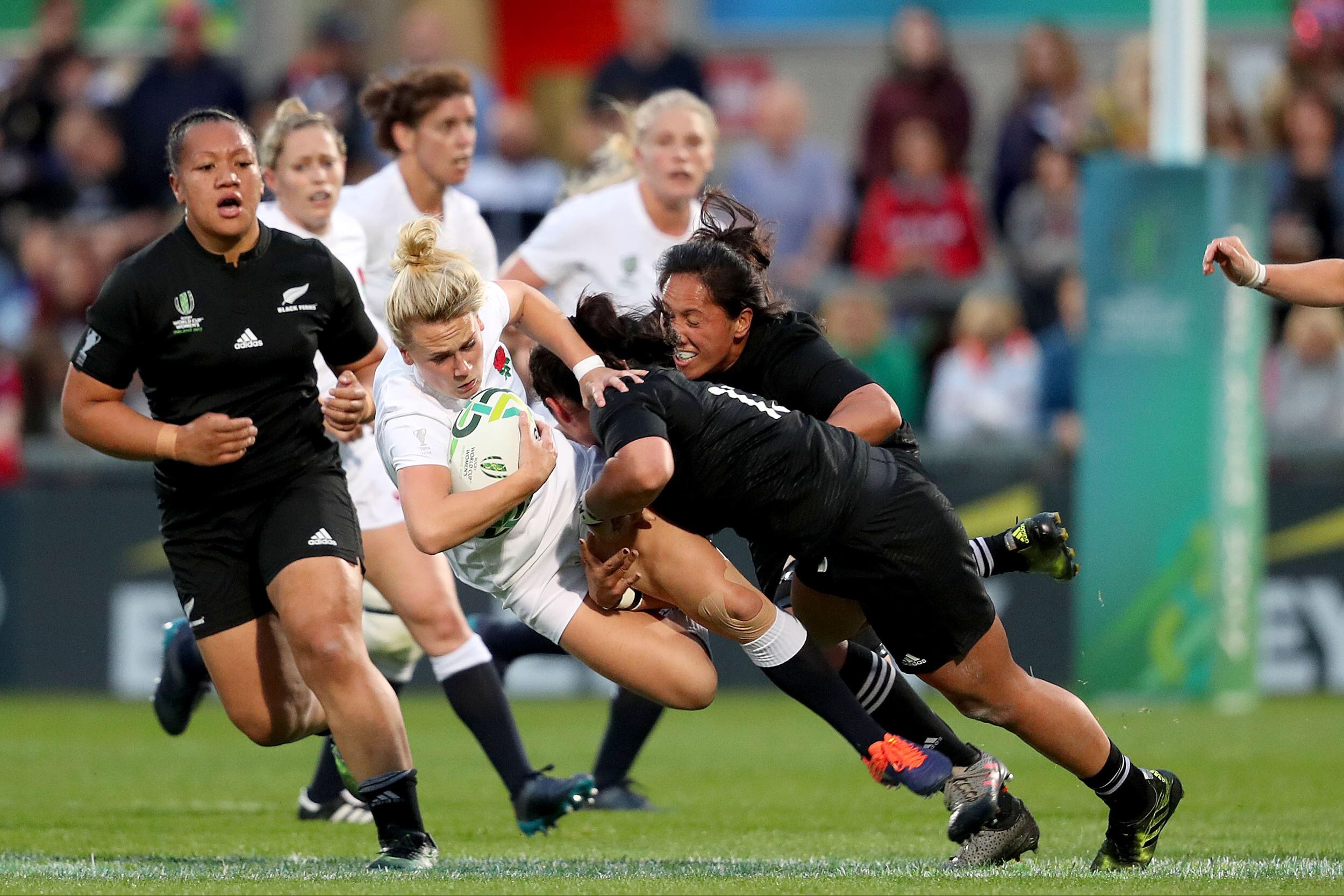
The Red Roses put on a magnificent first half display showing their true colours, and  put the Black Ferns well and truly in the shade.


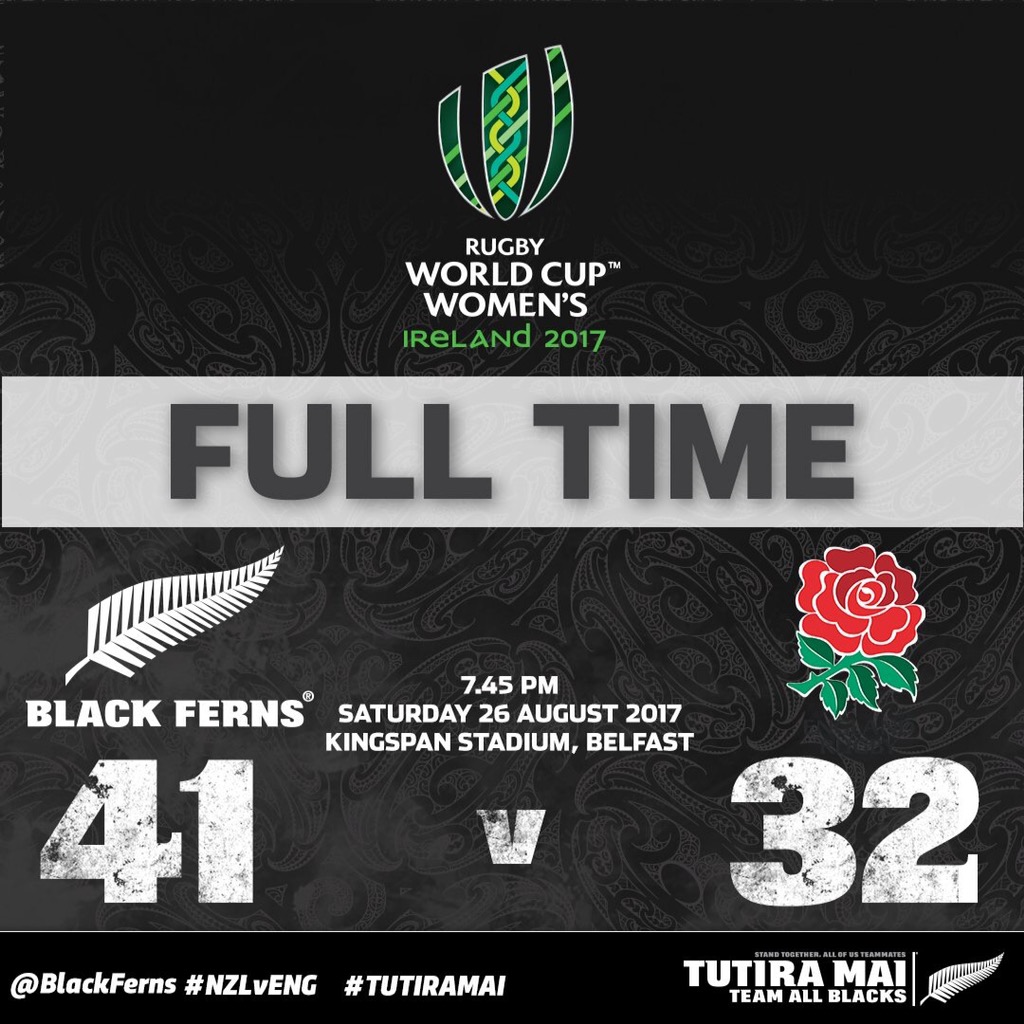
But in an astonishing second half the Black Ferns suffocated the Red Roses, they blocked out every space and every chunk of light, and they trampled all over them causing an inevitable wilting and a 41-32 final score line.


But Roses will flourish once again, so now it is important that any required pruning takes place,that they are tended, cared for and nurtured to enable them to bloom again in early February. 

Womens Rugby Where Do We Go From Here


There are 2.2 million women and girls now playing rugby at all levels, an increase of 142% since 2012, making it one of the fastest growing team sports in the world.

Katie Sadlier is World Rugby’s general manager of womens rugby, and there is an awful lot of corporate jargon and business speak in what she has to say, from intergrated development pathways to best practice governance standards, but I guess ever since the day a clearance kick became a defensive exit strategy there was no going back grammatically.

But in plain English, by 2025 the governing body has an ambition is to be a global leader in sport, where women have equal opportunities on and off the field play.

To this end “World Rugby Women’s Plan 2017-2025” is due to be cibsidered by the World Rugby Council in November.

I have been told that this plan has involved a consultation process involving  fans, unions, regional associations and broadcast partners in an attempt to generate increased interest in the women’s game, attract new investment and maximise the sports commercial value.

There is no mention of the players being consulted, most of whom at this World Cup will end up severely out of pocket, and with all their annual leave used up, but sadly thats nothing new.

Women’s rugby is a sleeping giant, the queues of people outside the UCD Bowl last week begging for tickets to watch Ireland v Japan was something I hadn’t seen in rugby since Wales v France at Cardiff Arms Park in 1978.

Ireland v Japan UCD Bowl

The Irish Rugby Union could have trebled ticket sales for the pool stages of this years tournament had they chosen Donnybrook or a similar larger venue as opposed to University College.

Also media demands need to be met and catered for to spread the word, not just the newspaper journos but also those on social media and electronic mediums who with the touch of a button can bring the wonders of the great occasion to phones iPads and computers by the tens of thousands.

We await with interest the “World Rugby Women’s Plan 2017-2025” I’ve already got my dictionary on hand to decipher it.

If it mentions stakeholders, then mine’s a medium eight ounce rib eye.