The Captains Run At Twickenham Today (A Forlorn Welshmans View)

FEB 15 104

It was with great reluctance, and a heavy heart, that I headed to Twickenham this morning.

The last place a defeated Welshman wants to visit, less than a week after a defeat to England, Is Twickenham.

But I have to be professional, after all, I am trying to make a living.

As my train, packed with commuters, judders towards Clapham Junction, I drift into a weary daze, a bit like George North last Friday.

I can see a dark Cardiff night, and Jamie Joseph, after twenty phases of English play, skipping through despairing Welsh defenders to score THAT try.

I see the Welsh scrum retreating, churning up the dewy green grass as it  back pedals at a rate of knots… luckily I am awakened by a fellow travellers briefcase in the small of my back,which brings me back to a state of alertness, wow ! this post traumatic stress can really get to you.

Anyway, I arrive at the North East gate of Twickenham, where the press have been told to assemble for the Captains run.

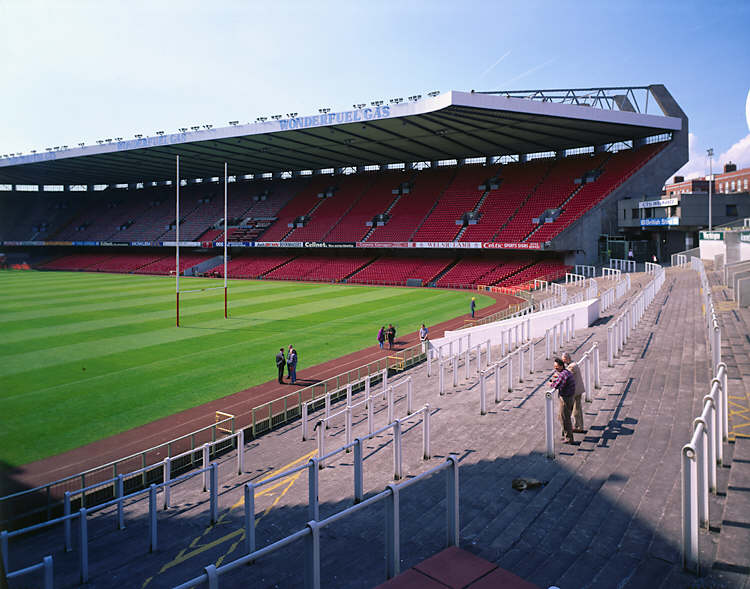
West_Stand_at_Twickenham_Rugby_Stadium

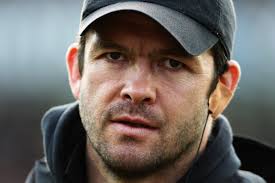
Andy Farrell arrives, I shake his hand, my brain is primed to say, congratulations, well done, a deserved win last Friday, but my mouth has other ideas and out comes a trickle of saliva, and a sort of Barry White mumble that causes him to look at me, with a mixture of pity and amazement.

af

Andy looks fit and relaxed, the result last week seems to have lifted the weight of the world that was firmly on the England management teams shoulders before the Wales match.

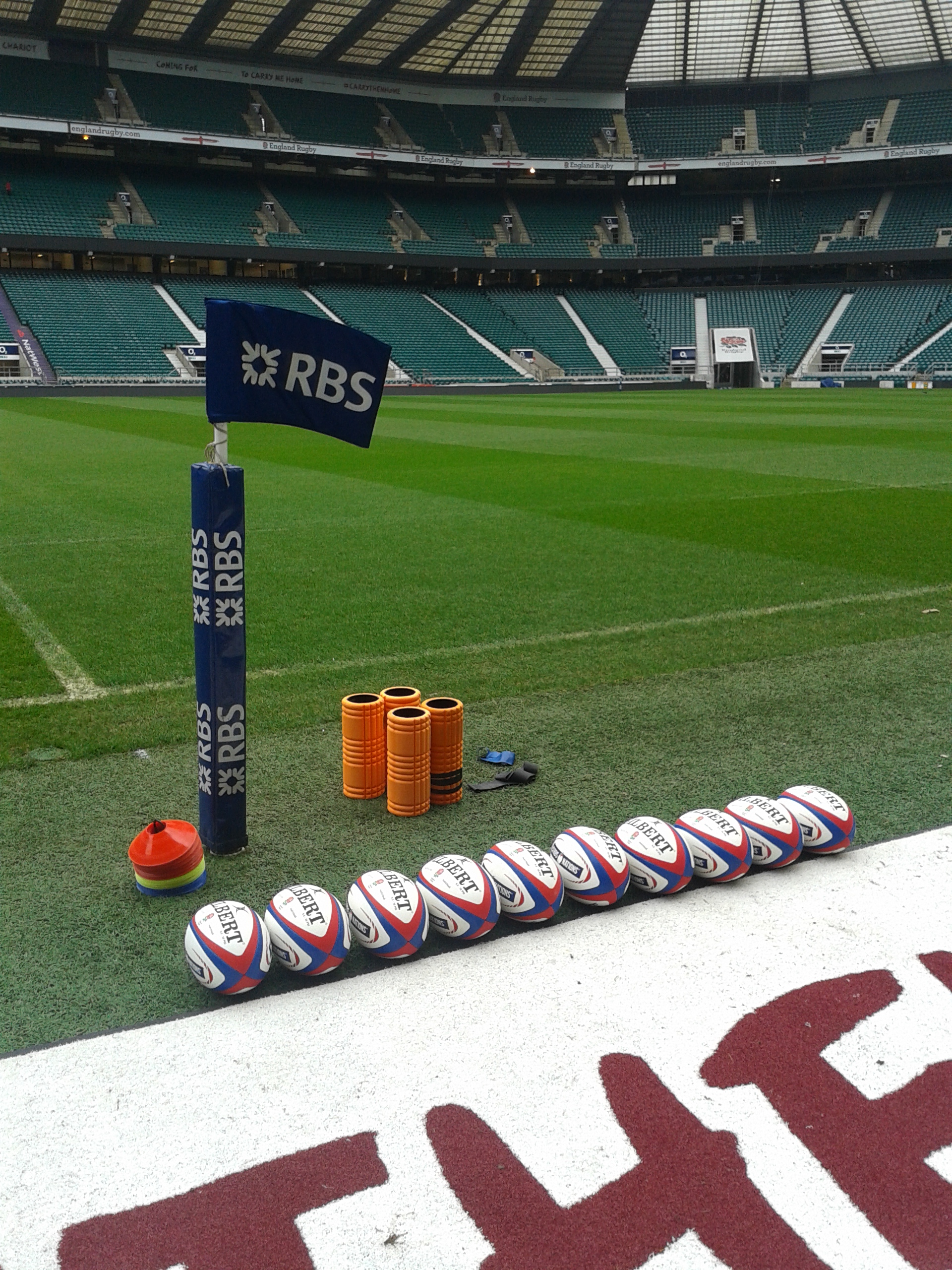
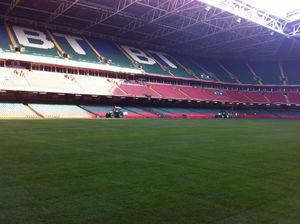
The Twickenham pitch looks magnificent, “Billy Williams cabbage patch” as it was all those years ago is now a state of the art  desso Grassmaster hybrid grass pitch

The installation of the high-tech pitch was part of a complete make-over of the stadium in preparation for hosting this years Rugby World Cup.

Head Groundsman Keith Kent says: “The old field only allowed 20/25 mm of water to drain away in an hour, whereas the new Desso GrassMaster system copes with up to 250 mm an hour.”

Andy Farrell tells me about the feel good factor last weeks win against Wales has created around the country, my inner voice replies “Yes Andy I am fully aware of this fact, I am a Welshman living in England, I’ve had so much abuse during the last seven days, Amnesty International have been e mailing me”.

Andy goes on to say that they are not taking Italy lightly, and that any thoughts of a St Valentines day massacre are totally unrealistic.

So maybe I have last found some closure, another magical RBS 6 Nations weekend looms and I can’t wait for it to start

FEB 15 085

The First Time I Cried For Wales

rty

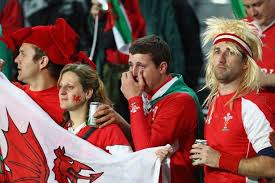
There have been many times when I have shed tears for Wales, too many to mention in detail, to be honest I have spent forty-six years crying for Wales on and off, and it never gets any easier.

Sam Warburton’s red card in the 2011 Rugby World Cup sem-final takes some beating, what was worse was having to watch Sam on the touch-line looking so dignified, when the whole of Wales wanted to give him a collected hug poor lad.

red card Sam Seeing Red

 
But I am going back 45 years to recall my first encounter with the emotional pit falls that are an essential part of being a Wales rugby fan.My main problem you see was that I at my hormonal peak in the 1970’s, despite the perils of a broken voice and acne, “I was there” when Wales had JPR, Barry, Gareth, Gerald and Merv, which meant that you were more likely to see Halley’s comet than a Wales defeat.

In fact Wales were unbeaten at home in a 5 nations match from 1969 to 1980.

But the first time I cried for Wales was 28 February 1970.

England were playing Wales at Twickenham, I was at my Gran and Grampa’s house, because they had a colour television, my gran loved JPR and the harder he tackled the more she loved him, bless her

jpr JPR My Grans Favourite

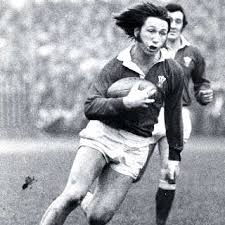
I settled down on the sofa expecting the usual routine Wales victory, but then it started going horribly wrong, firstly JPR was flattened, well JPR was always the “Flattener” not the “Flattenee” and as a result David Duckham scored in the corner.

A mere temporary setback I thought, until John Novak scored another try for England, this was getting serious, before I knew it Wales were 13-6 down, then came the final straw, Gareth Edwards had to go off, injured, with a pulled hamstring… that was it !

Feeling hot and clammy, the tears were welling up in my young eyes, I felt sick, I didn’t know what to do,so I  ran to the bathroom to try to hide my emotions from my grandparents, I remember praying with all my heart, you see I was a choirboy, so I felt that I might be given some leeway by the almighty, for service rendered as a soprano

Well something cosmic happened, I returned to the lounge and before I could sit down JPR had scored a try for Wales, Hey, maybe this praying lark works, then Gareth’s replacement “Chico” Hopkins scored another try, JPR converted and suddenly Wales were leading 14-13.

And to top it all, a Barry John drop goal in the last-minute, Wales win 19-13

Now, a cautionary tale, I’ve tried this prayer thing, on many, many occasions since, and it has never worked, going back to Sam’s red card I even went the extra mile and was down on my knees praying, to the cats dismay.

Still the miracle of 1970 has never been forgotten, the first tears for Wales, but cerainly not the last.

The Green Green Grass Of Home

5g1wI9fxaxSJsXfX8HYu

One fact was overlooked amidst all the hype of the Wales v England 6 Nations opener

The Millennium Stadium hosted its first RBS 6 Nations match on the new hybrid pitch last Friday night

The Desso Grassmaster installation is a state-of-the-art system which intertwines grass turf with millions of artificial fibres. The system aims to strengthen the quality of the playing surface in line with the most advanced sports stadia in the world.

The £3.1 million venture, part-funded by Welsh Government, also includes new state-of-the-art ‘plug and play’ facilities for media and a Terraplas covering to protect the surface during non-pitch events such as rock concerts and motorsports.

The new pitch was first used during the autumn’s Dove Men Series when Wales ended their campaign with a win over South Africa after facing New Zealand, Fiji and Australia on home turf.

For the first time ever in the history of the Millennium Stadium, the pitch will remain in situ all year round – with the very same hybrid fibres providing the stage for all of the upcoming 12 international matches at the venue in 2015.

Head of Physical Performance Adam Beard praised the surface ahead of the Wales v England clash. He said:

“The new state of the art pitch is a big step up from the old surface at the Millennium Stadium. There are a range of pitch diagnostics that the physical performance team take prior to each outing on the surface and there is a significant difference to what we had previously and we are very happy with what have now. Not only does it look good but also it performs very well.  We have constant dialogue with the ground staff who work hard to ensure it meets the requirements of the international game. The surface is hard and fast underfoot providing a great platform for the sides and hopefully a great spectacle for the supporters.”

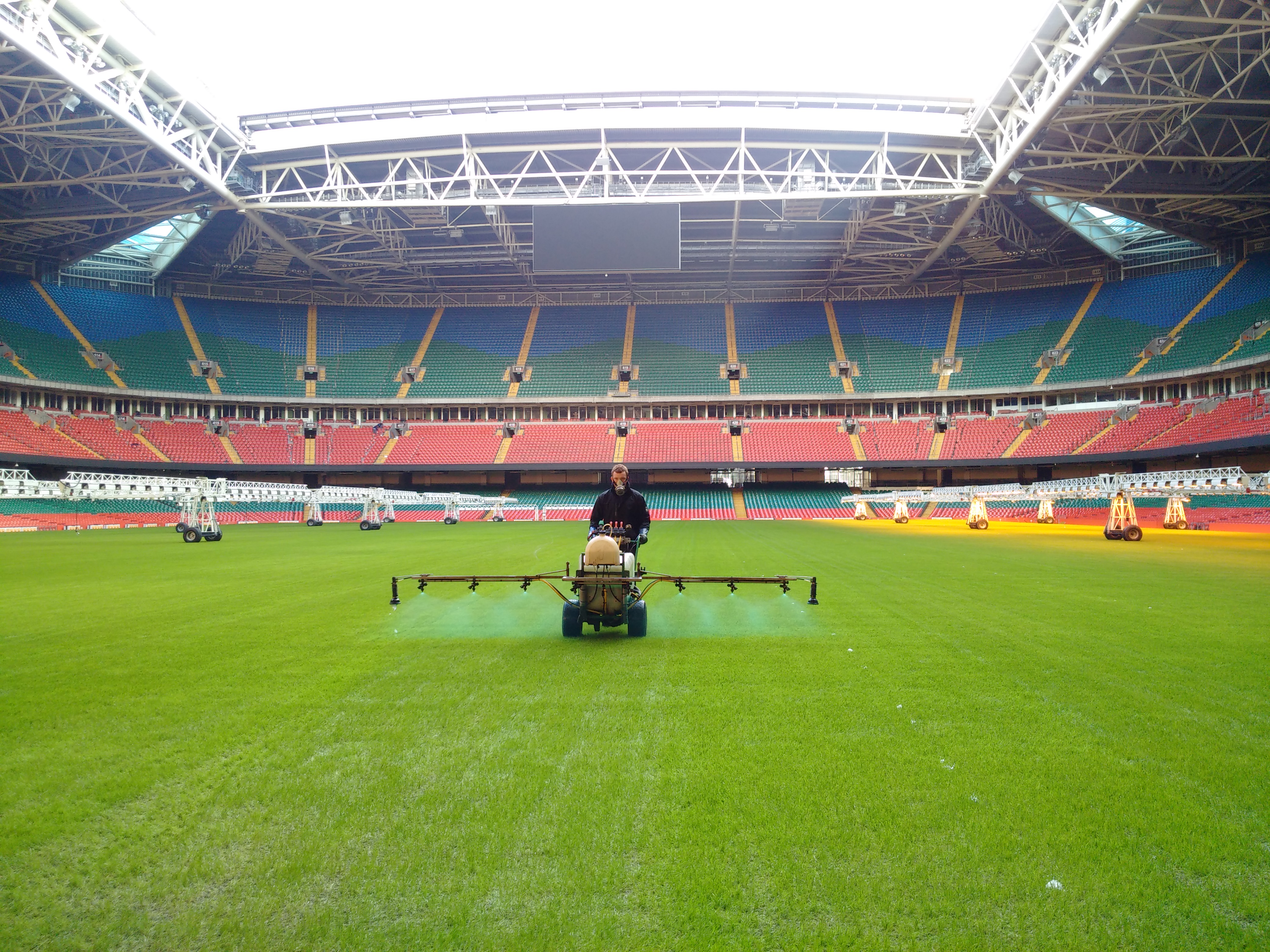
Complete Weed Control visit Millennium Stadium ahead of Six Nations

Keeping the weeds at bay

We all remember what the playing surface used to look like so to see it resembling a billiard table last Friday added to the spectacle.

Lets hope when the green green grass of home welcomes the men in green on March 14 the bounces go Wales way.

Where Did This Love Affair Start

16818_2

THE BEGINNING

Where did this love affair start?

My earliest memory is that of an old black and white television, in my uncle Eustace’s house, in Leatherhead, Surrey, I recall a grainy, almost sepia, picture with distorted sound; emanating from a tiny veneered wooden cabinet.

I had no interest in what was being watched by my father and my uncle, that day, I was aware however that they were particularly excited….

It was Saturday 15 April 1967… I was 9, not much older was Keith Jarrett, an 18 year old schoolboy, making his debut for Wales, against England, at Cardiff Arms Park, from what I could gather, he seemed to beating England single-handed. He ran in a try from his own half, kicked penalties and conversions galore, each one hitting some part of the woodwork before bisecting the goalposts.

Jarrett was picked at full back, a position he had never played before, but needless to say there was no way that Wales were going to lose that day, he was somehow “touched with glory”

There is an old anecdote stating, that later that night, long after the team dinner, and celebrations had ended, Keith Jarrett found himself at Cardiff bus station, he had just missed his last bus home, to Newport.

He noticed a bus driver finishing his shift and asked him how he could get to Newport. the driver replied that the last bus had gone, and the next one was Sunday morning.

Hang on a minute said the driver aren’t you Keith Jarrett the man who single-handed beat England today ?, Well yes said KJ rather bashfully.

Don’t worry said the driver I’ll get one of these buses and drive you home myself.

He was getting into the cab of his bus when he spotted an inspector marching towards him.

“Where do you think you are going that bus” he barked,

Well said the driver nervously, I’m driving Keith Jarrett home, he’s missed his last bus, after all he did beat England this afternoon, almost on his own….

“Take that bus back immediately” shouted the inspector..

“Go and get a double-decker”… the lad might want to smoke.

Wales beat England by 34 points to 21 that day……………………..

That distant event stands alone as my first and only rugby memory, until the affair blossomed in 1969.

In that match, Keith Jarrett scored a try breaking from his own 25 yard line and running most of the length of the pitch. He also converted the try from just inside the touch-line., and kicked two penalty goals and five conversions.

In a short international career Jarrett won 10 caps for Wales, scoring 73 points..(2 tries, 17 conversions and 11 penalty goals)

In 1969 he signed professional terms with Barrow rugby league club and went on to play for the Wales national rugby league team

His career was cut short in 1973, aged just 25, when he suffered a stroke resulting from a brain hemorrhage. .

For some inexplicable reason in the intervening years I found myself more interested in Gordon Banks, Bobby Charlton and the England football team.

What caused this mental breakdown I have no idea…. I found myself playing football and pretending to be Bobby, even to the extent of, when taking a corner, or a penalty, I would pretend to be bald, and comb over the few strands of hair on my head with my hand. (prior to kicking the ball, just like Bobby Charlton did) something I could have done with much greater realism not too many years later, when my testosterone fuelled body decide to dispense with my sleek locks.

The cure for this mental aberration, and national treason, was found on a spring day in 1969, April 12th to be exact.

I found myself sitting in front of yet another black and white television; when almost mystical The grandstand programme came on, and was showing the Wales v England Five nations match live from Cardiff.

The sight of the Wales number 10, a young man, born in the same town as me, ghosting past English defenders, that day, like a phantom,, made the hairs on the back of my neck stand up..

He was to be the catalyst of that love affair that is still burning brightly to this day.

That young man was Barry John, for many, the greatest fly half of all time.

barryjohn

Barry played with insouciance, bordering on arrogance, he always seemed to have more time on the ball than anyone else, and on the end of Gareth Edwards magnificent spin pass he was in my mind the greatest.

The sadness is that in 1972, at the age of only 27, with 25 Wales caps and five British Lions caps, BJ retired from the game. He cited the media attention and the unfair expectations of his country as the reasons, for his retirement, believing he was “living in a goldfish bowl”

He stated that the event that drew him to retire from rugby was when a young girl curtsied to him outside the opening of an extension to a local bank, in reference to his nickname. “The King”

His 25 caps for Wales resulted in 90 points scored, 5 tries, 9 conversions, 13 penalties and 8 dropped goals.

His British Lions career added a further 30 international points, with a single try, 3 conversions, 5 penalties and 2 dropped goals.

Anyway back to 1969…And in perfect symmetry, it was Wales v England, again, two years on from that first distant sepia memory.

Wales beat England by 30 points to 9.

Now this love affair has not been plain sailing…. We have had many ups and downs. There were times when we were sick of the sight of each other, but I was never unfaithful.

There were times when I just wanted to be left alone, when I thought I can’t carry on, but always somewhere there was a touch of magic, however slight, that kept me going.

As Richard Burton said in his narration of the WRU centenary programme in 1980

“A Touch Of Glory”….

“We are the nation of the possessed where rugby football is concerned.

We identify with out national team more completely than any other nation.

Now again we are in ecstasy”

I

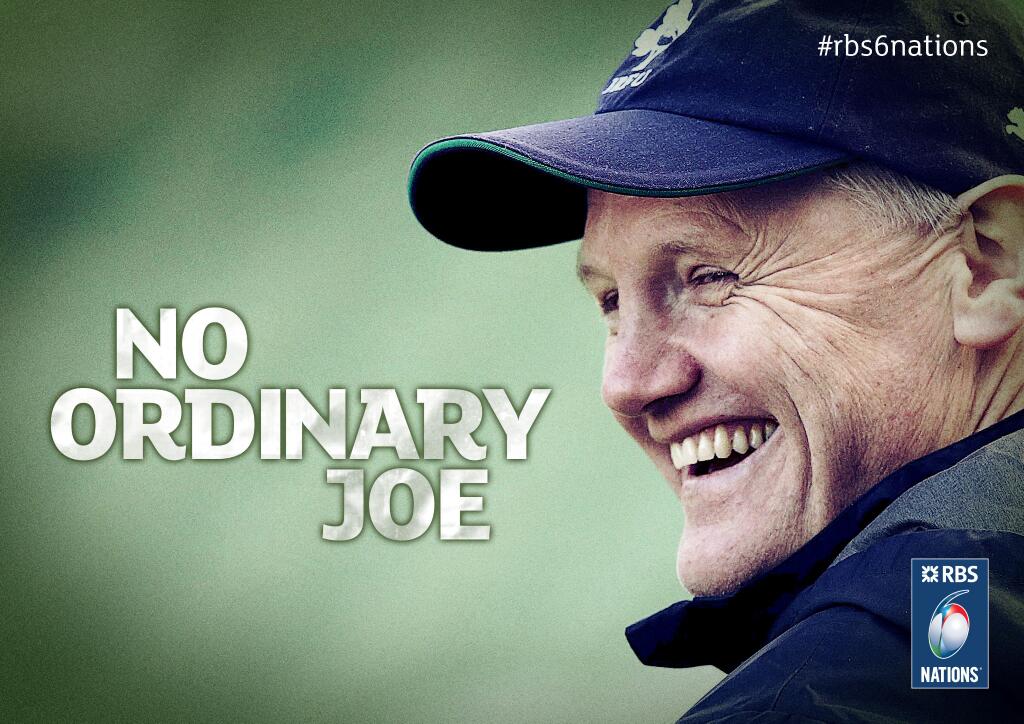
No Ordinary Joe

BiyqHdeCcAAHTW6.jpg large

Joe Schmidt does not buy in to the fact that Ireland are the bookies favourites for the 2015 RBS 6 Nations.

He will attempt to lead Ireland to a second successive title but stated that he and players will not be paying any attention to other people’s perceptions or predictions.

Schmidt’s men start their campaign against Italy in Rome on 7 February, without the injured Johnny Sexton.

At the RBS 6 Nations launch, Joe told me that he was unaware that Ireland were favourites for the tournament

He went on to state that “The favourites tag can be a distraction that we don’t necessarily need to focus on at all.”

Ireland are currently third in the World Rankings after wins over South Africa and Australia in the Autumn Internationals.

Joe Schmidt is a very quiet and personable man, but you only have to listen to him speak for a very short time, to realise, that he has an all-consuming attention to detail, and there is no doubt he is one of the best tacticians in the game.

He is currently contracted to the IRFU until the end of the 2015/16 season.

His career with Bay of Plenty, Blues, Clermont and Leinster has been littered with trophies and titles, the man is a winner, but appears to remain grounded, and like all the other coaches has an awareness of the  history and legacy of this great tournament.

He is certainly “No Ordinary Joe”

Home Thoughts From Abroad The 6 Nations Is Here Again

MARCH 2012 005

Yes it’s that time of year. I hear people say “oo I hate January  it’s so dark and depressing”

WHAT !!!!  Are they mad ? it’s nearly the start of the 6 Nations.

As an exiled Welshman the memories come flooding back, quite literally, as the part of West Wales I lived in was so wet, I was 15 before I realised you could actually take an anorak off ! (Thanks Rhod)

But for all you men out there, here’s some friendly advice, It’s time to start rubbing your back, flexing that dodgy hamstring, because you know that you are going to have to get out of all shopping and DIY obligations until March 21st.

So start sowing the seeds of doubt immediately, just a gentle limp to start, and a few “oh it’s ok, I’m sure it will pass”.

Don’t forget we’ve got five weekends to get through, so start preparing.

My cryotherapy sessions have already started, and I’m already making at least three trips to the fridge daily.

This is the very best time for us Welsh fans, the last few weeks building up to the start of the tournament… we are unbeaten in 2015, it can only get worse !.

We dream again of another Grand Slam, and then we start negotiating with our maker, to decide which games we would be prepared for Wales to lose, in exchange for beating England…

It’s the start of that magnificent winter festival, when we lie awake in the middle of a silent, cold frosty night, and remember trips to Paris, Murrayfield, HQ, and Rome, when those of us of a certain age get misty eyed recalling JPR, Gareth, Benny, JJ, and for those of you as old as me, Keith Jarrett and Barry John playing on a grainy black and white TV.

And each championship brings new ones to add to the memory bank.

This magnificent winter festival never lets us down.

Wherever you are and whoever you support, may the 2016 RBS 6 Nations send you on your way towards spring, with a long list of outstanding chores, and memories to cherish.

A Good 6 Nations Does Not Mean A Good World Cup

2015 RBS 6 Nations Rugby Championship Launch 28/1/2015

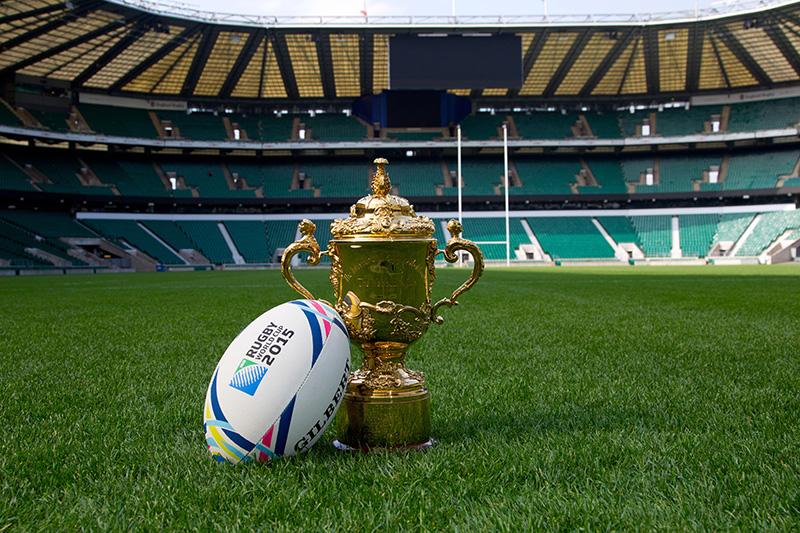
So as the 2015 RBS 6 Nations consigns itself to the history books,  it is worth considering if there is correlation with how a country does in the RBS 6 Nations Championship and how they perform at the following Rugby World Cup?

Sportdragon 2 181
In the 2003, England won the Grand Slam, and then went on to lift the Webb Ellis Trophy, in Australia, in the November, after being given a scare by Wales in the qurarter fnals..

France who were third in the championship took 4th place at the World Cup.

Ireland were 2nd in the 6 Nations and were knocked out by France in the quarter-finals

2007 saw England finished 3rd in the 6N Championship and they made it to the World Cup final where they lost to South Africa, although Mark Cueto may disagree.

France took the RBS 6 Nations title that year but only finished 4th in the World Cup
Cup that was staged in their own country.

I cannot bring myself to mention a certain match in Nantes between Wales and Fiji without the agreement of my GP.
In 2011 it was England who were RBS 6 Nations Champions, but they were beaten by France, who had finished runners-up, in the quarter-finals of the Rugby World Cup.

France in turn went on to lose to hosts New Zealand in the final

Ireland finished third, ahead of Wales by points difference in the RBS 6 Nations Championship, but were well beaten by the Sam Warburton’s  men in the RWC quarter-final in Wellington.

Wales finished 4th in the World Cup, after losing to France in a heart-breaking Semi final, and then by Australia a few days later in the bronze match..

So, make of that what you will.

John Warlow From Stradey To St Helens

16506-Douglas John Warlow

My Dad never talked much about his playing days, which were shrouded in mystery, he was Born in Burry Port and spent his early life in New Street.

His appearances at Stradey Park were not well documented, and the only bit of information the rest of the family could provide me with, was the fact that he got sent off, which was quite some feat in West Wales in the “sixties”

These were the days when the only way could only tell that a prop was running was by the expression on his face.

My Dad did speak fondly and in awe of his fellow prop in the Llanelli schoolboy’s side, one John Warlow.

John was different, and his name was mentioned with a whisper, in a hushed voice, in our house, as if in reverence to a deity.

John Warlow was born in Dafen, near Llanelli on 13 Feb 1939

He played for local side Felinfoel before joining Llanelli in the 1957-58 season, just as he was establishing himself in the Scarlets team, his rugby career was interrupted by two years national service with Welch regiment.

He returned to Stradey Park, in 1960 where he established himself as a top class prop, 6ft 1ins tall and weighing in at 15 stones.

He was selected by Wales for the game against Ireland in Dublin Nov 1962, a 5 Nations match held over from the previous season due a smallpox outbreak in the Rhondda.

The match ended in a 3-3 draw.

This proved to be his one and only cap, as he signed professional terms for St Helens Ruby League side on 23 October 1963.

He was signed in a pub by the then secretary Basil Lowe and Saints Chairman Harry Cook, the directors of Workington Town were also present attempting to sign `Big John`

Also in attendance to witness, and later celebrate, the signing of a Saint, were John`s team-mates from Llanelli.

On 30 November 1963 he made his St Helens debut against Liverpool City.

Away from his beloved homeland he lodged with a landlady called Minnie Cotton.

Minnie received national attention when she single-handedly invaded the pitch,  in the 1966 Championship Final against Halifax, and set about a couple of Halifax forwards with her umbrella as retribution for some rough play against her lodger.

Warlow played in the successful Saints teams of the sixties and early seventies, and was a stalwart of the “pack of aces” playing alongside great forwards like Cliff Watson, John Mantle, Kel Coslett, John Tembey, Mervyn Hicks, Ray French and Doug Laughton.

Warlow was a tough nut with the ball in his hands and a powerful tackler, and his unstinting efforts and consistent performances should have been rewarded with more international caps.

He had two spells with the Saints, leaving the Club after the end of the 1968/69 season for a stint with local rivals Widnes, who he captained for three seasons, and returned to Knowsley Road in November 1973 to complete his dazzling career with the Saints.

His last match for the Saints was against Leeds in the 1975 Premiership Final against Leeds when Saints dipped surprisingly after winning the Championship at a canter.

In 245 games for St Helens, he scored a total of 27 tries.

He played six times for Great Britain rugby league side between 1964 and 1971 also touring Australia and New Zealand with the team for the 1968 Rugby League World Cup.

John also played three times for the Wales rugby league team 1968-1970.

After thirteen years in the North, his playing career was over and John returned to South Wales, becoming the steward of the Burry Port British Legion.

There is not much written in the annals of rugby about this great warrior, but he achieved greatness in both codes.

John Warlow is a member of the St Helens hall of fame, and when you look at the elite members of this exclusive “band of brothers” you realise how much he is still held in awe by those in Lancashire who saw him play, …maybe you were right all along Dad !

The First Wales Rugby International Killed In World War I

index

Charles Gerald Taylor was born on 8 May 1863.

He was a Royal Navy officer and Welsh international player who played club rugby for Blackheath.

He was the first Welsh international to be killed in action during World War I

Taylor was an all-round athlete, and at one time was the Welsh pole vault champion, he joined the Royal Navy on 1 July 1885, when he was an acting assistant engineer.

Much of Taylor’s career was spent at training or other shore establishments, however, shortly after the outbreak of World War I,  on 16 September 1914 he was posted to the HMS Queen Mary, then on 20 November he was transferred to HMS Tiger.

On 24 January 1915, Tiger was one of the vessels engaged in the Battle of Dogger Bank. HMS Tiger was struck by fire from a German cruiser, and Taylor died during the engagement.

Unusually Taylor was not buried at sea, and his body was returned to Britain to be buried at Tavistock New Cemetery n Devon.

His international rugby career began in 1884 when he made his debut for Wales against England.

Wales lost the game but Taylor played in the two remaining games of the championship  against Scotland and Ireland.

In 1885, Taylor made his first international score when he converted a try, though as no points were given to conversions at the time he is recorded with no career score.

Taylor was instrumental in setting up a rugby club for Welshmen exiled in London.

A club was formed in June 1885, and Taylor became a committee member,and on 21 October became a member of the very first London Welsh team.

Taylor’s final game for Wales was in 1887 against Ireland in a win at Birkenhead.

How A Welshman Grew To Love Brian Moore

brian moore

I love Brian Moore, it is a relationship that didn’t begin well.

I’m Welsh you see, and in the 1980’s Brian was the “go to” man for us Welsh supporters who were witnessing an annual thrashing by England.

Wales v England 1995, at Cardiff Arms Park, he was a snarling ball of sweat and saliva, he terrified me, (and I was sat at the back of the west stand).

Fortunately the French seemed particularly susceptible to his Anglo saxon charm, and found Brian and co the rugby equivalent of Waterloo. (The battle, not the station)

Les Bleus front rows would visibly dissolve, physically and emotionally, until they were either totally P’d off, or sent off.

My view of Brian began to change, when in a magazine article, he recommended a particular cabinet Sauvignon that was economically viable for me, and it actually tasted good.

Sadly I went at it in the manner of Vincent Moscato, as a result I no longer drink alcohol.

I will not dwell on Brian’s playing career, as it gives me horrific flashbacks of trips, to Twickenham, and Cardiff that I, and most of Wales, would wish to forget.

But for me it is Brian’s media career that has totally won me over.

He speaks for us, the people who spend our lives in the grip of this wonderful game, he also, somehow manages to remain totally impartial and don’t we just love it when he starts on Eddie Butler ?

If someone had told me 20 years ago, that I would writing an article praising Brian Moore, I would have thought they were suffering from an overdose of the afore-mentioned cabinet Sauvignon.

Don’t change a thing Brian, keep on keeping on, and who knows maybe one day, in yours and my lifetime, we may see the scrum refereed according to the letter of the law.

Now that would be a birthday present worth getting.