After The Grand Slam Hangover What’s Next For Wales

Like a holiday romance the time has come to pack our bags and head home to reality, the grand slam party is finally over, and we are leaving with a doggy bag crammed full of memories and images.

Our Grand Slam T-shirts have been pre-ordered, and Welsh fans the world over are desperately attempting to find affordable flights to the land of the rising scrum for the Rugby World Cup in Japan.

So as the paracetamol is finally put back in the medicine cupboard, it’s time to look at what happens next for Wales.

It’s hard to believe that Wales last lost a game of rugby on 24 February 2018, and after fourteen consecutive wins they will remain unbeaten until at least August 11th 2019.

Warren Gatland’s last match in charge of Wales is a moveable feast, (or famine), at the moment, depending on how far the men in red progress at the Rugby World in Japan.

Welsh players will get four weeks off, regardless of when their season ends, then in July the Wales squad head to Flesch in the Swiss Alps living at 2,250 metres above sea level, but training at 1000 metres, the reduction in oxygen that occurs make their bodies more efficient, it is also likely to be extremely hot during July.

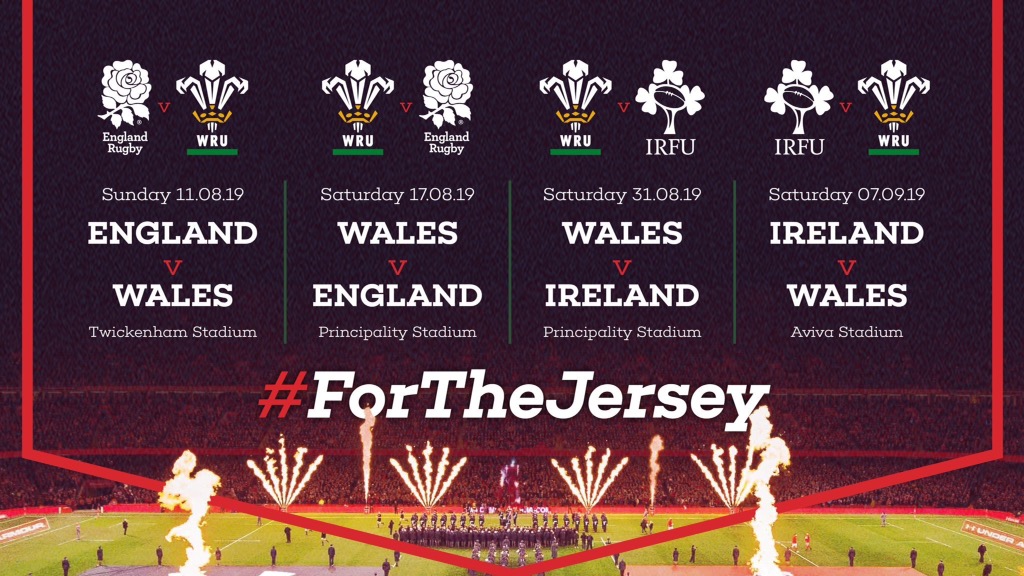
Wales then return to the UK for two matches against England, before heading out to a warm weather training camp at Gloria Sports Arena in Turkey, this will be a week long trip scheduled around 19-25 August, the players families will fly out to join them for the latter part of the week,

Wales then return home to face Ireland in Cardiff on 31 August after which the final World Cup squad of thirty-one players is revealed, Wales then go to Dublin on 7 September for their final warm up game.

The Welsh squad depart for Japan on Wednesday 11 September to commence a five-day training camp at Kitakyushu, before heading to Tokyo for the opening World Cup pool match against Georgia on Monday 23 September in Aichi.

Further Pool games follow against Australia in Tokyo on September 29, Fiji in Oita on October 9, and finally Uruguay in Kumamoto on 13 October.


Trying Times As Harlequin Heather Blooms

Heather: Definition

1. A purple flowered Eurasian Heath that grows abundantly on moorland and heathland.

2. A try scoring machine that inhabits grassy areas capable of destroying any defence once in full flight.


Heather Cowell of Harlequins Ladies is having one heck of a season.

As the club prepare for a Tyrrells Premier semi final against Loughborough Lightning she finds herself the team’s top try scorer, with twenty touchdowns.

Her exploits include three hat tricks one of which was achieved in 11 minutes against Bristol on 1 December 2018, touchdowns in the 21st, 29th and 32nd minute gave her the fastest hat trick ever recorded in the Tyrrells Premiership.

Heather has already scored four tries against Loughborough Lightning this season, two in the away encounter, and two at Surrey sports park in the return match.
Another brace at the Stoop next Sunday, in the Tyrrells Premiership semi final would be most welcome.

Heather Cowell’s Twenty

1. Loughborough Lightning 78mins 22/9/18

2. Loughborough lightning  79m  22/9/18

3. Worcester Valkyries 50m. 13/10/18

4. Saracens 67m. 20/10/18

5. DMP Sharks. 24/11/18

6. Bristol 21m. 1/12/18

7. Bristol 29m. 1/12/18

8. Bristol 32m. 1/12/18

9. Loughborough lightning 6m. 8/12/18

10. Loughborough lightning 69m. 8/12/18

11. Waterloo. 12m. 15/12/18

12. Waterloo. 23m. 15/12/18

13. Waterloo. 17m. 15/12/18

14. Worcester Valkyries 9m 22/12/18

15. Worcester Valkyries 20m 22/12/18

16. Saracens. 31m. 12/1/19

17. DMP Sharks 4m. 23/3/19

18. DMP Sharks. 38m. 23/3/19

19. DMP Sharks 45m. 23/3/19

20. Gloucester-Hartbury 14m. 30/3/19

Quins Proving To Be Pack Leaders On And Off The Field 

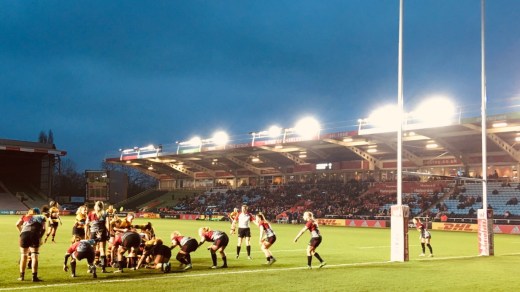
We’ve seen many memorable days at the stoop, but this was surely one of the very best.

It felt more like Tenerife than Twickenham on Saturday, as the barometer hit 20 degrees, even Chloe Butler Quins favourite Aussie was melting.

Melting Aussie Chloe Butler

Melting Aussie Chloe Butler

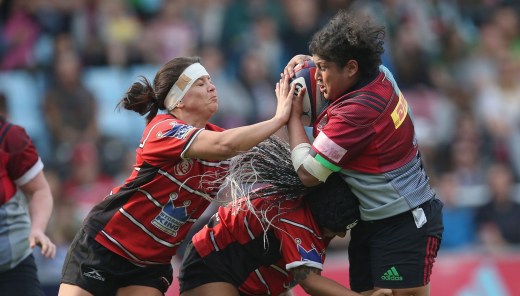
A 4,837 record crowd for a women’s club game serenaded Harlequins Ladies to a 62-0 win over Gloucester-Hartbury ,a victory that guarantees them a home Tyrrells Premier semi final against Loughborough Lightning.

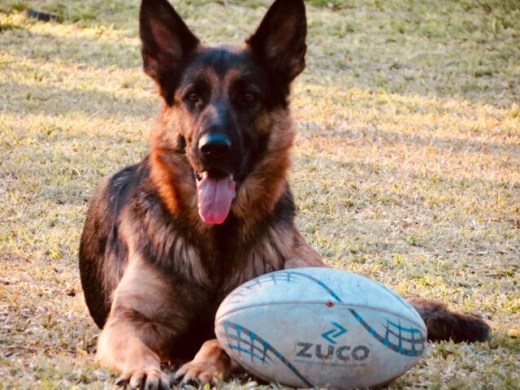
The police dogs from the Met were there on display ,their tails wagging at this great occasion,and as for Quins, their tails were certainly up, inspired by the vocal support that reverberated around the stoop they were like a dog with a bone from the first whistle, although dogged defence from Gloucester-Hartbury kept the home side out until the 14th minute when a brilliant finish from Heather Cowell, her 20th of the season, got the scoreboard moving.

They  extended their lead (subtle dog reference there !) when Vickii Cornborough crashed over on 21 minutes.

The tries rained a brilliant in and out from the Chichester Express Jess Breach allowed her to race in a long range try that was so rapid it set off the speed cameras on the A317.

A half time lead of 31-0 was extended on 46 minutes when Jade Konkel,the monster from the Black Isle, crashed over on 46 minutes followed by the melting Aussie, Chloe Butler on 57 minutes.

A spot of walkies for Khadidja Camara and Rachael Burford, after they both received yellow cards in quick succession, did nothing to stem the Quins tide.

Davinia Catlin scored two tries in five minutes to take Quins past fifty points, before Super sub Deborah McCormack put the misery of an injury ridden season behind her and bulldozed over for the the most popular try of the day.

Whilst the try scorers grab the glory the metronomic boot of Ellie Green notched up 13 points through a penalty and five conversions, her incredibly consistant performances continue to be a major factor in Harlequins success.

As the Met Police Alsatians headed for their tea, Winalot would appear to be something that they have in common with Harlequins Ladies…..Bon appetit everyone.

A Grand Slam For All Generations

A young  boy swathed in a red and white scarf his eyes wide with wonderment was firmly grasping his father’s hand as they walked slowly almost dazed down Westgate Street, after an epic game of rugby between Wales and Ireland on Saturday.

His face was pale and drawn with the emotion of it all, once he regains his strength, this will be a day he will remember for the rest of his life.

Most Welsh rugby fans will have a similar memory, and how lucky are we to own such a wonderful treasure, my generation have the seventies 71, 76 and 78 when we first experienced that wonderful sensation of a Welsh Grand Slam.

Our cranial YouTube channel can instantly recall Barry John’s broken nose, JPR’s shoulder barge on Gourdon, and in a week when storm Gareth hit the UK, I can recall another Storm Gareth, Edwards the Knight , dropping a towering drop goal to seal a slam.

That young boy who thankfully had some colour returning to his cheeks, by the time he reached St Mary street, will have a similar treasure chest to carry through his life although of course his recall will be aided by Instagram Facebook Twitter and snapchat where he can instantly re run the action.

His triple treasures span 2008, 2012 and 2019 and if he is old enough maybe even 2005

As the wind howled and the rain cascaded on to the streets of the Welsh capital he no doubt  began to download the mental images that will be recalled time and time again throughout his lifetime, of Alun Wyn Jones swathed in bandages majestically striding his field of dreams, of hymns and arias and bread of heaven echoing around the stadium, loud enough to shatter his eardrums.

For those of my generation who can remember every minute details of matches in the sixties and seventies, yet cannot recall why they went into the kitchen ten minutes ago, this slam brings tears to the eye, a tear for the present, a tear for the past, and a tear for those no longer here to share it with us.

One thing that spans the generations is that on Saturday night, as storm Gareth rattled the window panes and the wind rustled in the trees, we all enjoyed a joyous cosy sleep only interrupted by the images of Hadleigh, Alun Wyn and the other heroes clad in red  living out or our dreams.

A grand slam is a wonderful thing indeed, and as Van sang “My mamma told me there’d be days like these”, but she didn’t tell us they’d be this good.

Come The Day And Come The Hour

In West Wales children of my generation were raised on rugby folklore, tall tales that became exaggerated each time they were told, but there was almost a reverential hush when Grand Slams and Triple Crowns were mentioned.

Unlike today where every international contest has an accompanying trophy, these titles came with nothing tangible, they were the rugby equivalent of climbing Everest, the glory of the achievement was more than enough of a reward in itself.

This Saturday Wales face Ireland in Cardiff, with a triple crown and grand slam within tantalising reach, the glory has not been diminished by the fact that there is now a fair bit of silverware involved.

Ireland have been the opponents in the final match of four out of Wales eleven grand slams, stretching from their first in 1908 to the most recent in 2005.

In 1908, 1909, 1911 and 2005 Wales have faced Ireland in the final match of the tournament to win a grand slam, in Belfast, Swansea and twice in Cardiff

14 March 1908.         Ireland 5.    Wales 11.    Belfast

13 March 1909.         Wales 18.    Ireland 5.    St Helens, Swansea

11 March 1911.          Wales 16.    Ireland 0.    Cardiff

19 March 2005.         Wales 32.    Ireland 20.    Cardiff

This fixture has so much history, so many anecdotes and has been laced with some of the greatest characters of the game.

From the Irish rallying cry of “kick ahead Ireland….. any f****** head” to Willie Duggan telling the referee as he was being sent off “Sure I was knackered anyway”

Whilst we all enjoy the earthly pleasures of this wonderful game on Saturday, I have a fondant hope that there is a small pub, somewhere in heaven, where you will find tucked away, on an old wooden corner table three pints of Guinness, being sipped slowly by Merv Mossie and Willie Duggan, three rugby giants who always answered their country’s call.

Wales v Ireland has always been a very special encounter, and come the day, and come the hour, lets just hope that Wales produce the power and the glory on Saturday to win their twelfth Grand Slam.

The Times They Are A Changing For Women’s Rugby The Game Changer Is Here

In 1964 Bob Dylan released the title track of his album “The Times They Are A-Changin he wrote the song in a deliberate attempt to create an anthem of change for the mid 1960’s

The universal lyrics have provided a lasting message ever since, and they are once again relevant in the world of women’s rugby where the times are definitely a changing.

This Saturday at the stoop we have the game changer, Harlequins Ladies v Gloucester-Hartbury, an occasion that underlines just how far the women’s game has come and how it continues to grow and improve on almost a weekly basis, as underlined by the 13,000 crowd that watched the Red Roses face Scotland a few weeks ago across the road at Twickenham.

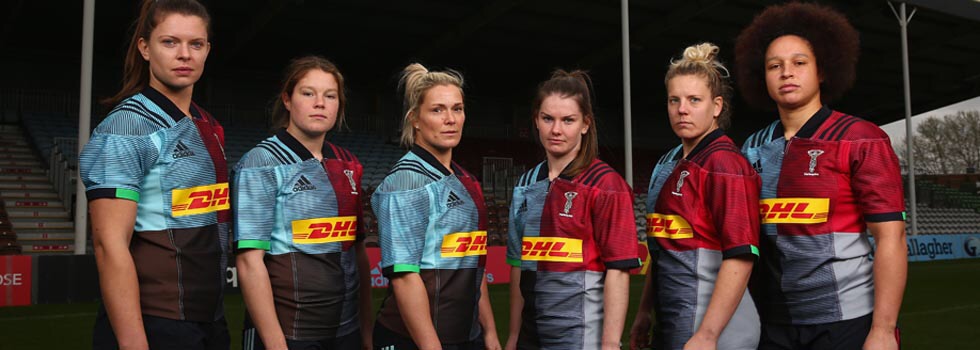
The United Nations of the game will be on show at the weekend, Quins are the home to Red Roses, Flowers of Scotland , a star spangled flanker and a Wallaroo, if you add in the Swedish, French, Irish and Welsh contingent then you really have a Noah’s ark of world rugby.


The women’s game has changed beyond recognition over recent years standards on and off the field are continuing to sky rocket.

In Dylan’s words “It’ll soon shake your windows and rattle your walls for the times they are a changin”

Dylan’s song even has a resonance with the media coverage of women’s rugby:

“Come writers and critics who prophesise with your pen, and keep your eyes open the chance won’t come again”

Harlequins are at the vanguard of the revolution they continue to break new ground on and off the field whilst maintaining the rugby values we all cherish, which is not an easy task, rugby is no longer a man’s game and young girls and women have idols and role models of their own.

The glass ceiling has not been broken at Quins it has been shattered to smithereens, a doctor, firefighter, Met Police chief superintendent and soldiers all line up together on the field of play, inspiring youngsters both on the pitch and in their day jobs.

Quins warmed up at the weekend infesting Sharks waters with a 76-12 over the Darlington Mowden Park outfit, providing a scintillating display that all but guarantees them a home Tyrrells Premier Semi final.

Everyone is up for “The Game Changer” and I can promise you a feast of rugby, and for those who have enjoyed the women’s Six Nations, you will be able to see stars of England, Scotland and Ireland from that tournament up close and personal, with the opportunity for a chat, autographs and even photos at full time.

Saturday will be an affirmation and celebration of how far womens rugby has come, and how far it has the potential to go, those that continue to scoff at the women’s game are getting quieter and fewer, there is no going back now, and I leave the last word with Bob Dylan himself.

“Come mothers and fathers throughout the land, and don’t criticise what you can’t understand”

“Your sons and daughters are beyond your command, your old road is rapidly ageing”

“Get out of the new one if you can’t lend a hand for the times they are a changing”

See you at the Stoop.

Wales Back To The Future Murrayfield 2005 And 2019

“The past is a foreign country they do things differently there” is the immortal first line of L.P. Hartley’s The Go Between. which wistfully condenses the problems inherent to memory and history. Distant, intangible, unreliable, lost, our histories, at the levels of personal and national, are at best half-remembered and at worst actively misrepresented.
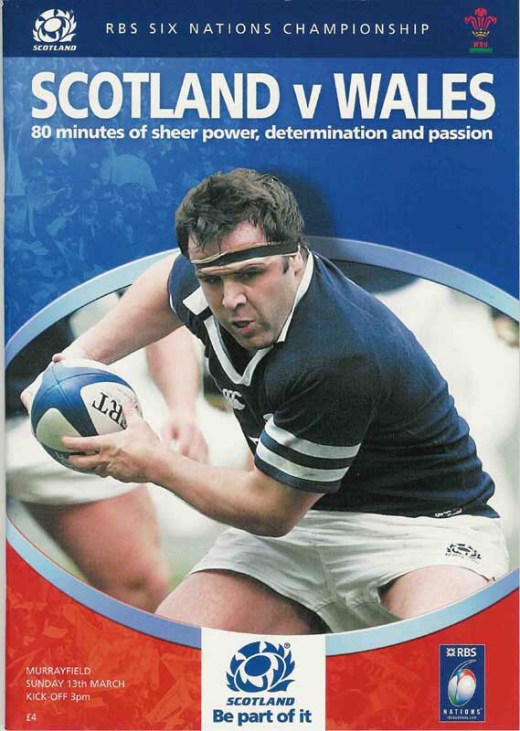
Fourteen years ago Wales headed to Edinburgh with slight trepidation, they had already beaten England France and Italy , and a win at Murrayfield would ensure following week they would face Ireland in Cardiff with the chance to win a first grand slam for twenty-seven years fast forward to 2019 and here we are again, nostalgia and deja vu make a pretty good half back pairing.

So this weekend Wales have much to play for, and so much to lose, a bit like a cup semi final a situation which they  are much more familiar with these days than was the case back in 2005

In many ways the matches the teams and even rugby itself is a world away from that sunny Scottish Sunday, but there are some striking similarities, and once again if Wales beat Scotland on Saturday they will face Ireland for the grand slam in Cardiff seven days later.

In 2005 Wales only had a six day turnaround between matches whilst Ireland had a full week to prepare.

This year the boot is on the other foot, Ireland face France in Dublin on Sunday giving them the disadvantage of a six day turnaround.

Grand Slams and championship wins have been more forthcoming for Wales since 2005, but there was something nervously new about 2005, it was fresh, it was unexpected and during an epic first half at Murrayfield the men in red blew Scotland away showing off all their finery in a joyous attacking display that had them leading 38-3 at half time.

If the men in red had any nerves about the enormity of the task in front of them they were dispelled after only four minutes when Ryan Jones try set them on a glorious path.

Wales were touched with glory on Sunday 13 March 2005, it was as of the ghosts of Barry, Phil, Gareth and JPR had inhabited the men in red to produce running and handling that warmed the heart and gladdened the soul.

That first half must rank as one of the best performances of any Welsh team in any era, they scored three tries in the opening fourteen minutes, and led 38-3 at half time.

So Wales headed home knowing they were in touching distance of the championship and a grand slam, Ireland would have to beat them by at least thirteen points to deny them the title, whilst France have to beat Italy in Rome by a minimum of 42 points to stand any chance of entering the equation.

The days that followed will never be forgotten, lets hope Wales can go back to future this weekend and make the past a more familiar country where they do things exactly the same.
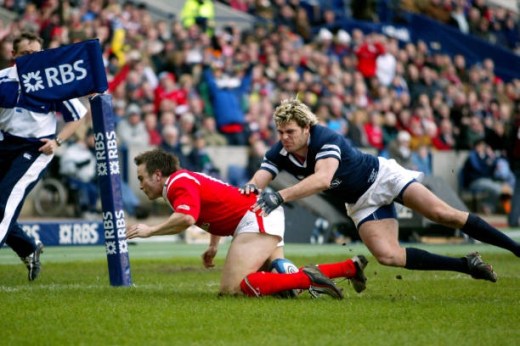
 

Scotland: Paterson (Edinburgh); R Lamont , (Glasgow), Craig (Glasgow; Henderson , 75), Southwell (Edinburgh), S Lamont (Glasgow); Parks (Glasgow; Ross , Leeds, h-t), Cusiter (Borders; Blair , Edinburgh, 44), Smith (Northampton), Bulloch (Glasgow, capt), Kerr (Leeds; Douglas , Borders, h-t), Grimes (Newcastle; Hines , Edinburgh, h-t), Murray (Edinburgh), Taylor (Edinburgh), Petrie (Glasgow), Hogg (Edinburgh).
Tries: Craig, R Lamont, Paterson. Cons: Paterson 2. Pen: Paterson.

Wales: Morgan (Newport-Gwent); R Williams (Cardiff; Luscombe , Newport-Gwent, 69), Shanklin (Cardiff), Henson (Neath-Swansea; Sweeney , Newport-Gwent, 75), S Williams (Neath-Swansea); S Jones (Clermont Auvergne), Peel (Llanelli); Jenkins (Cardiff), Davies (Gloucester; McBryde (Llanelli, 50), A Jones (Neath-Swansea; Yapp , Cardiff, 64), Cockbain (Neath-Swansea; J Thomas , Neath-Swansea 71), Sidoli (Cardiff), R Jones (Neath-Swansea), M Williams (Cardiff), Owen (Newport Gwent).
Try: R Jones, R Williams 2, S Williams, K Morgan 2. Cons: S Jones 5. Pens : S Jones 2.
Sin-bin: Cockbain 61.


Referee : J Kaplan (S Africa). Att : 63,431.

HOW IT ALL HAPPENED

Scotland 22-46 Wales
70 mins: Superb end-to-end rugby results in a Paterson try. Stephen Jones and Morgan combine to send Luscombe through who then stubles resulting in a counter attack going the length of the field, Paterson collects Southwell’s chip ahead. He converts his own try.

Scotland 15-43 Wales
68 mins: Rory Lamont’s brute strength earns him a try. Paterson opens the gap and Lamont arcs his way past Shane Williams and Shanklin for five points. Patterson converts

Scotland 10-43 Wales

53 mins:  Craig slides in for the home side’s first try. Scotland make the most of their numbers, the ball run all the way down the line to Craig. Paterson succeeds with a conversion from right on the touchline.

Scotland 3-43 Wales
49 mins: Some wonderful welsh passing leaves the Scots mesmerised and  Wales are awarded a penalty. Peel takes it quickly and Rhys Williams receives the ball out wide to touch down despite protestations from the Scots. Stephen Jones misses his chance for two points.

 
Half-time:
.

Scotland 3 Wales 38
40 mins:  Morgan produces another try fout of nothing. Peel  slices through the opposition’s defenders. Morgan runs a delightful angle and is in the perfect place for the try-scoring pass. Stephen Jones converts.

Scotland 3-31 Wales
27 mins: It’s try number four for Wales as Kevin Morgan acceleratess across the line. following a Shanklin dummy, Stephen Jones then maintains his 100% kicking record with the conversion

Scotland 3-24 Wales
23 mins: Scotland win a line out penaly Chris Paterson gets his first kick through the uprights.


Scotland 0-24 Wales

19 mins: Stephen Jones kicks a penaly


Scotland 0-21 Wales

14 mins: Stephen Jones breaks clear and feeds Shane Williams who youches down near the posts a simple conversion follows from Jones


Scotland 0-14 Wales
11 mins:  Rhys Williams  throughintercepts and run the length of the field after Scotland had looked certain to score with players queuing up outside Dan Parks, who instead opted to loft the ball into the hands of the fast-approaching Williams. Stephen Jones converts the try.


Scotland 0-7 Wales4 mins: Ryan Jones produces a scintillating break after a loose kick by Hugo Southwell. Jones has plenty of support and gets the final pass back from Martyn Williams for the try after a series of slick passes. Stephen Jones nails the conversion.


Paris The Auld Alliance And The Young Ones

There is something special about Paris in the winter, the moment you step off the train at Gare du Nord, the smell of coffee engulfs you as you hit the dark misty grey gloom lit up by the neon lights of the cafes and bars in rue dunkerque.

Paris does the cold dark miserable season like no other city, with its inimitable style and class.

But Paris had a surprise in store this weekend, supplying blazing sunshine and temperatures of fifteen degrees, it was more Marseille than Montmartre, the pavement cafes doing a roaring trade with the tartan army sipping their cafe cremes with an insouciance and panache, was this really the Six Nations ?

Historically France and Scotland have a very special bond, in 1942 Charles DeGaulle described it as the oldest alliance in the world

“In every combat for five centuries when the destiny of France was at stake, there were always men of Scotland to fight by the side of the men of France, and what Frenchmen feel is that no people has ever been more generous with its friendship”

The auld alliance with France was first agreed in 1295 built on France’ need to curtail English expansion.

The canny Scots were given the pick of the best French wines as a result of this accord.

There was no sign of the  auld alliance in Paris yesterday, the scots may have fought with Joan of arc at the battle of Orleans, but watching Guirado hit Gray underlined that friendships were on hold for at least eighty minutes.

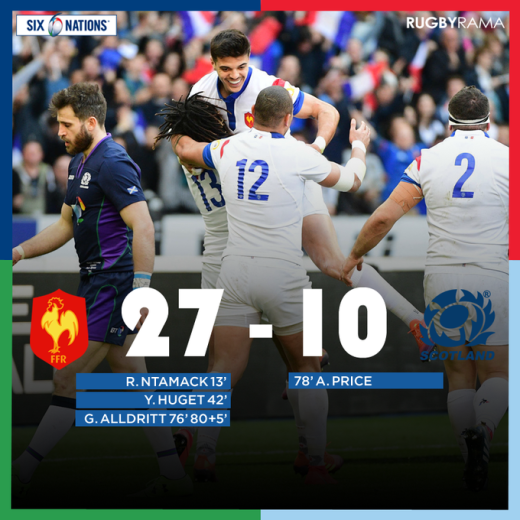
Under crystal clear azure skies the anthems roared and France got off to a roaring start, Penaud got over the line after six minutes, only for the TMO to disallow the try in fact Les Bleus had three tries disallowed and scored four not a bad return, although the clock had reached 88 minutes before Alldritt scored the fourth and bonus point try.

France played with the sun on their backs and in their hearts, it was evident they were playing for each other and with eachother, there were flashes of finesse, but bucket loads of desire.

The young guns Dupont, Ntamack, Penaud, Ramos and Bamba brought a freshness and an energy and that old warhorse Guilhem Guirado was his usual magnificent self.

As seems to be the way with matches in Paris, this one lasted 88 minutes and 49 seconds, with Gregory Alldritt scoring France’s fourth and bonus point winning try to the delight of the tricolour waving sun kissed supporters at the sacre couer end of the ground

Joy for once was the visible emotion etched in the faces of French rugby players, no spring revolution here just the relief of a victory which they hope will sprout the shoots of blossoming growth, although folks from Calais to Carcassonne will not be holding their breath, but maybe youth is the answer for France, and as in the words of the song:

The Young’s ones shouldn’t be afraid

To Live, Love, while the flame is strong

For we may not be the young ones very long”.

Paris a bientot !

Deborah McCormack And The Thirty Cap Curse

There are people you meet in this game that impress on so many levels, immense dedication is a pre requisite at the top-level, but to be a thoroughly decent human being is not necessarily part of the job description, neither is the ability to face adversity with a smile and without a hint of self-pity.

When you come across someone who has all these qualities by the bucket load, it makes you realise that this great game of ours is well and truly blessed.

Deborah McCormack is one such individual, I am honoured and privileged to know her, but even more privileged and honoured to be able to call her a friend.

On Saturday night in Lille, all being well, she will win her 30th Scottish cap, ever since I broached this impending milestone with her,at the start of the season, she has suffered a whole load of injury setbacks, so much so we have talked about a 30th cap curse, so I will be as relieved as anyone when she sets foot on the pitch at Le Stadium, in Lille, to face France this weekend.

Debs has hardly played all season after injuring her shoulder playing for Harlequins in the opening Tyrrells Premiership match at Gloucester-Hartbury on September 8 last year,she did not play again until January 29.

An integral part of Shade Munro’s plans, she was called up to face Ireland in the last round of the Women’s Six Nations, playing a lung busting forty one minutes on the back of sixty minutes game time during the last five months a remarkable effort, the official match stats also show that she put in 12 tackles during those forty one minutes.

Debs back story has been highlighted in some of my earlier articles a tale that encompasses Motherwell, Medway and Sydney, but today we celebrate a significant milestone in her international career, one that began in 2014 against Ireland.

Her life and rugby career to date has been indelibly linked with waterways, or to be precise, three rivers, the Medway, the Clyde and the Parramatta river, this current milestone in her international career is signposted by yet another waterway, the river Deule, which flows through Lille, from Lens, before it flows into the Lys in Deulemont.

I’m sure all family friends and supporters (of which there are many) will raise a glass to this popular Harlequins forward on Saturday night, I for one will be nervously clutching a glass of red and crossing my fingers until referee Sara Cox blows that first whistle and the 30th cap curse is finally lifted.

Time For France To Launch Another Best Sella

When the name Waterloo is mentioned most people automatically think of one of three things, the battle, the station or ABBA.

France arrived at St Pancras terminus ahead of their Six Nations match against England, the previously mentioned station might have been too much of an omen for a heartbroken team, who snatched defeat from the jaws of victory a week earlier at stade de France against Wales.

1815 was the year in which the Battle of Waterloo took place, at 1815 yesterday Twickenham was pretty much empty, with the exception of a few folk dressed in white and blue, the differing emotions shown in the opposing colours could not have been more contrasting.

A crest fallen French supporter dropped his plastic pint glass as he walked disconsolately away down Rugby Road, the stylish way in which he re-gathered it at ankle height showed more desire and artistry than his national team had displayed all afternoon.

The old cliche “Which France will turn up” was totally negated yesterday when one failed to show up at all.

Down in the South of France, at the Bar de l’esplanade in Tonneins, the locals must have looked on with a mixture of disbelief and melancholy, there was a time when one of their own sons strode the field of dreams, a time when France strutted their stuff with a certain panache and Elan, they ran at angles that Pythagoras would have swooned at, those were the days mon ami.

Tonneins is an unremarkable town in the Lot-Et-Garonne department of France, until the early 2000’s it was the tobacco capital of France, but now the town that stands above the river Garonne between Marmande and Agen has an agricultural emphasis producing maize, rapeseed and sunflowers.

An unremarkable town, maybe, but in 1962 it produced one truly remarkable rugby player, Phillipe Sella, the Prince of Centres who played 111 times for France scoring 125 points from 30 tries.

Phillipe Sella and I were both born on February 14th, sadly that is where our similarities begin and end, if only I had been granted an ounce of the sheer rugby  magic he possessed then I would have been truly blessed.

His French debut came in Bucharest on Sunday 31 October 1982 in a 13-9 defeat to Romania, to add injury to insult he had to spend the night in hospital with concussion following the match.

In his 111 appearances for Les Bleus he tasted victory on 72 occasions drawing 5 times and losing 34 matches, France won six Five Nations titles during his reign, including a Grand Slam in 1987.

Phillipe’s final international appearance came on 22 June 1995 in Pretoria during the Rugby World Cup Third place play off match where  France beat England 19-9.


Regarded as one of the world’s best ever centres it is sometimes forgotten that Sella played on the wing for his first seven games in the French shirt, before switching to the midfield for a glorious career where his centre partners included such illuminaries as Didier Cordoniou, Denis Charvet, Franc Mesnel and Thierry Lacroix.

In 1986 he scored Try in each of France’s 5 Nations matches, a remarkable feat achieved only by a very select few.

Phillipe Sella is “Mr Agen” he played for the club for thirteen years between 1982 and 1985 before heading across the channel for a spell with Saracens.

He retired from rugby in 1998 before heading home his beloved Agen, where he is currently director of rugby.

I’m not sure what state is lower than the doldrums, but France inhabit that area, in fact they own the lease, what they wouldn’t give for another best Sella.